

Why Commercial AC Maintenance Matters Before Summer
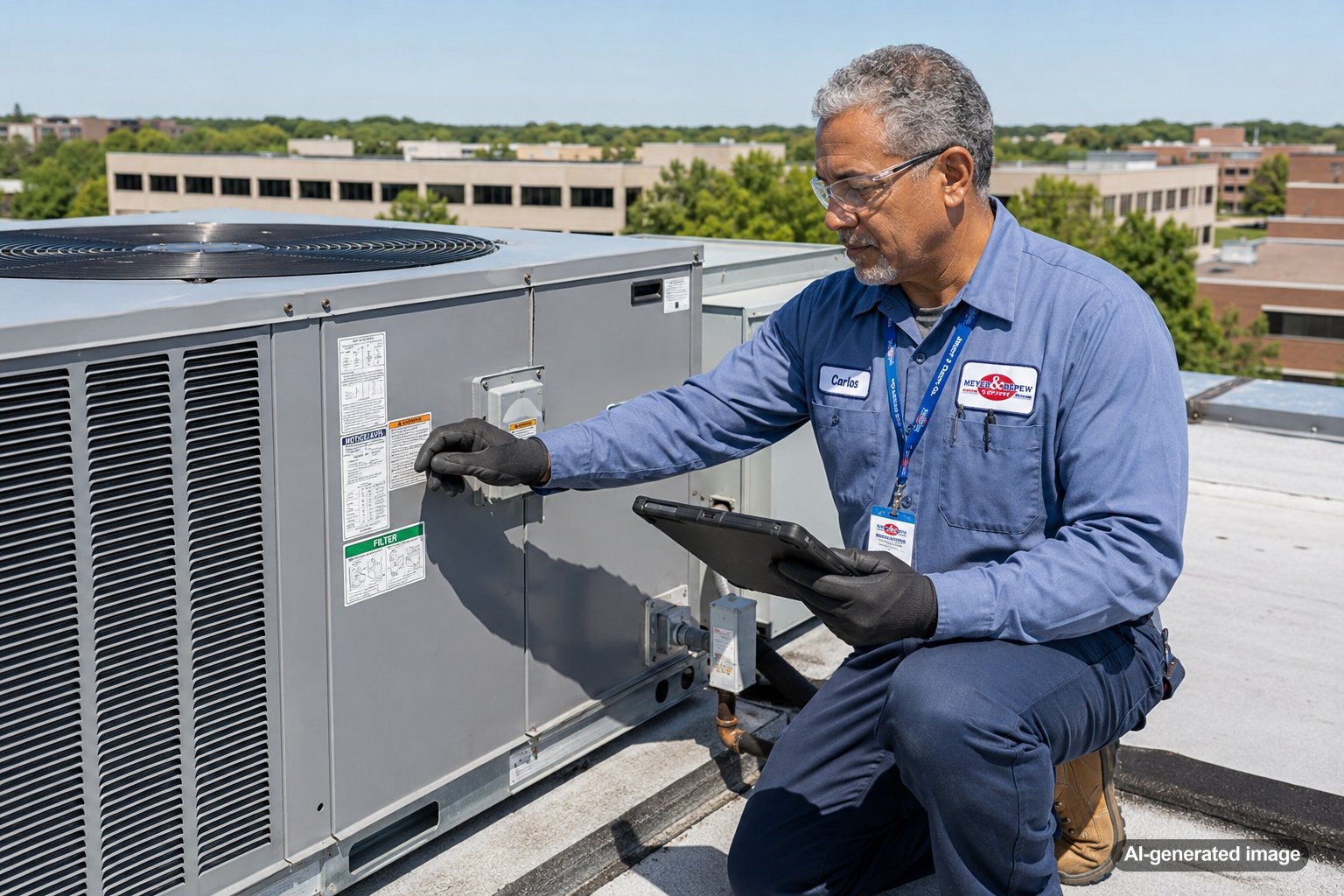
Commercial AC maintenance before summer is one of the most practical steps a building owner, property manager, or facility leader can take before New Jersey heat and humidity put cooling equipment under heavier demand. A cooling system that seemed fine in April can struggle quickly once offices, retail spaces, restaurants, medical suites, warehouses, and nonprofit facilities are dealing with longer run times, changing occupancy, and warmer rooftop conditions.
For many commercial properties, AC problems are not just comfort issues. They can affect employee productivity, tenant satisfaction, customer experience, indoor humidity, equipment rooms, and daily operations. A planned visit through a commercial HVAC maintenance plan gives a qualified technician the opportunity to evaluate the system before the busiest cooling months arrive.
Commercial AC maintenance matters before summer because it can reduce the risk of surprise breakdowns, improve system readiness, help identify worn components, support more consistent comfort, and give businesses time to make informed repair or replacement decisions before peak cooling demand.
Summer Demand Exposes Problems That Spring Weather Can Hide
Commercial cooling systems often coast through mild spring days without showing obvious signs of trouble. The building may feel comfortable because outdoor temperatures are moderate, internal heat loads are lower, and the equipment is not running for long stretches. Once summer arrives, the same system may need to operate for many more hours each day.
That shift can reveal problems that were easy to miss earlier in the season. Restricted airflow, dirty coils, weak capacitors, aging belts, failing motors, clogged condensate drains, and control issues can all become more noticeable when the system is working harder. Rooftop units are especially exposed to heat, debris, sun, wind, and changing weather, which makes pre-summer attention important for many commercial buildings.
Maintenance cannot guarantee that a system will never break down, but it can help uncover conditions that may raise the risk of downtime. For a business, finding a developing issue during a planned visit is usually easier to manage than discovering it during a hot afternoon when employees, tenants, or customers are already uncomfortable.
Comfort Issues Can Affect More Than Temperature
When a commercial AC system is not ready for summer, the first complaint is often that the building feels warm. In real buildings, the issue can be more complicated than that. Some rooms may cool properly while others stay sticky, stuffy, or uneven. Conference rooms, south-facing offices, lobbies, kitchens, server areas, and high-traffic spaces may each place different demands on the system.
Humidity is another important factor in Central and Northern New Jersey. If the system is short cycling, airflow is restricted, or equipment is not operating as intended, indoor humidity can become harder to control. That can make a space feel uncomfortable even when the thermostat setting appears reasonable.
During a maintenance visit, a technician can look at performance indicators that help explain comfort complaints. Airflow, coil condition, filter condition, refrigerant-related symptoms, thermostat operation, controls, drains, and equipment cycling patterns can all provide useful clues. The goal is not to guess at a quick fix. It is to understand what the system is doing before summer conditions make the issue more disruptive.
Commercial Properties Often Have Less Margin For Downtime
A residential cooling issue is frustrating. A commercial cooling issue can interrupt business. Warm indoor conditions may affect employees, customers, tenants, inventory, technology, health care settings, worship spaces, classrooms, dining areas, or other occupied environments. Even when a building can remain open, comfort complaints can create pressure on management and staff.
That is why pre-summer maintenance is especially valuable for businesses and organizations. It gives decision-makers a clearer view of equipment condition before emergency calls become more likely. If a rooftop unit is aging, a blower component is wearing down, or a control issue is affecting performance, the business may have more time to plan next steps.
Meyer & Depew supports commercial HVAC needs throughout Central and Northern New Jersey, including maintenance, service planning, and equipment conversations for properties where comfort and uptime matter. A proactive approach is often less stressful than reacting after the building is already hot.
Maintenance Helps Protect Airflow, Efficiency, And Equipment Operation
Airflow problems are one of the most common reasons commercial cooling systems struggle. Dirty filters, blocked returns, closed dampers, debris, worn belts, blower issues, or dirty coils can all reduce the amount of conditioned air moving through the building. When airflow is poor, the system may run longer, cool unevenly, or experience additional strain.
Commercial AC maintenance typically focuses on the parts of the system that affect safe, reliable operation. A qualified technician may inspect filters, coils, electrical components, motors, belts, pulleys, drains, controls, thermostats, contactors, capacitors, operating pressures, and general system performance. The exact scope depends on the equipment type and service agreement.
This work may help the system operate more consistently and can reduce the likelihood of avoidable problems during peak use. It is also a chance to document equipment condition, especially for older systems where repair history, age, and summer performance should guide future decisions.
Rooftop Units Need Attention Before Heat Builds
Many commercial buildings rely on rooftop units, and those systems face a different environment than indoor equipment. They are exposed to sun, pollen, leaves, wind-blown debris, heavy rain, freeze-thaw cycles, and wide temperature swings. By late spring, coils and outdoor components may already have accumulated debris that affects heat transfer and performance.
Pre-summer maintenance gives technicians a chance to inspect rooftop units before roof surfaces become extremely hot and before service demand increases. It can also help identify issues that may not be obvious from inside the building, such as loose panels, damaged wiring, deteriorated belts, drain concerns, or components showing signs of wear.
For properties with older rooftop equipment, maintenance can also inform replacement planning. If a unit is repeatedly needing repairs, struggling to maintain comfort, or nearing the end of practical service life, it may be worth discussing rooftop unit replacement before a major failure forces a rushed decision.
What Business Owners And Facility Managers Can Safely Check
Commercial HVAC systems should be serviced by qualified professionals, especially when electrical components, refrigerant circuits, gas heat sections, controls, and rooftop access are involved. Still, building teams can take a few safe, practical steps before calling for service or before a scheduled maintenance visit.
- Confirm thermostat settings, schedules, and occupied or unoccupied modes.
- Check whether obvious supply or return vents are blocked by furniture, storage, displays, or temporary partitions.
- Look for visible debris around outdoor or rooftop equipment only from a safe, accessible location.
- Review whether filters are being changed at an appropriate interval for the building use.
- Note which areas are uncomfortable, when the problem occurs, and whether it changes with occupancy or time of day.
- If it is safe and appropriate, check whether a breaker has tripped once. If it trips again, do not keep resetting it. Schedule professional service.
These checks can make the service conversation more productive, but they are not a substitute for professional maintenance. Building staff should not open electrical panels, bypass safety controls, add refrigerant, climb onto unsafe roof areas, or attempt repairs that could create shock, fire, refrigerant exposure, or other hazards.
Pre-Summer Service Can Support Better Budget And Replacement Decisions
One overlooked benefit of commercial AC maintenance is planning. A maintenance visit may reveal whether a system is in generally good condition, needs targeted repairs, or should be watched more closely because of age and performance concerns. That information matters when budgets, tenant needs, and operational timelines are involved.
For example, a facility manager may learn that one rooftop unit is performing normally while another has recurring electrical issues, declining airflow, or signs of compressor strain. A business owner may discover that uneven cooling is related to controls or airflow rather than a complete equipment failure. A property manager may decide to plan repairs before peak summer instead of waiting for repeated complaints.
These are practical decisions, not scare tactics. Maintenance gives commercial decision-makers more information, and better information often leads to better timing.
When To Call A Professional Before Summer
Schedule commercial AC service before summer if the building had comfort complaints last year, if equipment is older, if cooling costs have changed without a clear reason, if airflow feels weak, if humidity is difficult to control, or if the system has needed repeated repairs. It is also smart to schedule maintenance if the building has changed use, added occupants, added equipment, renovated interior layouts, or changed operating hours.
Professional service is also important if you notice burning smells, smoke, sparks, water around equipment, unusual electrical behavior, frequent breaker trips, loud mechanical noises, or cooling that stops suddenly. In unsafe conditions, prioritize safety first and contact the appropriate emergency service, utility, or qualified professional.
For commercial properties, timing matters. Waiting until the first major stretch of summer weather can mean heavier service demand and less flexibility. Pre-summer maintenance puts the building in a better position before AC performance becomes mission-critical.
FAQ: Commercial AC Maintenance Before Summer
How early should commercial AC maintenance be scheduled?
Many businesses prefer to schedule cooling maintenance in spring or early summer before sustained hot weather arrives. The best timing depends on the property, equipment type, occupancy, and service agreement.
Does maintenance prevent all commercial AC breakdowns?
No. Maintenance cannot prevent every failure or guarantee uninterrupted cooling. It can, however, help identify developing issues, improve system readiness, and reduce the chance of avoidable problems during peak demand.
Is commercial AC maintenance different from residential maintenance?
Yes. Commercial systems may involve rooftop units, larger equipment, zoning, more complex controls, longer run times, and different occupancy patterns. They also tend to have greater operational consequences when cooling problems occur.
What if my building has uneven cooling every summer?
Uneven cooling may be related to airflow, controls, duct design, equipment capacity, zoning, building layout, solar gain, or occupancy patterns. A qualified technician can evaluate the system and help determine practical next steps.
Commercial AC maintenance before summer gives New Jersey businesses a better chance to address comfort, airflow, reliability, and planning concerns before heat and humidity place heavier demand on the system.
Need commercial HVAC support in New Jersey?
Meyer & Depew works with businesses, organizations, and commercial properties throughout Central and Northern New Jersey.
Learn more about commercial HVAC maintenance plans.