



Can a Commercial Heat Pump Struggle During Rapid Fall Temperature Changes?
Estimated reading time: 10 minutes
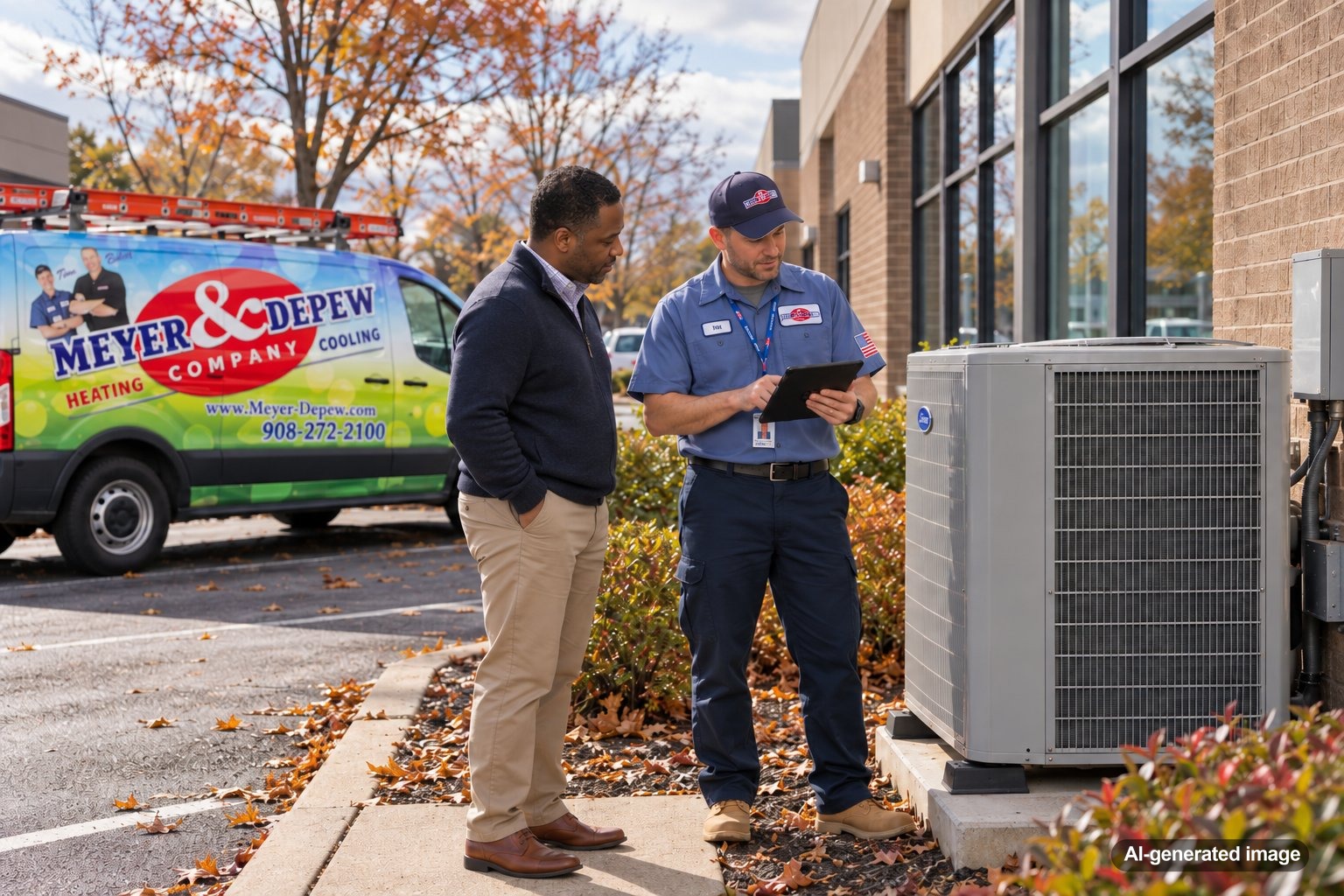
Yes, a commercial heat pump can appear to struggle when fall weather changes quickly, especially when a mild afternoon is followed by a much colder night or an abrupt cold front moves through New Jersey. A properly operating heat pump is designed to adjust to changing outdoor conditions, but rapid temperature swings can expose problems with capacity, controls, airflow, maintenance, building schedules, or backup heat that were much less noticeable during milder weather.
For property managers and business owners, the important distinction is whether the system is simply working harder because conditions changed or whether the temperature drop has revealed an HVAC problem that deserves attention. Understanding that difference can prevent unnecessary concern while also helping you recognize when it is time to have a commercial HVAC system evaluated.
Rapid fall temperature changes can affect commercial heat pump performance because heating demand can rise much faster than it did during mild weather. Longer run times are not automatically a problem, but persistent comfort issues, unusually frequent cycling, inconsistent temperatures, unexpected backup heat operation, icing, or failure to reach the setpoint can indicate that the system needs professional evaluation.
Why Rapid Fall Weather Changes Can Be Challenging
Commercial buildings do not respond instantly when outdoor temperatures change. The HVAC system has to manage the heat being lost through walls, roofs, windows, doors, ventilation, and air leakage while also accounting for changing internal loads from people, lighting, computers, kitchen equipment, machinery, and other sources.
During a mild fall afternoon, those internal heat gains may help keep occupied spaces comfortable with very little mechanical heating. If outdoor temperatures fall sharply overnight, the same building can require substantially more heating by early morning. The heat pump may suddenly have to operate for longer periods or at a higher capacity to bring the building back to its occupied temperature.
This is particularly noticeable in buildings that use an overnight temperature setback. A system that had only been maintaining a modest temperature overnight may face a large recovery load when the building schedule calls for warmer conditions shortly before employees, customers, students, tenants, or visitors arrive.
Heat Pump Capacity Changes With Outdoor Conditions
An air-source heat pump gathers heat from outdoor air and transfers it into the building. As outdoor temperatures fall, operating conditions become more demanding. The exact performance change depends on the equipment design, controls, refrigerant system, compressor technology, and the temperatures for which the system was selected.
Modern cold-climate and variable-capacity equipment may maintain strong heating performance at temperatures that would have been more difficult for older systems. Even so, every heat pump has an operating range and a relationship between outdoor temperature, available capacity, and building heating demand.
A rapid fall temperature drop can therefore expose a system that was already operating close to its limits. A heat pump that seemed completely adequate during 55-degree weather may reveal a capacity, airflow, control, or maintenance problem when nighttime conditions suddenly become much colder.
Longer Run Times Are Not Necessarily a Warning Sign
One of the easiest mistakes is assuming that a heat pump is malfunctioning simply because it runs longer during colder weather. Heat pumps commonly deliver heat over longer operating cycles rather than producing the brief blasts of very hot air people may associate with some traditional heating systems.
If indoor temperatures remain steady, occupied areas are comfortable, and the system is operating without unusual noises, repeated shutdowns, alarms, or other abnormalities, longer operation during a cold spell may be normal.
The more useful question is whether the building is maintaining the conditions the HVAC system is supposed to provide. If temperatures consistently fall behind the thermostat setpoint or different zones begin behaving very differently, there may be more to investigate.
Rapid Temperature Swings Can Expose Control Problems
Commercial HVAC controls can become particularly important during transitional weather. A building may need cooling during a sunny afternoon and heating only hours later. Multiple zones can also have completely different needs at the same time.
Problems with thermostats, sensors, building automation schedules, changeover settings, staging, or communication between system components may not become obvious until weather changes quickly. For example, an incorrect schedule could delay morning warm-up. A poorly located sensor could report a temperature that does not represent the occupied space. Improper staging could prevent available heating capacity from being used when it is actually needed.
Because commercial systems vary widely, these issues should be evaluated in the context of the building and equipment rather than diagnosed from a single symptom.
Morning Recovery Can Make a Healthy System Look Overworked
Morning warm-up is one of the most important situations to consider during fall temperature swings. Imagine an office building that experienced a comfortable 65-degree afternoon followed by a night in the 30s. If the HVAC schedule allowed indoor temperatures to fall overnight, the heat pump may need to recover several degrees before employees arrive.
That recovery period can coincide with the coldest outdoor temperature of the day. The building itself may also have cooled overnight, which means the HVAC system is warming not only the air but also compensating for colder surfaces and continuing heat loss through the building envelope.
If morning recovery becomes consistently slow, a qualified commercial HVAC technician can determine whether the issue relates to system capacity, scheduling, airflow, controls, auxiliary heat, maintenance, or another condition.
Airflow Problems Become More Noticeable as Heating Demand Rises
A heat pump cannot distribute its available heating capacity effectively without proper airflow. Problems that seemed minor during mild weather can become far more noticeable after a sudden drop in temperature.
Potential contributors include dirty filters, obstructed return-air paths, closed or blocked supply outlets, fan problems, duct leakage, improperly balanced zones, or changes in how a commercial space is being used. Furniture, inventory, partitions, renovations, or tenant changes can also alter airflow after a system was originally balanced.
Building staff can safely check accessible filters according to the facility’s maintenance procedures and confirm that visible supply and return openings have not been blocked. Internal equipment, electrical components, refrigerant systems, and sealed HVAC assemblies should be left to qualified professionals.
Outdoor Coil Frost and Defrost Operation Can Affect Heating
During certain combinations of outdoor temperature and moisture, frost can form on the outdoor coil of an air-source heat pump. Heat pumps are designed to manage this condition through a defrost cycle.
Defrost operation can temporarily change what occupants notice from the system. Depending on the equipment design, heating output may vary during the cycle, and supplemental heat may be used when available. Occasional defrosting under appropriate weather conditions can be part of normal operation.
Heavy ice that does not clear, repeated comfort problems, unusual noises, or an outdoor unit that appears severely iced should not be treated as a routine DIY repair. A qualified technician can evaluate whether the system is defrosting correctly and whether another problem is contributing to the condition.
Backup Heat and Staging Matter During Colder Conditions
Some commercial heat pump installations incorporate supplemental heating or multiple stages of heating capacity. Their controls determine when additional capacity becomes appropriate. A rapid drop in outdoor temperature can cause those additional stages to become much more important than they were a day earlier.
If supplemental heat is unavailable, improperly controlled, or not operating as intended, the heat pump may appear unable to recover the building temperature. Conversely, unusually frequent supplemental heat operation may deserve investigation because it could indicate a control, equipment, sizing, or operating issue.
The correct sequence depends on the specific system, so building operators should avoid changing technical staging parameters without understanding the equipment design.
Building Characteristics Can Be Part of the Problem
Not every cold-weather comfort complaint originates with the heat pump. A commercial building with significant air leakage, frequent door opening, large glass areas, high ventilation requirements, poorly insulated sections, loading docks, or dramatically different exposures can develop comfort problems as outdoor conditions become more demanding.
This is one reason a useful HVAC evaluation looks beyond whether the equipment simply turns on. A technician may need to consider operating temperatures, airflow, controls, zoning, equipment condition, building schedules, and how the space is actually being used.
In Central and Northern New Jersey, transitional fall weather can provide an especially useful test because buildings may move between relatively mild conditions and meaningful heating demand within a short period.
What Building Managers Can Safely Check
- Confirm that thermostats or building controls are in the intended operating mode and using the correct occupied schedule.
- Compare actual space temperatures with the intended setpoints instead of judging performance only by how long the equipment runs.
- Inspect accessible air filters and replace them according to the building’s maintenance procedures when needed.
- Make sure visible supply and return openings are not blocked by furniture, inventory, temporary displays, boxes, or construction materials.
- Look for obvious leaves or other debris restricting airflow around accessible outdoor equipment without opening or reaching inside the unit.
- Record which zones are uncomfortable, what time the problem occurs, the thermostat reading, and the approximate outdoor conditions.
That information can be extremely useful if professional service becomes necessary. A pattern such as “the west offices are comfortable in the afternoon but cannot recover before 9 a.m. after cold nights” gives a technician more useful diagnostic context than simply reporting that the building feels cold.
When a Commercial Heat Pump Should Be Evaluated
Consider scheduling professional service if the system repeatedly fails to maintain normal setpoints, comfort complaints continue after the weather moderates, some zones are consistently much colder than others, the equipment cycles abnormally, ice does not clear normally, controls generate faults, or operation has changed noticeably from previous heating seasons.
Preventive service can also be valuable before sustained winter temperatures arrive. A commercial HVAC maintenance plan can provide a structured approach to routine system care rather than waiting for colder conditions to expose a developing problem.
If there is smoke, sparking, an electrical burning odor, a suspected gas issue, or another potentially unsafe condition, prioritize safety and contact the appropriate emergency service, utility, or qualified professional rather than continuing to operate or troubleshoot the equipment.
Frequently Asked Questions
Is it normal for a commercial heat pump to run almost continuously after a temperature drop?
It can be. Longer cycles may be normal when heating demand rises sharply, particularly during morning recovery. The key question is whether the system can maintain the intended indoor temperature. Persistent inability to reach setpoints should be evaluated.
Can a warm fall afternoon followed by a cold night confuse a heat pump?
The temperature change itself should not confuse properly operating equipment, but transitional weather can expose problems with thermostats, sensors, schedules, staging, zoning, or other controls. It can also create very different heating and cooling requirements across a commercial building.
Does frost on a commercial heat pump mean it is broken?
Not necessarily. Some frost can develop on an outdoor heat pump coil under suitable temperature and moisture conditions, and the equipment may use a defrost cycle to remove it. Persistent heavy icing or frost that does not clear warrants professional evaluation.
Should commercial thermostats be changed whenever the outdoor temperature drops?
Usually, repeatedly making large manual changes is not the best response. Commercial systems often rely on programmed schedules, staging, zoning, and other controls. If the building cannot maintain its normal setpoints, investigate the underlying cause rather than continually increasing the thermostat setting.
Can fall HVAC maintenance help before winter?
Routine maintenance may identify issues involving filters, airflow, controls, equipment condition, and system operation before colder weather places greater demand on the heating system. Maintenance cannot prevent every breakdown, but it can reduce the chance that an overlooked problem remains unnoticed until the building needs more heating capacity.
A commercial heat pump can work noticeably harder during rapid fall temperature changes without necessarily being defective. The warning signs are persistent loss of comfort, abnormal operation, uncontrolled icing, repeated faults, or an inability to recover building temperatures. Those symptoms deserve a closer look before New Jersey weather becomes consistently colder.
Need commercial HVAC support in New Jersey?
Meyer & Depew works with businesses, organizations, and commercial properties throughout Central and Northern New Jersey.
Learn more about commercial HVAC maintenance plans.