

How Cooking Indoors Affects Summer AC Performance
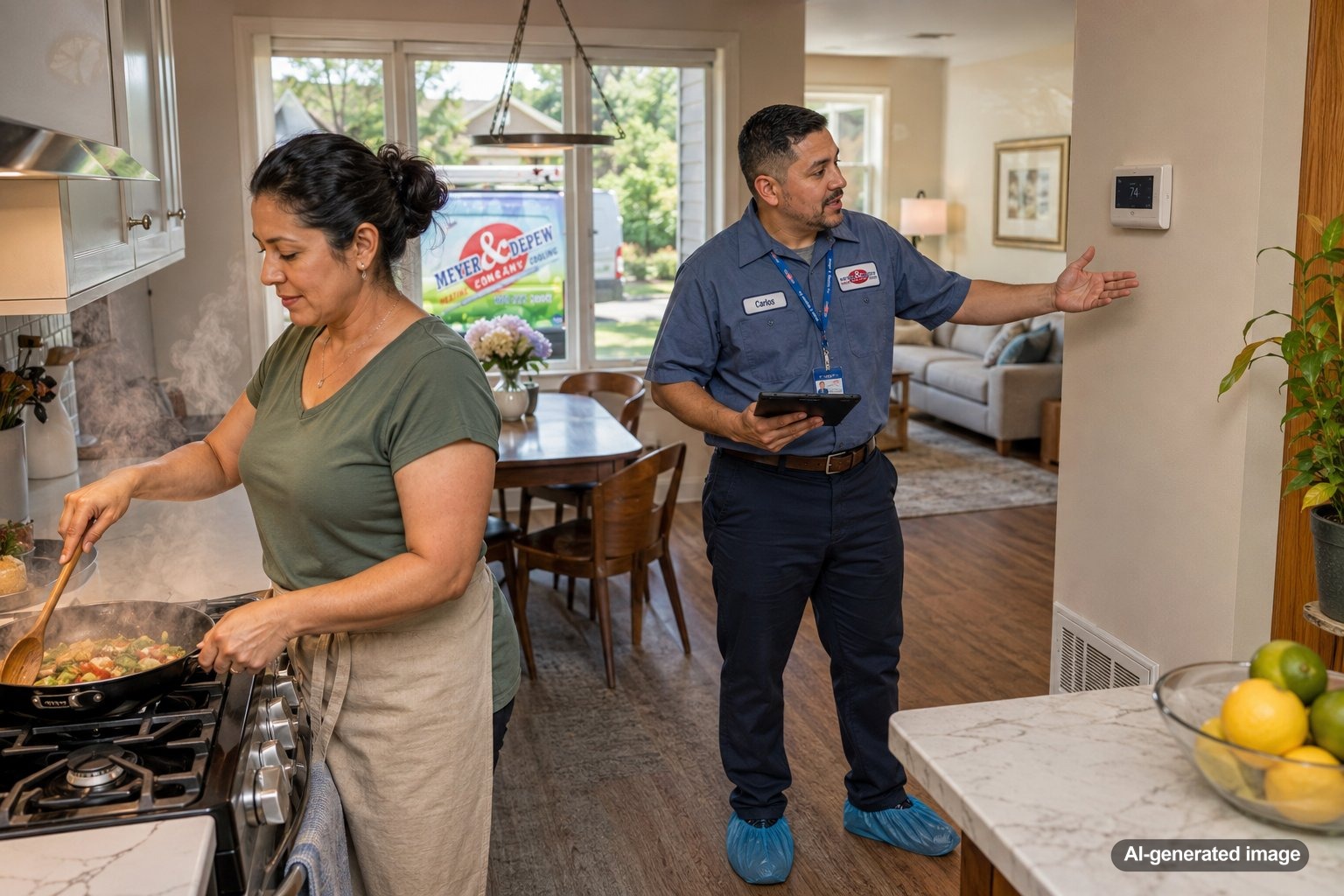
Cooking indoors can make your AC work harder because it adds heat, moisture, odors, and airborne particles to the same air your cooling system is trying to condition. During a New Jersey summer, especially on humid afternoons and evenings, that extra kitchen heat can be enough to make nearby rooms feel warmer, cause longer cooling cycles, and make an already stressed system seem like it is falling behind.
The effect is not always a sign that your air conditioner is broken. Sometimes it is a matter of timing, ventilation, humidity, airflow, or a system that needs routine attention. If your home regularly feels uncomfortable after cooking, it may be worth looking at your cooling habits, kitchen ventilation, and overall AC service and maintenance needs.
Indoor cooking affects summer AC performance by adding heat from ovens, stovetops, and appliances; moisture from boiling and steaming; and airborne contaminants that can affect filters and indoor comfort. Your AC may run longer, rooms near the kitchen may feel warmer, humidity may feel heavier, and odors may circulate if ventilation is limited.
Why the kitchen can work against your AC
An air conditioner removes heat from the indoor air and helps reduce humidity as air passes across the indoor coil. Cooking adds heat faster than many homeowners realize. An oven can warm the kitchen for a long time after the food is finished, while stovetop burners, boiling pots, slow cookers, countertop ovens, and dishwashers can all add heat to the space.
That heat does not always stay in the kitchen. In open floor plans, warm air can drift into the family room, dining area, hallway, and upstairs spaces. In older New Jersey homes with smaller kitchens or limited return airflow, the effect can be even more noticeable because warm air may collect in certain areas instead of moving evenly through the system.
When the thermostat is close to the kitchen or receives heat from nearby cooking activity, it may trigger the AC to run longer than usual. If the thermostat is farther away, the kitchen may feel warm even while the rest of the home seems close to set temperature. Both situations can lead to comfort complaints that feel inconsistent from room to room.
Heat is only part of the problem
Cooking indoors also adds moisture. Boiling pasta, steaming vegetables, simmering sauces, running a dishwasher, or cooking large meals can raise indoor humidity. On a dry day, this may not feel dramatic. During a humid New Jersey summer, it can make the home feel sticky even when the thermostat says the temperature is reasonable.
Humidity matters because people often judge comfort by how the air feels, not just by the number on the thermostat. A room at 74 degrees can feel comfortable when humidity is controlled, but heavy and warm when moisture levels rise. If the AC is already working through a hot, humid day, extra moisture from cooking can make the system run longer without delivering the crisp comfort you expect.
Kitchen activity can also add smoke, grease particles, and odors to indoor air. A good filter and proper ventilation help, but they do not replace routine system care or a correctly used kitchen exhaust fan. For homes where odors, humidity, or stale air linger, Meyer & Depew can also help homeowners think through broader Air Quality & Comfort options.
Common signs cooking is affecting cooling performance
Not every warm kitchen points to an AC problem. The pattern matters. If comfort issues show up mainly after oven use, large meals, or long stovetop cooking, the cooking load may be a major factor. If the same rooms are uncomfortable all day, the cause may involve airflow, insulation, system capacity, maintenance, or equipment condition.
- The kitchen and nearby rooms feel noticeably warmer after cooking.
- The AC runs longer during dinner preparation than it does at other times of day.
- Humidity feels heavier after boiling, steaming, or using the dishwasher.
- Cooking odors spread through the house and linger after the meal.
- Upstairs rooms get warmer after heat rises from an open kitchen or main living area.
- The thermostat reading looks acceptable, but the home still feels uncomfortable.
These clues are useful because they help separate normal heat gain from a system that may need professional attention. A qualified technician can evaluate airflow, refrigerant-related performance, coil condition, electrical components, thermostat location, duct issues, and other factors without guessing.
Safe steps that may reduce the cooling impact
Small changes can help reduce how much cooking affects summer comfort. The goal is not to stop cooking indoors, but to reduce unnecessary heat and moisture when your AC is already carrying a heavy load.
- Use a properly vented kitchen exhaust fan when cooking creates heat, steam, smoke, or odors.
- Keep the AC filter clean so airflow is not restricted during peak cooling season.
- Make sure supply and return vents are open and not blocked by furniture, rugs, or storage.
- Use lids on pots when boiling or simmering to reduce moisture released into the room.
- Consider cooking earlier in the day or using smaller countertop appliances when practical.
- Let hot pans and baking dishes cool safely, but avoid leaving the oven door open to cool the kitchen.
- Check whether the outdoor unit has obvious leaves, grass clippings, or debris around it.
These are homeowner-level checks only. Avoid opening sealed equipment, handling refrigerant, working on high-voltage components, or trying to modify ductwork or safety controls. If the AC is struggling consistently, a professional visit is the safer path.
Ventilation can help, but it has limits
A range hood or kitchen exhaust fan can remove some heat, moisture, smoke, and cooking odors before they spread. It is most effective when it vents outdoors and is used while the cooking is happening, not only after the kitchen is already hot. Recirculating hoods can help capture some grease and odors through filters, but they do not remove heat and humidity from the home in the same way an outdoor-vented system can.
Ventilation also has to be balanced with outdoor conditions. Opening windows during a humid summer evening may clear odors, but it can also bring in muggy outdoor air that makes the AC work harder afterward. In many New Jersey homes, using mechanical ventilation correctly is more helpful than letting in hot, humid air.
If a home has persistent stale air, strong cooking odors, or humidity concerns, the best solution may involve a combination of kitchen habits, HVAC maintenance, filtration, ventilation, and humidity control. The right answer depends on the home, layout, equipment, and comfort goals.
When cooking reveals a bigger AC issue
Cooking may be the trigger that makes a hidden cooling problem more obvious. A well-maintained, properly sized system should be able to recover after normal indoor heat gains, although long oven use during a heat wave can still be challenging. If your AC cannot regain comfort after cooking, or if it runs constantly without improving the temperature, something else may be contributing.
Common possibilities include a dirty air filter, restricted airflow, dirty coils, duct leakage, thermostat placement issues, low system performance, aging equipment, or an AC that is no longer a good match for the home. Homes with additions, finished attics, large open kitchens, or changed occupancy patterns may also experience comfort issues that were not as noticeable years ago.
One important distinction is recovery time. A kitchen that warms up during cooking but cools back down afterward may be responding normally to a temporary heat load. A home that stays warm for hours, feels humid every evening, or has rooms that never catch up should be evaluated.
How maintenance supports summer comfort
Routine AC maintenance can help the system operate as designed during demanding summer conditions. It does not guarantee that breakdowns will never happen, and it cannot erase every comfort challenge in the home, but it can reduce the risk of avoidable problems caused by neglect, airflow restriction, dirty components, or unnoticed wear.
During a professional maintenance visit, a technician can look at overall operation, inspect accessible components, check system performance, and identify concerns that may affect cooling on high-load days. For many homeowners, a planned maintenance schedule is easier than waiting until the AC is already struggling during a hot stretch.
Homeowners who want routine heating and cooling care on a more consistent calendar can review Meyer & Depew’s Service Plans. For homes where cooking, humidity, and uneven cooling are recurring summer complaints, maintenance is often one part of a broader comfort conversation.
FAQ
Can using the oven make the AC run longer?
Yes. Ovens add a concentrated heat load to the home, and that heat can continue radiating after the oven is turned off. The AC may run longer to remove that added heat, especially during hot and humid weather.
Does cooking increase indoor humidity?
It can. Boiling, steaming, simmering, and washing dishes can release moisture into the air. Higher humidity can make the home feel warmer even when the thermostat reading has not changed much.
Should I lower the thermostat before cooking?
Lowering the thermostat may make the AC run longer, but it does not remove heat instantly. A better approach is to limit extra heat and humidity when practical, use kitchen ventilation correctly, and keep the HVAC system well maintained.
Why does my kitchen stay hot after dinner?
The kitchen may be holding heat from the oven, stovetop, appliances, lighting, and poor airflow. If the room stays hot long after cooking ends, airflow, insulation, thermostat placement, or AC performance may need attention.
When should I call for AC service?
Schedule service if the AC runs constantly, cannot recover after normal cooking, blows weak or warm air, short cycles, creates unusual noises, or leaves the home humid and uncomfortable even when the filter and vents look clear.
Indoor cooking can add enough heat and moisture to make summer cooling feel less effective, but regular discomfort after meals may also point to airflow, maintenance, humidity, or system performance issues worth checking.
Need help with your heating, cooling, or HVAC system?
Meyer & Depew serves homeowners and businesses throughout Central and Northern New Jersey.
Get a quote or call 908.272.2100.