



Can Deferred HVAC Maintenance Increase Commercial Energy Costs? What New Jersey Businesses Should Know
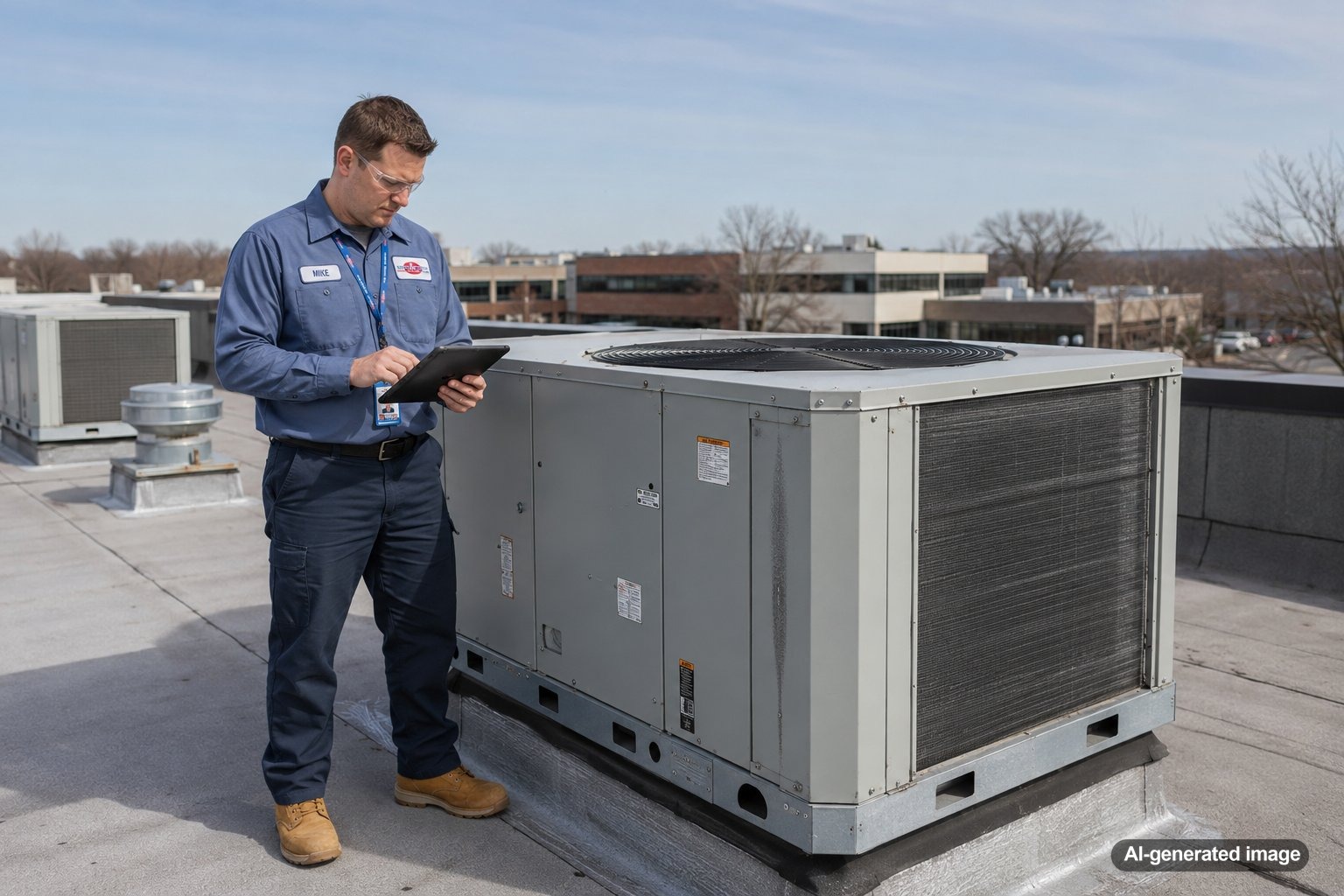
Yes, deferred HVAC maintenance can increase commercial energy costs. When filters, coils, controls, motors, belts, drains, and other system components go too long without professional attention, commercial heating and cooling equipment may have to work harder to maintain normal indoor conditions. That extra operating effort can contribute to longer runtimes, inefficient airflow, uneven temperatures, and avoidable energy use. For businesses and property managers in Central and Northern New Jersey, where HVAC systems may shift between demanding cooling and heating seasons, routine maintenance is an important part of controlling operating costs rather than simply responding to breakdowns.
Commercial HVAC maintenance also gives facility teams an opportunity to identify developing problems before they become larger performance issues. Meyer & Depew provides commercial HVAC services for businesses and organizations throughout the region, including preventive maintenance and system support.
Deferred HVAC maintenance can contribute to higher commercial energy costs when restricted airflow, dirty heat-transfer surfaces, worn components, control problems, or other operating issues make equipment run longer or less efficiently than intended. Maintenance does not guarantee lower utility bills, but regular inspection and service may help identify conditions that are wasting energy and placing unnecessary strain on commercial HVAC equipment.
How Deferred HVAC Maintenance Can Raise Energy Use
A commercial HVAC system does not have to stop working completely to become expensive to operate. Many efficiency problems develop gradually. The building may still feel reasonably comfortable while fans, compressors, pumps, burners, or other components operate longer than necessary to satisfy thermostat settings.
That gradual decline can be difficult to notice because commercial energy consumption is affected by many variables, including outdoor temperatures, operating hours, occupancy, equipment loads, building envelope conditions, and thermostat schedules. If energy costs begin trending upward, deferred HVAC maintenance may be one factor worth evaluating alongside those other changes.
Restricted Airflow Can Make the System Work Harder
Airflow problems are a common example of how neglected maintenance can affect operating efficiency. Dirty filters, blocked returns, closed or obstructed supply registers, and buildup on certain system components can interfere with normal airflow. When conditioned air cannot move through the building as intended, equipment may run for longer periods while occupants still experience hot spots, cold areas, or inconsistent comfort.
Commercial buildings can be especially sensitive to airflow issues because they often serve multiple rooms, tenant areas, offices, retail spaces, or zones with different schedules and loads. A restriction that seems minor at first can have a wider effect when the system is operating for many hours each day.
Dirty Coils Can Reduce Heat Transfer
Heating and cooling equipment depends on effective heat transfer. When accessible coil surfaces become dirty or airflow across them is compromised, the system may not exchange heat as effectively as intended. That can contribute to longer operating cycles and additional equipment strain.
Coil conditions should be evaluated by qualified HVAC professionals as part of appropriate commercial maintenance. Building staff should not open sealed equipment or attempt repairs involving refrigerant, electrical components, or other potentially hazardous parts.
Small Mechanical Problems Can Become Energy Problems
Commercial HVAC systems contain moving parts and electrical components that can wear over time. A deteriorating belt, motor issue, control problem, damaged component, or other developing condition may not immediately shut the system down. Instead, performance may slowly decline.
Routine maintenance gives a technician an opportunity to inspect system operation and identify issues that could be affecting performance. Addressing a developing problem does not guarantee energy savings, but it can reduce the chance that inefficient operation continues unnoticed for an extended period.
Control And Scheduling Problems May Waste Conditioned Air
Not every commercial HVAC energy issue is caused by a mechanical failure. Building schedules and controls matter too. A system that operates when a building is largely unoccupied, maintains unnecessary temperature settings overnight, or has controls that are no longer responding correctly may use more energy than the property actually requires.
Commercial properties also change over time. Office hours shift, tenants move, rooms are repurposed, occupancy changes, and business operating schedules evolve. Reviewing HVAC controls and operating schedules as part of a broader maintenance strategy can help ensure the system is still serving the way the building is actually being used.
Deferred Maintenance Can Hide Problems Behind Rising Utility Bills
A higher utility bill does not automatically mean the HVAC system is malfunctioning. Weather, utility rates, occupancy, production equipment, lighting, refrigeration, computers, and other electrical loads can all affect commercial energy costs. The useful question is whether HVAC operation has changed along with the bill.
Facility managers may want to look for patterns such as longer equipment runtimes, rooms taking longer to reach set temperatures, more frequent comfort complaints, noticeable changes in airflow, unusual sounds, repeated cycling, or unexplained differences between zones. These observations can give a qualified technician useful context during an inspection.
Why Commercial HVAC Maintenance Matters In New Jersey
Commercial HVAC systems in Central and Northern New Jersey can face demanding seasonal changes. Cooling equipment may operate heavily through stretches of summer heat and humidity, while heating equipment must be ready for cold winter conditions. Shoulder seasons can also bring rapid temperature swings that cause buildings to alternate between heating and cooling needs.
These operating conditions make regular inspection especially useful for businesses that depend on predictable indoor comfort. Preventive service can help identify maintenance needs before the next period of heavy system demand. Meyer & Depew offers a Commercial HVAC Maintenance Plan for organizations that want a more structured approach to routine system care.
What Business Owners And Facility Managers Can Safely Check
Commercial HVAC service should be performed by qualified professionals, but building owners and facility teams can still watch for basic conditions that may indicate a need for attention.
- Check whether accessible air filters appear dirty or are overdue for replacement according to the property’s maintenance procedures.
- Make sure supply and return vents are open and not blocked by furniture, stored materials, displays, or other objects.
- Review thermostat settings and operating schedules for obvious inconsistencies with current building hours.
- Look for visible debris around outdoor equipment without opening panels or entering restricted equipment areas.
- Document recurring hot spots, cold areas, unusual noises, odors, or changes in system cycling so a technician can evaluate them.
Do not attempt to repair commercial electrical wiring, refrigerant components, gas systems, combustion equipment, or high-voltage parts. If there is smoke, sparking, an electrical burning smell, a suspected gas leak, a carbon monoxide concern, refrigerant leakage, or another unsafe condition, prioritize safety and contact the appropriate emergency service, utility, or qualified professional.
Maintenance Versus Emergency Repair
Waiting for commercial HVAC equipment to fail before scheduling service can create more uncertainty for a business. Emergency repairs may occur during periods of peak heating or cooling demand, when indoor comfort is already being affected and the system may have been operating inefficiently for some time.
Preventive maintenance takes a different approach. Instead of waiting for a complete loss of heating or cooling, technicians can evaluate equipment condition, operating performance, airflow, controls, and other serviceable components at planned intervals. Maintenance cannot prevent every breakdown, but it can help reveal developing issues before they become more disruptive.
When To Call A Commercial HVAC Professional
Professional evaluation is appropriate when commercial energy costs rise without an obvious explanation, comfort complaints become more frequent, airflow changes noticeably, equipment runs longer than usual, different zones behave inconsistently, or maintenance has been postponed for an extended period.
A technician can evaluate the HVAC system in the context of the building rather than assuming one symptom has one universal cause. Commercial properties vary widely in size, equipment type, occupancy patterns, ventilation requirements, operating schedules, and internal heat loads. A careful assessment can help distinguish routine maintenance needs from control issues, equipment problems, or situations where replacement may deserve consideration.
Frequently Asked Questions About Commercial HVAC Maintenance And Energy Costs
Can one missed HVAC maintenance visit noticeably increase a commercial energy bill?
Not necessarily. The effect depends on system condition, building use, weather, equipment type, and whether a maintenance-related problem is already affecting performance. The concern becomes greater when maintenance is repeatedly deferred and efficiency problems are allowed to continue unnoticed.
Does commercial HVAC maintenance guarantee lower energy bills?
No. Energy costs depend on many factors, and maintenance cannot guarantee savings. However, professional maintenance may identify airflow restrictions, operating problems, control issues, or other conditions that could be contributing to unnecessary HVAC energy use.
How can a facility manager tell whether HVAC equipment is using more energy?
Utility data can be reviewed alongside weather conditions, operating hours, occupancy, and HVAC runtime. Comfort complaints, longer cycles, changing airflow, and inconsistent zones can also provide useful clues. A qualified HVAC professional can evaluate the system when the cause is unclear.
Should older commercial HVAC equipment be maintained or replaced?
Age alone does not determine the answer. Equipment condition, repair history, efficiency, reliability, operating costs, comfort performance, and the needs of the building all matter. A professional assessment can help determine whether continued maintenance or replacement is the more practical long-term approach.
Deferred commercial HVAC maintenance can contribute to higher energy costs when equipment gradually loses efficiency, airflow becomes restricted, controls stop matching building needs, or developing problems cause longer runtimes. Regular maintenance cannot eliminate every repair or guarantee lower utility bills, but it can provide business owners and facility managers with a clearer picture of system condition before small performance issues become costly operational problems.
Need commercial HVAC support in New Jersey?
Meyer & Depew works with businesses, organizations, and commercial properties throughout Central and Northern New Jersey.
Learn more about commercial HVAC maintenance plans.