



How a Dirty Air Filter Can Make Your AC Work Harder
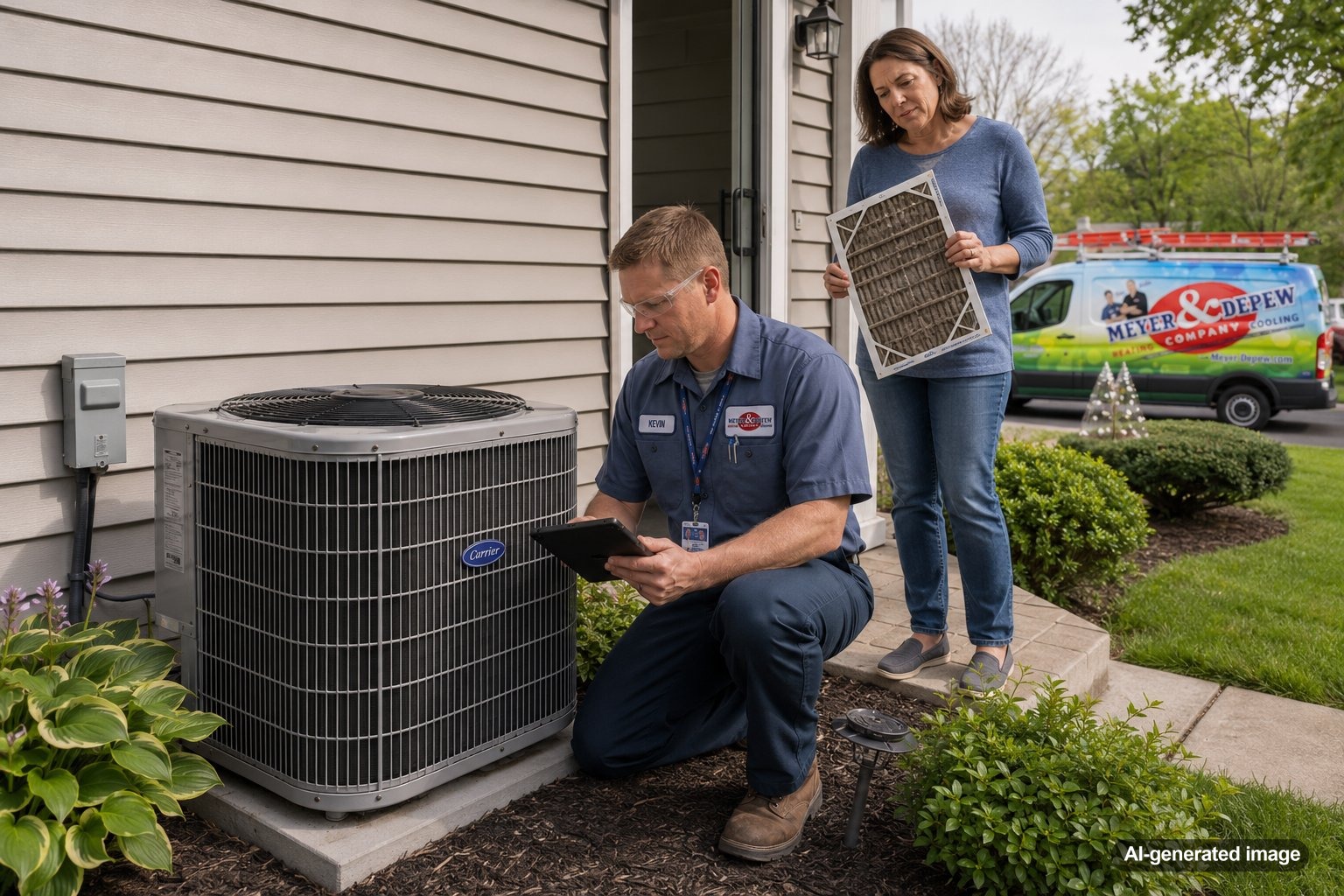
A dirty air filter may look like a small maintenance issue, but it can make your AC work harder every time it runs. When dust, pet hair, pollen, and debris collect on the filter, your system has to pull air through a tighter and tighter barrier. That restricted airflow can affect comfort, efficiency, indoor air quality, and the overall strain on your cooling equipment.
For homeowners in Central and Northern New Jersey, this can become especially noticeable during humid summer weather, when an AC system already has to work hard to cool the home and help manage moisture. A clean filter is not a cure-all for every cooling problem, but it is one of the simplest ways to support better airflow. If filter changes are part of a larger maintenance concern, Meyer & Depew’s AC service and maintenance team can help evaluate what is going on.
A dirty air filter can make your AC work harder by reducing airflow through the system. That can cause longer run times, weaker cooling, uneven temperatures, more dust around the home, and added stress on components. Homeowners can safely inspect and replace many filters, but persistent cooling or airflow problems should be checked by a qualified HVAC technician.
Why airflow matters so much to your AC
Your air conditioner depends on a steady path of air moving through return vents, the filter, the indoor equipment, ductwork, and supply vents. When that path is clear, the system can move conditioned air through the home more consistently. When the filter becomes clogged, the system may struggle to pull in enough return air.
That restriction can create a chain reaction. Rooms may cool more slowly. The AC may run longer than usual. Some areas of the home may feel comfortable while others remain warm or stuffy. In some cases, airflow restriction can contribute to coil problems, short cycling, or increased wear, although a professional should evaluate the equipment before any specific diagnosis is made.
How a dirty filter makes the system work harder
A clean filter allows air to pass through while capturing particles that would otherwise circulate through the system. As the filter loads up with debris, it becomes harder for air to move through it. Your AC then has to operate against that resistance.
Think of it like trying to breathe through a cloth that keeps getting thicker. The equipment is still trying to move air, but it has to work under less favorable conditions. That added strain may not create an immediate breakdown, but over time it can contribute to comfort issues, unnecessary run time, and avoidable service calls.
A clogged filter can be especially frustrating in homes with pets, recent renovations, high dust levels, or heavy pollen exposure. During peak cooling season, filters may collect debris faster than expected, particularly if the system runs for long stretches during hot and humid weather.
Signs your AC filter may be part of the problem
A dirty filter is not the only reason an AC system struggles, but it is often worth checking first. Common signs that the filter may be restricting airflow include:
- Weak airflow from supply vents.
- Rooms that take longer than usual to cool.
- The AC running for long periods without reaching the thermostat setting.
- More dust collecting on surfaces soon after cleaning.
- A filter that looks gray, packed with dust, or visibly clogged.
- Hot and cold spots that seem worse than usual.
If replacing the filter improves airflow, that is a good sign it was contributing to the issue. If the problem continues, the system may need a deeper inspection. Duct restrictions, blower issues, refrigerant concerns, thermostat problems, or dirty coils can also affect cooling performance.
What homeowners can safely check
- Inspect the air filter and replace it if it is dirty or overdue.
- Confirm the filter is installed in the correct airflow direction.
- Make sure return and supply vents are open and not blocked by furniture, rugs, or curtains.
- Check the thermostat settings and confirm the system is set to cooling mode.
- Look for obvious debris around the outdoor unit, while keeping the area clear and safe.
Always use the filter size and type recommended for your system. A filter that is too restrictive for the equipment can also limit airflow, even if it is new. Higher-rated filters can capture smaller particles, but they are not always the right fit for every system. If you are unsure, an HVAC technician can help you choose a filter that balances filtration and airflow.
How often should you change your AC filter?
There is no single schedule that fits every home. Many filters are checked monthly and replaced as needed, while some filter types are designed to last longer. Homes with pets, allergies, heavy system use, or a lot of dust may need more frequent changes. Vacation homes, lightly used spaces, or systems with larger media filters may be different.
The safest approach is to inspect the filter regularly and follow the equipment and filter manufacturer’s guidance. If the filter looks loaded with dust, do not wait for a calendar date just because the package says it can last longer. During New Jersey’s hottest stretches, your AC may run enough that the filter gets dirty faster than it does in milder weather.
Can a dirty filter damage your AC?
A dirty filter does not automatically mean your AC has been damaged, but it can increase stress on the system. Restricted airflow can make the equipment work under conditions it was not designed to handle for long periods. That may contribute to performance problems and can raise the likelihood that small issues become more noticeable.
In some situations, limited airflow can contribute to the indoor coil getting too cold, which may lead to ice formation. If you see ice on equipment, notice water where it should not be, or the system is not cooling properly, turn the system off and schedule professional service. Do not try to open sealed equipment, add refrigerant, bypass safety controls, or make electrical repairs yourself.
Why filter changes work best with regular AC maintenance
Changing the filter is important, but it is only one part of AC care. Professional maintenance can include checking system operation, reviewing airflow concerns, inspecting accessible components, cleaning appropriate areas, and looking for signs of wear or performance issues. This type of service may help reduce the risk of avoidable problems, especially before long summer run times.
A planned maintenance approach can be helpful for busy homeowners who do not want to remember every seasonal task on their own. Meyer & Depew offers service plans that can help keep routine HVAC care on schedule for homes in Central and Northern New Jersey.
When to call a professional
If your AC still struggles after you replace the filter and confirm vents are open, it is time to have the system evaluated. You should also schedule service if you notice unusual noises, burning smells, repeated breaker trips, ice on the system, water around indoor equipment, or cooling that drops off suddenly.
For commercial spaces, clogged filters can be even more disruptive because occupancy patterns, longer operating hours, and larger equipment can make airflow problems harder to ignore. Property managers and business owners should keep filter changes and maintenance intervals aligned with building use, not just a generic calendar.
FAQ
Can I run my AC without a filter for a short time?
No. Running an AC without a filter can allow dust and debris to enter the system and collect on components. It is better to replace the filter with the proper size and type.
Will a new filter fix weak AC airflow?
It may help if the old filter was clogged. If airflow is still weak after a filter change, the issue could involve ductwork, the blower, the coil, or another system condition that should be checked by a qualified technician.
Is a more expensive filter always better?
Not always. Some high-efficiency filters may be too restrictive for certain systems. The right choice depends on your equipment, indoor air quality goals, and airflow needs.
Why does my filter get dirty so fast?
Pets, dust, pollen, nearby renovation work, frequent system use, and leaky return ducts can all cause filters to load up quickly. If it seems unusually fast, ask an HVAC professional to look for underlying airflow or duct concerns.
A dirty air filter can make your AC work harder by limiting airflow. Checking and replacing the filter is a simple homeowner task, but ongoing comfort problems deserve a professional look before they become bigger issues.
Need help with your heating, cooling, or HVAC system?
Meyer & Depew serves homeowners and businesses throughout Central and Northern New Jersey.
Get a quote or call 908.272.2100.