



Are Ductless Mini Splits Good for Finished Basements?
Estimated reading time: 7 minutes
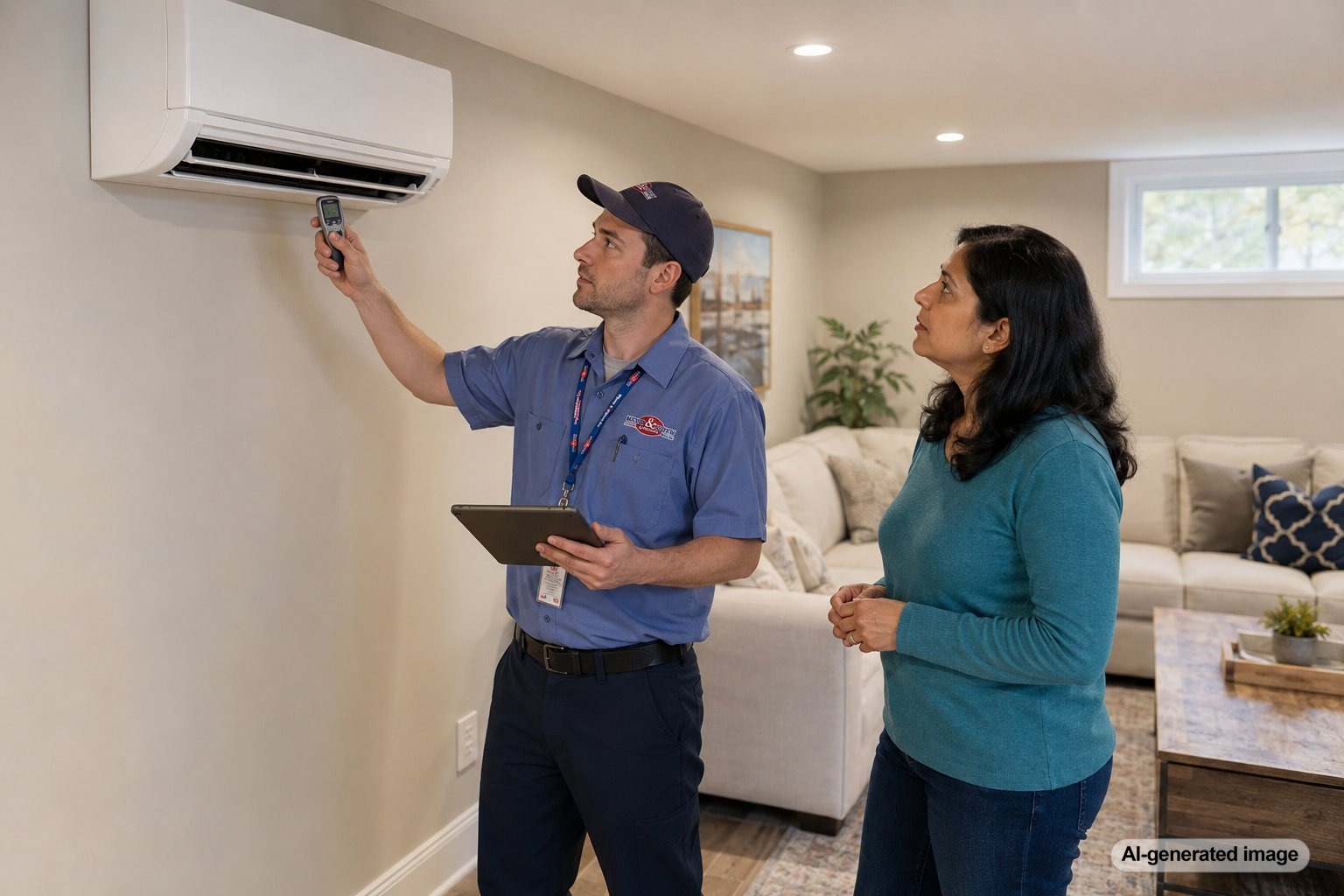
Yes, ductless mini splits are often a very good option for finished basements, especially when the space is comfortable sometimes but too cold, damp, or stuffy at other times. A finished basement in New Jersey can feel completely different from the rest of the house because it sits below grade, has different moisture conditions, and may not get enough airflow from the main HVAC system.
For many homeowners, a ductless system provides targeted heating and cooling without extending ductwork, opening ceilings, or overworking the existing furnace or AC. Meyer & Depew installs and services ductless mini split systems for homes throughout Central and Northern New Jersey, including spaces where conventional ductwork is difficult or impractical.
Ductless mini splits can be an excellent choice for finished basements when the system is properly sized, professionally installed, and matched to the way the room is used. They are especially helpful for basements that need independent temperature control, supplemental heating, better cooling during summer, or comfort without adding new duct runs.
Why finished basements are hard to heat and cool
Finished basements have their own comfort challenges. Even when they are insulated, furnished, and used every day, they often do not behave like above-grade rooms. The surrounding soil can keep the space cooler than the main floor, while humidity can make the room feel clammy in warm weather. In winter, the basement may lag behind the rest of the home because the main heating system was not designed with that finished living area in mind.
Many basements also have limited supply vents, undersized returns, or no dedicated HVAC zoning. That means the thermostat upstairs may say the house is comfortable while the basement is still chilly. In summer, the opposite can happen: the main floor needs cooling, but the basement becomes overly cold or damp because it is receiving conditioned air it does not really need.
How a ductless mini split helps
A ductless mini split gives the finished basement its own indoor unit and thermostat control. Instead of relying on air that is pushed through the same ductwork serving the rest of the home, the basement can be heated or cooled based on its own conditions. This is one reason ductless systems are commonly considered for basements, additions, garages converted to living space, older homes, and rooms that never seem to match the rest of the house.
In a finished basement, that independent control can be especially useful for home offices, guest suites, playrooms, workout spaces, media rooms, or in-law areas. The system can run when the room is occupied and stay off or set back when it is not. This type of room-by-room comfort is similar in purpose to zoning systems, but it can often be achieved without modifying the home’s existing ductwork.
Where ductless mini splits make the most sense
A ductless mini split is usually worth considering when the finished basement is used regularly and the existing HVAC system does not keep it comfortable. It may also make sense if adding ductwork would be expensive, disruptive, or physically difficult because of ceiling height, framing, finished walls, or the layout of the mechanical room.
Basements that need both heating and cooling are often strong candidates. Modern ductless heat pump systems can provide cooling in summer and heating in cooler weather, which can help bridge seasonal comfort gaps. In New Jersey homes, that flexibility matters because a basement may feel damp in July, chilly in October, and too cold for regular use in January unless it has dedicated comfort control.
When a ductless mini split may not be the only answer
A ductless mini split can do a lot, but it is not a cure-all for every basement problem. If the room has water intrusion, poor drainage, visible mold, serious insulation gaps, or persistent humidity issues, those concerns should be addressed before comfort equipment is expected to carry the whole load. HVAC can help manage temperature and, in some cases, remove some moisture during cooling operation, but it should not be treated as the only solution for a wet or poorly sealed basement.
It is also important to size the system correctly. An oversized unit may short cycle and do a poor job managing comfort. An undersized unit may run constantly and still leave the room uncomfortable. A qualified HVAC professional can evaluate square footage, ceiling height, insulation, windows, moisture conditions, use patterns, and the relationship between the basement and the rest of the home.
Comfort factors homeowners should think about
Before choosing ductless, think about how the basement is actually used. A finished basement that serves as a weekend movie room has different needs than a daily home office or bedroom. Occupancy, electronics, sunlight from walk-out doors, exterior wall exposure, and the number of people using the space can all affect the right equipment choice.
Placement of the indoor unit matters, too. The unit should be located where airflow can spread comfortably across the space without blowing directly on seating, desks, or beds. In larger or divided basements, one indoor head may not serve every area evenly. In those cases, a multi-zone ductless design or another approach may be more practical.
- Notice whether the basement is mainly too cold, too warm, damp, or uneven from room to room.
- Check whether existing supply and return vents are open and not blocked by furniture.
- Inspect the air filter for the main HVAC system if the whole home has weak airflow.
- Look for signs of moisture, musty odors, or water staining that may need attention beyond HVAC.
- Write down when the basement feels uncomfortable, such as during humid weather, cold snaps, or when the upstairs thermostat is satisfied.
What about indoor air quality and humidity?
Because finished basements are more likely to feel damp or stale, comfort is not only about temperature. Humidity, ventilation, filtration, and airflow all play a role. A ductless system can improve the feel of the room when properly selected and operated, but some homes may also benefit from a broader conversation about air quality and comfort.
If the basement smells musty, has recurring moisture, or feels humid even when the temperature is reasonable, the underlying cause should be evaluated. Sometimes the best solution is a combination of moisture control, better airflow, improved filtration, ventilation, or targeted HVAC upgrades. A professional assessment can help separate a comfort issue from a building moisture issue.
When to call a professional
Call a qualified HVAC contractor when the finished basement is uncomfortable even though the rest of the home feels fine, when the existing system cannot be extended easily, or when you want a dedicated heating and cooling option for a newly finished space. Professional design is especially important if the basement has multiple rooms, low ceilings, walk-out doors, or moisture concerns.
A technician can also evaluate whether ductless is the best fit or whether another solution makes more sense. Depending on the home, options may include ductless, duct modifications, zoning, thermostat upgrades, air quality improvements, or equipment replacement. The right answer depends on the basement, the existing HVAC system, and the homeowner’s goals.
FAQ: Ductless mini splits for finished basements
Can a ductless mini split heat a finished basement?
Yes, many ductless mini split systems are heat pumps that can provide both heating and cooling. Proper sizing and installation are important, especially in colder weather and below-grade spaces.
Will a mini split remove basement humidity?
During cooling operation, a mini split may help remove some moisture from the air. However, it should not be used as the only fix for water intrusion, drainage problems, or major basement humidity issues.
Is ductless better than extending ductwork?
It depends on the home. Ductless can be a strong option when ductwork is difficult, expensive, or disruptive to add. Extending ductwork may be practical in some homes, but it can also affect airflow balance if not designed correctly.
Can one indoor unit handle the whole basement?
Sometimes, but not always. Open basements are easier to serve with one indoor unit than basements divided into bedrooms, offices, storage areas, or hallways. Layout and airflow matter.
Should I install a ductless mini split before finishing the basement?
It is often helpful to plan HVAC before the basement is fully finished. Early planning can improve equipment placement, electrical coordination, drainage routing, and overall comfort design.
Ductless mini splits are often a smart, practical choice for finished basements that need their own comfort control. They work best when the basement is dry, reasonably insulated, properly evaluated, and matched with the right system design.
Thinking about replacing or upgrading your HVAC system?
Meyer & Depew can help you understand your options for comfort, efficiency, and long-term reliability in your New Jersey home or business.
Questions? Contact Meyer & Depew or call 908.272.2100.