



Can Dust on Furnace Components Cause Odors When Heating Season Starts?
Estimated reading time: 7 minutes
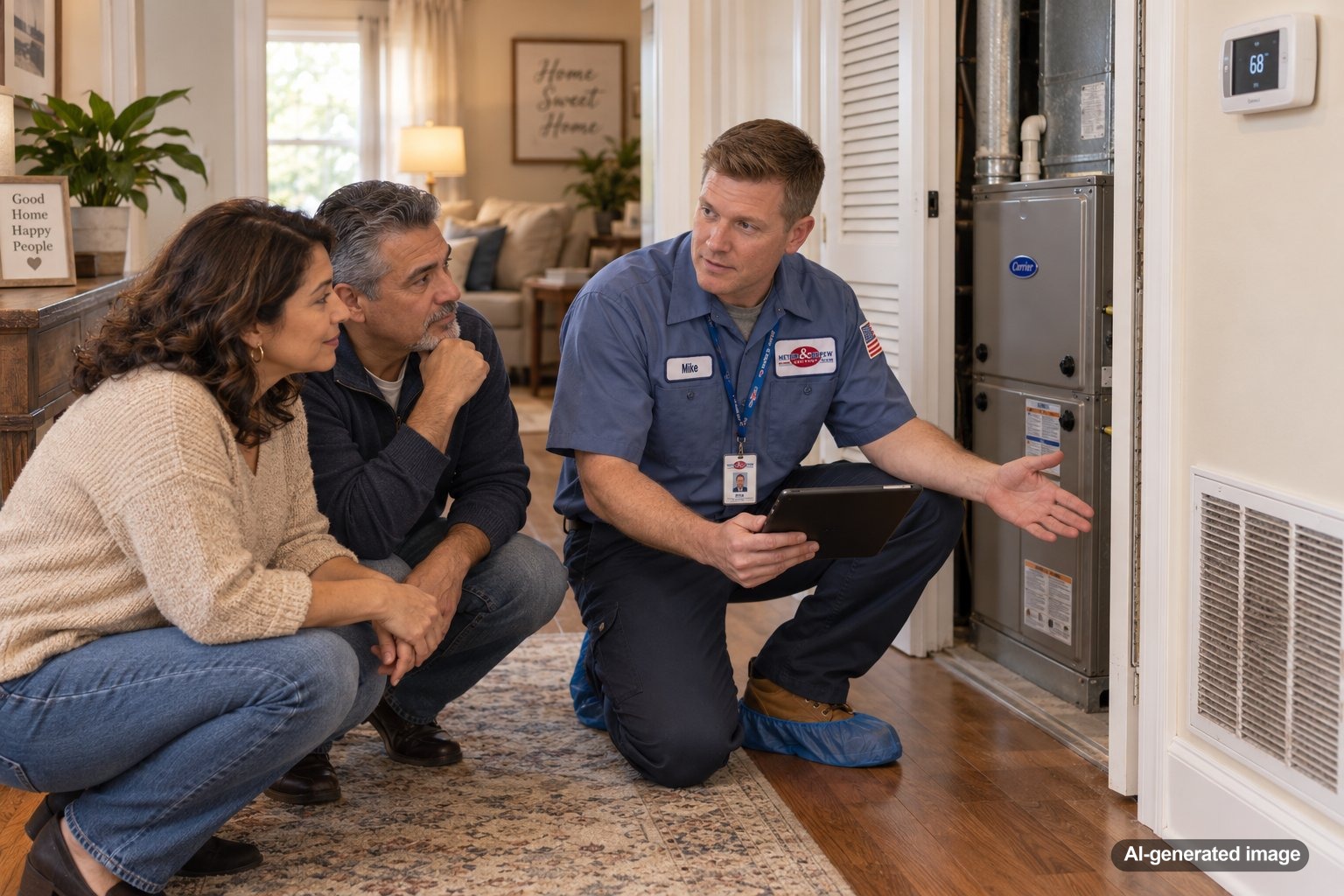
Yes. Dust that settles on furnace components during months of little or no heating use can create a temporary odor when the system starts running again. In many homes, the smell is most noticeable during the first few heating cycles of the season as accumulated dust warms on internal surfaces. A mild dusty or slightly burnt smell that fades relatively quickly can be normal. An odor that is strong, unusual, persistent, or accompanied by smoke, electrical smells, or a carbon monoxide concern should be treated differently.
For homeowners in Central and Northern New Jersey, this often happens during the first cool stretch of fall, when a furnace that has been mostly idle suddenly begins operating regularly. Seasonal heating service and maintenance can help identify buildup, airflow issues, and other conditions before winter demand increases.
Dust can collect on furnace components while the heating system is not being used. When those surfaces heat up, the dust may produce a temporary burnt-dust odor. A mild smell that disappears after the first few heating cycles is often less concerning than an odor that persists, becomes stronger, smells electrical or chemical, or is accompanied by smoke or other warning signs.
Why dust can create an odor when the furnace starts
A furnace does not remain perfectly dust-free during the warmer months. Small amounts of household dust can settle on accessible internal surfaces and nearby components while the heating system is idle. When the furnace begins operating again, those surfaces warm and the accumulated material can produce a noticeable smell.
The odor is often described as dusty, dry, or slightly burnt. It may be strongest near supply vents shortly after the first heating cycle begins because the HVAC system distributes heated air throughout the home. If dust accumulation is the main cause, the odor typically becomes less noticeable as the system continues to run and the residue is heated away.
This seasonal effect can be especially noticeable in homes where windows were open frequently during mild weather, renovation or cleaning projects created extra airborne dust, pets contribute more hair and dander, or the heating system went unused for an extended period.
How long should a normal burnt-dust smell last?
There is no universal number of minutes or heating cycles that applies to every furnace and home. The important factor is whether the odor is clearly diminishing rather than remaining equally strong or getting worse.
A brief dusty smell around the first operation of the season can be consistent with ordinary accumulation. If the odor continues through repeated operation, returns every time the furnace starts, spreads an unusually harsh smell through the house, or becomes more intense, it is worth having the system evaluated rather than assuming dust is responsible.
Persistent odors can have other causes, including an excessively dirty filter, debris in the air distribution system, an overheating component, an electrical issue, or another condition that requires professional inspection. A smell alone usually is not enough to diagnose the source with certainty.
Dust on components is not the same as every burning smell
The phrase “burning smell” covers several very different situations. A light dusty odor during the first seasonal heating cycle is not the same as the sharp smell of overheated wiring, melting plastic, smoke, or combustion problems.
Pay attention to the character of the odor and what else is happening. If you see smoke or sparks, notice a strong electrical or melting-plastic smell, suspect a gas leak, or have a carbon monoxide alarm, prioritize safety. Leave the affected area when appropriate and contact the utility, emergency services, or a qualified HVAC professional based on the situation. Do not open furnace panels or attempt to repair combustion or electrical components yourself.
Can a dirty furnace filter make the smell more noticeable?
It can contribute to the overall problem. A heavily loaded filter can restrict airflow, allowing the heating system to operate under conditions different from normal. It can also mean that more airborne dust has been circulating through the home than expected.
Homeowners can safely inspect the filter and replace it when appropriate for the filter type and system. The correct replacement should match the size and filtration requirements of the HVAC equipment. Using a filter that is excessively restrictive for the system can create airflow problems of its own.
If a clean filter does not improve a recurring odor, the cause may be somewhere else in the heating system and should not be guessed at from the smell alone.
Other reasons a furnace may smell when heating season begins
Dust is common, but it is not the only possible explanation. Several conditions can become noticeable when the furnace returns to regular operation after months of inactivity.
- Dust or debris near supply and return vents: Material around registers can produce or redistribute odors once airflow increases.
- A dirty air filter: A neglected filter may contribute to poor airflow and dusty conditions.
- Household odors in the duct system: Stored items, cleaning products, cooking odors, pet-related smells, or other household sources may become more noticeable when air begins circulating.
- Overheating or electrical problems: Sharp electrical, hot-plastic, or persistent burning odors should not be dismissed as seasonal dust.
- Combustion or venting concerns: Unusual exhaust-like odors or carbon monoxide concerns require prompt professional attention.
What homeowners can safely check
You do not need to open furnace panels or touch internal components to make a few useful observations. In fact, internal furnace cleaning and inspection should generally be left to a qualified technician because heating equipment can contain electrical, gas, combustion, and high-temperature components.
- Check that the thermostat is operating in the expected heating mode.
- Inspect the air filter and replace it if it is due for replacement.
- Make sure supply registers and return vents are open and not blocked by furniture, rugs, boxes, or other objects.
- Look around accessible vents for obvious household dust or debris.
- Notice whether the smell fades with operation, stays the same, or gets stronger.
- Schedule professional service if the odor continues or you are uncertain about its source.
Why preseason furnace maintenance can help
Heating maintenance is useful because the first cold night is not the ideal time to discover that a furnace has an airflow problem, dirty component, ignition issue, or other developing concern. A qualified technician can inspect the system under controlled conditions before it must handle longer heating cycles.
Maintenance cannot guarantee that a furnace will never develop a problem, but it can help uncover conditions that may otherwise go unnoticed while the system sits idle. Homeowners who prefer a more routine approach to seasonal care can also review available HVAC service plans.
When should you call an HVAC professional about a furnace odor?
Professional evaluation makes sense when the smell is persistent, keeps returning after the furnace has been operating, becomes stronger, or does not resemble a simple dusty odor. You should also seek help when the furnace is shutting down unexpectedly, airflow seems unusually weak, the system is making unfamiliar noises, or comfort problems appear at the same time.
More urgent action is appropriate for smoke, sparks, strong electrical or melting odors, suspected gas odors, or carbon monoxide concerns. Those situations should not be treated as routine seasonal dust. Follow appropriate safety procedures and contact the utility, emergency services, or a qualified professional as warranted.
Frequently asked questions about furnace odors and dust
Is a dusty smell normal the first time I turn on the heat?
A mild dusty or slightly burnt odor can occur when accumulated dust warms during the first heating cycles of the season. The key distinction is that the smell should generally become less noticeable rather than remain strong or worsen.
Should I turn the furnace off if I smell burning dust?
A faint, temporary dusty odor may occur during seasonal startup, but do not assume every burning smell is harmless. If the odor is strong, electrical, chemical, smoky, persistent, or accompanied by unusual system behavior, turn your attention to safety and arrange professional evaluation.
Can I clean dust off the inside of my furnace myself?
Homeowners should generally avoid opening furnace panels or cleaning internal combustion, electrical, or high-temperature components. Safe homeowner tasks are better limited to checking the filter, keeping vents unobstructed, and observing whether the odor changes.
Can dust in the ductwork cause heating odors?
Dust and household debris around vents or within accessible parts of the air distribution system can contribute to odors when airflow resumes. Persistent smells can also originate from other sources, so a professional inspection may be needed when the cause is not obvious.
Does a furnace odor mean the system needs to be replaced?
No. An odor by itself does not establish that a furnace needs replacement. The appropriate response depends on the odor, the condition and age of the equipment, its operating performance, and what a qualified inspection finds.
Dust on furnace components can create a temporary odor when heating season begins, especially after the system has been idle for months. A mild smell that fades is different from a persistent, electrical, smoky, chemical, or otherwise unusual odor. When the smell does not improve or you are unsure what you are smelling, professional evaluation is the safer next step.
Need help with your heating, cooling, or HVAC system?
Meyer & Depew serves homeowners and businesses throughout Central and Northern New Jersey.
Get a quote or call 908.272.2100.