

How Facility Managers Can Prepare HVAC Systems For Summer
Estimated reading time: 7 minutes
Summer can put real pressure on commercial HVAC systems, especially in Central and Northern New Jersey, where heat, humidity, storms, and changing occupancy patterns can all arrive in the same season. For facility managers, preparing before the heaviest cooling demand begins is not just about comfort. It is about keeping buildings usable, reducing avoidable disruptions, protecting equipment, and making better decisions before an emergency service call becomes the only option.
A strong summer HVAC plan starts with inspection, maintenance, airflow review, controls testing, and clear communication with the people who use the building. Meyer & Depew works with commercial properties, businesses, and organizations that need practical HVAC support without guesswork. If your building needs a more structured approach, a commercial HVAC maintenance plan can help keep seasonal service on schedule.
Facility managers should prepare HVAC systems for summer by scheduling professional maintenance, replacing or reviewing filters, checking airflow and thermostat settings, inspecting rooftop units, reviewing building schedules, and documenting comfort complaints before peak heat arrives.
Start With A Pre-Summer Commercial HVAC Inspection
A pre-summer inspection gives facility managers a clearer view of how the cooling system is likely to perform when demand rises. Commercial HVAC equipment often runs longer hours than residential systems, and small issues can become more noticeable once outdoor temperatures climb and indoor spaces stay occupied throughout the day.
A qualified technician can evaluate components such as coils, electrical connections, motors, belts, drains, refrigerant-related performance, controls, safeties, and overall system operation. This type of visit is not about promising that nothing will go wrong. It is about reducing preventable problems, catching developing concerns, and giving the facility team useful information before summer conditions expose weak points.
For buildings with multiple units, older equipment, rooftop systems, or varied tenant needs, the inspection should also help prioritize which equipment deserves closer attention. A unit serving a server room, medical office, busy retail area, or top-floor conference space may have a different risk profile than equipment serving a lightly used storage area.
Review Filters, Airflow, And Occupied Areas
Airflow is one of the simplest areas to overlook and one of the most important for summer performance. Dirty filters, blocked returns, closed dampers, obstructed supply vents, or poorly balanced zones can make cooling problems seem more complicated than they are. Restricted airflow can also make equipment work harder and may contribute to comfort complaints across the building.
Facility managers should confirm that filters are being changed on an appropriate schedule for the building’s use. A professional office with light foot traffic may not load filters the same way as a clinic, restaurant, school, workshop, or retail space near frequently opened exterior doors. Summer pollen, construction dust, and higher occupancy can also affect filter conditions.
- Confirm thermostats are set correctly for occupied and unoccupied hours.
- Make sure supply and return vents are open and not blocked by furniture, displays, boxes, or equipment.
- Check whether filters are visibly dirty or overdue for replacement.
- Look for obvious debris around outdoor or rooftop equipment from a safe, accessible location only.
- Document which rooms or zones are too warm, too humid, or inconsistent.
Pay Close Attention To Rooftop Units
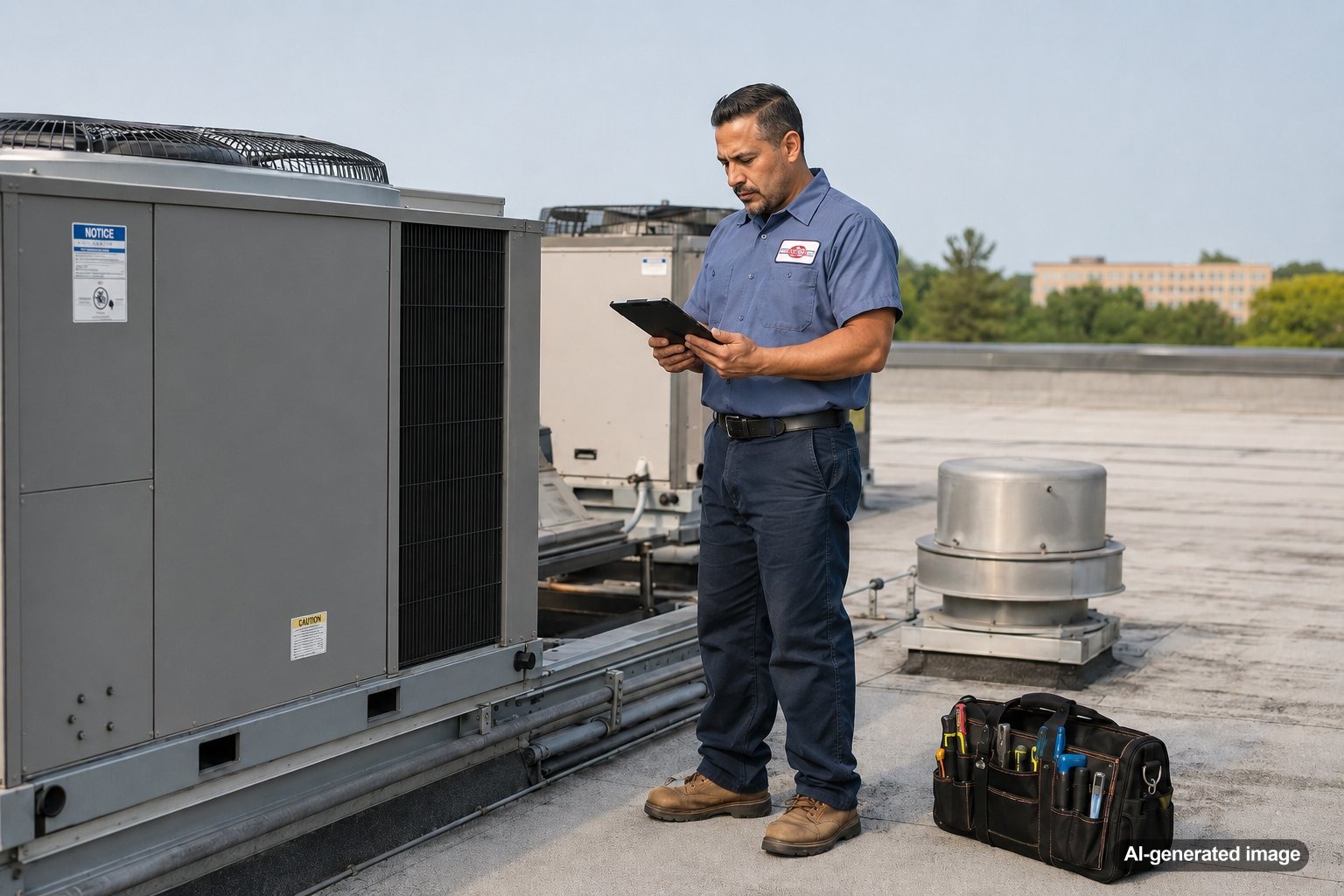
Many commercial buildings rely on rooftop units, and these systems face a demanding summer environment. Direct sun, roof surface temperatures, windblown debris, storm exposure, and limited visibility from the ground can make rooftop equipment easy to neglect until indoor comfort drops.
Before summer, rooftop units should be inspected by qualified professionals who can safely access and evaluate them. Facility managers should not open sealed panels, work around high-voltage components, adjust refrigerant systems, or bypass safety controls. Instead, the facility team can support the process by keeping roof access clear, reporting recurring issues, and making sure service history is available.
If a rooftop unit is aging, frequently needing service, or struggling to keep up, it may be time to discuss whether continued repairs or rooftop unit replacement makes more sense. That decision should consider reliability, tenant impact, equipment condition, repair frequency, building needs, and long-term operating priorities.
Test Controls, Thermostats, And Building Schedules
Cooling problems are not always caused by failed equipment. Sometimes the issue is a schedule that no longer matches how the building is used. Hybrid work, extended retail hours, weekend events, evening tenants, or summer programs can all change when cooling is needed.
Facility managers should review thermostat settings, building automation schedules, occupied and unoccupied modes, holiday overrides, and temperature setpoints before the first major stretch of heat. A building that starts cooling too late in the morning may feel uncomfortable for hours, especially on upper floors or in spaces with large windows. A system that overcools empty areas can waste operation time and still leave occupied areas uncomfortable.
It is also worth checking whether staff members or tenants are making frequent thermostat changes. Competing adjustments can create short cycling, uneven comfort, and confusion about what the system is actually doing. Clear setpoint policies and controlled access can help reduce unnecessary changes.
Prepare For Humidity, Not Just Temperature
New Jersey summers are not only hot. They can be humid, and humidity can make commercial spaces feel uncomfortable even when the thermostat looks reasonable. High indoor humidity may contribute to sticky conditions, musty odors, occupant complaints, and added strain on cooling equipment.
Humidity concerns may come from short equipment runtimes, oversized systems, ventilation issues, infiltration from frequently opened doors, drainage problems, or building envelope conditions. A qualified HVAC professional can evaluate whether the system is cooling and dehumidifying appropriately for the space. Facility managers should track patterns, such as humidity issues after storms, during peak occupancy, or in specific rooms.
Document Comfort Complaints Before They Become Emergencies
Facility managers often hear comfort complaints in fragments: one office is too warm, a conference room never cools down, a lobby feels humid, or a tenant says the system is louder than usual. Written notes can turn those complaints into useful diagnostic clues.
Track the location, time of day, weather conditions, thermostat reading, occupancy level, and whether the issue happens repeatedly. This information can help technicians narrow down possible causes and may reveal patterns that are not obvious from a single service visit. For example, a south-facing office may overheat in the afternoon, while a rooftop unit may struggle only during high outdoor temperatures.
Plan Around Occupants, Tenants, And Business Continuity
Commercial HVAC preparation is partly technical and partly operational. Facility managers should consider how service visits, filter access, roof access, noise, temporary shutdowns, and equipment replacement would affect the building. Planning service before peak summer demand can reduce disruption and give decision-makers more room to schedule around business needs.
For multi-tenant buildings, clear communication matters. Let tenants know when maintenance is scheduled, who to contact with comfort concerns, and what safe steps they can take, such as keeping vents clear and reporting unusual noises or water around equipment. Avoid asking occupants to reset equipment, open panels, or troubleshoot anything beyond basic thermostat awareness.
When To Call A Commercial HVAC Professional
Facility managers should call for professional service if cooling performance drops, equipment short cycles, breakers trip repeatedly, airflow changes suddenly, water appears around equipment, unusual odors develop, or occupants report persistent humidity or comfort issues. Electrical burning smells, smoke, sparks, refrigerant concerns, or unsafe conditions should be treated seriously, with safety as the first priority.
For commercial properties in Central and Northern New Jersey, Meyer & Depew provides commercial HVAC services for businesses, organizations, and facility teams that need dependable support before and during the cooling season.
FAQ: Summer HVAC Preparation For Facility Managers
How early should facility managers schedule summer HVAC maintenance?
It is usually best to schedule before peak summer heat, when possible. Pre-season service gives the facility team more time to address maintenance items, review equipment condition, and plan around building operations.
Do commercial HVAC filters need to be changed more often in summer?
They may, depending on building use, occupancy, outdoor air conditions, and the type of space. A facility with heavy traffic, dust, frequent door openings, or sensitive indoor air needs may require closer filter review.
What information should facility managers provide before a service visit?
Useful details include equipment location, recent complaints, operating schedules, known problem areas, past service history, and any changes in occupancy or building use. The more context a technician has, the more productive the visit can be.
Can preventive maintenance prevent every summer HVAC breakdown?
No. Maintenance can reduce the risk of avoidable problems and help identify developing issues, but no service visit can guarantee that equipment will not fail. It can, however, support better planning and more reliable operation.
Summer HVAC preparation is most effective when facility managers combine professional maintenance with practical building awareness. Filters, airflow, schedules, rooftop units, humidity, and occupant feedback all deserve attention before the hottest weeks arrive.
Need commercial HVAC support in New Jersey?
Meyer & Depew works with businesses, organizations, and commercial properties throughout Central and Northern New Jersey.
Learn more about commercial HVAC maintenance plans.