

Can a Furnace Filter Installed Backward Reduce Heating Performance?
Yes, a furnace filter installed backward can contribute to reduced heating performance, although the effect depends on the filter design, its condition, and the HVAC system. Most disposable filters are designed for air to move through them in one specific direction. Installing one backward may increase resistance, reduce effective filtration, or allow the filter material to deform as the blower pulls air through it.
For homeowners in Central and Northern New Jersey, this is a simple detail worth checking before heating demand increases. A backward filter is not the only possible cause of weak airflow or uneven heating, but correcting its orientation is an easy first step. If airflow problems continue, professional heating service and maintenance can help identify other restrictions or equipment issues.
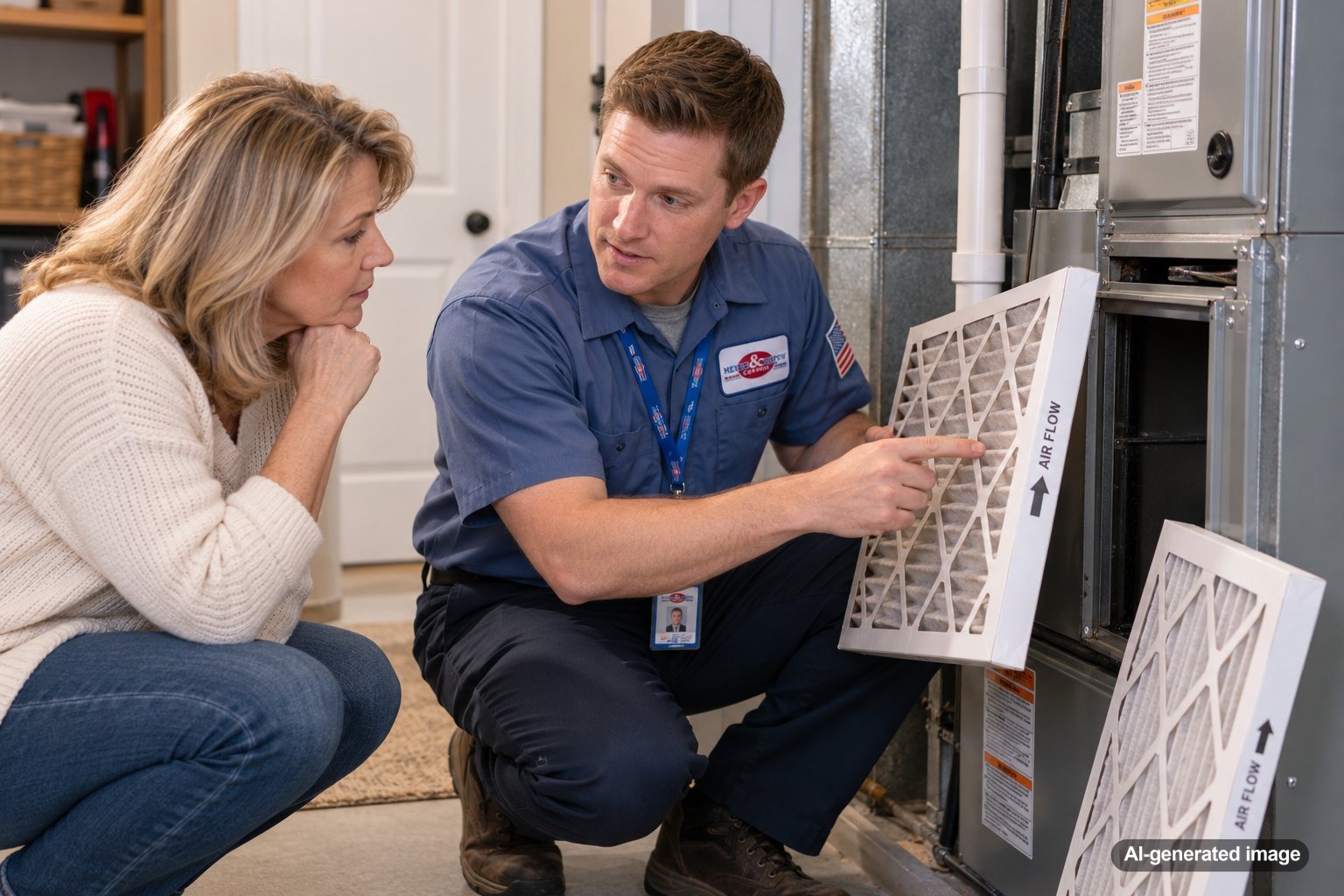
A furnace filter should normally be installed with its airflow arrow pointing toward the furnace or air handler and toward the blower. If it is backward, the filter may not perform as designed and could add unnecessary airflow resistance.
- Check the airflow arrow printed on the filter frame.
- The arrow generally points toward the furnace or air handler.
- A backward filter can sometimes restrict airflow or become distorted.
- A dirty filter may cause a much larger airflow problem than filter direction alone.
- If heating remains weak after correcting the filter, the system may need professional evaluation.
Why furnace filter direction matters
A typical forced-air heating system pulls return air from the home, moves it through the filter, heats it, and sends it back through the supply ductwork. The filter is positioned to capture dust and airborne debris before that material reaches important HVAC components.
Many pleated filters have a support grid on the downstream side. That support helps the filter media withstand the force of airflow as the blower operates. When the filter is reversed, the media may not have the support it was designed to receive.
The difference may be subtle with a clean, low-resistance filter, but filter orientation still matters because the product was engineered around a particular airflow direction.
How a backward filter can affect heating performance
The main concern is airflow. A furnace needs adequate airflow across its heat exchanger and through the duct system to deliver heat effectively. Anything that adds unnecessary resistance can potentially affect comfort and system operation.
A backward filter may contribute to several problems:
- Reduced airflow: Depending on the filter construction, reversing it can create more resistance than intended.
- Filter deformation: Unsupported filter media may bow or flex toward the blower, especially as the filter collects debris.
- Less effective filtration: Some filters use layered media designed to capture particles progressively as air moves through them.
- Uneven comfort: If airflow becomes restricted enough, rooms farther from the furnace may receive less heated air.
- Longer heating cycles: A system with inadequate airflow may need to operate longer to satisfy the thermostat, although many other HVAC problems can cause the same symptom.
It is important not to assume that reversing the filter automatically causes a major furnace problem. Filter type, filter loading, duct conditions, blower performance, equipment design, and other factors all influence airflow.
How to tell which direction the furnace filter should face
Look along the cardboard or plastic frame of the filter for an arrow labeled for airflow. That arrow indicates the direction air should travel through the filter.
In most residential systems, the arrow should point toward the furnace or air handler because return air is moving toward the equipment. If the filter sits in a return grille instead of directly beside the furnace, the arrow should point into the return duct.
Do not rely only on which side of the filter looks cleaner, denser, or more finished. The printed airflow arrow is the best guide.
A dirty filter is often more restrictive than a backward filter
Orientation matters, but filter condition is equally important. A filter that has accumulated substantial dust, pet hair, and debris can restrict return airflow even when it is installed correctly.
That restriction may show up as weaker airflow from supply registers, longer furnace operation, rooms that take longer to warm, or noticeable differences in comfort throughout the home. The furnace itself may also operate differently when airflow falls outside its intended range.
How quickly a filter becomes dirty varies considerably. Homes with pets, renovation dust, higher occupancy, frequent HVAC operation, or certain filter types may require more frequent inspection than other homes. Instead of relying on one replacement schedule for every household, inspect the filter periodically and follow the equipment and filter manufacturer’s recommendations.
Can a high-efficiency filter also reduce airflow?
Potentially. Filter performance is not determined only by whether it is facing the correct direction. The filter’s resistance to airflow also matters.
A thicker or more restrictive filter is not automatically appropriate for every furnace and duct system. Some HVAC systems are designed to accommodate higher-efficiency filtration, while others may experience excessive pressure drop if a restrictive filter is installed without considering system airflow.
If heating performance changed after switching to a different filter type, size, or efficiency level, mention that change when scheduling service. A qualified technician can evaluate airflow and determine whether the filter is appropriate for the equipment and duct system.
Safe checks homeowners can make
- Turn the system off at the thermostat before removing the filter if needed for safe access.
- Find the airflow arrow printed on the filter frame.
- Confirm that the arrow points toward the furnace, air handler, or return duct airflow direction.
- Make sure the filter is the correct physical size and fits properly in its slot.
- Inspect the filter for heavy dust buildup, sagging, damage, or deformation.
- Make sure supply registers and return grilles are open and not blocked by furniture, rugs, or stored items.
- Schedule professional service if weak airflow or poor heating continues.
Homeowners should not open sealed furnace compartments, alter blower components, bypass safety controls, or attempt electrical or combustion repairs to diagnose an airflow problem.
What if you have been running the furnace with the filter backward?
Finding a backward filter does not necessarily mean the furnace has been damaged. Correct the filter orientation and pay attention to how the system operates afterward.
If airflow improves and the furnace heats the home normally, the filter may have been contributing to the problem. If performance does not improve, the cause may be elsewhere in the system.
Possible contributors can include a heavily restricted filter, blocked return airflow, duct problems, blower issues, thermostat problems, or other heating system conditions. Those possibilities should be evaluated rather than diagnosed from one symptom alone.
When weak heating deserves professional attention
A correctly installed filter will not solve every heating problem. Consider scheduling professional service if the furnace continues to produce weak airflow, struggles to maintain the thermostat setting, heats rooms unevenly, cycles unusually, or behaves differently from normal.
A technician can evaluate the complete airflow path rather than focusing only on the filter. That may include checking the filter setup, blower operation, duct restrictions, temperature rise, controls, and other relevant system conditions.
Routine HVAC care can also help identify airflow problems before they become more disruptive. Homeowners interested in ongoing maintenance can learn more about Meyer & Depew’s service plans.
Frequently asked questions
Which way should the arrow on a furnace filter point?
The airflow arrow generally points toward the furnace or air handler. If the filter is installed in a return grille, it should point into the return duct in the direction the air is traveling.
Will a furnace still run with the filter installed backward?
Often it will, but that does not mean the filter is working as designed. Depending on the filter and system, reversed orientation may increase resistance, reduce filtration effectiveness, or allow the media to deform.
Can a backward furnace filter cause weak airflow from vents?
It can contribute to airflow restriction in some systems, but weak vent airflow can have many causes. A dirty filter, blocked returns, duct restrictions, blower problems, or other HVAC conditions may also be involved.
Should I replace a filter that was installed backward?
If the filter is still clean, undamaged, and structurally sound, correcting its orientation may be sufficient. Replace it if the media is dirty, damaged, bowed, or no longer fits securely.
What should I do if heating performance stays poor after fixing the filter?
Check that vents and returns are open and unobstructed, verify normal thermostat settings, and schedule professional service if the problem continues. Persistent airflow or heating problems can have causes that require system testing.
A furnace filter installed backward may reduce heating performance by interfering with airflow or filtration, but the severity varies by filter and HVAC system. Install the filter according to its airflow arrow, keep it reasonably clean, and investigate persistent comfort problems instead of assuming the filter is the only cause.
Need help with your heating, cooling, or HVAC system?
Meyer & Depew serves homeowners and businesses throughout Central and Northern New Jersey.
Get a quote or call 908.272.2100.