



How Furniture Placement Can Block Cooling Without You Realizing It
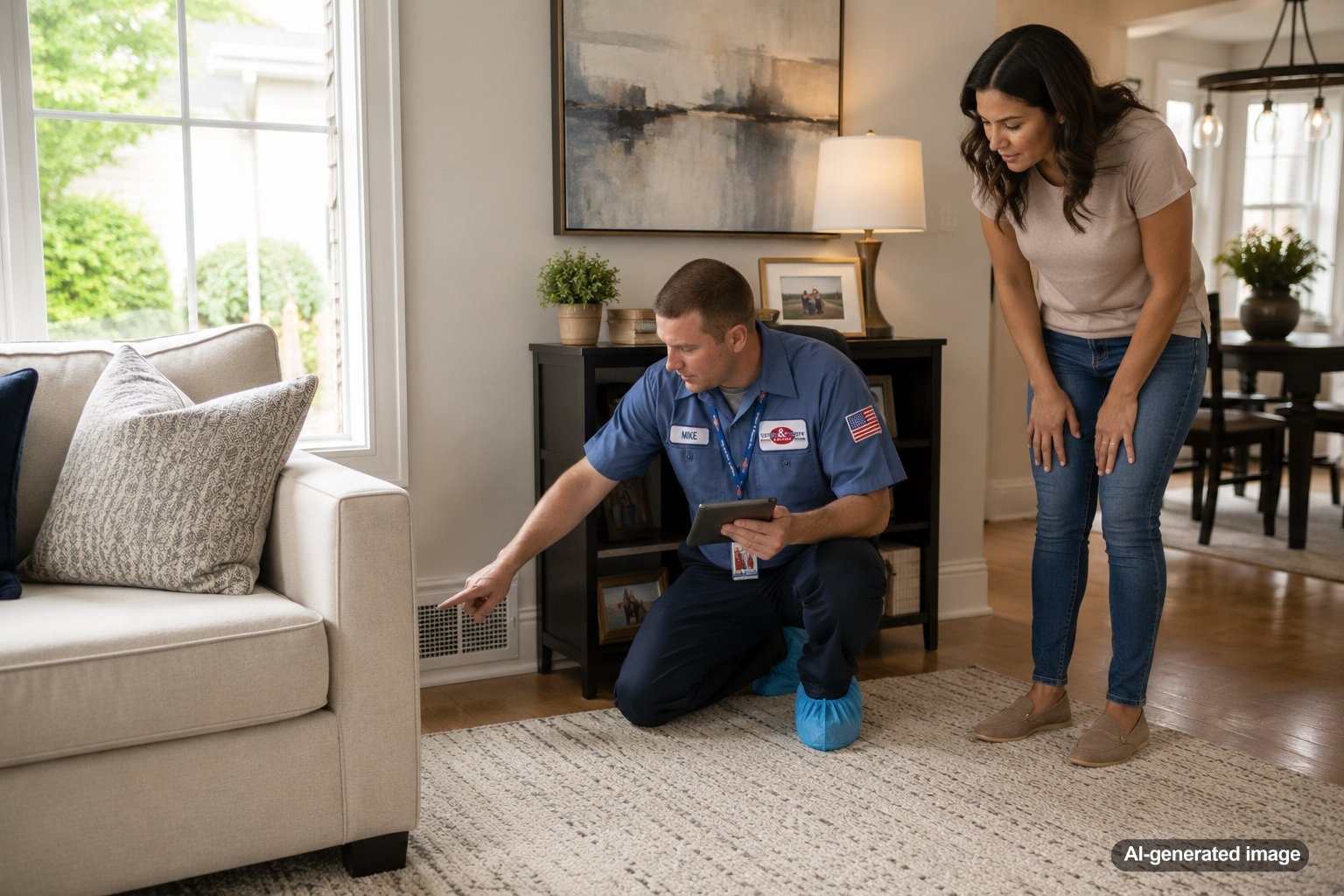
Your AC may be running normally while a sofa, bookcase, bed, or set of curtains quietly prevents cooled air from circulating through the room. Furniture placement can block supply vents, restrict return airflow, and create warm areas that make the entire house feel less comfortable. During a humid New Jersey summer, even a small airflow restriction can become noticeable when the cooling system is already working through long, hot afternoons.
Before assuming the equipment is failing, take a careful look at the room itself. Clearing blocked vents is one of the simplest safe checks a homeowner can make. If weak or uneven cooling continues afterward, Meyer & Depew’s AC service and maintenance team can evaluate the system and determine whether another airflow or equipment issue is involved.
- Furniture can redirect or trap cooled air before it reaches the occupied part of a room.
- Sofas, beds, cabinets, and rugs can partially or completely cover floor vents.
- Large furniture placed against a return grille can reduce airflow through the entire HVAC system.
- Curtains and upholstered pieces may absorb or deflect airflow even when they do not fully cover a vent.
- Moving furniture a modest distance away from vents may improve comfort, but persistent problems should be professionally evaluated.
Why blocked airflow affects more than one spot
A supply vent delivers conditioned air into a room. A return grille pulls room air back toward the HVAC system so it can be filtered, cooled, and circulated again. Both sides of that process need a reasonably clear path.
When a sofa sits directly over a floor register, the cooled air may collect beneath the furniture or blow into its underside. When a tall cabinet blocks a wall register, the air may be pushed sideways into a narrow gap rather than across the room. These situations do not always stop airflow completely, which is why the problem can go unnoticed.
A blocked return can have a broader effect. Restricting return airflow may reduce the amount of air moving through the system, contribute to weak airflow at multiple supply vents, and make rooms farther from the equipment feel especially uncomfortable. It can also resemble other issues, including a dirty filter, closed damper, duct restriction, or blower problem.
Furniture arrangements that commonly interfere with cooling
Sofas and sectionals over floor registers
Large upholstered furniture is one of the most common airflow obstacles. A sectional may cover a register completely, while a low sofa may leave only a small gap beneath it. The vent can appear technically open even though the air has nowhere useful to go.
Beds placed against wall vents
A headboard, mattress, storage bed, or pile of bedding can obstruct a low wall register. This is easy to miss in bedrooms where the bed placement is dictated by windows, doors, and closet access. The result may be a bedroom that stays warm at night even while nearby rooms cool normally.
Bookcases, dressers, and media consoles
Tall or deep furniture can block wall-mounted supply vents and return grilles. Even when the grille remains partly visible, the furniture may leave too little clearance for air to spread into the room or return freely to the system.
Area rugs over floor vents
A rug can slide just far enough to cover part of a register. Thick rug pads may create an additional restriction. Because the vent is hidden, homeowners may spend time adjusting the thermostat without realizing that the airflow path has changed.
Curtains that hang over registers
Long curtains can billow over a floor or wall vent when the system turns on. The fabric may trap cooled air near the window, redirect it behind furniture, or reduce the amount of air entering the room. This is especially relevant when a register is positioned beneath a window.
Signs furniture may be blocking your cooling
- One room feels warmer even though the thermostat setting is comfortable elsewhere.
- Airflow feels stronger after moving a chair, curtain, or rug.
- A sofa, bed, or cabinet feels unusually cool underneath or behind it.
- The AC seems to run for long periods while certain areas remain stuffy.
- A return grille makes a louder pulling or whistling sound when nearby furniture is moved.
- Temperatures improve when interior doors are open but worsen when rooms are closed.
These clues can point toward an airflow restriction, but they do not prove furniture is the only cause. Uneven cooling can also be associated with duct leakage, inadequate return paths, insulation differences, solar heat gain, thermostat location, equipment condition, or room additions that changed the home’s cooling needs.
Safe checks homeowners can make
- Make sure every supply and return vent is open and visible.
- Move furniture, baskets, rugs, and curtains away from registers and grilles.
- Leave enough open space for air to move into or out of the vent without immediately striking a solid surface.
- Inspect or replace the air filter if it appears dirty and the replacement is a safe homeowner task for your system.
- Confirm that the thermostat is set to cooling and the fan setting is appropriate.
- Compare airflow at similar vents without removing grilles or opening HVAC equipment.
After making adjustments, give the room time to respond. Furniture, walls, and flooring hold heat, so the temperature may not change immediately. Avoid closing multiple vents in other rooms to force more air toward the problem area. That approach can alter system airflow and may create additional comfort problems.
How to arrange furniture without sacrificing comfort
You do not necessarily need to redesign the entire room. In many cases, a small change can provide a clearer airflow path. Shift a sofa forward, move a side table away from a register, shorten curtains, or position a rug so the vent remains fully exposed.
Vent deflectors may be useful in certain simple layouts, such as directing air away from the underside of a sofa. They should not be treated as a solution for every room, particularly when airflow is already weak or the vent is almost completely enclosed. A qualified HVAC professional can help determine whether the room needs a better return path, duct adjustment, balancing, zoning, or another comfort solution.
Homes with recurring room-to-room temperature differences may also benefit from learning about zoning systems, which can provide more precise temperature control when the home’s layout and HVAC design support them.
When furniture is not the real problem
If all vents are clear but cooling remains weak, the restriction may be elsewhere. A dirty filter, blocked coil, blower issue, damaged duct, closed damper, or low system capacity could produce similar symptoms. Rooms above garages, finished attics, large west-facing windows, and home additions can also gain heat faster than other areas.
Schedule professional service when airflow is weak throughout the house, the system runs continuously without reaching the thermostat setting, ice appears on HVAC components, unusual noises develop, or comfort does not improve after basic safe checks. A technician can measure airflow, inspect accessible ductwork and equipment, and identify whether the issue is related to the system, the duct design, or the room layout.
Frequently asked questions
How much space should furniture have around an AC vent?
There is no single clearance that fits every vent and furniture style. The goal is to keep the grille fully open and provide enough unobstructed space for air to enter or leave the room. If air immediately strikes the underside or back of a large object, more clearance may be needed.
Can blocking one vent damage the AC?
One partially blocked supply vent may not cause an immediate equipment problem, but closing or obstructing multiple vents can reduce airflow and affect comfort. Because system designs vary, persistent airflow concerns should be evaluated rather than solved by repeatedly closing other registers.
Is it worse to block a supply vent or a return vent?
Both can create problems, but a blocked return may influence airflow across a larger portion of the system. Returns need a clear path to pull air back toward the HVAC equipment. Large furniture should not be placed directly against them.
Why is my room still warm after moving the furniture?
The room may need time to cool, or another issue may be contributing. Duct restrictions, insulation, window heat, equipment performance, and limited return airflow can all affect room temperature.
Can a professional improve airflow without replacing the AC?
Sometimes. Depending on the cause, service may involve correcting a maintenance issue, balancing airflow, addressing duct problems, improving return pathways, or considering zoning or ductless options. Replacement is not automatically required.
Furniture placement can quietly undermine cooling by covering vents, restricting returns, and trapping conditioned air where the room cannot benefit from it. Clear the airflow paths first. If the room still feels warm, the next step is a professional evaluation rather than more thermostat adjustments.
Need help with your heating, cooling, or HVAC system?
Meyer & Depew serves homeowners and businesses throughout Central and Northern New Jersey.
Get a quote or call 908.272.2100.