



How Much Clearance Does a Heat Pump Need Before Winter?
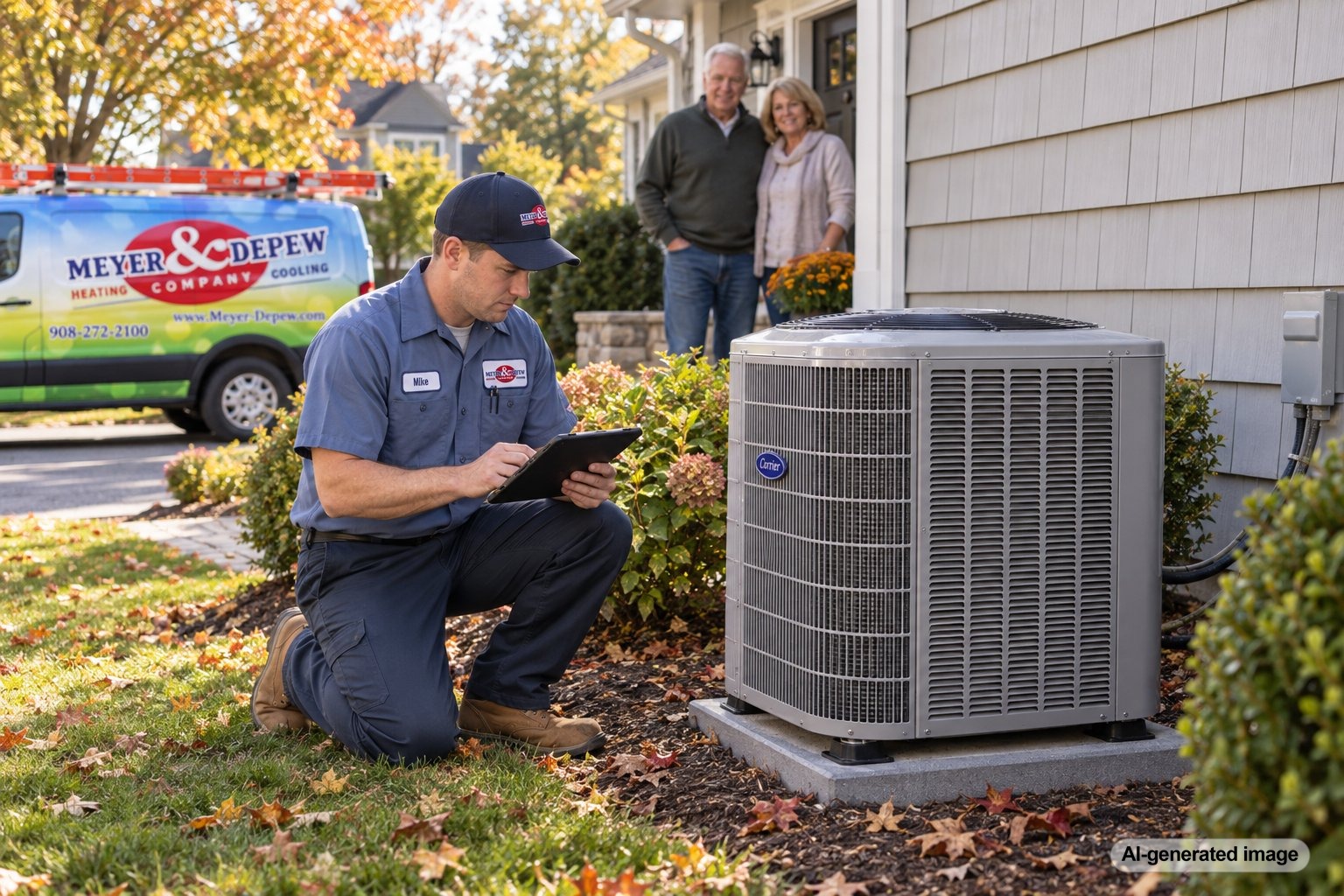
A heat pump needs enough open space around its outdoor unit to draw in air, release air, drain water, complete defrost cycles, and remain accessible for service. Before winter, many units should have roughly 18 to 24 inches of open space around their sides and several feet of unobstructed space above them. Those figures are general guidelines, however. The installation manual for your specific model and local requirements should always control.
Winter clearance deserves special attention in Central and Northern New Jersey because drifting snow, fallen leaves, ice, shrubs, and stored outdoor items can restrict a unit that appeared unobstructed during summer. A preseason inspection and appropriate heating service and maintenance can help identify airflow, drainage, or placement concerns before colder weather arrives.
- Follow the manufacturer’s minimum clearances for the exact heat pump model.
- As a general planning guideline, preserve about 18 to 24 inches around the sides unless the manufacturer requires more.
- Keep several feet of open space above the discharge area, commonly 4 to 6 feet for an upward-discharge unit.
- Maintain a clear service path and working area, often 24 to 36 inches near the access panel.
- Keep the base above expected snow accumulation without blocking drainage or airflow.
Why Heat Pump Clearance Matters More in Winter
An outdoor heat pump moves a large volume of air across its coil. If a fence, shrub, wall, snowbank, or pile of leaves crowds the cabinet, discharged air may circulate back through the unit instead of dispersing. This recirculation can reduce capacity and make the equipment work harder during cold weather.
Some frost on an outdoor coil can be normal in heating mode. The system periodically enters a defrost cycle to remove it, producing water that must drain away from the unit. Poor clearance can interfere with airflow, while poor drainage can allow water to freeze around the base. Ice near the cabinet is not automatically an equipment failure, but heavy buildup, a coil that remains encased in ice, or repeated performance problems should be evaluated professionally.
How Much Space Should Be Left Around the Sides?
A common guideline is approximately 18 to 24 inches between the heat pump and shrubs, outdoor furniture, stored items, or other obstructions. Certain sides may require more space, especially where the service panel is located. Units installed near walls, corners, decks, or multiple outdoor units can also have different clearance requirements.
Do not treat the general guideline as permission to move the equipment or modify nearby structures. The manufacturer’s installation instructions account for cabinet design, coil location, fan discharge, and service access. A qualified HVAC technician can confirm whether an existing installation meets the applicable requirements.
How Much Overhead Clearance Does a Heat Pump Need?
Upward-discharge heat pumps need open space above the fan so air can leave without striking a low deck, dense branch canopy, shelf, or other obstruction. Four to 6 feet is a commonly used general range, but the specific installation manual remains the authority.
A roof or purpose-built cover may sometimes help manage falling snow or ice, but an improvised cover can create a new airflow problem. Never wrap an operating heat pump in plastic or place a solid cover directly over it. Any protective structure should be designed for the equipment, keep the discharge path open, and satisfy the manufacturer’s requirements.
Plan for Snow Depth, Not Just Ground Clearance
The bottom of the heat pump should remain above the snow levels reasonably expected at its location. This is particularly important beside driveways, roof drip lines, and corners where wind or snow removal can create deep drifts. A unit that is technically elevated may still become blocked if shoveled snow is piled beside it.
The mounting base should be stable, level, and suitable for the equipment. Raising or relocating an existing outdoor unit involves refrigerant and electrical work and is not a homeowner project. If the unit appears too low for local winter conditions, arrange for a professional assessment before attempting changes.
Do Not Forget Service and Drainage Clearance
Airflow is only part of the calculation. A technician needs enough room to remove panels, use diagnostic equipment, and reach critical components safely. A narrow gap that barely satisfies an airflow minimum may still be inadequate on the service side.
Defrost water also needs somewhere to go. The area beneath and around the unit should not trap water against the foundation, create a recurring sheet of ice, or direct runoff onto a walkway. Drainage solutions must preserve airflow and should not obstruct the bottom of the cabinet.
Safe Checks to Complete Before Winter
- Remove loose leaves, grass clippings, and lightweight debris around the cabinet.
- Move planters, patio furniture, hoses, and stored items away from the unit.
- Trim shrubs while preserving the manufacturer’s required clearance on every side.
- Look above the unit for low branches, shelves, or other discharge obstructions.
- Check that roof runoff or a gutter does not repeatedly dump water onto the cabinet.
- Identify where shoveled or plowed snow will accumulate before the first storm.
- Inspect the air filter indoors and replace it if appropriate for your system.
Turn off power according to the manufacturer’s directions before working close enough to contact the cabinet, and avoid inserting tools or hands through the grille. Do not chip ice from the coil, pour hot water onto the unit, bend coil fins, or open equipment panels.
Clearance Problems That Need Professional Attention
Schedule service if the heat pump sits too close to a wall or fence, has been enclosed by a deck addition, is sinking or tilting, or appears too low for expected snow. Professional help is also appropriate when the fan is obstructed, the coil remains heavily iced, the unit makes unusual sounds, breakers trip repeatedly, or indoor heating performance declines.
A technician can compare the installation with the model’s published requirements and evaluate airflow, defrost operation, drainage, mounting, and service access. The appropriate solution might involve landscaping changes, drainage corrections, a properly designed protective structure, base improvements, or equipment relocation. Refrigerant lines, high-voltage wiring, and sealed components should only be handled by qualified professionals.
Frequently Asked Questions
Can shrubs protect a heat pump from winter wind?
Shrubs may reduce direct exposure, but dense or overgrown landscaping can restrict airflow. Keep plants trimmed to the equipment manufacturer’s required distance and preserve an open path for discharged air.
Should I cover my heat pump when it snows?
An operating heat pump should not be wrapped or covered in a way that blocks airflow. After a storm, gently clear loose snow around the cabinet while leaving the coil, fan, refrigerant lines, and electrical components undisturbed.
How close can a heat pump be to a fence?
The correct distance depends on the model, fence design, discharge direction, and service-panel location. A solid fence usually affects airflow more than an open one. Check the installation manual or ask a qualified technician to measure the available clearance.
Is frost on the outdoor unit normal?
A light layer of frost can occur in heating mode, and the heat pump should periodically defrost itself. Thick ice, ice that does not clear, or recurring loss of heat could indicate a drainage, airflow, control, or equipment problem that needs service.
Can I raise the heat pump myself before winter?
No. Raising the unit can place stress on refrigerant lines, wiring, and the mounting system. A qualified HVAC professional should determine whether elevation changes are needed and complete any equipment work safely.
Leave generous open space around and above the outdoor unit, protect its service access and drainage path, and plan for the deepest likely snow accumulation rather than today’s conditions. General measurements are useful for spotting potential concerns, but the heat pump manufacturer’s requirements determine the correct clearance.
Want to make HVAC maintenance easier to stay on top of?
A service plan can help keep routine heating and cooling maintenance on your calendar before small issues become bigger headaches.
You can also request a service appointment.