

How Long Should an AC System Last?
Estimated reading time: 6 minutes
Most central AC systems last about 10 to 15 years, but that range is not a promise or a deadline. Some systems continue cooling reasonably well beyond that point, while others start having expensive problems earlier because of heavy use, poor airflow, missed maintenance, installation issues, or the demands of New Jersey summers.
For homeowners in Central and Northern New Jersey, the better question is not only how old the system is. It is whether the system is still cooling reliably, controlling humidity, operating efficiently, and worth repairing. If your system is older and struggling, Meyer & Depew can help you compare AC service and maintenance with replacement options so you can make a practical decision.
A well-maintained central AC system commonly lasts around 10 to 15 years. Lifespan depends on how often it runs, whether it has received routine maintenance, how well it was installed, and whether the home has airflow or humidity issues that make the system work harder.
What affects how long an AC system lasts?
Age matters, but it is only one part of the picture. An air conditioner that has been serviced regularly, paired with a clean air filter, and sized properly for the home may have a much different lifespan than a system that has been neglected or forced to run through airflow restrictions for years.
New Jersey weather can also put real stress on cooling equipment. Long stretches of heat and humidity can make an AC system run for extended periods, especially in older homes with uneven insulation, leaky ductwork, large sun-facing windows, or rooms that are difficult to cool. The harder the system has to work, the more wear it may experience over time.
Installation quality is another major factor. A system that is incorrectly sized, poorly matched to the ductwork, or installed without proper airflow considerations may short cycle, run too long, cool unevenly, or fail to remove humidity as well as expected. Those problems can shorten useful service life and make the home less comfortable even before the equipment is considered old.
Signs your AC system may be nearing the end
An older AC system does not automatically need to be replaced. Still, certain patterns suggest it may be time to look more closely at repair costs, comfort performance, and long-term reliability.
- Frequent repairs: One repair may be reasonable. Repeated service calls in a short period can point to broader wear.
- Weak or uneven cooling: Rooms that stay warm, poor airflow, or long run times may indicate equipment, duct, or airflow problems.
- Rising energy use: If utility bills keep climbing without a clear change in usage, an aging or struggling system could be part of the reason.
- Humidity problems: An AC system should help remove moisture while cooling. A clammy home can signal performance or sizing issues.
- Short cycling: If the system turns on and off repeatedly, it may be under strain and should be evaluated by a qualified technician.
- Unusual noises or odors: Grinding, rattling, burning smells, or persistent musty odors should not be ignored.
Repair or replace: how to think through the decision
There is no single rule that works for every home. A newer system with one isolated issue may be a good candidate for repair. An older system with repeated breakdowns, comfort complaints, and higher operating costs may justify a replacement conversation.
Repair cost matters, but so does timing. A major repair on an older AC system right before another hot New Jersey summer may feel different than a minor repair on a system that has otherwise been dependable. Homeowners should also consider whether the current system still meets the comfort needs of the house. Finished basements, additions, changed occupancy, and renovated spaces can all affect cooling demand.
If replacement starts to make sense, it is worth reviewing system options carefully instead of rushing into the same size or setup by default. The right approach may include a new central AC system, ductwork improvements, zoning, or in certain homes, a ductless option for problem areas. Meyer & Depew offers AC installation and replacement support for homeowners who want to understand practical upgrade options.
How maintenance can help protect your AC system
Routine maintenance cannot prevent every breakdown, but it can reduce the risk of avoidable problems and help a technician catch small issues before they become more disruptive. During professional AC maintenance, a technician can evaluate system operation, inspect components, check airflow concerns, and look for signs of wear that a homeowner may not notice.
Homeowners also play a role. Replacing or inspecting the air filter, keeping supply and return vents open, and keeping obvious debris away from the outdoor unit can help the system breathe. Restricted airflow is one of the most common ways an AC system gets forced to work harder than it should.
For many households, a maintenance plan makes it easier to keep service on schedule. If you prefer a more organized approach, Meyer & Depew’s service plans can help keep routine HVAC care from slipping off the calendar.
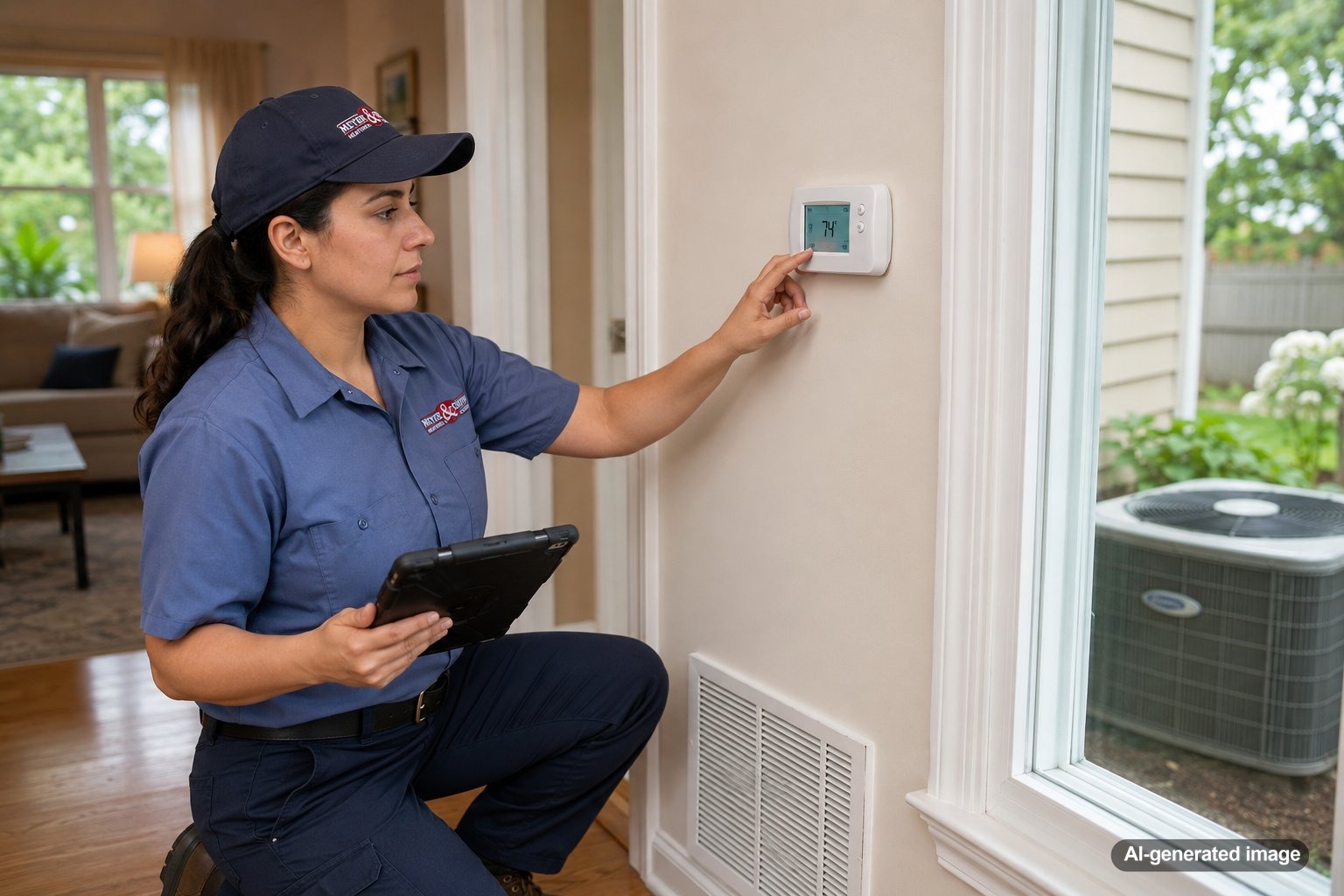
- Confirm the thermostat is set to cooling and the temperature setting is reasonable.
- Inspect or replace the air filter if it is dirty.
- Make sure supply and return vents are open and not blocked by furniture or rugs.
- Look for obvious leaves, grass, or debris around the outdoor unit.
- Check whether the breaker has tripped once, if it is safe to do so. If it trips again, schedule professional service.
When to call a professional
Call a qualified HVAC professional if your AC system is not cooling, runs constantly, cycles on and off repeatedly, leaks water around indoor equipment, makes unusual noises, or gives off burning or electrical odors. You should also schedule service if the system freezes up, because ice on the coil often points to airflow, refrigerant, or mechanical issues that should not be handled as a DIY repair.
Do not open sealed equipment, attempt refrigerant work, bypass safety switches, or modify electrical components. Those repairs can create safety risks and may damage the system. A qualified technician can evaluate the equipment, explain what is happening, and help you compare repair and replacement options without guesswork.
FAQ: AC system lifespan
Can an AC system last 20 years?
Some AC systems can continue operating for around 20 years, especially if they have been maintained well and are not heavily stressed. However, older equipment may become less reliable, less efficient, or more expensive to repair over time.
Should I replace my AC system just because it is 15 years old?
Not automatically. If the system cools well, has manageable repair needs, and still fits your comfort expectations, service may still be reasonable. Replacement becomes more worth considering when age is combined with repeated repairs, poor comfort, or rising operating costs.
Does maintenance really affect AC lifespan?
Maintenance can help. It does not guarantee a longer life or prevent every breakdown, but it may reduce strain, improve operating conditions, and help catch issues before they cause larger problems.
What shortens the life of an AC system?
Common factors include dirty filters, blocked airflow, missed maintenance, incorrect sizing, poor installation, duct problems, heavy summer use, and running the system with unresolved mechanical issues.
How do I know if my AC repair is worth it?
Consider the age of the system, the cost of the repair, how often it has needed service, and whether it still keeps your home comfortable. A technician can help you understand whether the issue appears isolated or part of a larger pattern.
An AC system often lasts 10 to 15 years, but its real useful life depends on comfort, reliability, maintenance history, repair costs, and how hard it has worked through New Jersey summers.
Thinking about replacing or upgrading your HVAC system?
Meyer & Depew can help you understand your options for comfort, efficiency, and long-term reliability in your New Jersey home or business.
Questions? Contact Meyer & Depew or call 908.272.2100.