

How Often Should Your AC Turn on and Off?
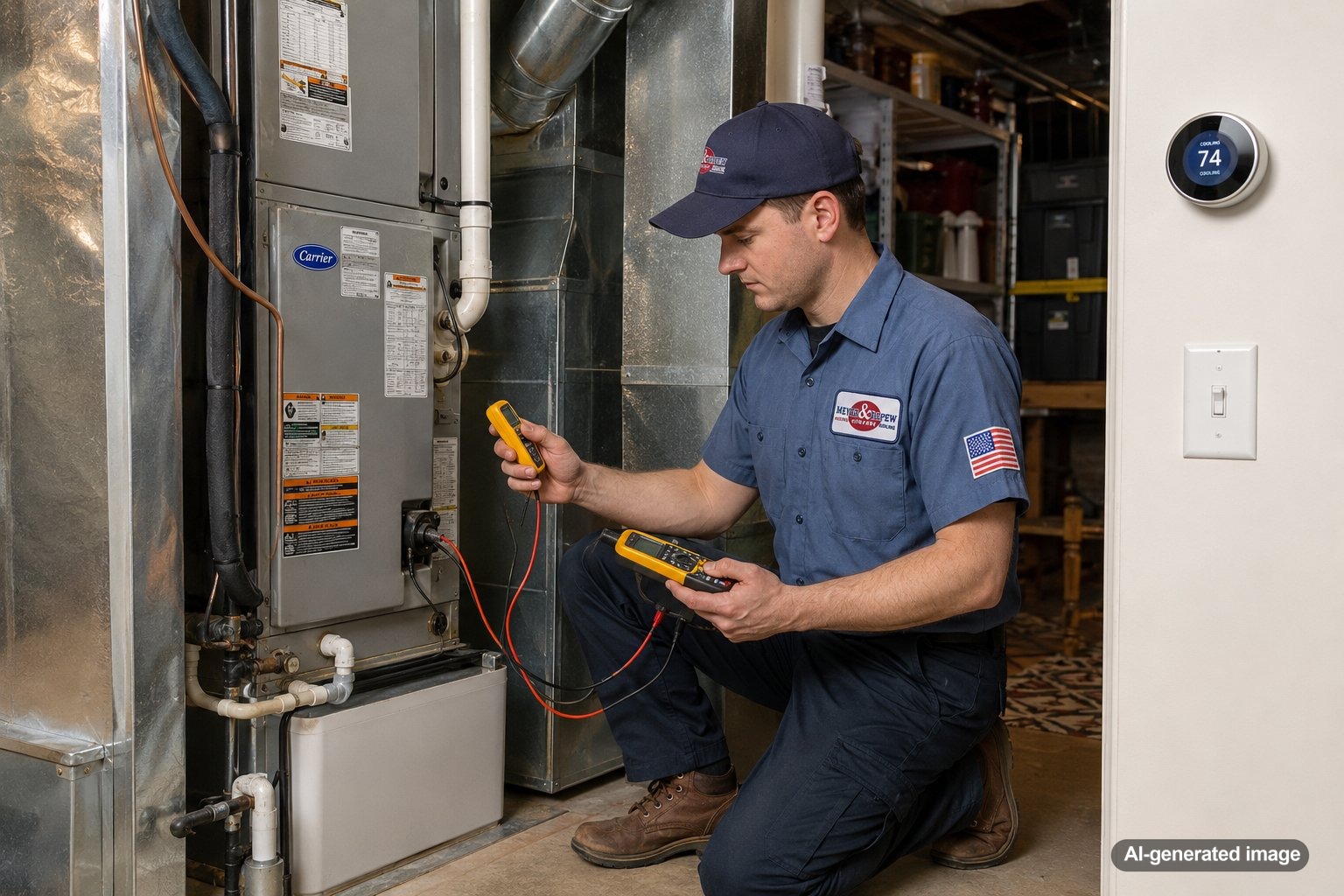
Your AC should turn on and off in steady cycles, not every few minutes and not so rarely that your home feels warm between runs. In many New Jersey homes, a normal cooling cycle often lasts around 10 to 20 minutes during mild to warm weather, with longer run times during heat waves, high humidity, or peak afternoon sun. The exact pattern depends on the size of your home, thermostat setting, insulation, ductwork, system age, and outdoor conditions.
If your air conditioner seems to be starting, stopping, and starting again constantly, it may be short cycling. If it runs almost nonstop and still cannot keep up, that can also point to a problem. Meyer & Depew helps homeowners throughout Central and Northern New Jersey evaluate cooling performance, airflow, controls, maintenance needs, and repair concerns through professional AC service and maintenance.
A healthy AC usually runs in regular cycles long enough to cool the home and remove humidity. Occasional longer cycles are normal on very hot or humid days, but frequent starts and stops every few minutes are not. If your system cycles rapidly, struggles to reach the thermostat setting, or leaves rooms sticky and uneven, it is worth having a qualified technician check it.
What Is A Normal AC Cycle?
An AC cycle is the period when your cooling system is actively running to lower indoor temperature and remove moisture from the air. Once the thermostat senses that the home has reached the set temperature, the system shuts off until cooling is needed again.
There is no single perfect number of cycles per hour for every home. A well-matched system in a reasonably insulated house may run a few cycles per hour during normal summer conditions. During a New Jersey heat wave, the same system may run longer because it is working against higher outdoor temperatures, stronger sun exposure, and heavier humidity.
The pattern matters more than the exact count. A system that runs for a reasonable stretch, shuts off for a while, and keeps the home comfortable is usually behaving more normally than one that runs for three minutes, stops, then repeats over and over.
Why Short Cycling Is A Concern
Short cycling means the AC turns on and off too frequently without completing a healthy cooling cycle. This can make the home less comfortable because the system may not run long enough to pull enough humidity from the indoor air. The air may feel cool for a moment, but rooms can still feel clammy or uneven.
Short cycling can also put extra wear on system components. Starting up is one of the more demanding parts of an AC cycle, so repeated starts can be harder on the equipment than longer, steadier operation. It may also increase energy use because the system keeps restarting instead of settling into a more efficient rhythm.
Common causes can include a dirty air filter, restricted airflow, thermostat placement issues, an oversized AC, refrigerant-related concerns, electrical control problems, or a system that needs professional maintenance. Some of these are simple to check safely, while others require trained HVAC service.
When Longer AC Run Times Are Normal
Longer run times are not always a bad sign. On hot, humid New Jersey afternoons, your AC may need to run longer to keep your home close to the thermostat setting. Homes with large west-facing windows, older insulation, leaky ductwork, or second-floor rooms that gain heat quickly may also need longer cooling cycles.
Longer operation can actually help with humidity control when the system is otherwise working properly. Since moisture removal happens while air passes over the indoor coil, a system that runs long enough can often make the home feel more comfortable than one that shuts off too quickly.
The concern is when the system runs constantly but never reaches the set temperature, airflow feels weak, ice appears on the system, the outdoor unit sounds unusual, or energy bills rise without a clear reason. Those signs point to a deeper issue that should be evaluated.
Common Reasons Your AC Turns On And Off Too Often
A clogged filter is one of the most common and simplest airflow problems. When airflow is restricted, the system may overwork, cool unevenly, or shut down before completing a proper cycle. Replacing or inspecting the air filter is a safe first step for most homeowners.
Thermostat location can also affect cycling. If the thermostat is near a supply vent, sunny window, kitchen, exterior door, or heat-producing electronics, it may sense temperature changes that do not reflect the rest of the home. That can cause the AC to start or stop at odd times.
System sizing matters as well. An oversized AC can cool the air quickly but shut off before removing enough humidity. An undersized or aging system may run too long and still struggle during summer heat. Duct issues, blocked returns, closed vents, dirty coils, and refrigerant problems can also affect the cycling pattern.
Safe Checks Before You Call For Service
- Make sure the thermostat is set to cooling mode and the temperature setting is reasonable.
- Inspect or replace the air filter if it looks dirty or has not been changed recently.
- Confirm that supply and return vents are open and not blocked by furniture, rugs, or curtains.
- Look for obvious leaves, grass clippings, or debris around the outdoor unit without opening the equipment.
- Check whether the breaker has tripped once, if it is safe to do so. If it trips again, stop and call a professional.
Do not open sealed HVAC equipment, handle refrigerant, bypass switches, or work on high-voltage components. If you notice smoke, sparks, a burning smell, flooding around electrical equipment, or any unsafe condition, prioritize safety and contact the appropriate emergency service or a qualified professional.
When To Schedule Professional AC Service
Schedule service if your AC turns on and off every few minutes, cannot hold the set temperature, makes new noises, blows weak air, leaves the home humid, or shows ice on the indoor or outdoor components. These symptoms can have several possible causes, and a qualified technician can evaluate the system safely.
Professional service can include checking airflow, controls, electrical components, refrigerant-related indicators, thermostat performance, coil condition, drainage, and overall system operation. Regular maintenance may also help reduce the risk of surprise breakdowns during peak cooling season, especially when paired with a consistent filter routine and smart thermostat use.
If cycling problems keep coming back, it may be time to look beyond a basic repair. Older systems, mismatched equipment, failing components, poor duct design, and oversized or undersized units can all affect comfort. In those cases, a technician can help you compare repair options with possible replacement considerations through AC installation and replacement guidance.
FAQ: AC Cycling Questions
Is it bad if my AC turns on and off every 5 minutes?
Frequent cycling every few minutes is usually not ideal. It may point to airflow restriction, thermostat issues, equipment sizing problems, or another service concern. If the pattern continues after basic safe checks, schedule professional service.
Should my AC run all day during a heat wave?
It may run much longer than usual during very hot or humid weather, especially in older homes or homes with high sun exposure. However, if it runs nonstop and still cannot cool the home, there may be an airflow, capacity, maintenance, or mechanical issue.
Can a dirty filter make my AC short cycle?
Yes, a dirty filter can restrict airflow and contribute to poor cooling performance or abnormal cycling. Filter replacement is one of the safest and most useful homeowner checks before calling for service.
Does short cycling mean I need a new AC?
Not always. Short cycling can be caused by maintenance issues, thermostat problems, airflow restrictions, or repairable component concerns. Replacement may be worth discussing if the system is older, incorrectly sized, unreliable, or expensive to keep repairing.
Your AC should run in steady, useful cooling cycles. A little variation is normal, but rapid starting and stopping, weak cooling, high humidity, or nonstop operation are signs worth taking seriously.
Need help with your heating, cooling, or HVAC system?
Meyer & Depew serves homeowners and businesses throughout Central and Northern New Jersey.
Get a quote or call 908.272.2100.