



Why Does My HVAC System Run in Short Bursts During Mild Fall Weather?
Estimated reading time: 8 minutes
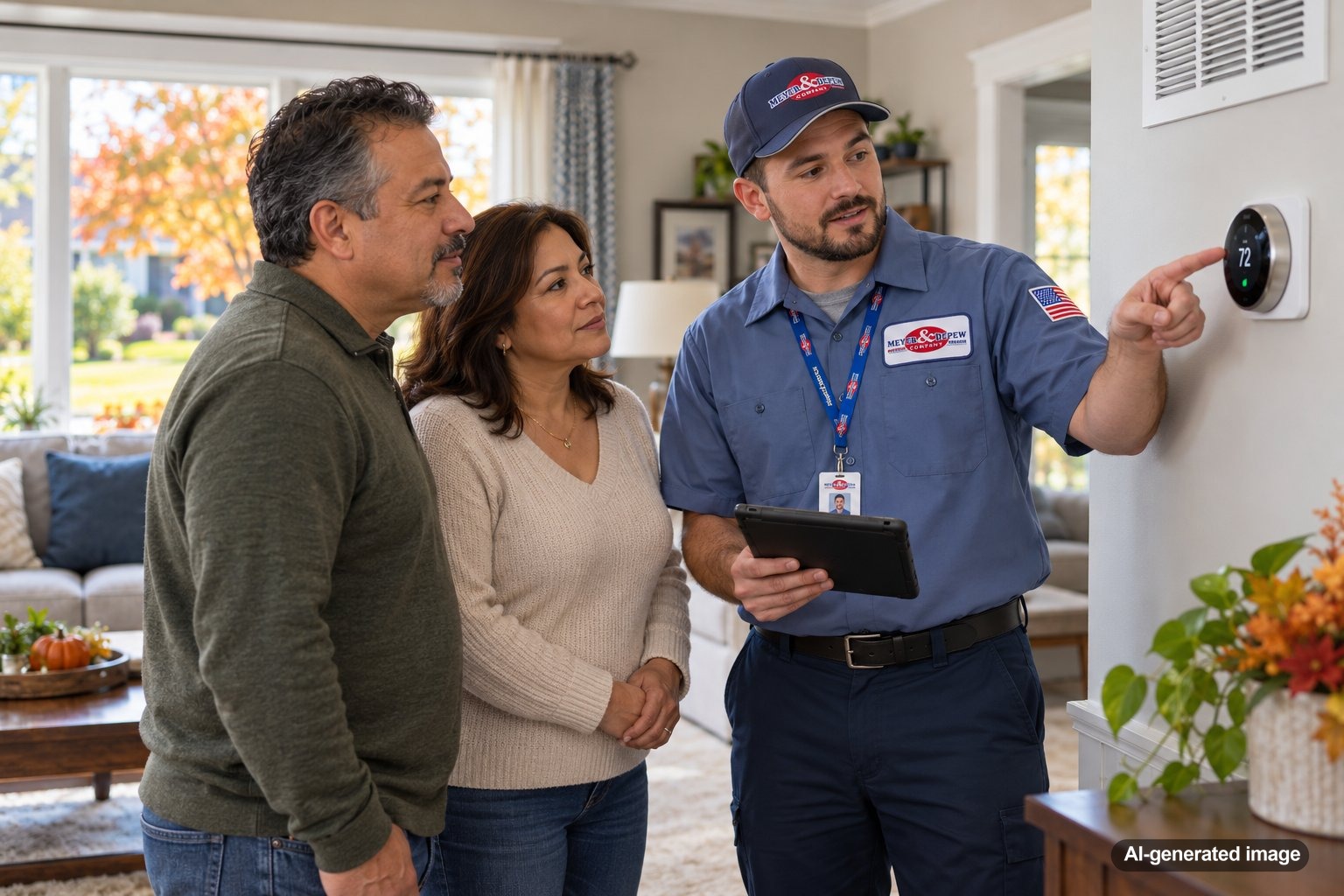
Your HVAC system may run in shorter bursts during mild fall weather because your home needs very little heating or cooling to reach the thermostat setting. In Central and Northern New Jersey, fall afternoons can be warm while mornings and evenings are much cooler, so the system may only need a brief cycle to correct a small temperature change. Short operation is not automatically a sign that something is wrong.
The important distinction is between an appropriately short cycle caused by a light heating or cooling load and repeated short cycling caused by a control, airflow, or equipment problem. If the system starts and stops unusually often, struggles to maintain comfort, or behaves differently from previous seasons, it may be worth having the system evaluated. Meyer & Depew’s AC service and maintenance resources can help homeowners understand when seasonal operation deserves professional attention.
Short HVAC bursts can be normal during mild fall weather when the indoor temperature is already close to the thermostat setting. Pay more attention to how frequently the system starts, whether your home stays comfortable, and whether other symptoms appear.
- Mild outdoor temperatures can create very small heating or cooling demands.
- Sunlight, cooking, appliances, and changing outdoor temperatures can trigger brief calls for heating or cooling.
- Thermostat settings and location can influence how frequently the system cycles.
- Restricted airflow or equipment problems can also cause unusually frequent starts and stops.
- Persistent rapid cycling should be evaluated by a qualified HVAC technician.
Why Mild Fall Weather Changes HVAC Run Times
An HVAC system generally runs until the thermostat senses that the desired temperature has been reached. During the peak of summer or winter, the temperature difference between indoors and outdoors can be large, so longer cycles are common. A mild October afternoon may create a much smaller temperature difference.
For example, if your home is already close to the thermostat setting, only a small amount of cooling may be needed after afternoon sun warms a room. Later that evening, the heating system might run briefly when the outdoor temperature drops. This back-and-forth seasonal pattern can make fall HVAC operation seem less predictable than operation during sustained hot or cold weather.
Short Runs Are Not Always the Same as Short Cycling
Homeowners often use the term “short cycling” whenever an HVAC system runs briefly, but the phrase is more useful when it describes a system that repeatedly starts and stops before completing what appears to be a normal operating cycle.
A few brief cycles on a mild day may simply reflect a low heating or cooling demand. A system that repeatedly turns on, shuts off after a very short period, and starts again soon afterward deserves closer attention, especially if indoor temperatures are uneven or the thermostat setting is not being maintained.
There is no single cycle length that proves a problem exists because equipment type, thermostat controls, home construction, outdoor conditions, and system sizing all affect operation. Changes from your system’s normal behavior are often more useful than watching the clock alone.
Common Reasons an HVAC System May Run in Short Bursts
The Indoor Temperature Is Already Near the Set Point
This is one of the simplest explanations during mild fall weather. If your thermostat is set to 70 degrees and the home is already very close to that temperature, the system may only need a small amount of heating or cooling before the thermostat is satisfied.
Sunlight Is Heating Certain Rooms
Large windows and direct afternoon sun can warm part of a home even when outdoor temperatures are comfortable. The thermostat may respond to this localized heat gain with a short cooling cycle. After sunset, that same heat gain disappears quickly.
Your Thermostat Is Reacting to Local Conditions
A thermostat measures conditions where it is installed, not the average temperature of every room. Sunlight, nearby supply vents, drafts, cooking activity, or other heat sources can influence what the thermostat senses. Smart thermostat settings can also affect how a system stages or responds to small temperature changes. Homeowners considering control options can review Meyer & Depew’s information about thermostats.
Airflow Is Restricted
A dirty filter, blocked return, closed supply vents, or another airflow restriction can affect system operation. In some cases, equipment protection controls may stop a system when operating conditions move outside the intended range. The cause should not be assumed without proper evaluation, but airflow is one of the safe areas homeowners can check before scheduling service.
The System May Have a Control or Equipment Issue
Repeated short cycling can sometimes be associated with thermostat problems, electrical controls, equipment sizing, overheating, or other HVAC faults. Refrigerant, electrical, combustion, and internal equipment issues should be diagnosed by a qualified professional rather than handled as a DIY repair.
Why Fall Can Make the Pattern More Noticeable
New Jersey fall weather can change considerably over the course of a day. A chilly morning may call for heat, afternoon sun can push indoor temperatures upward, and the evening can become cool again. A well-insulated home may hold its temperature for hours and then need only a small correction.
Open windows can add another variable. If windows are opened during a comfortable afternoon and closed later, the indoor temperature may move above or below the thermostat setting quickly enough to trigger a short cycle. Cooking, gatherings, fireplaces, and household appliances can also add temporary heat.
These factors help explain why a system that ran long, steady cycles during August may seem much more intermittent in September or October.
Safe Checks You Can Make Before Calling for Service
- Check the thermostat mode, temperature setting, and schedule.
- Inspect the air filter and replace it if it is due for replacement.
- Make sure supply vents are open and return grilles are not blocked by furniture or other objects.
- Notice whether direct sunlight, cooking, or open windows are affecting the thermostat area.
- Look for obvious leaves or debris restricting airflow around the outdoor unit.
- Write down how often the system starts and whether rooms remain comfortable.
These observations can help distinguish an occasional mild-weather cycle from a persistent operating problem. Avoid opening equipment panels, bypassing switches, adjusting electrical components, handling refrigerant, or making combustion-related adjustments yourself.
When Short Bursts Deserve Professional Attention
Consider scheduling HVAC service when the system repeatedly starts and stops in rapid succession, the pattern continues regardless of mild outdoor temperatures, or the behavior is noticeably different from previous operation.
Other signs that make professional evaluation more appropriate include poor temperature control, weak airflow, unusual noises, persistent humidity problems, unexpected shutdowns, or a breaker that continues to trip. A technician can evaluate thermostat operation, airflow, electrical controls, equipment condition, and other factors without guessing at the cause.
If you smell gas, notice smoke or sparks, detect an electrical burning odor, or have a carbon monoxide concern, prioritize safety. Leave the affected area when appropriate and contact the applicable emergency service, utility, or qualified professional rather than continuing to operate or troubleshoot the equipment.
Does a Short Cycle Mean the HVAC System Is Too Large?
Oversized equipment can sometimes contribute to shorter operating cycles because it may change the indoor temperature quickly. However, cycle length alone does not prove that a system is oversized. Thermostat behavior, airflow, outdoor conditions, equipment staging, insulation, and the home’s heating or cooling load can all influence run time.
If short cycling has been a persistent issue across multiple seasons, a qualified technician can look at the system as a whole instead of assuming equipment size is the only explanation.
Can a Smart Thermostat Cause Shorter HVAC Cycles?
Thermostat configuration can influence when equipment starts and stops. Smart thermostats may use scheduling, temperature thresholds, occupancy information, recovery strategies, or equipment-specific settings to manage comfort. That does not necessarily mean the thermostat is malfunctioning.
If frequent cycling began after a thermostat replacement or settings change, reviewing the thermostat configuration is a sensible first step. Avoid changing advanced equipment settings unless you understand how they apply to your HVAC system.
Frequently Asked Questions
Is it normal for my AC to turn on briefly during a cool fall day?
It can be. Afternoon sunlight, indoor heat sources, humidity, or a small temperature increase may create a brief cooling demand even when the outdoor air feels comfortable.
Why does my furnace run for only a few minutes in the fall?
If your home is already close to the thermostat setting, the furnace may only need a short run to satisfy a small heating demand. Repeated rapid starts and stops, poor comfort, or unusual system behavior should be checked professionally.
Should I change my thermostat settings when fall temperatures swing between warm and cool?
A consistent, comfortable setting is often easier for homeowners to manage than frequent manual changes. A thermostat schedule can also help if your household follows a predictable routine. The best setup depends on your equipment and comfort preferences.
Can a dirty filter cause short cycling?
A heavily restricted filter can reduce airflow and contribute to operating problems in some systems. Inspecting or replacing the filter is a safe homeowner check, but continued short cycling should be professionally diagnosed.
Should I turn off my HVAC system completely on mild days?
You can choose settings based on your comfort needs, but there is generally no need to shut the system down simply because run times are short. If indoor conditions are comfortable, the system may remain off naturally for long periods between calls for heating or cooling.
Short HVAC bursts during mild fall weather can be completely normal when your New Jersey home only needs small temperature corrections. The concern is persistent rapid cycling, especially when it comes with poor comfort, airflow problems, unusual sounds, or other changes in system behavior.
Need help with your heating, cooling, or HVAC system?
Meyer & Depew serves homeowners and businesses throughout Central and Northern New Jersey.
Get a quote or call 908.272.2100.