



Can a Multi-Zone Mini Split Maintain Different Bedroom Temperatures?
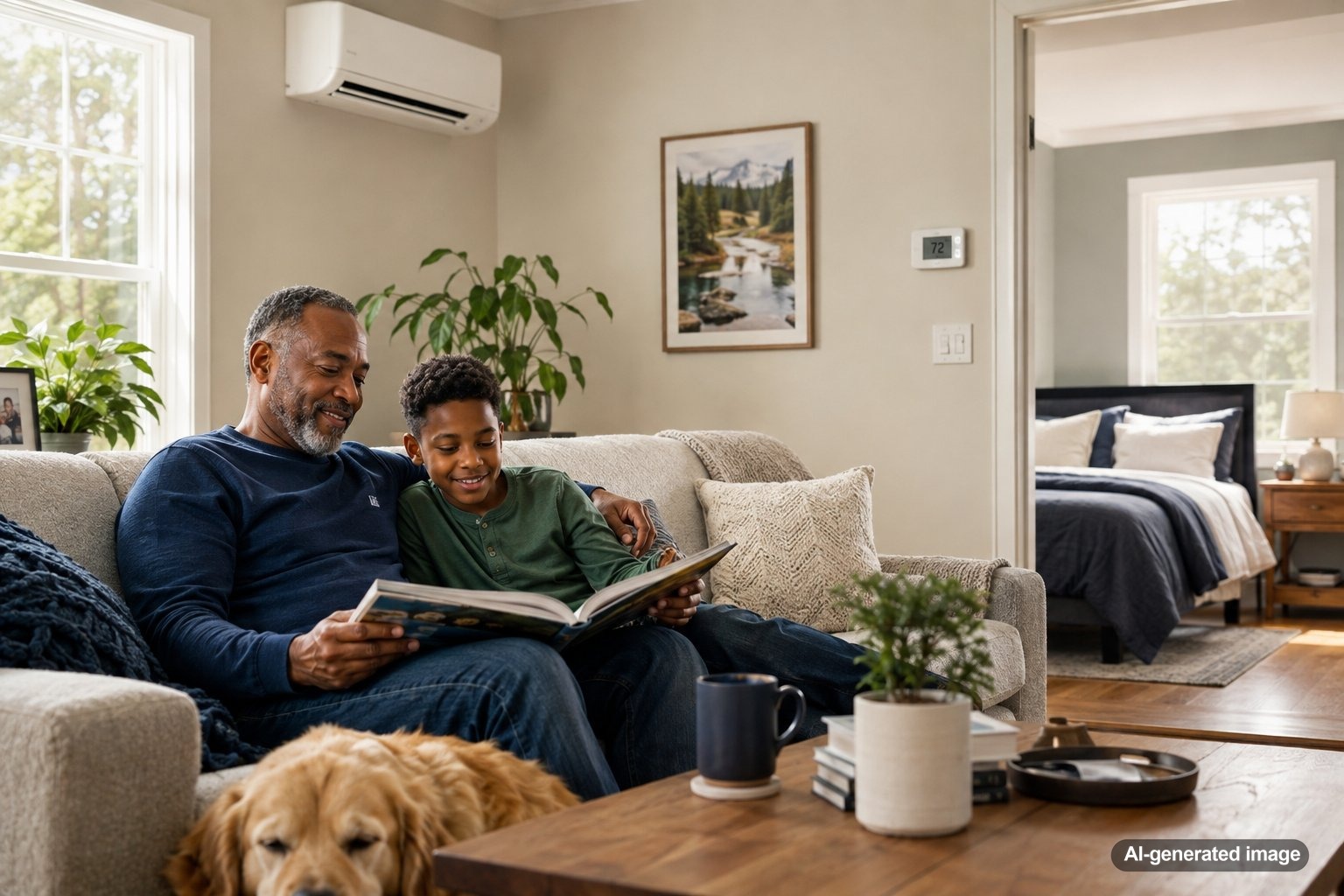
Yes, a properly designed multi-zone mini split can maintain different temperatures in separate bedrooms. Each indoor unit generally has its own temperature sensor, controls, and setpoint, allowing one person to keep a bedroom cooler while another prefers a warmer setting. However, independent control does not mean each room operates as if it had a completely separate HVAC system. The indoor units share an outdoor unit, and equipment sizing, room conditions, operating mode, airflow, and system limitations all influence how closely each bedroom reaches and maintains its selected temperature.
For homeowners in Central and Northern New Jersey, this flexibility can be especially useful in older homes without ductwork, additions, converted attics, and households where bedroom comfort preferences vary. A professionally selected ductless mini split system can provide targeted heating and cooling without forcing every bedroom to follow one central thermostat.
- Each bedroom needs its own indoor unit to function as a true individual zone.
- Occupants can select different temperatures for their respective rooms.
- Most multi-zone heat pump systems require connected indoor units to operate in the same general mode, such as heating or cooling.
- The outdoor unit’s available capacity is shared among all active bedrooms.
- Correct sizing and indoor-unit placement are essential for consistent comfort.
How Individual Bedroom Temperature Control Works
A multi-zone mini split connects several indoor air-handling units to one outdoor condenser or heat pump. Each indoor unit conditions the room or area where it is installed. A wall-mounted bedroom unit, for example, measures temperature near that unit and adjusts its output and fan operation in response to its local setting.
If one bedroom is set to 68 degrees and another is set to 72 degrees, the indoor units can modulate independently as their rooms approach those targets. The warmer bedroom may reduce its output or pause while the cooler bedroom continues running. Inverter-driven equipment makes this possible by varying capacity instead of relying only on full-output on-and-off cycles.
The important distinction is that a zone is tied to an indoor unit, not simply to a room name on a remote control. Two bedrooms served by one indoor unit are not independently controlled zones. Open doorways may allow some conditioned air to reach an adjacent bedroom, but that arrangement cannot reliably maintain two separate setpoints.
Why Different Setpoints Do Not Guarantee Exact Temperatures
The number selected on a remote or wall control is a target rather than a guarantee that every spot in the room will remain at that exact temperature. Several practical factors determine the actual result.
The Indoor Units Share Outdoor Capacity
All connected zones draw from the capacity of the same outdoor unit. When several bedrooms call for substantial heating or cooling at once, the system distributes its available output among them. A bedroom with strong afternoon sun, poor insulation, or a large exterior wall may need more capacity than a shaded interior bedroom.
Matching the outdoor unit to the combined and simultaneous loads matters. Simply adding the maximum ratings of every indoor unit does not tell the whole story because the rooms may not all require peak output at the same time. A qualified HVAC professional can calculate the heating and cooling load of each bedroom and evaluate how the zones are likely to operate together.
Connected Zones Usually Share an Operating Mode
Many multi-zone heat pump systems can heat different bedrooms to different setpoints or cool them to different setpoints, but they generally cannot heat one bedroom while actively cooling another at the same moment. If one occupant selects heating and another selects cooling, the system may prioritize one mode, place a unit on standby, or display a mode conflict, depending on the equipment and controls.
This limitation is most noticeable during mild spring and fall weather. A sunny upstairs bedroom may feel warm while a shaded bedroom remains cool. Setpoint adjustments, fan-only operation where appropriate, shades, and better air circulation may help, but equipment selection should account for households that frequently have opposing comfort demands.
Temperature Is Measured Near the Indoor Unit
A wall-mounted unit is often installed high on the wall, where air temperature may differ from the temperature near the bed. Warm air naturally rises, and furniture, curtains, ceiling slopes, or restricted airflow can create uneven conditions. Some control options use a remote sensor or compatible wall controller to measure temperature closer to the occupied area.
Indoor-unit placement should allow conditioned air to circulate across the room without blowing directly onto the bed. Placement above a tall wardrobe, behind a door, or where curtains block airflow can make temperature control less accurate and less comfortable.
Bedroom Doors and Air Leakage Affect Zone Separation
Bedrooms are not airtight compartments. Air moves under doors, through hallways, around attic access points, and through gaps in the building envelope. Leaving bedroom doors open allows temperatures to influence one another, while closed doors create more distinct zones. Poor insulation, leaky windows, and attic heat gain can also cause one room to drift farther from its setpoint.
System Sizing Matters in Both Directions
An undersized indoor unit may struggle to satisfy a bedroom during a New Jersey heat wave or cold snap. Oversizing can create a different set of problems. A unit that delivers more capacity than a small bedroom needs may reach its setpoint quickly, cycle or reduce output, and provide less consistent humidity control during cooling season.
The outdoor unit’s minimum operating capacity also deserves attention. During mild weather or when only one small bedroom calls for conditioning, the connected load may be lower than the outdoor unit can efficiently produce. Depending on the system, this can lead to cycling or minor temperature swings. Accurate room-by-room load calculations and equipment selection help reduce these mismatches.
Homeowners considering room-by-room comfort may also want to compare ductless equipment with conventional HVAC zoning systems. A ducted zoning system uses dampers to direct conditioned air, while a ductless system gives each equipped room its own indoor air handler. The better choice depends on existing ductwork, home layout, renovation plans, and comfort goals.
Practical Ways to Improve Bedroom Comfort
- Confirm that every indoor unit is set to a compatible operating mode.
- Check each setpoint, fan setting, and programmed schedule.
- Clean or inspect washable filters according to the equipment instructions.
- Make sure curtains, furniture, and doors are not blocking the indoor unit’s intake or discharge airflow.
- Note whether the problem occurs only when several zones run simultaneously.
- Compare conditions with bedroom doors open and closed to identify unwanted air transfer.
It also helps to avoid extreme setpoint differences. Setting one bedroom dramatically colder does not make that indoor unit cool faster, and it may increase the demand placed on the shared outdoor equipment. Moderate, stable settings generally allow the system to modulate more smoothly.
If a bedroom consistently misses its setpoint, record the time of day, outdoor weather, active zones, selected mode, and whether the door was open or closed. These observations can help a technician distinguish between a control issue, an airflow concern, a room-load problem, and a broader equipment-capacity limitation.
When Professional Evaluation Is Appropriate
Schedule professional service if a zone stops producing conditioned air, displays recurring error codes, makes unusual noises, leaks water, or remains noticeably warmer or cooler than its setpoint after basic checks. A technician can evaluate filters, coils, refrigerant distribution, sensors, controls, condensate drainage, and communication between the indoor and outdoor units without exposing occupants to electrical or refrigerant hazards.
Professional planning is especially important before installation. The contractor should consider each bedroom’s size, ceiling height, window area, sun exposure, insulation, exterior walls, typical occupancy, and door position. The evaluation should also consider how often multiple rooms will operate together and whether the household expects significantly different setpoints.
Frequently Asked Questions
Does every bedroom need its own indoor mini split unit?
Yes, if each bedroom needs dependable independent temperature control. One indoor unit may influence adjacent spaces when doors are open, but it cannot directly sense and regulate several closed bedrooms as separate zones.
Can one bedroom be turned off while the others keep running?
Usually, individual indoor units can be turned off while other connected zones operate. Some systems may still allow a small amount of refrigerant flow or residual temperature change in an inactive unit, so exact behavior depends on the equipment design.
Can one bedroom heat while another bedroom cools?
Most residential multi-zone mini split heat pumps cannot provide simultaneous heating and cooling from the same outdoor unit. They can maintain different setpoints when the active zones use the same general operating mode. Specialized equipment may work differently, so this capability should be confirmed before installation.
Why is one bedroom not reaching its selected temperature?
Possible reasons include an incorrect mode, blocked airflow, a dirty filter, poor indoor-unit placement, high room heat loss or heat gain, sensor location, insufficient shared capacity, or an equipment problem. A technician can evaluate the system without assuming one cause based on temperature alone.
Are multi-zone mini splits a good option for older New Jersey homes?
They can be a practical option when installing or extending ductwork would be difficult, but the home’s insulation, electrical capacity, layout, and room-by-room loads still need evaluation. The right design depends on the building rather than its age alone.
A multi-zone mini split can maintain different bedroom temperatures when each room has a correctly sized and well-placed indoor unit. The zones provide individual setpoints, but they still share outdoor capacity and commonly must operate in the same heating or cooling mode. Careful design is what turns separate controls into reliable room-by-room comfort.
Thinking about replacing or upgrading your HVAC system?
Meyer & Depew can help you understand your options for comfort, efficiency, and long-term reliability in your New Jersey home or business.
Questions? Contact Meyer & Depew or call 908.272.2100.