

How New Jersey Humidity Makes Your AC Work Harder
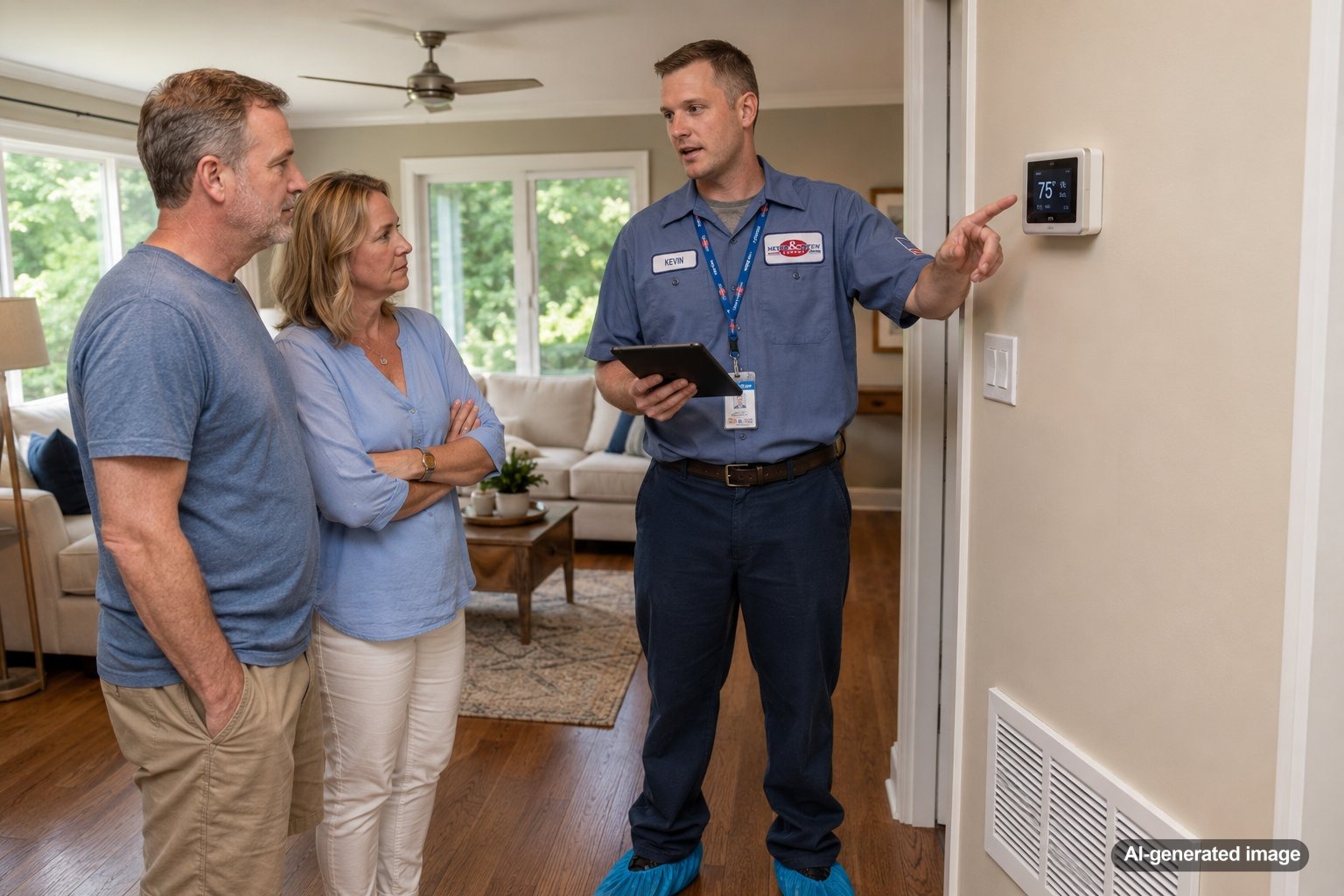
New Jersey humidity makes your AC work harder because the system must remove both heat and moisture from the indoor air. On a muggy summer day, lowering the thermostat temperature is only part of the job. Your air conditioner also has to pull water vapor from the air, and that added moisture load can lead to longer cooling cycles, higher energy use, and rooms that still feel uncomfortable even when the thermostat shows the expected temperature.
Homes throughout Central and Northern New Jersey can experience sticky indoor air during prolonged humid weather, especially when airflow is restricted, equipment is oversized or aging, or moisture is entering through basements, crawl spaces, open windows, and air leaks. Understanding the connection between humidity and cooling can help you recognize when normal summer operation may be turning into an AC performance problem. For ongoing cooling concerns, learn more about AC service and maintenance.
High humidity increases the amount of work your AC must perform before your home feels comfortable.
- Your AC must remove moisture as well as heat.
- Humid air can make normal temperatures feel warmer.
- The system may run longer to reach the thermostat setting.
- Restricted airflow or equipment problems can reduce moisture removal.
- Persistent indoor humidity may require professional evaluation.
Why Humid Air Feels Warmer
Your body cools itself partly through the evaporation of moisture from your skin. When the surrounding air already contains a high amount of water vapor, evaporation slows down. As a result, a room at 74 degrees may feel warmer and more uncomfortable on a humid day than it does when indoor moisture levels are moderate.
This can create a frustrating cycle. You may lower the thermostat because the house feels sticky, causing the AC to run longer even though the measured temperature is already fairly low. If the underlying humidity problem remains, additional cooling may provide limited relief while placing more demand on the system.
Your AC Is Removing Heat And Moisture
During a normal cooling cycle, warm indoor air passes over the cold evaporator coil. Heat transfers out of the air, and moisture condenses on the coil. That water drains away through the condensate system while the cooled, drier air returns to the living space.
When outdoor humidity is high, the system may need longer cycles to remove enough moisture for the home to feel comfortable. This latent moisture load is separate from the sensible heat load associated with lowering the air temperature. A properly operating AC handles both, but extreme humidity can expose weaknesses in airflow, drainage, equipment sizing, ductwork, and overall system condition.
How Humidity Increases AC Workload
Longer cooling cycles
The system may run for extended periods because it is continuously addressing heat entering the home and moisture carried by outdoor air. Longer cycles are not automatically a sign of failure during very hot, humid weather, but constant operation without adequate comfort deserves attention.
More heat enters when humid air leaks indoors
Gaps around windows, doors, attic access points, recessed fixtures, and duct penetrations can allow warm, damp air into the house. Exhaust fans, open doors, and leaky return ducts may also draw humid outdoor or attic air indoors. Your AC must then condition that incoming air in addition to handling the normal indoor cooling load.
Reduced comfort at the thermostat setting
A thermostat primarily responds to temperature unless it includes humidity sensing and control features. The displayed temperature may look normal while the home still feels clammy. Occupants may compensate by lowering the temperature, which increases runtime without necessarily addressing why moisture remains elevated.
More condensate to manage
Greater moisture removal means more water flowing through the condensate pan, drain line, and related components. A partially blocked drain or drainage problem may become more noticeable during humid weather. Water around indoor HVAC equipment should be evaluated promptly to help prevent property damage and equipment issues.
Why Some Homes Struggle More Than Others
Two homes on the same New Jersey street can respond very differently to humid weather. Building construction, equipment selection, maintenance history, and occupant habits all affect how effectively an AC system manages moisture.
- Oversized AC equipment: A system with more cooling capacity than the home needs may lower the temperature quickly and shut off before it has run long enough to remove sufficient moisture.
- Dirty air filters: A restricted filter can reduce airflow across the evaporator coil and interfere with normal cooling and moisture removal.
- Blocked supply or return vents: Closed registers, furniture, rugs, and stored items can limit circulation and contribute to uneven comfort.
- Duct leakage: Leaky ducts may lose conditioned air or pull humid air from attics, crawl spaces, garages, and wall cavities.
- Aging or poorly performing equipment: An AC system with worn components, low airflow, coil contamination, or another service issue may struggle under peak summer conditions.
- Basement and crawl-space moisture: Damp lower levels can add moisture to the entire home, particularly when air circulates between floors.
- Frequent outdoor air entry: Open windows, doors, and exhaust fans can introduce significant moisture during muggy weather.
Signs Humidity May Be Affecting Your Cooling
Humidity problems are not always obvious from the thermostat. Pay attention to how the house feels and how the cooling system operates.
- The home feels sticky or clammy even when the thermostat setting has been reached.
- The AC runs for long periods but comfort remains uneven.
- Some rooms feel noticeably more humid than others.
- Windows, vents, pipes, or other cool surfaces develop condensation.
- Musty odors become more noticeable during warm weather.
- The thermostat must be set unusually low for the house to feel comfortable.
- Water appears near the indoor AC equipment or condensate drain.
These symptoms can have several possible causes, so they should not be treated as proof of one specific failure. A qualified HVAC technician can evaluate temperature, humidity, airflow, refrigerant performance, equipment sizing, duct conditions, and drainage to identify contributing factors.
Safe Checks Homeowners Can Make
- Confirm the thermostat is set to cooling mode and the fan is set to Auto rather than On. Continuous fan operation can sometimes reintroduce moisture from a wet evaporator coil after the compressor stops.
- Inspect the air filter and replace it if it is dirty, using the correct filter type and size for the system.
- Make sure supply registers and return vents are open and not blocked by furniture, curtains, or stored items.
- Keep exterior doors and windows closed while the AC is operating during humid weather.
- Use kitchen and bathroom exhaust fans during moisture-producing activities, but turn them off when they are no longer needed.
- Look for visible water around the indoor unit without opening equipment panels or touching electrical components.
- Clear obvious leaves and debris from around the outdoor unit while maintaining safe clearance.
Avoid opening sealed equipment, adding refrigerant, adjusting electrical parts, bypassing safety controls, or attempting internal repairs. If you notice smoke, sparks, an electrical burning odor, or unsafe water contact with electrical equipment, turn away from the area and contact the appropriate emergency service or qualified professional.
Maintenance Can Support Better Humidity Control
Routine AC maintenance can help the system operate as designed during New Jersey’s most demanding summer conditions. A technician may inspect airflow, coils, condensate drainage, controls, electrical components, refrigerant performance, and other factors that affect cooling and moisture removal.
Maintenance cannot prevent every breakdown or correct every building-related moisture issue. However, it can identify developing problems and help reduce the likelihood that a dirty coil, restricted filter, drainage issue, or worn component will undermine comfort during humid weather. Homeowners who want a more consistent maintenance schedule can review Meyer & Depew’s service plans.
When Humidity Control May Require More Than AC Repair
Sometimes the cooling system is operating correctly, but the home still has a broader moisture problem. Air leakage, damp basements, crawl-space conditions, bathroom ventilation, duct leakage, and equipment sizing can all contribute. In these situations, simply lowering the thermostat or replacing one component may not address the full cause.
A whole-home comfort evaluation may include measurements of indoor humidity, supply and return temperatures, airflow, runtime, duct conditions, and moisture sources. Depending on the findings, options may include correcting airflow restrictions, repairing duct leakage, improving ventilation, adjusting controls, or considering dedicated humidity-control equipment. Meyer & Depew’s air quality and comfort services can help homeowners explore appropriate solutions without assuming every humid home needs the same equipment.
When To Call An HVAC Professional
Schedule professional service when your AC runs continuously without maintaining comfort, produces weak airflow, frequently turns on and off, leaves the home persistently clammy, or creates water around indoor equipment. You should also call if the system is making unusual noises, tripping the breaker repeatedly, freezing, or showing a sudden decline in performance.
Humidity complaints can involve overlapping issues, including airflow, equipment capacity, duct leakage, condensate drainage, insulation, and building moisture. A technician can take measurements and evaluate the system rather than relying on a single symptom or guess.
Frequently Asked Questions
Does running the AC lower indoor humidity?
Yes. A properly operating AC removes moisture as warm indoor air passes over the cold evaporator coil. The amount removed depends on system runtime, airflow, equipment condition, sizing, and the amount of moisture entering the home.
Why does my house feel humid even with the AC on?
Possible reasons include short cooling cycles, oversized equipment, restricted airflow, duct leakage, continuous fan operation, excessive outdoor air infiltration, damp basements or crawl spaces, and system performance problems. A professional assessment can help separate equipment issues from building-related moisture sources.
Should I set the thermostat lower when humidity is high?
A slightly lower setting may make the air feel cooler, but repeatedly lowering the thermostat is not a reliable solution for persistent humidity. It can increase runtime and energy use while leaving the underlying moisture source unresolved.
Can a dirty filter affect humidity removal?
It can. A heavily restricted filter may reduce airflow and interfere with normal AC performance. Check the filter regularly and replace it when needed according to the system and filter manufacturer’s guidance.
Is constant AC operation normal during humid weather?
Longer cycles can be normal during hot, humid conditions. Constant operation becomes more concerning when the system cannot maintain the temperature, airflow is weak, indoor conditions remain clammy, or performance has changed noticeably from previous summers.
New Jersey humidity adds a moisture-removal burden to your AC, which can lengthen cooling cycles and make your home feel warmer than the thermostat suggests. If basic airflow and thermostat checks do not improve comfort, professional testing can determine whether the cause involves maintenance, equipment performance, ductwork, sizing, or a broader moisture problem.
Need help with your heating, cooling, or HVAC system?
Meyer & Depew serves homeowners and businesses throughout Central and Northern New Jersey.
Get a quote or call 908.272.2100.