


Why Portable Fans Cannot Fix Whole-Home Cooling Problems
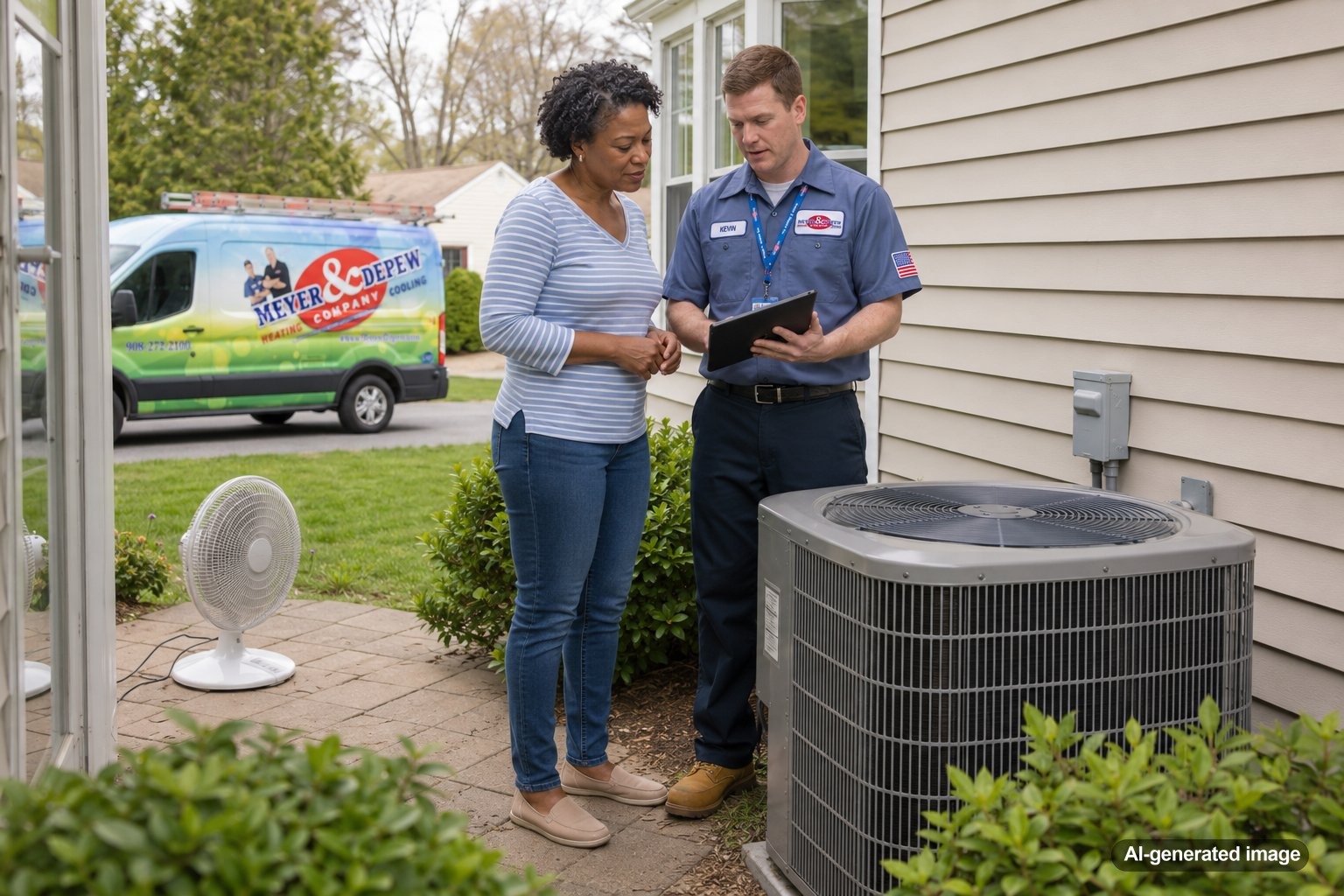
A portable fan can make one room feel a little more comfortable, but it cannot correct a whole-home cooling problem. When a home in Central and Northern New Jersey stays warm, sticky, or uneven even while the AC is running, the real issue is usually tied to airflow, humidity, ductwork, equipment performance, thermostat control, or system capacity.
Fans are useful for moving air across your skin, but they do not remove heat from the home, lower indoor humidity, or repair a struggling air conditioning system. If you are relying on fans in several rooms just to get through the day, it may be time to look beyond temporary relief and schedule professional AC service and maintenance.
Portable fans can help people feel cooler in the room where they are sitting, but they cannot fix the root causes of poor whole-home cooling. If the AC is not keeping up, rooms are uneven, humidity is high, or airflow feels weak, a qualified technician can evaluate the system and identify what is actually limiting comfort.
Fans Move Air, But They Do Not Remove Heat
The biggest limitation is simple: a fan does not cool the home. It creates air movement, which can help sweat evaporate and make a person feel cooler. The indoor air temperature may stay nearly the same, especially in rooms with direct sun, poor insulation, weak AC airflow, or closed-off returns.
An air conditioning system works differently. It pulls warm indoor air across the evaporator coil, removes heat, manages moisture, and sends conditioned air back through the home. When that process is disrupted, a fan can mask the discomfort for a little while, but it cannot restore the cooling cycle.
Whole-Home Cooling Problems Usually Have A Bigger Cause
When one bedroom is warm, the upstairs feels heavy, or the living room never reaches the thermostat setting, the issue is rarely solved by adding more fans. Many New Jersey homes have comfort challenges caused by older ductwork, attic heat, additions, sun exposure, humidity, aging equipment, or undersized returns.
Common reasons fans become a daily workaround include:
- Restricted airflow from a dirty air filter, blocked return, closed supply vent, or duct issue.
- An AC system that is short cycling, running constantly, or losing cooling capacity.
- High indoor humidity that makes rooms feel warmer than the thermostat suggests.
- Leaky, poorly balanced, or poorly insulated ductwork.
- A thermostat location that does not represent the temperature in the rooms where people spend the most time.
- A cooling system that may be too small, too large, aging, or no longer matched to the home’s needs.
Each of those situations requires a different solution. That is why guessing can lead to wasted energy, ongoing frustration, and rooms that never feel right.
Humidity Can Make Fans Feel Like A Weak Fix
New Jersey summers can bring a heavy mix of heat and moisture. When indoor humidity is high, the home can feel clammy even when the thermostat shows a reasonable number. A fan may create a breeze, but it will not remove moisture from the air.
If the AC is not dehumidifying well, possible causes may include short run times, airflow problems, equipment issues, duct leakage, or a mismatch between the system and the home. Indoor comfort may also improve when the home has better air balancing, ventilation, or humidity control. Meyer & Depew’s Air Quality & Comfort services can help homeowners think through these comfort factors instead of treating temperature alone.
Uneven Cooling Often Points To Airflow Or Control Issues
Portable fans are often placed in the rooms that never cool properly: upstairs bedrooms, finished basements, home offices over garages, sunrooms, additions, or rooms farthest from the air handler. These trouble spots can point to airflow problems, zoning limitations, duct design issues, insulation gaps, or thermostat control challenges.
For example, a second floor may gain heat faster than the first floor during the afternoon. A long duct run may not deliver enough conditioned air to a far bedroom. A home office with computers, large windows, or closed doors may heat up faster than the central thermostat can detect. In some homes, solutions such as duct adjustments, thermostat upgrades, zoning, or ductless systems may be worth discussing.
Safe Checks Before You Assume The AC Is Failing
There are a few basic checks homeowners can make before calling for service. These steps are safe, practical, and may help rule out simple airflow restrictions.
- Check that the thermostat is set to cooling and the temperature setting is reasonable.
- Inspect the air filter and replace it if it is dirty or overdue.
- Make sure supply vents and return grilles are open and not blocked by furniture, curtains, rugs, or boxes.
- Look for obvious leaves, weeds, or debris around the outdoor unit.
- Check whether a breaker has tripped once, if it is safe to do so.
If the problem continues, avoid opening sealed equipment, handling electrical components, adding refrigerant, bypassing controls, or trying to diagnose the system yourself. Those repairs should be handled by a qualified HVAC professional.
When Portable Fans Are A Sign You Should Schedule Service
A single fan used occasionally is not necessarily a concern. Multiple fans running every day, however, can be a sign that the cooling system is no longer keeping the home comfortable. Pay attention to patterns, especially if the AC runs for long periods, rooms stay uneven, humidity feels high, or energy use seems to climb without better comfort.
You should consider scheduling service if you notice weak airflow, warm air from the vents, frequent cycling, unusual noises, water around indoor equipment, ice on visible refrigerant lines, or a thermostat that never seems satisfied. For urgent electrical burning smells, smoke, sparks, flooding near equipment, or safety concerns, prioritize safety and contact the appropriate emergency service, utility, or qualified professional.
What A Technician Can Evaluate
A professional AC evaluation can look at the system as a whole instead of treating each warm room separately. Depending on the symptoms, a technician may check airflow, temperature split, filter condition, blower operation, refrigerant-related indicators, electrical components, condensate drainage, thermostat operation, duct performance, and overall equipment condition.
The goal is not just to make one room feel better for an hour. It is to understand why the home is not cooling evenly and whether maintenance, repair, duct improvements, thermostat changes, zoning, or replacement should be considered. For older systems or homes with long-term comfort issues, Meyer & Depew can also help homeowners compare repair needs with potential upgrade options through AC installation and replacement.
FAQ: Portable Fans And Home Cooling Problems
Can a portable fan lower the temperature in a room?
Not in the same way an AC system can. A fan moves air and may make people feel cooler, but it does not remove heat from the room or reduce indoor humidity.
Is it bad to use fans with air conditioning?
Using fans with AC can be reasonable when they are used for comfort and air movement. The concern is when fans become the only reason a home feels tolerable, because that may hide an AC, airflow, humidity, or ductwork issue.
Why does one room need a fan when the rest of the house feels fine?
One warm room can be caused by sun exposure, closed doors, blocked vents, duct design, insulation, room location, or equipment balance. A fan may help temporarily, but it does not explain or correct the uneven cooling.
Should I repair or replace my AC if fans are needed all summer?
That depends on the system age, condition, repair history, comfort problems, and how well the equipment is matched to the home. A qualified technician can evaluate whether service, repair, duct changes, controls, or replacement should be considered.
Portable fans are comfort helpers, not whole-home cooling solutions. If your home depends on them to stay livable, the better next step is to find out why the AC system is not delivering balanced, reliable comfort.
Need help with your heating, cooling, or HVAC system?
Meyer & Depew serves homeowners and businesses throughout Central and Northern New Jersey.
Get a quote or call 908.272.2100.