


How to Prepare Your AC Before the First Big Heat Wave
Estimated reading time: 6 minutes
The first stretch of serious summer heat has a way of exposing AC problems that were easy to miss in mild spring weather. A cooling system may seem fine on a 75-degree day, then struggle when New Jersey humidity rises, the sun heats the attic, and the system has to run for hours at a time.
Preparing your AC before the first big heat wave is less about doing complicated repairs and more about giving the system the best chance to operate safely and efficiently. A few simple homeowner checks, paired with professional maintenance when needed, can reduce the risk of weak airflow, short cycling, warm rooms, and last-minute service calls. For more complete cooling maintenance, Meyer & Depew offers AC service and maintenance for homes throughout Central and Northern New Jersey.
Before the first big heat wave, replace or inspect the air filter, clear debris around the outdoor unit, make sure vents and returns are open, test the thermostat, listen for unusual operation, and schedule service before the system is under heavy demand.
Start With The Air Filter
A dirty air filter is one of the simplest problems to find and one of the most common reasons an AC system struggles during hot weather. When airflow is restricted, the system has to work harder to move cooled air through the home. That can make rooms feel stuffy, reduce comfort, and contribute to longer run times.
Check the filter before the heat arrives, especially if the system has been running during pollen season or if you have pets, recent renovation dust, or high household traffic. Some filters need attention more often than others, so follow the filter type and equipment guidance rather than guessing. If the filter looks heavily loaded, replace it with the correct size and type.
Clear The Area Around The Outdoor Unit
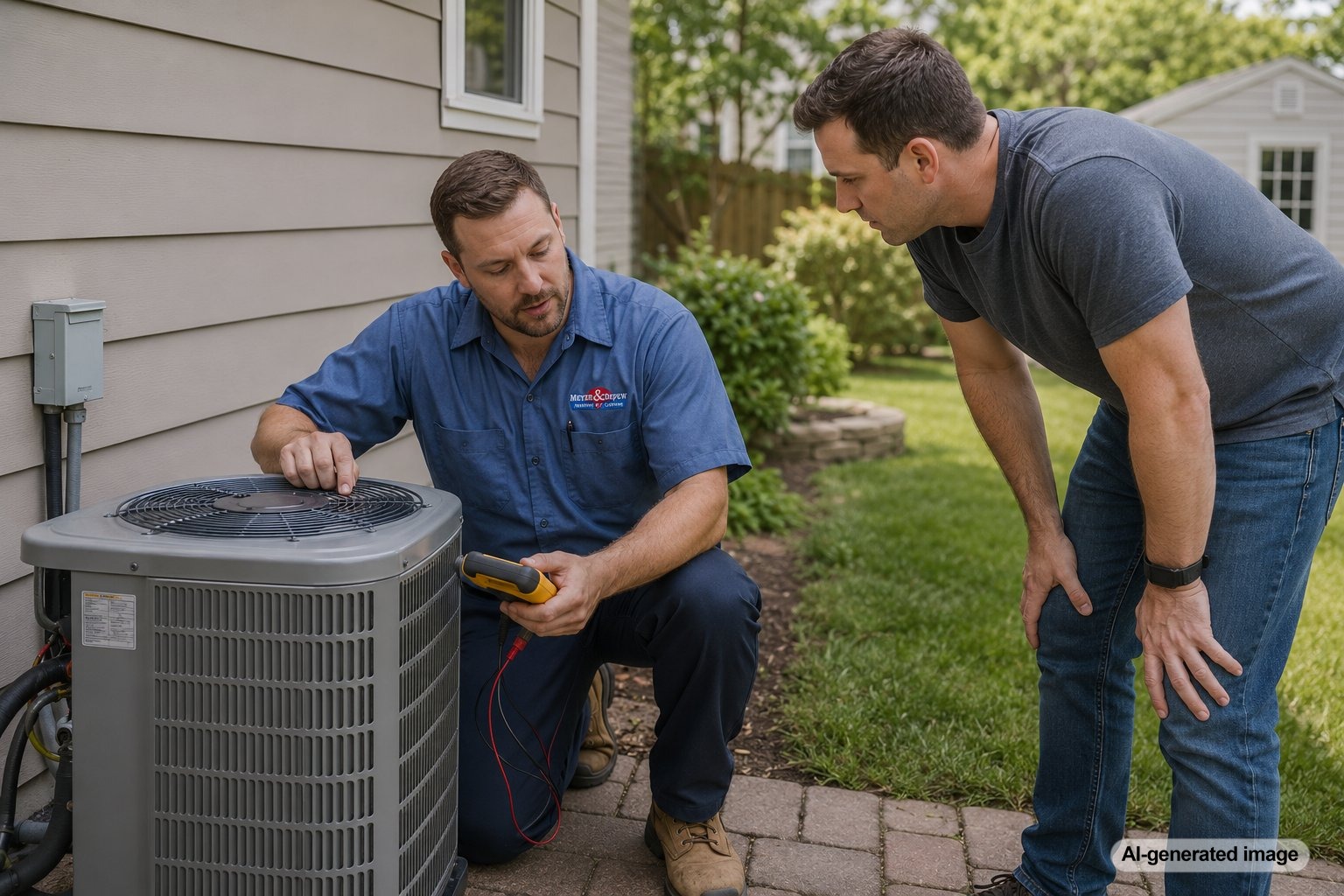
The outdoor AC unit needs room to release heat. Leaves, mulch, weeds, grass clippings, and stored items around the cabinet can restrict airflow and make cooling harder during a heat wave. Walk around the unit and look for obvious debris near the sides and top.
Keep the area open and avoid leaning tools, hoses, planters, or lawn furniture against the equipment. If you see bent panels, damaged wiring, unusual oil stains, or signs of animal activity, do not open the unit or try to repair internal components. Those are reasons to schedule a professional evaluation.
Check Supply Vents And Return Airflow
Heat waves often reveal rooms that are already on the edge of being uncomfortable. Before the weather turns extreme, make sure supply vents are open and not blocked by rugs, furniture, drapes, or storage boxes. Return grilles should also have a clear path so air can move back to the system.
In many New Jersey homes, comfort problems are made worse by older ductwork, finished attics, sun-facing rooms, additions, or rooms over garages. If one area of the home is always warmer than the rest, the issue may not be the thermostat alone. It could involve airflow balance, duct condition, insulation, zoning needs, or equipment performance.
Test The Thermostat Before The Heat Arrives
Do not wait for a 95-degree afternoon to find out the thermostat is set incorrectly or not communicating well with the system. Set the thermostat to cooling mode and lower the temperature a few degrees to confirm that the AC starts, runs, and delivers cool air from the vents.
If you use a programmable or smart thermostat, review the schedule. A setting that worked in spring may not match summer routines, especially if people are home during the day, bedrooms need more evening comfort, or a business has different occupancy patterns during warmer months. Meyer & Depew also offers options for thermostats when temperature control is part of the comfort issue.
Listen For Early Warning Signs
An AC system does not always fail all at once. It may give smaller warnings before a major heat wave: new rattling sounds, repeated starting and stopping, air that feels less cool than usual, water near the indoor equipment, or a system that runs constantly without reaching the set temperature.
These symptoms do not prove one specific failure, but they are worth taking seriously. Refrigerant issues, electrical problems, dirty coils, failing motors, drainage problems, and airflow restrictions should be evaluated by a qualified technician. Avoid opening sealed equipment, adding refrigerant, bypassing switches, or handling electrical components yourself.
- Confirm the thermostat is set to cooling mode and the desired temperature.
- Inspect or replace the air filter if it is dirty.
- Make sure supply and return vents are open and unblocked.
- Look for obvious debris around the outdoor unit.
- Check whether the breaker has tripped once, if it is safe to do so. If it trips again, stop and call for service.
Schedule Maintenance Before Everyone Else Needs Service
During the first major heat wave, service demand can rise quickly. Systems that were already dirty, low on performance, or near a failure point may start showing problems at the same time across many homes and businesses. Scheduling maintenance before that rush can make it easier to address concerns while the weather is still manageable.
Professional AC maintenance can include checks and adjustments that are not safe or practical for homeowners to perform. A technician can evaluate electrical components, refrigerant-related concerns, condensate drainage, coil condition, blower operation, and overall system performance. Maintenance cannot prevent every breakdown, but it may help identify issues before the system is under peak demand.
Think About Age, Performance, And Comfort History
If your AC has struggled through the last few summers, heat-wave preparation should include a bigger-picture look at performance. An older system that needs repeated repairs, cools unevenly, or runs constantly during humid weather may be approaching the point where replacement becomes part of the conversation.
That does not mean every issue calls for a new system. A qualified technician can help separate maintenance needs from repair concerns and long-term replacement factors. For homes where replacement is worth discussing, Meyer & Depew can help homeowners compare practical options through AC installation and replacement guidance.
FAQ: Preparing Your AC For Hot Weather
How early should I prepare my AC for a heat wave?
Ideally, check the basics and schedule maintenance before sustained hot weather arrives. Late spring or early summer is often a practical time in Central and Northern New Jersey.
Should I turn the thermostat way down to cool the house faster?
No. Setting the thermostat much lower than your target temperature usually does not cool the home faster. It may simply make the system run longer than necessary.
Is it normal for the AC to run more during a heat wave?
Yes, longer run times can be normal during extreme heat and humidity. However, if the system never reaches the set temperature, blows warm air, short cycles, leaks water, or makes unusual noises, it should be checked.
Can I hose off my outdoor AC unit?
Lightly clearing loose debris from around the unit is generally safe, but avoid using high pressure, opening panels, or forcing water into electrical areas. If the unit looks heavily clogged or damaged, schedule professional service.
What should I do if the AC stops working during dangerous heat?
Check safe basics such as thermostat settings, the filter, vents, and the breaker once if it is safe. If the problem continues, contact a qualified HVAC professional. For health or safety concerns during extreme heat, prioritize personal safety and seek a cooler location if needed.
The best time to prepare your AC is before the first big heat wave puts it under real stress. Clean airflow, clear outdoor equipment, smart thermostat settings, and timely service can make summer comfort less stressful.
Need help with your heating, cooling, or HVAC system?
Meyer & Depew serves homeowners and businesses throughout Central and Northern New Jersey.
Get a quote or call 908.272.2100.