

Should I Repair My AC Before the Next New Jersey Heat Wave?
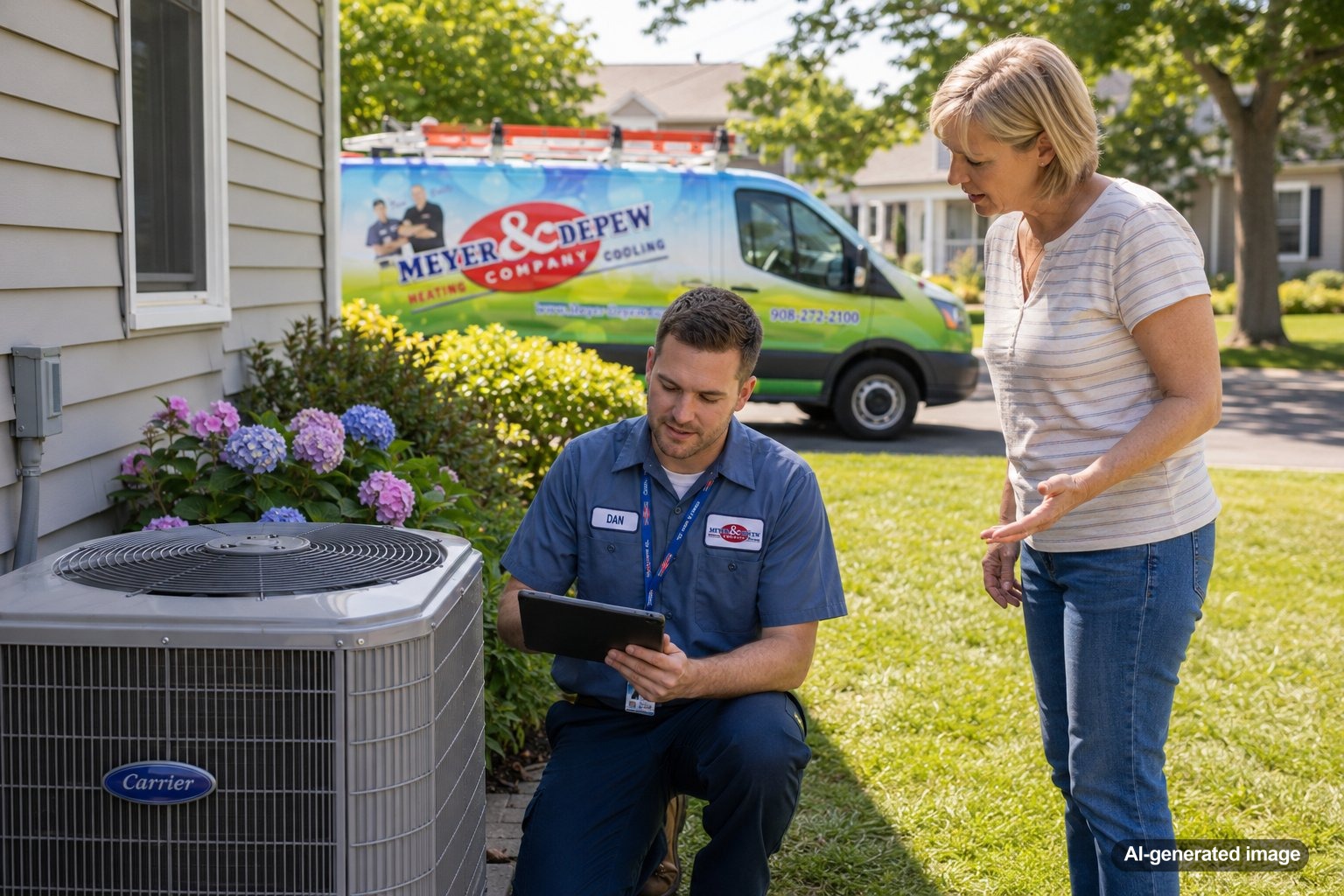
Yes, you should consider repairing your AC before the next New Jersey heat wave if it is already showing signs of weak cooling, unusual operation, or recurring trouble. An air conditioner that performs adequately on a mild afternoon may struggle once outdoor temperatures remain high for hours. Addressing a developing problem early can reduce the risk of losing cooling when your system is under its heaviest seasonal workload.
You do not need to replace every system that makes a strange sound or runs longer on a hot day. The better approach is to identify meaningful warning signs, complete a few safe checks, and arrange professional AC service and maintenance when the problem persists.
Schedule an AC evaluation before a heat wave if your system is cooling unevenly, blowing warm air, cycling abnormally, leaking water, making new noises, producing unusual odors, or causing unexplained increases in electricity use.
- Minor airflow restrictions may sometimes be corrected with a clean filter or unblocked vent.
- Persistent cooling problems may involve components that require professional testing.
- Repeated repairs on an aging system may justify comparing repair and replacement options.
- Do not wait for complete cooling failure if warning signs are already present.
Why AC problems often become worse during a heat wave
Heat waves do not necessarily create every AC problem, but they can expose weaknesses that were less noticeable during moderate weather. Your cooling system must run longer to remove heat from the home, and New Jersey humidity can add to the workload because the system is also removing moisture from indoor air.
A system with restricted airflow, a dirty coil, a weak electrical component, an aging motor, an incorrect refrigerant charge, or another developing issue may continue running without delivering enough cooling. Longer operating cycles can also make an existing mechanical or electrical problem more apparent.
Homes with older windows, limited insulation, substantial afternoon sun, leaky ductwork, or poorly balanced airflow can be especially difficult to cool during prolonged heat. A technician may find that the AC equipment is only part of the comfort problem.
Warning signs that should be checked before temperatures climb
Your AC is running but the house is not reaching the thermostat setting
An air conditioner may run for longer periods during extreme heat. However, it deserves attention when indoor temperatures continue rising, the system never appears to satisfy the thermostat, or the home remains much warmer than expected even after sunset.
Possible contributors include restricted airflow, dirty heat-transfer surfaces, duct leakage, equipment deterioration, improper system sizing, or a technical fault. A qualified technician can measure system performance rather than guessing from the amount of time the equipment runs.
Some rooms are much warmer than others
Uneven cooling may result from closed vents, blocked returns, duct problems, poor air balancing, solar heat gain, or changes to the home since the system was installed. A finished attic, room addition, remodeled floor plan, or converted basement can change how cooling is distributed.
If one room has always been warmer, the issue may involve system design or the building itself. If the imbalance appeared recently, it could point to a new airflow or equipment problem. Do not close numerous supply vents in an attempt to force air elsewhere, since that can create unwanted pressure within the duct system.
The system turns on and off in short bursts
Short cycling means the AC starts and stops repeatedly without completing normal cooling cycles. It can be associated with thermostat issues, restricted airflow, overheating components, drainage problems, equipment sizing, or other faults. Frequent cycling may increase wear and should be evaluated before the system faces extended heat-wave operation.
Airflow from the vents feels weak
Weak airflow can make a home feel uncomfortable even when the air coming from the vents is cool. A clogged filter, blocked return, blower issue, duct restriction, or damaged ductwork may be involved. Airflow problems can also interfere with the system’s ability to transfer heat properly.
The AC is blowing warm or only slightly cool air
First confirm that the thermostat is set to cooling mode and that the temperature setting is below the current room temperature. If the system continues blowing warm air, professional service is appropriate. Avoid opening equipment panels or attempting to add refrigerant. Refrigerant and electrical work should be handled by qualified HVAC professionals.
You notice water near the indoor equipment
Air conditioners remove moisture from indoor air, creating condensate that must drain correctly. Water near the indoor unit may be related to a clogged drain, damaged drain components, ice formation, or another condition that needs attention. Turn the system off if water is approaching electrical components or causing property damage, and arrange service promptly.
New noises or odors have appeared
Rattling, grinding, buzzing, squealing, or repeated clicking may indicate loose, worn, obstructed, or failing components. Musty odors can be associated with moisture, while a burning or electrical odor requires immediate caution. Shut the system off if you see smoke or sparks or notice a strong burning smell, and contact the appropriate emergency service or a qualified professional.
Safe checks homeowners can complete first
- Confirm that the thermostat is set to cool and that the programmed schedule is correct.
- Inspect the air filter and replace it if it is dirty, using a filter appropriate for the system.
- Make sure supply registers and return grilles are open and not blocked by furniture, rugs, curtains, or storage.
- Look for leaves, grass clippings, or other obvious debris around the outdoor unit without opening or disassembling it.
- Check the AC breaker once, if it is safe to do so. If it trips again, leave it off and call for service.
These checks may correct simple operating issues, but they are not substitutes for diagnosis. Do not bypass safety switches, open sealed components, handle capacitors, modify wiring, or attempt refrigerant repairs.
When a repair may be the practical choice
Repair may make sense when the system has otherwise been dependable, the problem is isolated, replacement parts are available, and the expected repair is reasonable relative to the equipment’s condition. The system’s maintenance history also matters. Equipment that has received regular care and has not experienced repeated breakdowns may remain a good candidate for repair.
A professional evaluation should consider more than the failed part. Ask whether airflow is correct, whether the system is delivering expected temperature performance, whether electrical readings are within acceptable ranges, and whether another underlying issue could cause the same failure to return.
When replacement deserves consideration
Replacement may be worth comparing when an AC system has recurring breakdowns, needs a major repair, struggles every summer, cools the home unevenly, or no longer matches the property’s needs. Age alone does not make the decision, but age combined with poor performance and repeated repair spending can change the calculation.
Other factors include equipment condition, efficiency, comfort, humidity control, refrigerant type, parts availability, ductwork, and how long you expect to remain in the property. Homeowners considering an upgrade can review AC installation and replacement options before deciding whether another repair provides sufficient long-term value.
Do not let a rushed heat-wave decision determine the outcome if your system is already showing decline. Evaluating options before a breakdown gives you more time to compare equipment, discuss comfort concerns, and understand what installation work may be necessary.
Do you need service if the AC still works?
Possibly. An AC system does not need to stop completely before professional service is justified. Weak airflow, repeated cycling, rising indoor humidity, unusual sounds, longer operating times, and uneven temperatures can all indicate reduced performance.
Preventive maintenance cannot guarantee that a system will avoid every breakdown. It can, however, help identify dirty components, drainage concerns, worn parts, abnormal electrical readings, and other conditions before peak summer demand makes them more disruptive.
How to prepare your home for the next heat wave
- Replace a dirty filter before prolonged hot weather arrives.
- Keep indoor and outdoor airflow paths clear.
- Use blinds or curtains to reduce direct afternoon solar heat.
- Avoid making dramatic thermostat changes that do not allow the system to cool any faster.
- Limit unnecessary heat-producing activities during the hottest part of the day when practical.
- Schedule service early if the AC is already showing warning signs.
During extreme outdoor conditions, even a properly operating system may run for extended periods. The key distinction is whether it continues maintaining reasonable indoor comfort without unusual symptoms.
Frequently asked questions
Should I wait until my AC stops working before calling for repair?
No. Waiting for complete failure may leave you without cooling during the busiest and hottest part of the season. Persistent warning signs are a reasonable basis for scheduling an evaluation.
Is it normal for an AC to run continuously during a heat wave?
Long cycles can be normal during extreme heat, especially during the hottest afternoon hours. Continuous operation becomes more concerning when indoor temperatures keep rising, airflow is weak, the system is short cycling, or new noises and odors appear.
Will replacing the air filter fix weak cooling?
A dirty filter can restrict airflow, so replacement may help when the filter is the primary problem. If cooling remains weak after installing the correct clean filter, schedule professional service rather than continuing to troubleshoot internal components.
How can I decide between AC repair and replacement?
Consider the repair scope, system condition, recent repair history, comfort performance, efficiency, parts availability, and anticipated future needs. A qualified contractor can explain both options without assuming replacement is always necessary.
How early should I schedule AC service before hot weather?
Schedule as soon as you notice a persistent issue. Addressing it before a period of extreme heat can provide more scheduling flexibility and reduce the chance of the problem becoming an urgent loss-of-cooling situation.
If your AC is already struggling, making unusual noises, cycling improperly, leaking, or failing to cool evenly, arranging service before the next New Jersey heat wave is a sensible step. Early evaluation can clarify whether you need a straightforward repair, additional maintenance, airflow improvements, or a broader replacement discussion.
Need help with your heating, cooling, or HVAC system?
Meyer & Depew serves homeowners and businesses throughout Central and Northern New Jersey.
Get a quote or call 908.272.2100.