



Should You Replace Your Furnace Filter Before Heating Season?
Estimated reading time: 7 minutes
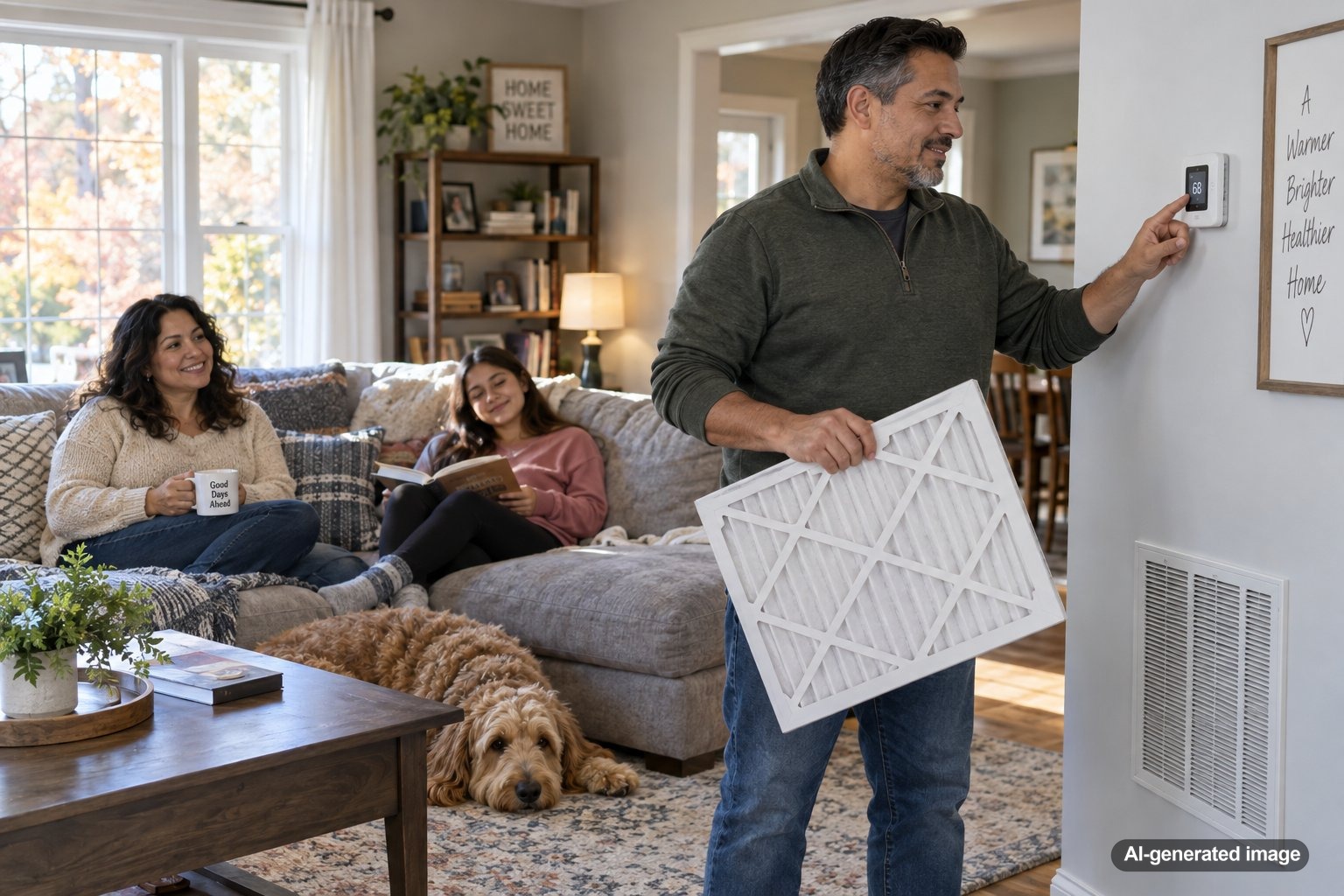
Yes, in many homes it makes sense to inspect your furnace filter before heating season and replace it if it is dirty, clogged, damaged, or due for replacement. A clean filter helps reduce unnecessary airflow restriction as your heating system begins running more frequently. It is a simple maintenance step, but the right timing depends on your filter type, household conditions, and how much your HVAC system has been operating.
For homeowners across Central and Northern New Jersey, early fall is also a practical time to think about broader heating service and maintenance. A filter change cannot replace professional maintenance, but it can help your system begin the colder months without an avoidable dirty-filter restriction.
- Inspect the furnace filter before you begin relying heavily on your heating system.
- Replace it if it looks visibly dirty, loaded with dust, damaged, or overdue according to the filter manufacturer’s guidance.
- Do not assume every filter should be changed on the same schedule. Filter type and household conditions matter.
- A dirty filter can restrict airflow, but changing the filter will not correct every heating or comfort problem.
- If weak airflow, unusual cycling, or heating problems continue after a filter change, schedule professional service.
Why replacing the filter before heating season can make sense
Your HVAC filter collects airborne particles as air moves through the return side of the system. Over time, that buildup can make it harder for air to pass through the filter. When heating season arrives and the system begins running for longer periods, an already-loaded filter can become an unnecessary source of airflow restriction.
Checking the filter before the first sustained cold weather is useful because summer cooling may have already put months of use on it. Homes that ran the AC frequently through a hot or humid New Jersey summer may enter fall with a filter that has already collected a significant amount of dust and debris.
Starting the season with an appropriate, clean filter also gives you a useful baseline. If you check it again later, you can get a better sense of how quickly your particular home loads a filter during the heating months.
How a dirty furnace filter can affect your heating system
A heavily loaded filter may reduce the amount of air moving through the HVAC system. That does not automatically mean a dirty filter is responsible for every comfort complaint, but it is one of the simplest airflow restrictions a homeowner can safely inspect.
Possible signs that deserve a filter check include weaker airflow at supply vents, more dust buildup than usual, rooms that seem slower to warm, or a system that appears to be working harder than expected. Those symptoms can also have other causes, including duct issues, blower problems, thermostat settings, equipment faults, or blocked returns, so avoid treating the filter as a guaranteed diagnosis.
If the heating system continues to struggle after a dirty filter has been replaced, a qualified HVAC technician can evaluate the system instead of relying on guesswork.
How often should you replace a furnace filter?
There is no single replacement interval that is correct for every home. Filter construction, size, thickness, system runtime, indoor dust levels, renovation activity, pets, and other household conditions can all affect how quickly a filter becomes loaded.
A thin filter in a busy household may need attention more frequently than a deeper media filter designed for longer service. Rather than relying only on a calendar reminder, inspect the filter periodically and follow the manufacturer’s replacement guidance for the specific filter and HVAC system.
It is also important to use a filter that is appropriate for your equipment. A higher-efficiency filter is not automatically better for every system if it creates more airflow resistance than the equipment is designed to handle. If you are unsure which filter type is appropriate, an HVAC professional can help you understand the system’s requirements.
What should you look for when checking the filter?
Homeowners can safely inspect an accessible HVAC filter without opening sealed equipment or working around electrical or combustion components. Look for visible dust buildup, a dark or heavily loaded filter surface, physical damage, or a filter that no longer fits properly in its slot.
- Inspect the filter and replace it if it is dirty or overdue.
- Confirm the replacement filter is the correct size and is installed in the proper airflow direction.
- Make sure return grilles and supply vents are open and not blocked by furniture, rugs, or stored items.
- Check your thermostat settings before assuming there is an equipment problem.
- Schedule professional service if airflow or heating problems continue.
Do not bypass the filter or operate the system with a filter that does not fit correctly. The filter is part of the system’s airflow and equipment-protection strategy, and the wrong setup can allow debris to travel where it should not.
Should you change a filter that still looks fairly clean?
Not necessarily. If the filter is still within its expected service period, fits correctly, and shows little visible loading, replacing it simply because the calendar says fall may not be necessary. The goal is to avoid beginning heating season with an excessively dirty or overdue filter, not to discard a usable filter without reason.
On the other hand, appearance alone is not always a perfect measure. Some filters collect fine particles that may not create dramatic surface discoloration. When in doubt, follow the filter manufacturer’s replacement recommendations and consider how heavily the HVAC system has been used.
Why a new filter is not a substitute for heating maintenance
Changing the filter is one useful homeowner task, but professional heating maintenance involves more than airflow through the filter. Depending on the equipment, a qualified technician may inspect system operation, controls, safety-related components, electrical connections, combustion-related performance where applicable, and other areas that homeowners should not attempt to service themselves.
Routine maintenance also creates an opportunity to identify developing issues before the system is under the heavier demand of a New Jersey cold snap. Maintenance cannot prevent every breakdown, but it can help uncover problems that may otherwise go unnoticed until the equipment is working harder.
Homeowners who prefer a more structured approach to recurring HVAC care can also review Meyer & Depew’s service plans.
When should you call a professional?
A filter change is worth trying when the existing filter is clearly dirty, but continuing heating problems should not be blamed on the filter without further evaluation. Schedule professional service if you notice persistent weak airflow, frequent cycling, unusual noises, rooms that will not warm normally, repeated breaker trips, or a heating system that is not operating as expected.
If you smell gas, suspect carbon monoxide, see smoke or sparks, or notice an electrical burning smell, prioritize safety. Leave the affected area when appropriate and contact the proper emergency service, utility, or qualified professional rather than attempting to troubleshoot internal HVAC components yourself.
Frequently asked questions
Should I replace my furnace filter even if I changed it during the summer?
Inspect it first. If it is still relatively clean and within the manufacturer’s recommended service period, it may not need immediate replacement. If summer AC use loaded it with dust, replacing it before heating season can be sensible.
Can a dirty filter cause my furnace to stop working?
A severely restricted filter can contribute to airflow problems and may affect system operation, but a furnace that stops working can have many possible causes. Do not assume the filter is the only problem if the system continues to malfunction after replacement.
Does a more expensive filter always protect the furnace better?
No. The filter must be appropriate for the HVAC system. Some higher-efficiency filters create more airflow resistance, so the correct choice depends on the equipment and filter setup.
Is fall a good time for furnace maintenance in New Jersey?
Yes. Scheduling maintenance before periods of sustained cold weather gives homeowners an opportunity to have the heating system evaluated before it is needed heavily.
Can I replace my furnace filter myself?
For many systems, replacing an accessible filter is a reasonable homeowner maintenance task. Use the correct size, follow the airflow-direction marking, and do not open sealed equipment or work on gas, electrical, combustion, or other internal components.
Inspecting your furnace filter before heating season is a simple, practical step. Replace it when it is dirty, damaged, or overdue, and treat persistent airflow or heating problems as a reason for professional evaluation rather than assuming a new filter will solve everything.
Want to make HVAC maintenance easier to stay on top of?
A service plan can help keep routine heating and cooling maintenance on your calendar before small issues become bigger headaches.
You can also request a service appointment.