



Should a Mini Split Run Continuously During Hot Weather? What Normal Operation Looks Like and When to Call for Help
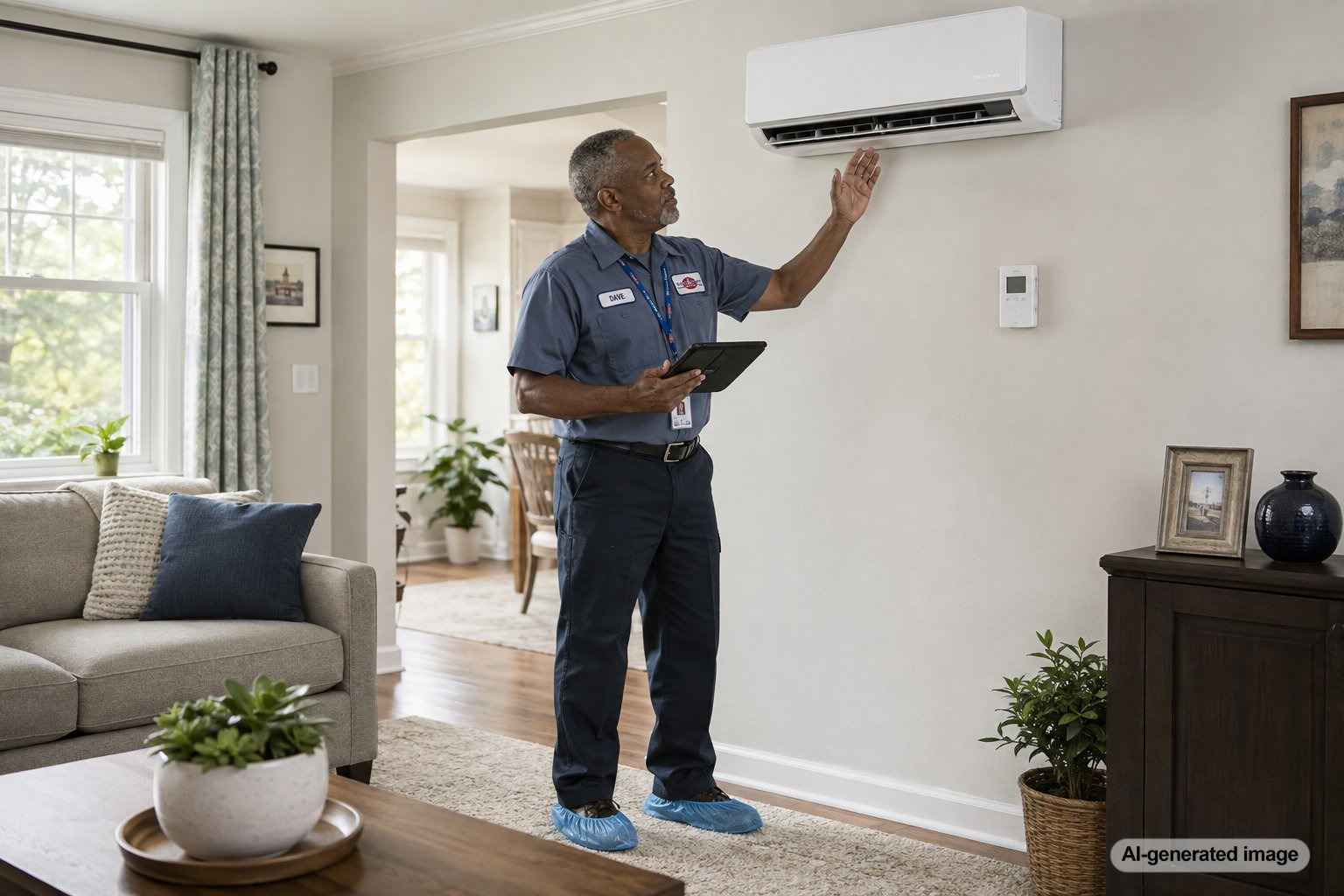
Yes, a mini split may run continuously during hot weather, and that does not automatically mean something is wrong. Unlike many traditional central AC systems that switch fully on and off, inverter-driven mini splits can slow down and operate for long periods at a low output. This steady operation helps maintain the selected temperature, manage humidity, and avoid the noticeable temperature swings that can occur when equipment cycles repeatedly.
During a humid New Jersey heat wave, your system may need to work longer because heat is continually entering the home. The important question is not simply whether the mini split is running. Pay attention to whether the room remains comfortable, the system responds to temperature adjustments, airflow feels normal, and operating sounds remain consistent. Homeowners considering or already using ductless mini split systems should understand that long run times are often part of normal operation.
A mini split can run continuously during very hot weather without indicating a problem, especially when it uses inverter technology and is maintaining the temperature at a reduced output.
- Long, quiet operation can be normal.
- Steady cooling is often more efficient than frequent starts and stops.
- High outdoor temperatures and humidity can extend run times.
- Continuous operation deserves attention if the room stays warm, airflow weakens, or the system behaves differently than usual.
Why mini splits often run longer than traditional AC systems
Most modern mini splits use a variable-speed, inverter-driven compressor. Instead of operating only at full capacity and then shutting down, the compressor can adjust its output as the cooling demand changes. It may work harder when the room is warm, slow down as the temperature approaches the thermostat setting, and continue operating gently to hold that temperature.
This distinction matters when evaluating system performance. A conventional single-stage AC system may turn on, cool the home, shut off, and restart when the indoor temperature rises. An inverter mini split may run for much longer while consuming less power during periods of reduced output. The indoor fan may also continue moving air even when the compressor has slowed substantially, making it appear that the system is always cooling at full capacity when it is not.
Frequent starts require equipment to ramp up repeatedly. By maintaining a steady operating level, a properly functioning mini split can provide more consistent room temperatures and quieter performance. Longer cycles can also support moisture removal, which is valuable during the humid summers common throughout Central and Northern New Jersey.
When continuous operation is normal
A mini split is more likely to operate for extended periods when the amount of heat entering the room closely matches the system’s current cooling output. Several conditions can produce this pattern without indicating a mechanical failure.
Outdoor temperatures are unusually high
As outdoor temperatures rise, heat enters through windows, walls, ceilings, doors, and small air leaks. The system must remove that heat as it arrives. During the hottest part of the afternoon, it may run continuously simply to maintain the selected indoor temperature.
The system is maintaining a steady setpoint
If the room reaches the selected temperature and remains comfortable, a low and steady operating sound is generally encouraging. The mini split may be modulating at reduced capacity instead of shutting down. Avoid judging performance only by whether the indoor fan is moving. Comfort, temperature stability, and normal airflow provide more useful clues.
Humidity is placing an additional load on the system
Cooling equipment removes both heat and moisture. A muggy day can make the system work longer even when the outdoor temperature is similar to a less humid day. Doors opening frequently, cooking, showering, and outdoor air entering through leaks can add to the moisture load.
The space has a heavy heat load
Large windows, direct afternoon sun, limited insulation, high ceilings, occupied home offices, and heat-producing appliances can all increase cooling demand. A finished attic or sunroom may require longer operation than a shaded bedroom, even when both zones use similar temperature settings.
Signs the system may need professional attention
Continuous operation becomes more concerning when it is paired with poor cooling or a noticeable change in performance. A mini split that previously maintained the room comfortably but now struggles on comparable days should be evaluated based on the full pattern of symptoms.
- The room never approaches the selected temperature. Some temperature difference is understandable during extreme conditions, but persistent discomfort may point to an airflow, maintenance, refrigerant, sizing, or equipment issue.
- Airflow is noticeably weaker than usual. A restricted filter, dirty indoor coil, blower problem, or ice formation could interfere with performance.
- Ice appears on the indoor or outdoor equipment. Ice is not a normal sign of extra cooling power. Turn the system off and arrange professional service rather than attempting to remove ice or open the equipment.
- Water drips inside the room. Condensate should drain safely away. Indoor leakage could indicate a blocked drain, installation issue, frozen coil, or another condition requiring attention.
- The system repeatedly speeds up and slows down without stabilizing. Some modulation is normal, but erratic behavior accompanied by poor comfort may warrant an inspection.
- New noises or odors develop. Grinding, rattling, electrical odors, smoke, or burning smells should not be ignored. Shut the equipment off if conditions appear unsafe and contact a qualified professional.
A technician can evaluate electrical components, refrigerant performance, coil condition, drainage, controls, and system capacity. Homeowners should not open sealed components, work on high-voltage wiring, or attempt to add refrigerant.
Safe checks homeowners can make
A few simple observations can help determine whether the system is responding to an unusually hot day or showing signs of a service problem. These checks do not require opening the equipment or handling electrical and refrigerant components.
- Confirm that the mini split is in cooling mode rather than fan, heat, or automatic mode.
- Check the temperature setting and allow the system time to respond after making an adjustment.
- Inspect and clean or replace the washable filter according to the manufacturer’s instructions.
- Make sure furniture, curtains, and stored items are not blocking the indoor unit’s intake or discharge.
- Look for obvious leaves, weeds, or debris restricting airflow around the outdoor unit without opening or disassembling it.
- Keep exterior doors and windows closed while cooling.
- Note whether the problem affects one indoor unit or every zone connected to the same outdoor unit.
The last observation can be especially useful. If one room is uncomfortable while other zones cool normally, the issue may be limited to that indoor unit, its filter, its controls, the room’s heat load, or the way air moves through the space. If every connected zone struggles, the shared outdoor equipment or overall system demand may need closer evaluation.
Temperature settings and operating habits matter
Setting a mini split dramatically colder does not make it cool the room instantly. It generally tells the system to continue working toward a lower target. On an extremely hot day, a very low setting can keep the unit operating at a higher output for longer without producing a practical improvement in comfort.
Choose a reasonable, consistent setpoint and give the equipment time to stabilize. Constantly turning the system off when leaving for a short period and then requesting a large temperature reduction upon returning can create a heavy recovery load. In many homes, modest adjustments allow an inverter system to use its variable capacity more effectively.
Fan direction also influences comfort. The indoor unit should have a clear path to distribute conditioned air across the occupied area. If the airflow is directed into a wall, blocked by tall furniture, or confined by a closed doorway, the sensor may indicate acceptable conditions near the unit while another part of the room remains uncomfortable.
Could the mini split be improperly sized?
Equipment capacity should match the space and its actual cooling load. A unit that is too small may run continuously and still fail to maintain comfort during hot weather. A unit that is substantially oversized may satisfy the thermostat quickly but provide short cycles or less consistent humidity control. Room area alone is not enough to select capacity accurately.
A professional load calculation considers insulation, window size and orientation, ceiling height, air leakage, occupancy, construction, and other sources of heat. For multi-zone systems, the relationship between individual indoor units and the shared outdoor unit also matters. Several zones requesting maximum cooling simultaneously can create a different operating pattern than one indoor unit cooling a single room.
Continuous operation does not prove that the equipment is undersized. It becomes a reasonable question when the system has never maintained the desired conditions, even after filters, airflow, installation quality, and maintenance needs have been assessed.
How maintenance affects summer run time
A mini split can continue operating with a dirty filter or restricted coil, but it may move less air and take longer to cool the space. Dust accumulation on the indoor coil, debris around the outdoor coil, drainage problems, and worn components can gradually reduce performance. Because the change may happen slowly, homeowners sometimes assume the system is struggling only because the weather is hot.
Routine professional maintenance can identify developing issues, confirm normal drainage, inspect electrical connections, and evaluate overall performance. Maintenance cannot prevent every breakdown, but it may reduce the risk of avoidable problems and help the equipment operate as intended when cooling demand is high.
Frequently asked questions
Should the indoor mini split fan ever stop?
It depends on the model, operating mode, fan setting, and current cooling demand. Some indoor fans continue running at a low speed to circulate air and monitor room temperature even when the compressor has reduced output. Consult the equipment manual for model-specific behavior.
Is continuous mini split operation expensive?
Not necessarily. Inverter systems can reduce compressor output instead of operating at full capacity continuously. Actual energy use depends on outdoor conditions, temperature settings, insulation, system efficiency, maintenance, and the heat load in the space. Run time alone does not reveal how much electricity the equipment is using.
Why does my mini split run all night?
The system may be maintaining a stable temperature, removing humidity, or responding to heat stored in the building during the day. Normal low-speed operation can continue overnight. If the room remains too warm or the system runs loudly at high output throughout the night, service may be appropriate.
Should I turn off my mini split during a heat wave?
There is generally no need to turn off a normally functioning mini split simply because it has a long cycle. Consistent operation is part of how inverter equipment manages changing demand. Turn it off and seek help if you notice smoke, sparks, a burning electrical odor, active leaking near electrical parts, or another unsafe condition.
When should I request service?
Request professional service when the mini split cannot maintain reasonable comfort, airflow has weakened, water is leaking indoors, ice develops, error codes appear, or performance has changed noticeably. A qualified technician can determine whether the cause involves maintenance, controls, drainage, refrigerant performance, installation, or equipment capacity.
A mini split that runs continuously during hot weather may be doing exactly what it was designed to do. If it maintains the room temperature with normal airflow and quiet operation, the long cycle is often related to inverter modulation and high cooling demand. If comfort declines or new symptoms appear, professional evaluation is the safest way to identify the cause.
Need help with your heating, cooling, or HVAC system?
Meyer & Depew serves homeowners and businesses throughout Central and Northern New Jersey.
Get a quote or call 908.272.2100.