

Why Smart Thermostat Settings Can Backfire During Heat Waves
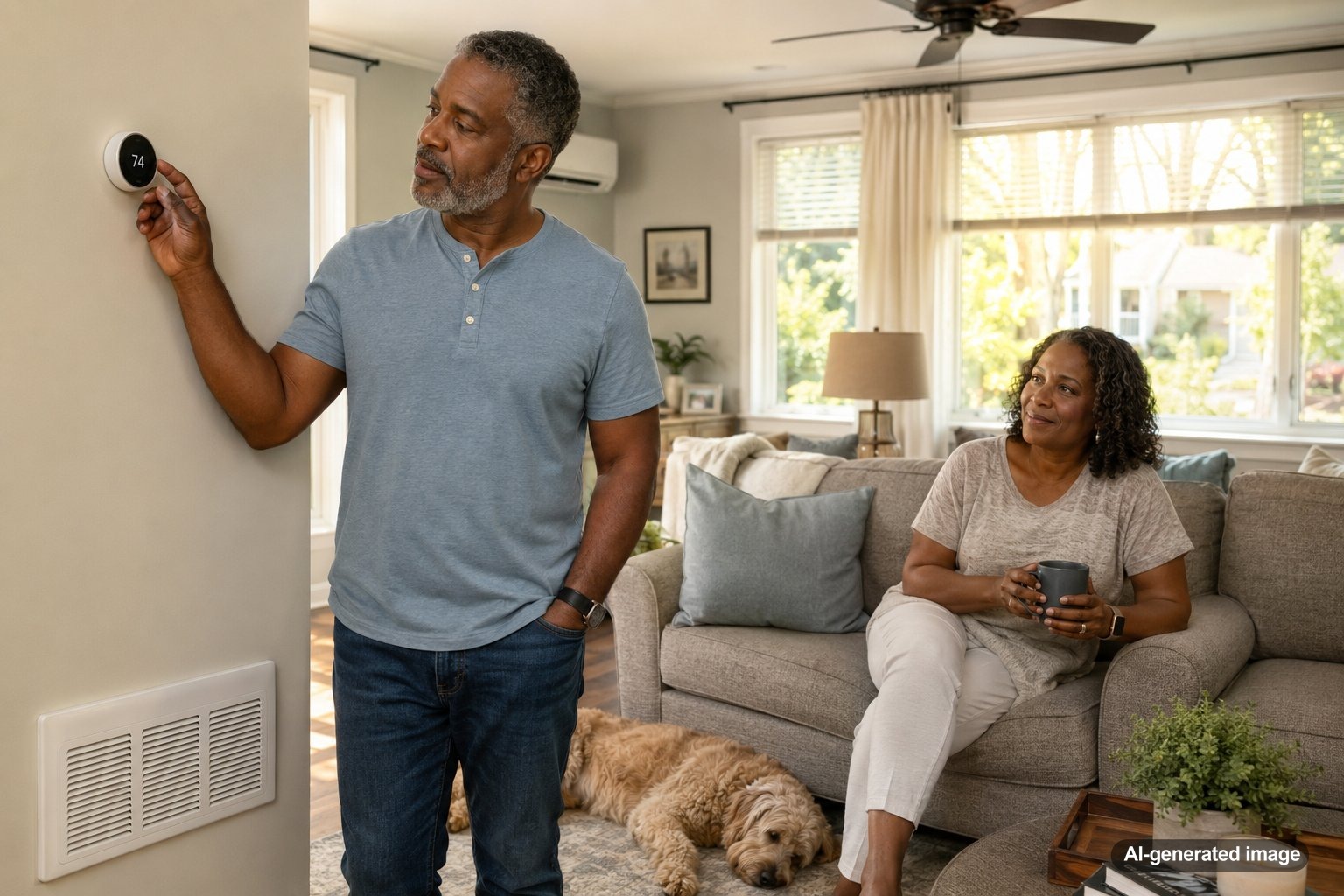
Smart thermostats can make daily temperature control easier, but some of their most popular energy-saving settings can work against you during a heat wave. Deep daytime setbacks, aggressive recovery schedules, geofencing changes, and frequent manual adjustments may force your AC to make a long, difficult temperature recovery during the hottest part of the afternoon.
In Central and Northern New Jersey, extended heat and high humidity can place unusual demand on cooling systems. A smart thermostat is still a useful tool, but it needs a heat-wave strategy that reflects your home’s insulation, airflow, equipment condition, humidity level, and normal occupancy. Homeowners who understand those limits can use thermostat controls more effectively without creating unnecessary comfort problems.
Smart thermostat settings can backfire when they let the indoor temperature rise too far and then demand a rapid cooldown during peak outdoor heat. Moderate settings, fewer temperature swings, realistic recovery times, and attention to indoor humidity usually provide a better balance than aggressive setbacks.
How Smart Thermostat Setbacks Can Create a Difficult Recovery
A temperature setback means allowing the house to become warmer while no one is home, then returning it to a cooler setting before occupants arrive. This approach may be useful under normal summer conditions, especially when the setback is modest. During extreme heat, however, the indoor temperature may climb faster and remain elevated longer than expected.
The thermostat does not cool the house by itself. It simply tells the AC when to operate. If the home has reached 82 degrees and the thermostat is suddenly lowered to 72, the cooling system cannot deliver colder air just because the temperature gap is larger. It will generally run for an extended period while removing heat and moisture at the rate the equipment can manage.
That recovery may begin when outdoor temperatures, attic temperatures, solar heat gain, and electrical demand are near their daily peak. The result can be long run times, slow temperature changes, uneven rooms, and frustration with a system that appears unable to follow the schedule.
Why Recovery Mode May Start Earlier Than Expected
Many smart thermostats include an adaptive recovery feature. Instead of waiting until the scheduled time to begin cooling, the thermostat learns how long the home usually takes to reach the target temperature and starts the AC in advance.
During a heat wave, the thermostat may determine that recovery requires significantly more time. Homeowners may notice the AC starting hours before the scheduled arrival time. This does not always indicate a thermostat defect. The device may be responding to slower cooling caused by high outdoor temperatures, direct sun, humidity, insulation limitations, or reduced airflow.
Problems arise when the schedule assumes the home can recover quickly. A setting that works on an 84-degree day may not work the same way when temperatures remain much higher for several afternoons in a row. Smart learning features rely on past performance, and sudden weather extremes can temporarily make those predictions less accurate.
Large Temperature Swings Can Reduce Comfort
Saving energy is not only about how long the AC runs. Comfort also depends on surface temperatures, humidity, airflow, and heat stored inside the building. Walls, floors, furniture, and upper-level rooms absorb heat while the thermostat is set higher. Even after the air temperature begins to fall, those warmer surfaces may continue releasing heat into the room.
This is one reason a house can feel uncomfortable even when the thermostat displays the requested temperature. The system may satisfy the thermostat sensor before distant bedrooms, upstairs areas, or sun-exposed rooms have fully cooled.
Homes with uneven temperatures may benefit from a professional evaluation of airflow, duct conditions, insulation, thermostat placement, or zoning system options. A thermostat schedule cannot correct every underlying comfort issue.
Humidity Can Complicate Aggressive Energy-Saving Settings
Air conditioners help remove moisture while they cool. During a humid New Jersey heat wave, allowing indoor temperatures to rise significantly may also allow indoor humidity to increase. When cooling resumes, the system must address both sensible heat, which affects temperature, and latent heat, which relates to moisture.
A thermostat may display a lower temperature while the house still feels sticky or heavy. Some homeowners respond by lowering the setting again, which can lead to unnecessary adjustments without addressing the reason the space feels uncomfortable.
Humidity performance depends on equipment sizing, run time, airflow, duct conditions, ventilation, building tightness, and indoor moisture sources. If humidity remains persistently high, a qualified HVAC technician can evaluate whether the issue involves thermostat configuration, system performance, ventilation, drainage, or another factor.
Geofencing May Make the Temperature Change Too Often
Geofencing uses a phone’s location to switch the thermostat between home and away settings. It can be convenient, but it may create problems for households with irregular schedules, multiple occupants, unreliable location permissions, or people who remain home without the primary phone.
During extreme heat, repeated changes between away and occupied settings can create unnecessary temperature swings. The thermostat may raise the temperature when one person leaves, then begin a demanding recovery when another person returns shortly afterward.
For heat-wave conditions, a predictable schedule with a moderate setback may perform more consistently than frequent location-based changes. Households should also confirm that every relevant occupant and device is included in the geofencing configuration.
Constant Manual Adjustments Can Override Smart Features
When a home is not cooling as quickly as expected, it is tempting to lower the thermostat several degrees. Setting it to 65 instead of 72 generally does not make a standard AC system cool faster. It simply tells the system to continue running until it reaches the lower target.
Frequent overrides can also interfere with learning features. The thermostat may have difficulty identifying a stable schedule if occupants repeatedly change the setting, cancel holds, or switch between modes. A consistent target gives the thermostat and cooling system a clearer operating pattern.
If the indoor temperature continues rising while the AC runs, the issue may involve more than the schedule. A dirty filter, blocked return, closed vent, debris around the outdoor unit, duct leakage, equipment condition, or a system that is struggling under extreme conditions could contribute.
What Temperature Should You Use During a Heat Wave?
There is no single temperature that works for every home. The most practical setting is one that keeps occupants safe and reasonably comfortable while avoiding dramatic temperature changes that the system cannot recover from efficiently.
During extreme heat, consider using a smaller setback than you would on a typical summer day. For example, allowing the temperature to rise by a few degrees may be more manageable than using a deep setback that requires a long afternoon recovery. Homes with older equipment, limited insulation, large west-facing windows, or significant upstairs heat gain may need an even more conservative schedule.
It is also important to account for infants, older adults, pets, medical needs, home offices, and anyone who remains in the house during the day. Energy-saving settings should never take priority over occupant safety.
Smart Thermostat Settings That May Work Better
- Use moderate setbacks: Avoid letting the house become excessively warm before asking the system to recover.
- Start recovery before peak heat: Schedule cooling earlier when possible instead of demanding a major temperature drop late in the afternoon.
- Keep occupied settings consistent: Allow the system to maintain a stable range rather than making repeated large adjustments.
- Review adaptive recovery: Confirm that the feature matches your schedule and understand why the AC may start early.
- Check geofencing behavior: Make sure phone permissions, household members, and away settings are configured correctly.
- Monitor humidity: Pay attention to whether the house feels humid even when the displayed temperature appears acceptable.
- Use ceiling fans appropriately: Fans can improve comfort for people in the room, but they do not lower the actual room temperature.
Safe Checks Before Assuming the Thermostat Is the Problem
- Confirm that the thermostat is set to cooling mode and that the target temperature is below the current indoor temperature.
- Inspect or replace the air filter if it is dirty or overdue.
- Make sure supply vents and return grilles are open and not blocked by furniture, rugs, or curtains.
- Look for obvious leaves, grass, or debris restricting airflow around the outdoor unit.
- Check whether the thermostat is receiving power and connected to Wi-Fi if app controls are not responding.
- Check a tripped breaker once, if it is safe to do so. Do not repeatedly reset a breaker that trips again.
Do not open sealed equipment panels, handle refrigerant components, bypass safety controls, or attempt electrical repairs. If you notice smoke, sparks, an electrical burning smell, flooding around equipment, or another unsafe condition, turn your attention to safety and contact the appropriate emergency service, utility, or qualified professional.
When Long AC Run Times Are Normal and When They Are Not
Longer run times are not automatically a sign of failure during a severe heat wave. Properly operating systems may run for extended periods when outdoor temperatures are far above normal. Longer cycles can also support more consistent temperatures and moisture removal than frequent starts and stops.
Professional service is worth considering when the indoor temperature keeps rising, airflow becomes noticeably weak, the system repeatedly starts and stops, certain rooms remain significantly warmer, ice is visible on accessible refrigerant lines, unusual noises develop, or the thermostat reports errors that persist after basic checks.
Routine cooling maintenance may help identify airflow restrictions, worn components, drainage problems, thermostat configuration issues, and other concerns before they become more disruptive. Meyer & Depew provides AC service and maintenance for homeowners throughout Central and Northern New Jersey.
Frequently Asked Questions
Should I turn off my AC when I leave during a heat wave?
Turning the AC off completely can allow the home, furnishings, and indoor humidity to reach uncomfortable levels. A moderate setback is often more practical than a complete shutdown, particularly during prolonged heat or when pets, sensitive belongings, or moisture concerns are present.
Does lowering the thermostat cool the house faster?
Usually not. A standard central AC system generally cools at its normal operating capacity regardless of how far the thermostat is lowered. A very low setting may simply make the equipment run longer.
Why does my smart thermostat say it will take hours to cool?
The estimate may reflect outdoor heat, current indoor temperature, recent system performance, humidity, and the amount of temperature recovery requested. The estimate can also indicate that the home is gaining heat nearly as quickly as the system can remove it.
Is it bad for the AC to run constantly during extreme heat?
Extended operation can be normal during extreme conditions, especially when the system is maintaining the target temperature. Service may be appropriate if the home continues getting warmer, airflow is weak, the system behaves unusually, or it cannot maintain a reasonable indoor temperature.
Can a smart thermostat cause short cycling?
Thermostat configuration or placement may contribute to unusual cycling, but short cycling can also involve equipment, airflow, electrical, sizing, or safety-control issues. A qualified technician can evaluate the pattern rather than assuming the thermostat is the only cause.
A smart thermostat performs best during a heat wave when it is used as a steady control tool, not as a shortcut for rapid cooling. Moderate setbacks, realistic recovery schedules, stable settings, and attention to humidity can help your AC manage extreme conditions more effectively.
Need help with your heating, cooling, or HVAC system?
Meyer & Depew serves homeowners and businesses throughout Central and Northern New Jersey.
Get a quote or call 908.272.2100.