



Why Does a Split-Level Home Feel Uneven During Fall Temperature Swings?
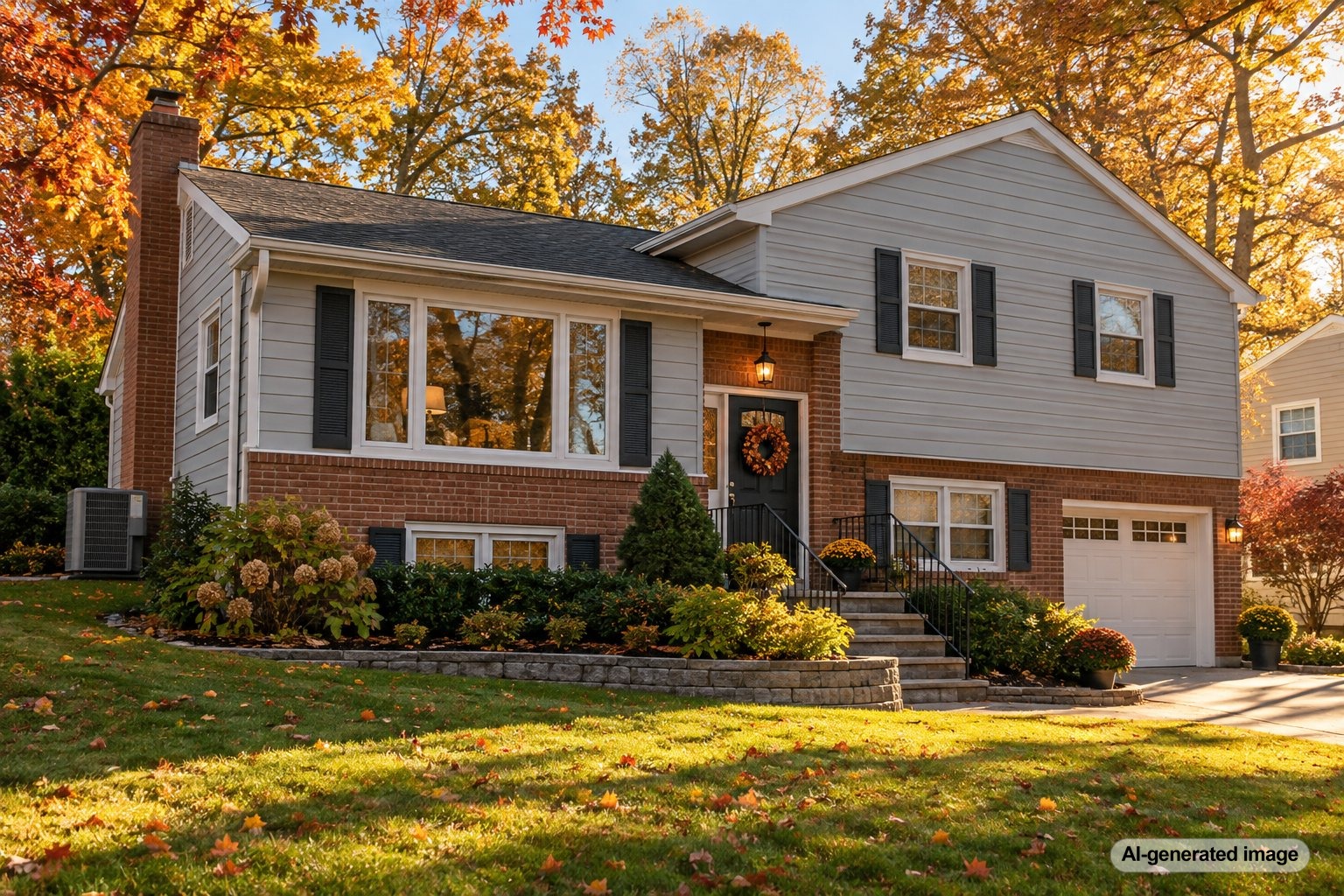
Split-level homes can feel surprisingly uneven during fall temperature swings because their design naturally separates living spaces by elevation, while outdoor conditions may change dramatically between morning, afternoon, and night. Warm air rises, sunlight heats different sides of the house at different times, and a central HVAC system may be responding to a thermostat located on only one level. The result can be a comfortable main floor while an upper bedroom feels warm or a lower-level family room feels noticeably cooler.
In Central and Northern New Jersey, fall makes these differences especially noticeable because homes may need little or no heating during a sunny afternoon but considerably more warmth after sunset. If temperature differences are persistent or uncomfortable, options such as zoning systems may provide more precise control than simply changing the thermostat setting.
A split-level home often feels uneven in fall because warm air moves upward, individual levels receive different amounts of sun, the thermostat measures only one location, and the HVAC system may not distribute conditioned air equally among floors. Mild daytime weather followed by cooler evenings can make these differences more obvious.
Why split-level homes are especially prone to temperature differences
A split-level layout usually places major living areas only a half-story apart, but even a modest elevation difference can affect how heat moves through the house. Stairways and open passages create natural paths for warmer air to rise into upper spaces while cooler, denser air settles lower.
This stack effect can be subtle during steady weather. During fall, however, outdoor temperatures can change quickly over the course of a day. A lower level that felt comfortable in the afternoon may feel cool after sunset, while an upstairs bedroom can remain warm from accumulated daytime heat.
The HVAC system also has to serve spaces with different heat gains and heat losses at the same time. One level may have large sun-facing windows, another may be partially below grade, and another may sit directly beneath the attic. Those spaces rarely gain and lose heat at identical rates.
The thermostat may be comfortable while another level is not
Most conventional HVAC systems operate according to the temperature where the thermostat is installed. If the thermostat is on the main level, the system may shut off as soon as that area reaches the set temperature even though a lower or upper level still feels different.
Fall weather can amplify this problem. For example, afternoon sun may warm the thermostat area enough that the heating system stays off. A shaded lower level may meanwhile become cooler. Later, when the main level finally cools and calls for heat, the upper floor may warm more quickly than the rest of the home.
Thermostat placement matters too. A thermostat near a sunny wall, drafty entry, kitchen, stair opening, or other location with unusual temperature conditions may not represent the rest of the house accurately. Homeowners experiencing recurring differences can review available thermostat options as part of a broader comfort evaluation.
Airflow can favor one level over another
Room-to-room comfort is not determined by temperature alone. Airflow plays an important role. Supply ducts serving one level may deliver more air than branches serving another, especially if the duct system has a complicated layout, long runs, restrictions, leakage, or balancing issues.
Return airflow matters as well. The HVAC system needs a clear path for air to leave rooms and return to the equipment. Closed interior doors, blocked return grilles, furniture covering registers, or inadequate return pathways can contribute to uneven comfort.
Homeowners should avoid assuming that partially closing a large number of supply vents will fix the problem. Restricting airflow without understanding the duct system can affect HVAC performance. A technician can evaluate airflow and determine whether balancing, duct improvements, zoning, or another approach is appropriate.
Sunlight can create a different climate on each side of the house
Solar heat gain is one of the biggest reasons a split-level home can change character throughout a fall day. Rooms with strong afternoon sun may become comfortable or even warm without any help from the heating system. Shaded rooms can remain cool at the same time.
Window size, orientation, curtains, shades, tree cover, and exterior overhangs all influence how much heat enters a room. Because upper levels often have more exterior exposure and lower levels may be partly below grade, their temperatures can respond very differently to the same outdoor weather.
This is also why the problem may seem inconsistent. A home can feel evenly balanced on a cloudy day and noticeably uneven the next afternoon when direct sun heats one side of the structure.
Lower levels can stay cooler for structural reasons
Many split-level homes have a lower floor that is partly below ground. Soil temperatures change more slowly than outdoor air temperatures, which can help moderate conditions but can also make the lower level feel cooler during transitional weather.
Upper floors, by comparison, receive heat rising from below and may gain additional warmth through the roof or attic area. Differences in insulation and air sealing can further widen the gap.
These characteristics do not automatically indicate an HVAC malfunction. The key question is whether the temperature difference is modest and expected or large enough to interfere with normal comfort.
Fall HVAC operation can be irregular by nature
During colder winter weather, a heating system may run often enough to create relatively consistent airflow throughout the house. During fall, the same system might run briefly in the morning, remain off for most of the afternoon, and operate again at night.
Those long off periods give individual levels more time to drift apart based on sun exposure, air movement, insulation, occupancy, and the natural movement of heat. Short heating cycles may then change temperatures quickly near some registers while more distant rooms respond more slowly.
That does not necessarily mean the equipment is improperly sized or failing. Transitional weather simply exposes differences that may be less obvious when the system operates more consistently.
Safe things homeowners can check
- Make sure supply vents and return grilles are open and not blocked by furniture, rugs, curtains, or storage.
- Inspect the HVAC filter and replace it if it is dirty and replacement is appropriate for your system.
- Check thermostat settings and make sure schedules are not creating unexpected temperature changes.
- Notice whether the uncomfortable level changes with sunlight, time of day, open or closed doors, or HVAC operation.
- Compare several rooms rather than relying on one unusually warm or cool spot.
Keeping a short record for several days can be useful. Note which rooms feel uncomfortable, the approximate time, whether the system is running, and whether the affected spaces are sunny or shaded. Patterns can help distinguish a seasonal building effect from an airflow or control problem.
When zoning may help a split-level home
Zoning is designed to give different areas of a home more independent temperature control. Depending on the existing HVAC system and ductwork, separate zones may allow the equipment to direct conditioning where it is needed rather than treating the entire house as one uniform space.
A split-level layout can be a logical candidate for evaluation because each level may have different heating and cooling demands. However, zoning is not automatically the right answer for every house. Duct design, equipment capabilities, thermostat strategy, insulation, and existing airflow all need to be considered.
In some homes, improving air distribution or correcting a specific duct issue may be more appropriate. In others, a zoning system, thermostat changes, ductless equipment, or a combination of comfort improvements may be worth considering.
When uneven temperatures deserve professional attention
Consider scheduling HVAC service if the difference between levels is persistent, has become noticeably worse, or is accompanied by weak airflow, unusually long run times, frequent cycling, rooms that never become comfortable, or other changes in system performance.
A qualified technician can evaluate the HVAC equipment, thermostat operation, filter condition, supply and return airflow, ductwork, and overall system behavior. If the heating system itself appears to need attention, professional heating service and maintenance can help identify whether the comfort problem is related to equipment operation or to the way air is distributed through the home.
Uneven temperatures can also be caused by more than one issue at once. A split-level home might have normal heat migration between floors plus a blocked return, an imbalanced duct branch, or an unsuitable thermostat location. Looking at the house as a complete comfort system is often more useful than focusing on a single room.
Frequently asked questions about split-level comfort
Is it normal for the upstairs of a split-level home to be warmer?
Some difference can be normal because warm air naturally rises and upper floors may receive more solar heat. A large or persistent difference, however, may justify an airflow, thermostat, insulation, or HVAC evaluation.
Why does my lower level get colder after sunset?
A partly below-grade lower level may receive less solar heat and can lose the benefit of daytime warmth quickly once outdoor temperatures fall. Meanwhile, warmer air inside the home tends to move toward upper levels.
Should I close upstairs vents to push more heat downstairs?
It is generally better not to make major airflow changes by closing numerous registers. HVAC systems are designed for a certain amount of airflow, and excessive restriction can affect performance. A technician can evaluate proper balancing if one level receives too much or too little air.
Can a smart thermostat solve uneven temperatures?
A different thermostat or remote sensing strategy may improve temperature awareness in some homes, but it cannot correct every airflow, ductwork, insulation, or equipment issue. The cause of the imbalance should guide the solution.
Why is the problem worse in fall than in winter?
Fall often brings large daytime temperature swings and long periods when the HVAC system is not running. That allows different parts of a split-level home to respond independently to sunlight, outdoor conditions, and natural heat movement. More continuous heating during colder weather can sometimes make those differences less noticeable.
Uneven fall temperatures in a split-level home often come from the combination of rising warm air, different sun exposure, thermostat location, varying airflow, and the stop-and-start nature of HVAC operation during mild weather. If basic vent, filter, and thermostat checks do not explain the problem, a professional comfort evaluation can help determine whether airflow adjustments, controls, zoning, or HVAC service would be appropriate.
Need help with your heating, cooling, or HVAC system?
Meyer & Depew serves homeowners and businesses throughout Central and Northern New Jersey.
Get a quote or call 908.272.2100.