



How Summer Storms Can Affect Indoor Humidity
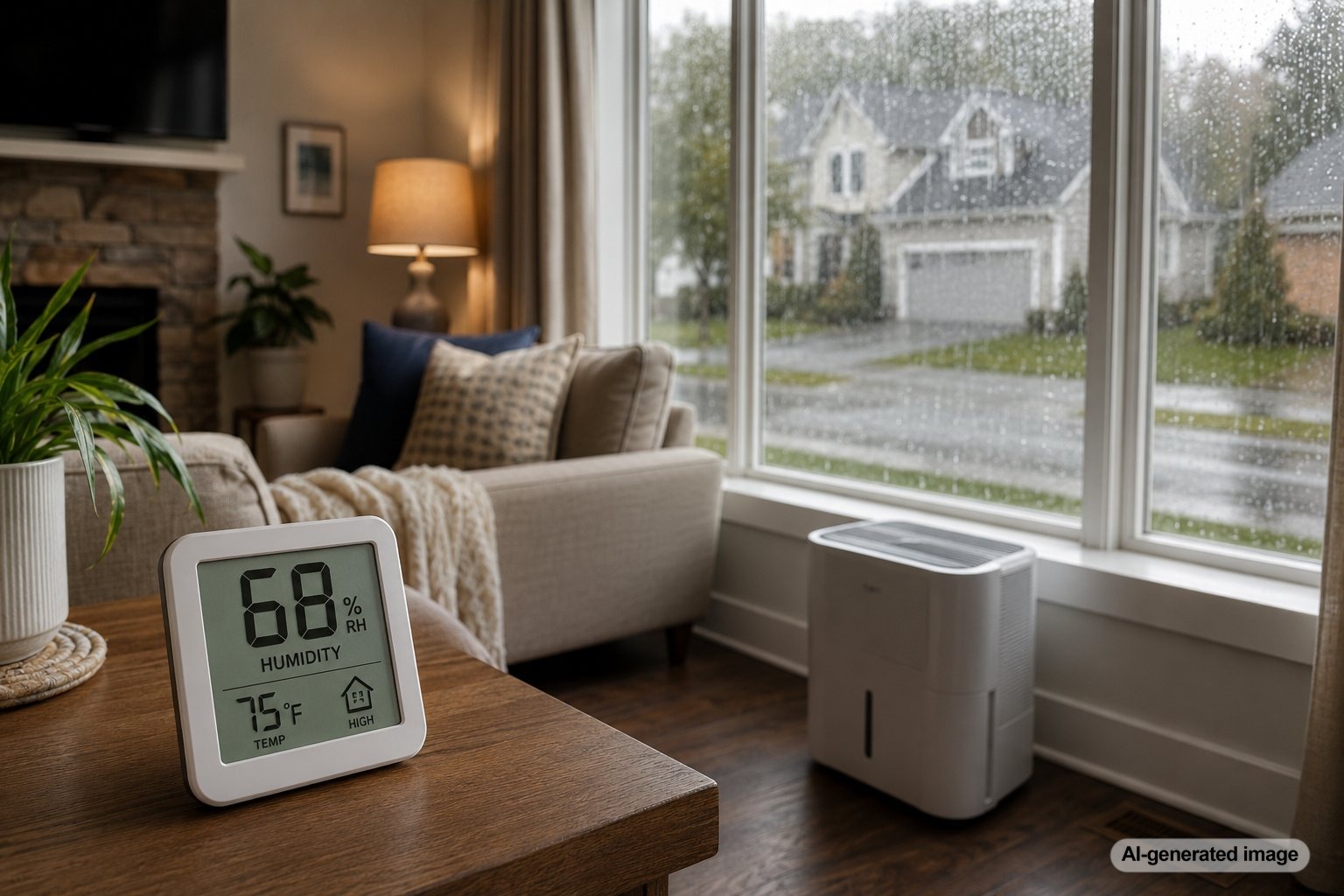
Summer storms can make your home feel damp, sticky, and uncomfortable even when the thermostat shows a normal temperature. Heavy rain brings moisture-laden outdoor air, while cloud cover and falling temperatures can change how your AC operates. If the cooling system runs for shorter periods, it may remove less moisture from the air.
This effect is especially noticeable in Central and Northern New Jersey, where humid summer weather can combine with sudden downpours, wind, power interruptions, and changing outdoor temperatures. Understanding what is happening can help you separate a temporary weather-related change from an HVAC or moisture problem that deserves professional attention.
Summer storms can increase indoor humidity by bringing in moist outdoor air, reducing AC run time, exposing air leaks, and introducing water around basements, crawl spaces, windows, or ductwork. Humidity that remains high after the storm may point to an airflow, drainage, ventilation, insulation, or HVAC performance issue.
Why indoor humidity often rises during a summer storm
Indoor humidity is influenced by more than the amount of moisture outside. It also depends on how much outdoor air enters the building, how long the AC runs, how well the system removes moisture, and whether rainwater reaches parts of the structure.
A properly operating air conditioner cools the air and collects moisture on the indoor coil. That moisture drains away through the condensate system. During a storm, however, outdoor temperatures may drop quickly while humidity stays high. Your thermostat may become satisfied before the AC has run long enough to remove as much moisture as usual.
Homes with recurring humidity concerns may benefit from a broader evaluation of air quality and comfort, rather than focusing only on the thermostat setting.
Moist outdoor air can enter through small openings
Wind-driven rain and strong gusts can push humid air through gaps around windows, exterior doors, attic access points, recessed lights, utility penetrations, and poorly sealed duct connections. Every home exchanges some air with the outdoors, but storm conditions can make existing leakage more noticeable.
Opening doors repeatedly during a storm also allows humid air inside. Wet clothing, umbrellas, pets, and damp shoes add smaller amounts of moisture. These sources may not create a lasting problem by themselves, but they can contribute to a temporary rise in indoor humidity.
Shorter AC cycles may remove less moisture
An oversized cooling system can lower the temperature quickly and shut off before completing a long moisture-removal cycle. This tendency may become more obvious during cloudy or rainy weather because the home requires less sensible cooling while the air still contains substantial moisture.
Short cycling can also be associated with thermostat placement, airflow restrictions, equipment problems, or other conditions. A homeowner should not assume that equipment size is the only cause. A qualified technician can evaluate system operation, temperature change, airflow, drainage, and cycle length.
If the system is running unusually, producing weak airflow, or failing to keep the home comfortable after the storm passes, professional AC service and maintenance can help identify the underlying issue.
Rain can reveal hidden moisture entry points
Not every humidity problem begins with the HVAC system. Water may seep into a basement, crawl space, wall cavity, attic, or area around a window. Even a small amount of damp material can release moisture into the indoor air as it dries.
Common clues include a musty odor, damp carpeting, condensation on cool surfaces, water staining, peeling paint, or one room that feels noticeably more humid than the rest of the house. These signs should not be ignored, particularly when they return after each heavy rain.
HVAC service may address comfort and dehumidification concerns, but roof leaks, foundation seepage, plumbing leaks, and exterior drainage problems may require another qualified professional.
Power interruptions can interrupt humidity control
Even a brief power outage stops the air conditioner, blower, thermostat, and any dedicated humidity-control equipment. Indoor moisture may rise while the system is off, especially if doors or windows are opened for ventilation.
After power returns, avoid repeatedly changing the thermostat or switching the system on and off. Restore normal settings and allow the equipment time to operate. If a breaker has tripped, it may be checked once if it is safe to do so. Do not continue resetting a breaker that trips again, since repeated tripping could indicate an electrical problem that needs professional service.
Blocked airflow can make storm-related humidity feel worse
A dirty air filter, blocked return grille, closed supply vent, or furniture covering a register can reduce airflow through the system. Restricted airflow may affect comfort and can interfere with normal cooling performance.
Some rooms may feel clammy while others remain comfortable. Finished basements, additions, upper floors, and rooms with limited return airflow can be especially sensitive to changes in outdoor humidity.
- Check that the thermostat is set to cooling and the fan is set to Auto rather than On.
- Inspect the air filter and replace it if it is dirty or overdue.
- Make sure supply vents and return grilles are open and not blocked by furniture, curtains, or rugs.
- Look for visible water near windows, basement walls, ceilings, or the indoor HVAC equipment.
- Check for obvious debris around the outdoor unit without opening or disassembling any equipment.
- Allow the system time to run after the storm and note whether the humidity gradually improves.
Why the thermostat fan setting matters
When the fan is set to On, the blower may continue circulating air after the outdoor unit stops. In some systems, this can allow moisture remaining on the indoor coil to evaporate back into the air instead of draining away. Setting the fan to Auto generally allows it to stop at the end of a cooling cycle.
This is a safe setting for homeowners to check. If the fan does not respond correctly, runs continuously despite the Auto setting, or behaves unpredictably, schedule professional service rather than opening equipment panels or attempting electrical repairs.
When high humidity may indicate an HVAC problem
A temporary increase during a storm can be normal. Humidity that remains elevated for an extended period, returns frequently, or appears alongside other symptoms may warrant an HVAC evaluation.
Professional attention may be appropriate when the AC runs but the home stays clammy, the system turns on and off unusually often, airflow is weak, water collects around the indoor unit, the condensate drain appears to be overflowing, or certain rooms consistently feel damp.
Do not attempt to open sealed components, add refrigerant, modify electrical wiring, or bypass safety controls. Refrigerant, electrical, drainage, and internal equipment concerns should be evaluated by a qualified technician.
How to reduce indoor humidity during storm season
Start with basic moisture control. Keep windows and exterior doors closed when outdoor humidity is high. Use bathroom and kitchen exhaust fans while generating moisture, but avoid leaving them on unnecessarily for long periods because they can pull additional outdoor air into the home.
Address visible leaks and drainage concerns promptly. Keep gutters, downspouts, and exterior drainage areas functioning so rainwater is directed away from the structure. In basements and other damp areas, a properly selected dehumidifier may help, although it should not be used as a substitute for correcting active water entry.
Routine HVAC maintenance can also help confirm that filters, airflow, coils, condensate drainage, and system controls are operating as intended. Maintenance cannot prevent every humidity problem, but it can reduce the risk of overlooked issues affecting comfort during demanding summer weather.
Summer storms can raise indoor humidity by changing AC run time, bringing moist air indoors, interrupting power, and exposing hidden water-entry problems. A brief increase may resolve as the weather clears and the AC resumes normal operation. Persistent dampness, musty odors, water near equipment, or unusual system behavior should be evaluated rather than treated as a normal part of summer.
Frequently asked questions
Why does my house feel humid even though the AC is running?
The system may be cooling the home faster than it removes moisture, particularly during cloudy and rainy weather. Restricted airflow, short cycling, an incorrect fan setting, equipment performance issues, or moisture entering from outside could also contribute.
Should I lower the thermostat to remove more humidity?
Lowering the temperature may increase run time, but it is not always the right solution and can make the home excessively cold. Start by checking the filter, vents, fan setting, and visible moisture sources. If the problem continues, have the system evaluated.
Can a clogged condensate drain increase indoor humidity?
A drainage problem can interfere with proper moisture removal and may cause water around the indoor unit. Do not open or modify internal equipment. If you see overflowing water or repeated drainage issues, turn to a qualified HVAC professional.
How long should storm-related indoor humidity last?
There is no single time limit because homes, systems, and storm conditions differ. Humidity should generally begin improving as outdoor conditions settle and the AC completes normal cooling cycles. Persistent or recurring humidity deserves further investigation.
Can ductwork contribute to high humidity?
Yes. Leaky or poorly insulated ducts in attics, crawl spaces, garages, or other unconditioned areas may allow humid air to enter the system or create condensation concerns. Duct inspection and repair should be handled by a qualified professional.
Need help with your heating, cooling, or HVAC system?
Meyer & Depew serves homeowners and businesses throughout Central and Northern New Jersey.
Get a quote or call 908.272.2100.