



How Sunlight On A Thermostat Can Cause AC Problems
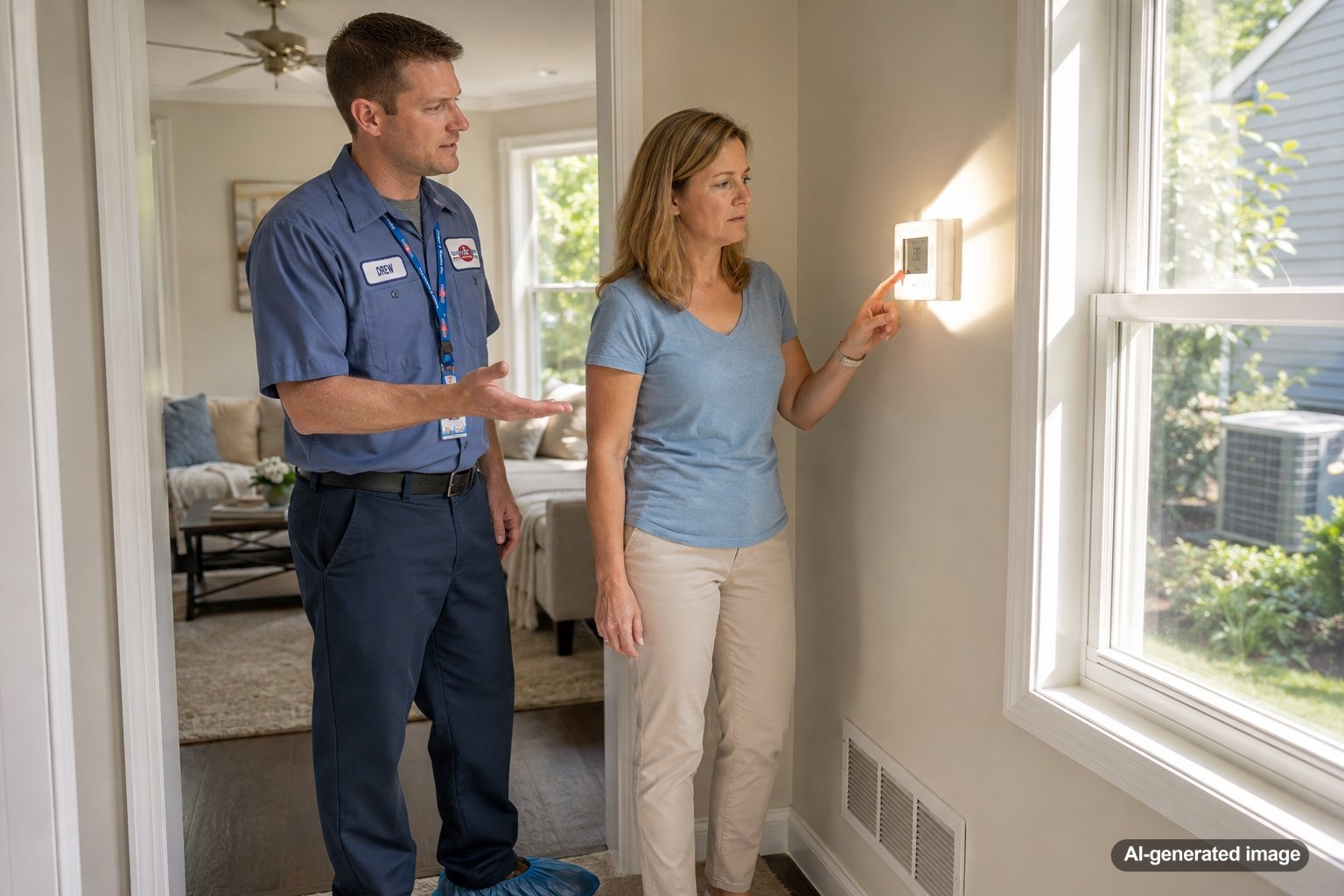
Sunlight on a thermostat can confuse your AC system because the thermostat may think the room is warmer than it really is. When that happens, the AC can run longer than needed, make nearby rooms feel too cold, leave other parts of the home uncomfortable, or cycle in ways that do not match the actual temperature in the house.
For homeowners in Central and Northern New Jersey, this can be especially noticeable during hot afternoons when strong sun comes through a window, glass door, skylight, or open shade. The system may not be broken at all. The thermostat may simply be reading the wrong temperature because of where it is installed. If your cooling feels inconsistent, Meyer & Depew can help evaluate thermostat placement, AC performance, and comfort issues through professional AC service and maintenance.
A thermostat should read the average air temperature in the living space. Direct sunlight can heat the thermostat housing and sensor, causing a false high reading. That can make the AC overcool the home, run longer than necessary, or create uneven comfort from room to room.
Why sunlight changes what your thermostat thinks
Your thermostat does not know how the entire home feels. It makes decisions based on the temperature at its own location. If the thermostat is mounted on a wall that gets direct afternoon sun, the sensor may read several degrees warmer than the air around it.
That false reading can tell the AC to keep cooling even after the main living area has already reached the set temperature. A family room may feel chilly while a sunlit hallway thermostat keeps calling for more cooling. In some homes, the opposite pattern can happen later in the day when the sun moves away and the system suddenly stops running as expected.
Common AC problems caused by a sunlit thermostat
Thermostat sunlight issues often feel like equipment problems because the symptoms show up through the AC system. The difference is that the AC may be responding correctly to bad information.
- The AC runs longer than expected. A thermostat heated by direct sun may keep calling for cooling even when the house is already comfortable.
- Some rooms get too cold. Rooms near supply vents may become uncomfortable because the system keeps running to satisfy the overheated thermostat.
- Cooling feels uneven. Areas far from the thermostat may not match the temperature shown on the display.
- Energy use may increase. Longer run times can use more electricity, especially during New Jersey heat and humidity.
- The system may seem hard to control. You may keep changing the set temperature because the thermostat reading does not match how the home actually feels.
Where thermostat placement can go wrong
Direct sunlight is one of the most common placement problems, but it is not the only one. A thermostat installed near a window, patio door, skylight, exterior wall, kitchen, fireplace, lamp, television, or supply vent may not represent the average temperature in the home.
Older homes in New Jersey can make this more complicated. Additions, renovated rooms, large windows, and uneven insulation can all affect how heat moves through the house. A thermostat that was acceptable years ago may become a problem after new windows, room changes, furniture layout changes, or smart thermostat upgrades.
Smart thermostats can help with scheduling and control, but they still need accurate temperature information. If a smart thermostat is in a poor location, advanced features may not fully solve the comfort problem. In some cases, an HVAC professional may recommend a better thermostat location, zoning improvements, or compatible remote sensors. Meyer & Depew offers options for thermostats and comfort controls that can be evaluated as part of a broader system review.
- Notice whether the thermostat gets direct sun at certain times of day.
- Compare the thermostat reading with another reliable thermometer placed nearby but out of sunlight.
- Close blinds or curtains temporarily and see whether the temperature reading becomes more realistic.
- Make sure vents and returns are open and not blocked by furniture.
- Inspect or replace the air filter if it is dirty.
When the thermostat is not the only issue
Sunlight may be part of the problem, but it should not be blamed for every cooling complaint. If your AC struggles even when the thermostat is shaded, there may be another issue affecting comfort or performance.
Possible causes include a restricted air filter, low airflow, duct leakage, an aging AC system, refrigerant-related problems, a dirty outdoor coil, poor insulation, undersized equipment, or a zoning imbalance. These are not issues homeowners should try to diagnose by opening equipment or adjusting internal components. A qualified technician can test the system safely and determine whether thermostat placement is the main problem or just one piece of the puzzle.
Should you move the thermostat?
Moving a thermostat can help when its location is clearly causing false readings, but it is not always the first or only answer. The best location is usually an interior wall, away from direct sun, vents, exterior doors, kitchens, fireplaces, and electronics that produce heat.
Before relocating anything, it is smart to confirm that the thermostat, wiring, HVAC controls, and system operation are working properly. In some homes, a remote temperature sensor may be a better option than moving the main thermostat. In other homes, zoning or duct adjustments may be more appropriate. The right answer depends on the home, the equipment, and how the rooms are used.
When to call a professional
Schedule professional service if the AC keeps running too long, rooms feel noticeably uneven, the thermostat temperature seems inaccurate, or changing the set point does not improve comfort. You should also call if the system short cycles, freezes up, blows warm air, trips a breaker, or makes unusual noises.
A technician can check thermostat location, calibration, wiring, control settings, airflow, system performance, and whether the AC is operating safely. For homes with recurring hot and cold spots, it may also be worth discussing zoning systems or other comfort-control options.
FAQ
Can sunlight really make a thermostat wrong?
Yes. Direct sunlight can warm the thermostat body and sensor, causing it to read higher than the actual room temperature. The AC may then run longer than needed.
Will closing curtains fix the problem?
It may help as a temporary test, especially during the hottest part of the afternoon. If comfort issues return whenever sunlight hits the thermostat, the thermostat location or sensor setup may need professional attention.
Can a smart thermostat solve this automatically?
Not always. A smart thermostat still needs accurate temperature data. Remote sensors, better placement, or professional setup may be needed if the main thermostat is exposed to sun or other heat sources.
Is moving a thermostat a DIY job?
Thermostat replacement and relocation can involve low-voltage wiring, system compatibility, and control settings. It is best to have a qualified HVAC professional handle relocation or wiring changes.
If sunlight hits your thermostat, your AC may be reacting to a false temperature instead of the real comfort level in your home. Shading the thermostat can help you spot the issue, but persistent cooling problems should be checked by a professional.
Need help with your heating, cooling, or HVAC system?
Meyer & Depew serves homeowners and businesses throughout Central and Northern New Jersey.
Get a quote or call 908.272.2100.