



Can Switching Between Heat and AC in the Same Day Hurt Your HVAC System?
Estimated reading time: 10 minutes
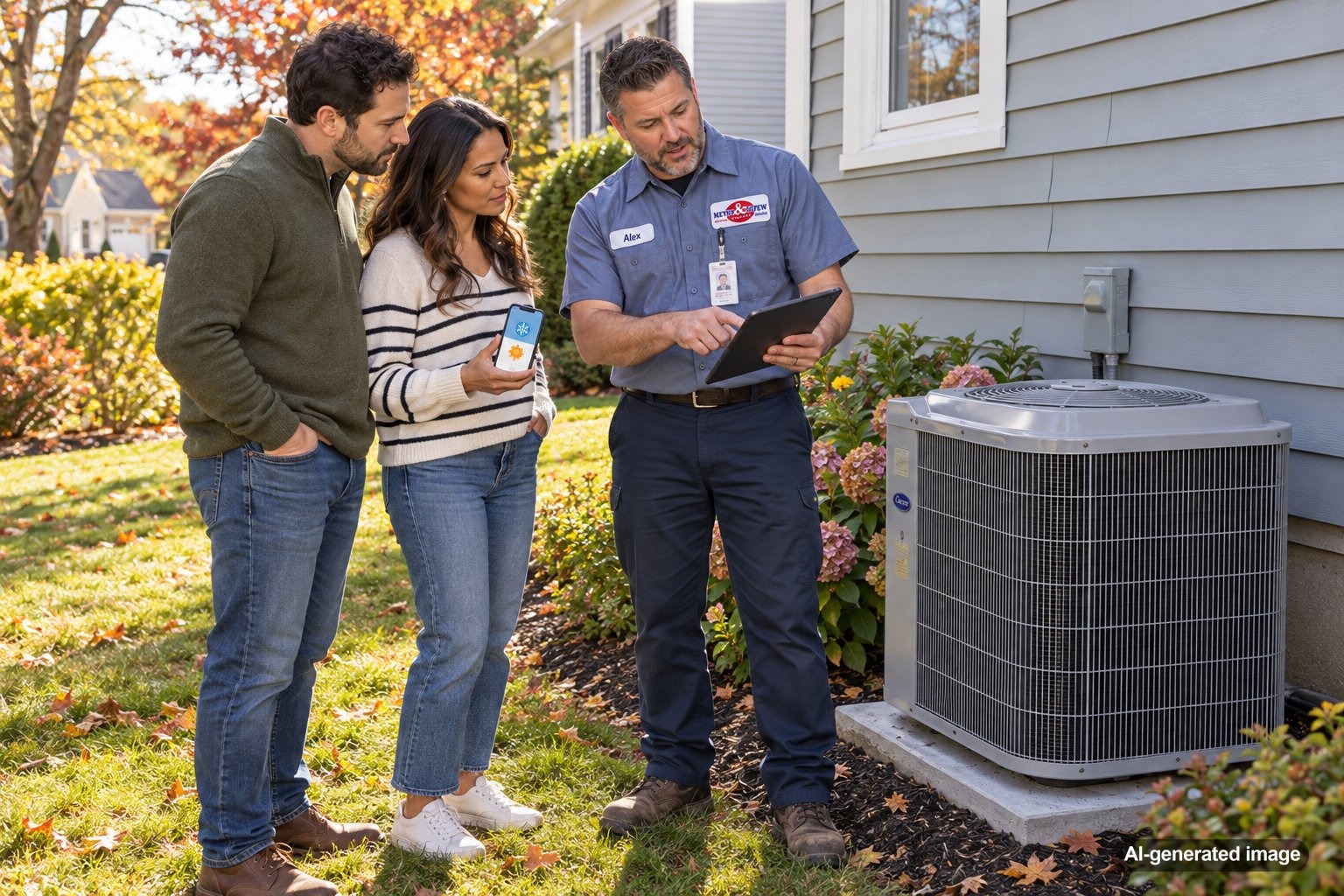
A chilly New Jersey morning can have you reaching for the heat, only for the afternoon sunshine to make your house warm enough to need air conditioning. By evening, the temperature drops again, and you’re considering turning the heat back on. If you’ve ever wondered whether all that switching is hard on your HVAC system, you’re asking a reasonable question. Fortunately, most properly functioning heating and cooling systems are designed to accommodate changing comfort needs. Switching between heat and AC in the same day generally will not damage your equipment when you operate it correctly.
What matters more is how quickly you switch modes, whether the equipment has time to complete normal operating cycles, and how your thermostat controls the transition. In Central and Northern New Jersey, where spring and fall temperatures can change dramatically between morning and afternoon, understanding these details can help you maintain comfort without putting unnecessary stress on your system.
Yes, you can normally use heat and AC on the same day without harming your HVAC system. However, avoid rapidly switching modes, repeatedly changing thermostat settings, or forcing equipment to restart immediately after shutting down. Allow normal shutdown and restart delays to finish, and investigate frequent cycling or unusual operation rather than assuming every temperature change is harmless.
Why New Jersey Homes Sometimes Need Heat and AC on the Same Day
Spring and fall create particularly challenging conditions for indoor temperature control. An overnight low in the 40s may leave your home feeling chilly at breakfast, while afternoon sunshine and outdoor temperatures in the 70s can make certain rooms uncomfortable.
Homes with large south-facing windows may experience significant solar heat gain. Older houses with inconsistent insulation can have even greater temperature differences between rooms. Upper floors often warm faster than lower levels, especially when sunlight hits the roof throughout the afternoon.
These situations can make switching between heating and cooling perfectly reasonable. The question is not whether your HVAC equipment can handle different operating modes. It is whether the transitions are being managed properly.
Modern thermostats offer control features that can help manage these changing conditions, although the available settings depend on your thermostat and HVAC equipment.
Does Switching From Heat to AC Put Extra Wear on Your Equipment?
Changing thermostat modes does not automatically create excessive wear. Heating and cooling systems are designed to start, operate, and shut down repeatedly during normal use.
However, the details depend on your equipment.
Homes With a Furnace and Central Air Conditioner
In a conventional system with a gas furnace and central AC, heating and cooling rely on different major components. The furnace provides heat, while the air conditioner’s compressor and refrigeration system provide cooling. The indoor blower and certain controls may be shared.
When you switch from heating to cooling, you are not usually asking one piece of equipment to reverse its entire operating process. Instead, the thermostat changes which components are called upon to run.
Normal mode changes are generally fine. The greater concern is unnecessarily frequent starting and stopping, particularly for the cooling compressor.
Homes With Heat Pumps
Heat pumps operate differently. A heat pump typically uses the refrigeration system for both heating and cooling, with a reversing valve changing the direction of refrigerant flow.
That capability is fundamental to heat pump operation. Switching modes is not inherently damaging when the equipment and controls are working correctly.
Still, manufacturers build protective timing and operating sequences into many systems. Repeatedly forcing mode changes or interrupting those sequences can create avoidable operating stress. Heat pumps may also have auxiliary heating controls that require proper thermostat configuration.
The Real Concern Is Rapid Cycling, Not Normal Temperature Changes
There is an important difference between using heat in the morning and AC in the afternoon versus repeatedly switching between the two every few minutes.
HVAC equipment needs appropriate operating and shutdown periods. Cooling compressors, in particular, benefit from controls that prevent excessively rapid restarts. Many systems include compressor protection delays that temporarily prevent another start after shutdown.
If you switch your thermostat from cooling to heating and back again, the cooling system may not immediately respond. This can be a normal protective feature rather than evidence that the equipment is broken.
Short cycling is a separate concern. It occurs when equipment turns on and off more frequently than intended, potentially because of thermostat problems, airflow restrictions, equipment sizing, or other operating conditions.
Signs worth investigating include:
- The AC or heating system starts and stops repeatedly after very short operating periods.
- Rooms never reach the selected temperature despite frequent equipment operation.
- The outdoor unit repeatedly attempts to restart.
- The thermostat changes modes unexpectedly or seems to issue conflicting calls.
- You hear unusual clicking, buzzing, grinding, or other sounds during operation.
These symptoms deserve attention even if you have not been switching between heat and AC manually.
How Long Should You Wait Before Switching From Heat to AC?
There is no single universal waiting period that applies to every furnace, heat pump, air conditioner, and thermostat combination. The correct approach is to follow the manufacturer’s operating instructions and allow built-in protection delays to complete.
For a conventional furnace and central AC system, a sensible practice is to let the current heating or cooling cycle finish and the equipment shut down before selecting the opposite mode. If needed, you can move the thermostat to Off and allow the system to stop completely.
Many thermostats and cooling systems use compressor restart delays of several minutes, often around five minutes. These protections are particularly relevant when an air conditioner has just stopped running. Do not repeatedly adjust the controls in an attempt to override the delay.
For heat pumps, follow the equipment and thermostat instructions, since switching between heating and cooling may involve additional control sequences.
Waiting longer than the equipment requires is generally unnecessary. The important point is to avoid rapid toggling and give the controls time to respond.
Can Automatic Heat and Cool Mode Make Switching Easier?
Some thermostats offer an Auto mode that can select heating or cooling based on indoor temperature. This is different from the fan setting labeled Auto, which simply determines when the blower operates.
Automatic changeover can be useful during New Jersey’s transitional seasons. However, proper temperature settings are essential.
For example, you might configure heating to maintain a minimum indoor temperature of 68 degrees and cooling to begin only when indoor temperatures exceed 76 degrees, if those settings suit your comfort needs and your thermostat supports them.
The space between those two settings creates a temperature range where neither heating nor cooling is requested. This helps prevent unnecessary switching when the indoor temperature changes slightly.
Some thermostats require a minimum separation between heating and cooling setpoints. Others include adjustable deadbands, minimum cycle times, or automatic changeover safeguards.
Not every thermostat supports automatic heating and cooling changeover, and compatibility matters. This is particularly important for heat pumps, multistage equipment, and systems with specialized controls.
When Switching Between Heat and AC Becomes a Warning Sign
Occasional seasonal switching is normal. Needing to alternate modes constantly just to maintain a reasonable indoor temperature can indicate another issue.
Uneven Temperatures Between Rooms
A sunny upstairs bedroom may become uncomfortable while a shaded downstairs room remains cold. Switching the entire house between heating and cooling may not solve the underlying difference.
Airflow, duct configuration, insulation, thermostat location, and building orientation can all contribute. Depending on the home, professionally evaluated zoning systems may provide more appropriate room-by-room control.
A Thermostat in a Poor Location
A thermostat installed near direct sunlight, a draft, or another heat source may detect a temperature that does not represent the rest of the home.
This can lead to unnecessary heating or cooling calls. A qualified technician can determine whether thermostat placement, calibration, configuration, or replacement should be considered.
Equipment That Cannot Maintain Comfortable Temperatures
If heating and cooling cycles are unusually frequent, the issue may involve restricted airflow, dirty filters, control problems, or equipment performance.
Repeatedly changing the thermostat mode is unlikely to fix those underlying conditions. A professional evaluation can help identify the actual cause.
Safe Ways to Manage Heat and AC During Changing Weather
- Use comfortable, reasonable setpoints. Avoid changing the temperature several degrees every few minutes in an effort to get an immediate response.
- Let equipment complete normal cycles. Do not repeatedly toggle between Heat, Cool, and Off.
- Check your thermostat’s operating mode. Confirm whether Auto refers to automatic system changeover or only the indoor fan.
- Inspect the air filter. Replace a dirty filter according to your equipment’s requirements.
- Keep supply and return vents unobstructed. Furniture, rugs, and closed vents can interfere with normal airflow.
- Use windows and shades thoughtfully. Managing sunlight may help reduce afternoon overheating without requiring immediate cooling.
- Allow built-in delays to finish. A short wait before the compressor starts is often normal.
These simple practices are usually more useful than trying to establish an arbitrary number of hours between heating and cooling.
Should You Leave the Thermostat on Heat or Cool During Fall?
The answer depends on indoor temperatures, your comfort preferences, and your equipment.
If mornings are cold but afternoons remain comfortable indoors, leaving the system in Heat mode may be sufficient. You do not need to run AC simply because outdoor temperatures rise during the afternoon.
If indoor temperatures regularly become uncomfortable later in the day, manually changing modes or using a properly configured automatic changeover thermostat may make sense.
Remember that outdoor temperature does not always match indoor conditions. Insulation, solar exposure, humidity, occupancy, and household activities can influence indoor comfort.
Rather than constantly reacting to the outdoor forecast, pay attention to how your home actually behaves during these seasonal temperature swings.
When Should You Schedule Professional HVAC Service?
Switching between heat and AC on the same day should not routinely produce unusual noises, repeated equipment faults, or persistent comfort problems.
Consider professional service if your system frequently short cycles, refuses to change modes, trips a breaker, struggles to reach normal setpoints, or behaves differently after a mode change.
If you notice an electrical burning smell, smoke, or sparks, stop using the equipment if it is safe to do so and seek appropriate emergency assistance. For a suspected gas leak or carbon monoxide hazard, leave the affected area and contact emergency services or your utility as appropriate. Do not attempt equipment repairs yourself.
Routine HVAC maintenance also provides an opportunity for a qualified technician to evaluate thermostat operation, airflow, electrical controls, and equipment performance before the next period of demanding weather.
Frequently Asked Questions
Is It Bad to Run the Furnace in the Morning and AC in the Afternoon?
No. For most properly operating systems, using the furnace in the morning and AC several hours later is a normal response to changing indoor temperatures. Allow the equipment to finish its operating cycle and follow the thermostat’s control instructions.
Can Switching Between Heat and AC Damage the Compressor?
A normal mode change should not damage a properly controlled compressor. Rapid restarting and excessive cycling are more concerning. Compressor protection delays help prevent immediate restarts, so allow those safeguards to operate.
Should I Turn the Thermostat Off Before Switching Modes?
It is generally reasonable to let the active cycle finish before switching modes. Selecting Off briefly can help you confirm the equipment has stopped, but it is not universally required. Follow the instructions for your particular thermostat and system.
Will Switching Between Heating and Cooling Increase My Energy Bills?
Energy use depends on how long the equipment operates, the temperatures you select, outdoor conditions, and system efficiency. A mode change alone does not determine energy consumption. Maintaining an unnecessarily narrow temperature range can cause additional heating and cooling operation.
Is Auto Mode Better Than Changing the Thermostat Manually?
Automatic changeover can be convenient when properly configured, particularly during spring and fall. Manual control can also work well. The better option depends on your thermostat’s capabilities, equipment compatibility, and household comfort patterns.
The Bottom Line for New Jersey Homeowners
Switching between heat and AC in the same day is generally safe. The bigger risks involve frequent short cycling, overriding normal protective delays, improper thermostat configuration, and unresolved equipment problems. During New Jersey’s unpredictable spring and fall weather, use sensible temperature settings, allow normal equipment operation, and seek professional help if your system behaves unusually.
If you regularly struggle with uncomfortable temperature swings, the solution may involve thermostat settings, airflow improvements, maintenance, or a more suitable comfort-control strategy rather than avoiding mode changes entirely.
Need help with your heating, cooling, or HVAC system?
Meyer & Depew serves homeowners and businesses throughout Central and Northern New Jersey.
Get a quote or call 908.272.2100.