

How to Tell If Your Thermostat Is Causing AC Problems
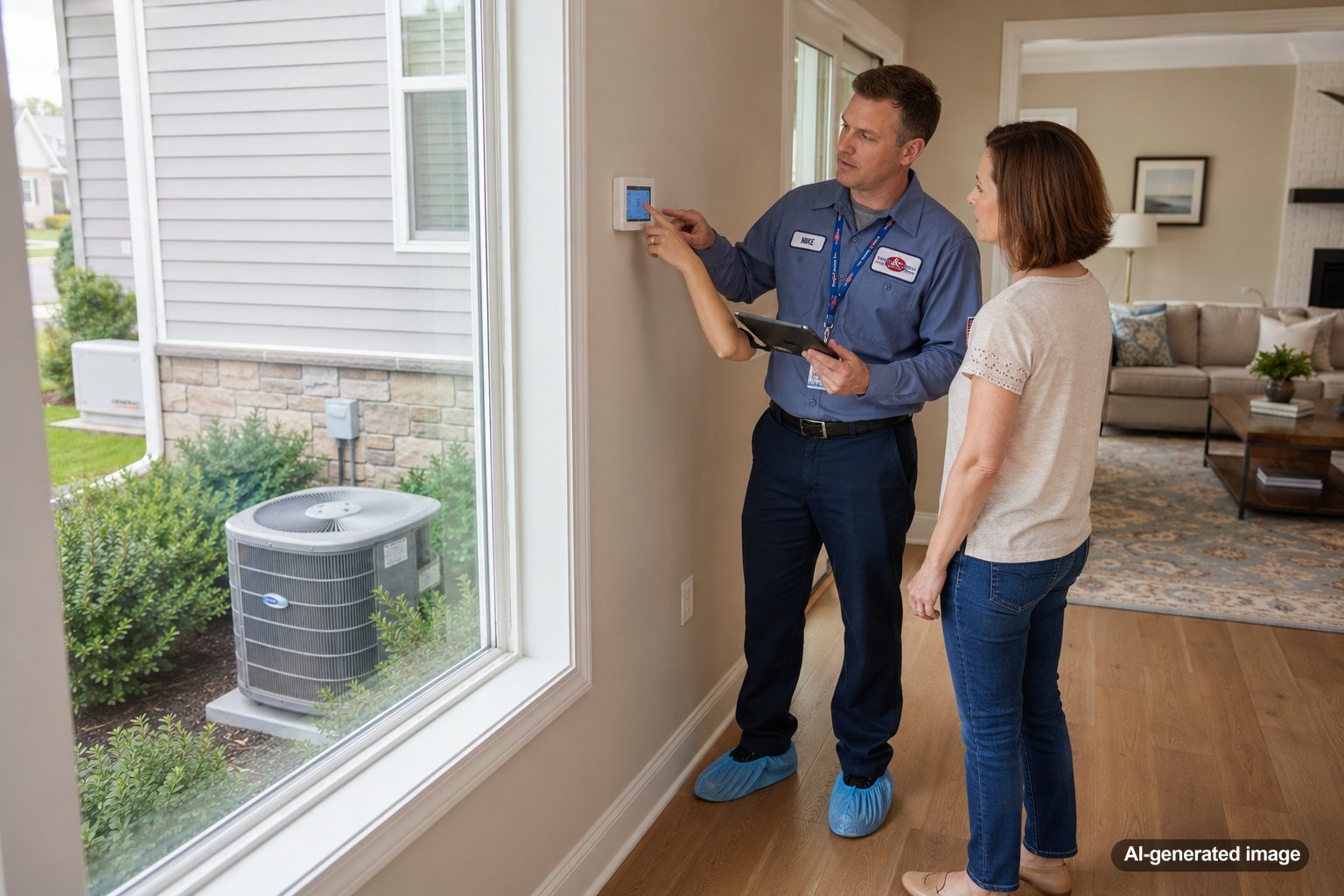
Your thermostat is the control center for your home’s cooling system, so a small thermostat problem can sometimes look like a much larger AC failure. If your air conditioner will not start, runs longer than expected, cycles on and off repeatedly, or leaves the house warmer than the temperature shown on the thermostat, the thermostat could be part of the problem. It is not the only possible cause, however. Airflow restrictions, electrical issues, equipment problems, and other HVAC conditions can produce similar symptoms, which is why it helps to know what clues point specifically toward the thermostat.
For homeowners throughout Central and Northern New Jersey, understanding those clues can make the next step easier. You may be able to rule out a simple setting or battery issue yourself, while persistent problems are better evaluated by a qualified HVAC technician. Meyer & Depew offers thermostat options as well as professional AC service and maintenance when the problem goes beyond a basic setting.
Your thermostat may be contributing to AC problems if the displayed temperature seems wrong, the AC does not respond when you change settings, the system starts and stops unexpectedly, or cooling behavior changes when the thermostat is adjusted. Before assuming the thermostat has failed, check the mode, temperature setting, fan setting, batteries if applicable, and whether the thermostat appears to have power. If the problem continues, professional diagnosis can determine whether the thermostat, wiring, control system, or AC equipment is responsible.
How a thermostat can create AC problems
A thermostat does more than display the temperature. It senses indoor conditions and signals the cooling system when your home needs more cooling. If the thermostat senses the wrong temperature, loses power, has a poor connection, or sends inconsistent signals, the AC may not operate the way you expect.
For example, a thermostat that reads 72 degrees when the room is actually much warmer may not call for enough cooling. A thermostat with an intermittent connection could cause the system to stop before reaching the set temperature. In other cases, the thermostat may be working normally and simply revealing another issue, such as weak airflow or an AC system that cannot keep up with the cooling demand.
Signs the thermostat could be causing your AC problem
The thermostat temperature does not match the room
If the thermostat says the house is comfortable but the room feels noticeably warmer or cooler, compare the reading with another reliable indoor thermometer placed nearby. A small difference does not automatically mean the thermostat is defective, but a consistent and significant mismatch could indicate a sensing or placement issue.
Location matters, too. A thermostat exposed to direct sunlight, drafts, nearby heat sources, or unusual airflow may sense conditions that do not represent the rest of the home. That can affect when the AC turns on and off.
The AC does not respond to thermostat changes
When you lower the temperature setting and the AC does not start after a reasonable delay, first confirm that the thermostat is set to cooling mode and that the requested temperature is below the current room temperature. Some systems intentionally delay startup for a few minutes to protect equipment, so an immediate response is not always expected.
If the thermostat appears active but repeated setting changes do not produce a response, the problem could involve the thermostat, controls, wiring, power supply, or the AC equipment itself. Those possibilities are difficult to separate without proper testing.
The system starts and stops unexpectedly
Frequent or irregular cycling can sometimes be related to thermostat location, sensing problems, loose connections, or control issues. It can also have causes elsewhere in the HVAC system, including restricted airflow or equipment faults. Because short cycling can put additional stress on cooling equipment, recurring cycling is worth having evaluated rather than repeatedly changing thermostat settings and hoping it clears up.
The thermostat screen is blank or inconsistent
A blank display may point to dead batteries on models that use them, a loss of power, or another electrical or HVAC control issue. If your thermostat uses replaceable batteries, installing fresh batteries according to the manufacturer’s instructions is a reasonable homeowner check. If the display remains blank, professional service may be appropriate.
A screen that resets, flickers, or behaves unpredictably can also be a clue, especially when the AC problem happens at the same time. Avoid removing panels or attempting electrical repairs yourself.
The AC runs even when the thermostat setting should not call for cooling
If cooling seems to continue after the set temperature has been reached, confirm the thermostat is in the correct mode and look at the fan setting. A fan set to ON may continue circulating air even when the outdoor cooling equipment is not running. That is different from the AC compressor itself continuing to operate.
If the cooling equipment appears to run continuously regardless of thermostat settings, contact a qualified HVAC professional. The issue could involve the thermostat or another component in the control system.
Safe thermostat checks homeowners can make
- Confirm the thermostat is set to COOL rather than HEAT or OFF.
- Set the desired temperature below the current indoor temperature.
- Check whether the fan is set to AUTO or ON and understand that ON can keep the indoor fan running continuously.
- Replace thermostat batteries if your model uses replaceable batteries and they are low or dead.
- Make sure the thermostat display is powered and responding normally.
- Check the HVAC air filter and replace it if it is visibly dirty or due for replacement.
- Make sure supply vents and return vents are open and not blocked.
- If it is safe to do so, check whether the HVAC breaker has tripped once. If it trips again, do not repeatedly reset it.
These checks can eliminate several simple causes without requiring you to open equipment or handle electrical components. If the system still will not cool correctly, further troubleshooting should be left to a professional.
When the thermostat may not be the real problem
Thermostat symptoms can overlap with many common AC problems. A system that runs but does not cool well could have restricted airflow, a dirty filter, an outdoor unit problem, a refrigerant-related issue, or another mechanical or electrical condition. A house that cools unevenly could involve ductwork, airflow balance, insulation, zoning, or equipment sizing rather than the thermostat itself.
New Jersey summer heat and humidity can also make an underlying cooling problem more noticeable. A thermostat may correctly call for cooling while the AC struggles to satisfy that call. In that situation, replacing the thermostat would not address the actual cause.
Could thermostat placement be affecting comfort?
Thermostat placement is easy to overlook. A thermostat located where sunlight hits the wall, near an exterior door, close to a supply vent, beside heat-producing electronics, or in an unusually warm or cool section of the house may not sense a representative temperature.
This can lead to rooms feeling uncomfortable even when the thermostat appears to be working properly. Homes with additions, multiple floors, finished basements, or significant room-to-room temperature differences may also benefit from a broader comfort evaluation. In some situations, zoning systems can provide more targeted temperature control, although the right solution depends on the home’s layout and HVAC system.
When to call an HVAC professional
Professional service is appropriate when basic thermostat checks do not resolve the problem, the AC repeatedly fails to respond, the thermostat loses power, the system short cycles, or the temperature remains uncomfortable despite apparently correct settings. A technician can evaluate the thermostat along with the HVAC controls and cooling equipment instead of assuming one component is responsible.
Call for professional help sooner if you notice smoke, sparks, an electrical burning smell, repeated breaker trips, flooding around equipment, or another unsafe condition. Avoid opening electrical panels, altering thermostat wiring, bypassing controls, or attempting repairs to high-voltage HVAC components.
Frequently asked questions about thermostat and AC problems
Can a bad thermostat stop the AC from turning on?
Yes, a thermostat problem can sometimes prevent the AC from receiving the correct call for cooling. However, a system that will not start can also have electrical, control, or equipment-related causes, so the thermostat should not be assumed to be the problem without testing.
Can thermostat batteries affect air conditioning?
On thermostats that depend on replaceable batteries for normal operation, weak or dead batteries can affect the display or thermostat operation. Replacing the batteries is a safe first check when applicable. Some thermostats receive power directly from the HVAC system and do not rely on batteries in the same way.
Why does my thermostat say it is cool when the house feels warm?
The thermostat may be sensing a different temperature than the rest of the home because of its location, airflow around it, direct sunlight, or a sensing issue. Uneven temperatures can also result from ductwork, airflow, insulation, zoning, or AC performance problems.
Can a thermostat cause an AC to short cycle?
A thermostat or control issue can sometimes contribute to short cycling, but it is only one possible cause. Recurring short cycling should be evaluated professionally because airflow restrictions and equipment problems can create similar behavior.
Should I replace my thermostat before calling for AC service?
Not necessarily. If the thermostat has an obvious battery or setting problem, correcting that may solve the issue. When the cause is unclear, diagnosing the system first can help avoid replacing a thermostat that is working properly.
A thermostat can absolutely contribute to AC problems, but many cooling issues create similar symptoms. Check the basic settings, power, batteries, filter, and vents first. If the AC still behaves inconsistently or cannot keep your home comfortable, a qualified technician can determine whether the problem is the thermostat, the cooling system, or both.
Need help with your heating, cooling, or HVAC system?
Meyer & Depew serves homeowners and businesses throughout Central and Northern New Jersey.
Get a quote or call 908.272.2100.