



Why a Thermostat Near the Kitchen Can Overcool the House
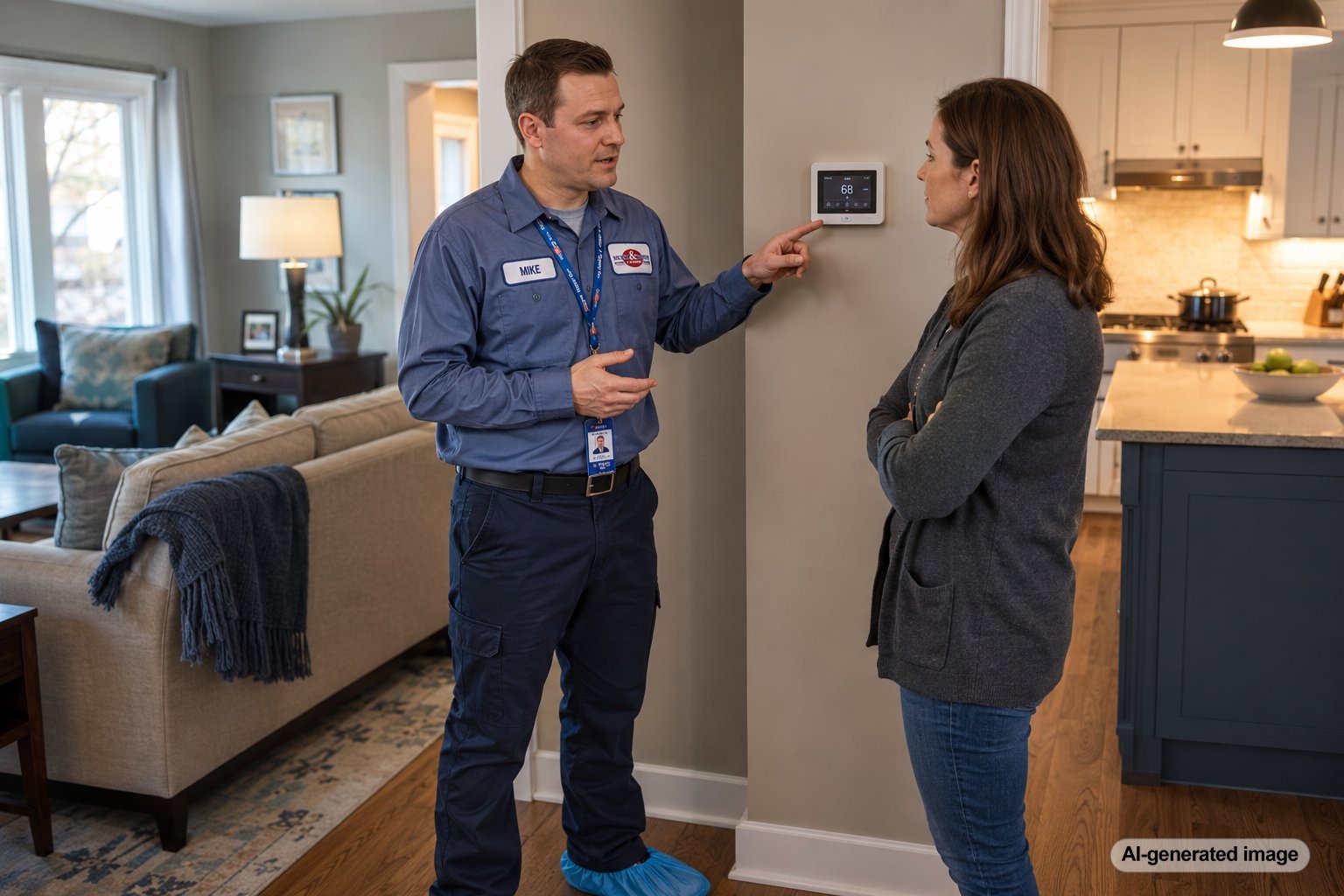
A thermostat near the kitchen can overcool the house because it may sense heat from cooking, appliances, sunlight, and busy household activity instead of the true average temperature of the home. When the thermostat thinks the house is warmer than it really is, the AC keeps running, and rooms farther from the kitchen can end up chilly.
This is a common comfort problem in New Jersey homes where kitchens connect to open living spaces, additions, hallways, or older floor plans that were not designed around modern cooling expectations. The thermostat may be doing exactly what it was told to do, but it is reading the wrong part of the house. If uneven cooling keeps happening, Meyer & Depew can help evaluate thermostat location, airflow, and comfort options through AC service and maintenance.
A thermostat near the kitchen can be fooled by heat from ovens, stovetops, dishwashers, refrigerators, sunlight, and people gathering nearby. The thermostat may call for more cooling even when bedrooms, offices, basements, or rooms on the other side of the house are already comfortable. The result is often longer AC run times, cold rooms, uneven temperatures, and comfort complaints that feel random.
How the kitchen affects thermostat readings
Your thermostat controls the cooling cycle based on the temperature it senses at its own location. It does not automatically know what is happening in every room unless the system includes properly configured remote sensors, zoning, or other controls.
A kitchen is one of the most heat-active areas in a home. Cooking dinner, running the oven, using small appliances, opening the refrigerator, running the dishwasher, and having several people in the room can all raise the local temperature. Even a few degrees of extra heat near the thermostat can make the AC run longer than needed for the rest of the house.
The problem can become more noticeable in open-concept homes. A thermostat on a wall near the kitchen may be exposed to cooking heat and family activity, while bedrooms down the hall or rooms upstairs may not gain heat at the same rate. The AC responds to the kitchen area, not the whole comfort picture.
Why overcooling happens in other rooms
Overcooling usually happens when the thermostat continues calling for cooling after other areas have already reached a comfortable temperature. The kitchen area may still feel warm because of appliance heat, sunlight, or poor air mixing, so the system keeps running.
Meanwhile, rooms with strong supply airflow, shaded windows, fewer people, or less heat gain may cool too far. That is why one person may feel warm near the kitchen while someone in a bedroom or home office needs a sweatshirt. The system is not necessarily too powerful, but the control point may not represent the whole house well.
Common signs the thermostat location is part of the problem
- The AC runs longer during or after cooking, even when other rooms feel cold.
- Bedrooms, offices, or finished basements feel too cool while the kitchen still feels warm.
- The thermostat is mounted on a wall near the oven, range, refrigerator, dishwasher, or a sunny window.
- Temperature swings are worse at dinner time or during large gatherings.
- The system seems to satisfy the thermostat at odd times, then starts again quickly once kitchen heat builds up.
These symptoms can also overlap with airflow issues, duct design, insulation problems, dirty filters, or an aging AC system. Thermostat placement is one possible factor, not the only one.
Other issues that can look like a thermostat problem
Before assuming the thermostat needs to move, it helps to look at the bigger comfort picture. A thermostat near the kitchen may be involved, but uneven cooling can come from several causes working together.
Restricted airflow
A dirty air filter, blocked return, closed vent, or furniture covering supply registers can change how rooms cool. If some rooms get too much airflow while others do not get enough, the thermostat may only reveal the imbalance rather than cause it.
Sun exposure and window heat
Rooms with large windows, west-facing glass, or limited shading can gain heat quickly during New Jersey summer afternoons. If the thermostat is near a sunny kitchen wall or window, it may read warmer than the rest of the home.
Open floor plans and additions
Homes that have been renovated over time may have rooms that were added or opened up without a full ductwork redesign. The thermostat location that once worked may no longer match how the home is used today.
Oversized or undersized equipment
An AC system that is not properly matched to the home can create short cycles, humidity problems, or uneven temperatures. Thermostat placement can make those issues more obvious, but equipment sizing and ductwork still need to be evaluated together.
- Check whether the thermostat is near cooking appliances, direct sun, supply vents, return vents, or exterior doors.
- Replace or inspect the air filter if it is dirty.
- Make sure supply and return vents are open and not blocked by furniture, rugs, curtains, or storage.
- Notice when the overcooling happens, such as during cooking, late afternoon sun, or large gatherings.
- If your thermostat has remote sensors, confirm they are placed in rooms that reflect real comfort needs, not near heat sources.
Can a smart thermostat fix the issue?
A smart thermostat may help, but only if it is installed, configured, and used correctly. Some smart thermostats can work with room sensors, schedules, occupancy settings, and comfort profiles. Those features can be useful when the thermostat location is not ideal.
However, a smart thermostat cannot overcome every airflow or ductwork problem. If a kitchen thermostat is reading extra heat while the rest of the house is cold, adding sensors may help the system make better decisions, but it still depends on the home, equipment, wiring, and control setup. Meyer & Depew offers thermostat and comfort options, including thermostat solutions that can be matched to the way your home actually feels.
When zoning may be a better answer
If the home has consistent room-by-room temperature differences, zoning may be worth discussing. A zoning system can divide the home into separate comfort areas, so one thermostat or sensor does not have to represent the entire house. This can be especially helpful for homes with finished basements, second floors, additions, large open kitchens, or rooms with very different sun exposure.
Zoning is not right for every system, and it should be evaluated by a qualified HVAC professional. Duct design, equipment capacity, control compatibility, and airflow all matter. When designed properly, zoning systems can make temperature control more precise in homes where one thermostat cannot do the whole job.
When to call a professional
Call a professional if overcooling continues after basic checks, if the AC runs constantly, if certain rooms are always uncomfortable, or if the thermostat location appears to be affected by kitchen heat. A technician can evaluate the thermostat location, temperature readings, airflow, duct performance, filter condition, refrigerant-related symptoms, and equipment operation without guessing.
You should also schedule service if the system is short cycling, freezing, making unusual noises, producing weak airflow, or struggling to manage humidity. Those issues can involve equipment problems that should not be handled as DIY repairs.
FAQ
Should a thermostat be installed in or near a kitchen?
Usually, a thermostat should not be installed where kitchen heat can affect the reading. A central interior location away from direct sun, vents, exterior doors, and heat-producing appliances is typically better.
Can cooking really change the thermostat reading?
Yes. Ovens, stovetops, dishwashers, refrigerators, small appliances, and extra people can all raise the local temperature near the thermostat. Even a small difference can cause longer AC run times.
Is moving the thermostat always the answer?
No. Moving a thermostat may help in some homes, but uneven cooling can also come from ductwork, airflow, insulation, window heat gain, equipment sizing, or control settings. A full comfort evaluation is often more useful than guessing.
Can remote sensors prevent overcooling?
Remote sensors can help some thermostats average temperatures or prioritize specific rooms, but placement and setup matter. A sensor placed near another heat source can create a new version of the same problem.
Why is the bedroom freezing while the kitchen feels warm?
The kitchen may have more heat gain, while the bedroom may receive strong cooling airflow or have less sun exposure. If the thermostat is near the kitchen, the AC may keep running until the kitchen area is satisfied, even if the bedroom is already too cold.
A thermostat near the kitchen can make the AC respond to cooking heat instead of whole-home comfort. If your home keeps overcooling in some rooms while the kitchen area stays warm, the best next step is to look at thermostat placement, airflow, controls, and possible zoning together.
Need help with your heating, cooling, or HVAC system?
Meyer & Depew serves homeowners and businesses throughout Central and Northern New Jersey.
Get a quote or call 908.272.2100.