



How Should You Set the Thermostat When Leaving for a Fall Weekend?
Estimated reading time: 7 minutes
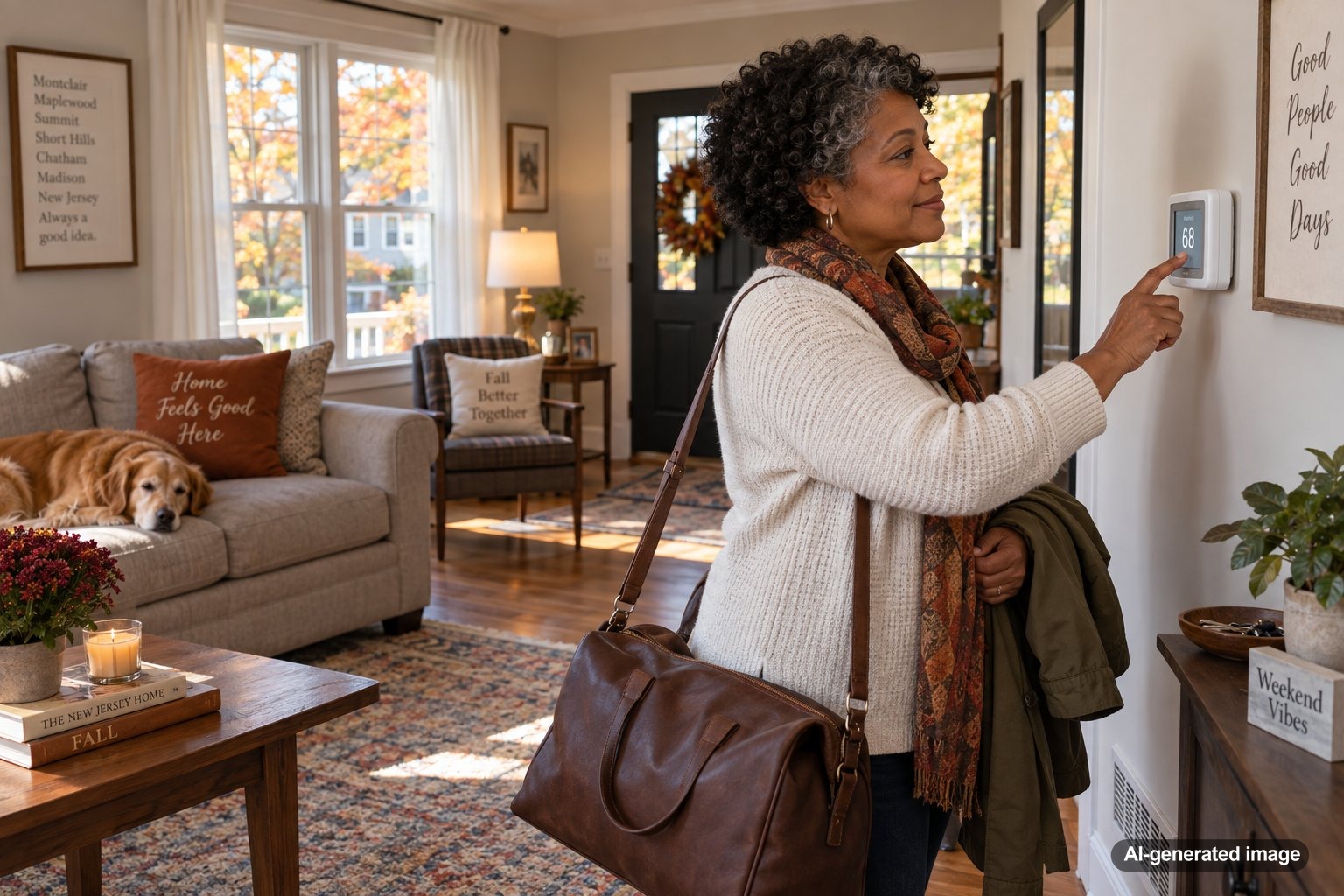
When you leave home for a fall weekend, you generally do not need to keep your thermostat at the same temperature you use while the house is occupied. A modest temperature adjustment can reduce unnecessary heating or cooling while still keeping the home within a reasonable range for changing fall weather. In Central and Northern New Jersey, where a mild afternoon can turn into a chilly night, the best setting depends on the forecast, your HVAC system, your home’s characteristics, and whether anyone or anything needs a more tightly controlled indoor temperature.
Rather than shutting the HVAC system off completely, use a moderate setback and let the thermostat maintain a safe, practical indoor temperature. If you have a programmable or smart thermostat, scheduling the change can also make it easier to have the house comfortable again before you return.
For a typical fall weekend away, use a modest thermostat setback instead of turning the system off. During cooler weather, many homeowners can lower the heating setpoint several degrees from their normal occupied setting. During unusually warm fall weather, the cooling setpoint can be raised. Keep pets, plants, plumbing, humidity, and temperature-sensitive belongings in mind, and avoid extreme settings simply to save energy.
Why a modest thermostat setback usually makes sense
Your home does not need the same level of heating or cooling when nobody is there, but completely shutting down climate control can create other problems. Fall temperatures in New Jersey can vary substantially between daytime and nighttime, and a house that feels comfortable when you leave may become much colder or warmer before you return.
A moderate setback reduces the amount of time your HVAC system needs to maintain your normal comfort temperature while still giving it a reasonable target. The goal is not to make the house as cold or hot as possible. It is to avoid conditioning an empty home more than necessary without creating an uncomfortable or potentially problematic indoor environment.
Consider whether you are heating or cooling
Fall is a transition season, which means some weekends may still require AC while others bring the first regular heating calls of the year. Your thermostat strategy should reflect the actual weather rather than the calendar.
If your home is in heating mode
Lower the thermostat from your normal occupied setting while you are away, but keep the heat operating. A small setback is often enough for a weekend trip. If overnight temperatures are expected to fall sharply, maintaining a reasonable minimum temperature becomes more important.
If your home is still in cooling mode
You can usually raise the cooling setpoint while the house is empty. However, do not assume that a September or early October weekend will stay cool just because mornings feel crisp. Sunny fall afternoons can still warm a closed house, especially one with large south- or west-facing windows.
If your thermostat is set to automatic changeover
Some thermostats can switch between heating and cooling automatically. This can be useful during shoulder season, but make sure the heating and cooling setpoints are separated appropriately so the system is not frequently switching modes. If you are unsure how your thermostat handles automatic changeover, check its settings before leaving.
Factors that should influence the temperature you choose
There is no single thermostat number that works for every New Jersey home. Several practical factors can change what makes sense.
- Outdoor forecast: Look at both daytime highs and overnight lows for the entire period you will be gone.
- Pets: Animals left at home may require a narrower temperature range than an empty house.
- Houseplants: Temperature-sensitive plants may not tolerate an aggressive setback.
- Home construction: Older homes, poorly insulated spaces, finished additions, and rooms over garages may lose heat faster than the thermostat location suggests.
- Sun exposure: Large windows and strong afternoon sun can cause some rooms to warm considerably even on mild days.
- Humidity: Warm, humid fall weather may still require some cooling or dehumidification to keep indoor conditions reasonable.
- Temperature-sensitive belongings: Musical instruments, certain electronics, artwork, medications, and other items may benefit from a more stable indoor environment.
Do not turn your HVAC system completely off just to save energy
Turning the system off may seem like the simplest way to avoid heating or cooling an empty house, but it removes your ability to control indoor temperature if the weather changes unexpectedly. A thermostat setback gives you a better balance between reduced HVAC operation and basic environmental control.
This is especially relevant during New Jersey’s fall shoulder season. A forecast that looks mild when you leave can include an unexpectedly cold night, a warm sunny afternoon, or a quick weather shift. Keeping the thermostat active allows the system to respond when needed.
Use scheduling features before you leave
A programmable or smart thermostat can make weekend setbacks easier. Instead of remembering to change the temperature when you walk out the door, schedule the away temperature in advance and program your normal comfort setting to resume before you expect to return.
If you use an Ecobee smart thermostat or another connected thermostat, remote access can also be useful if the forecast changes while you are away. You may be able to check the indoor temperature or adjust the setpoint without returning home.
Think about where the thermostat is measuring temperature
Your thermostat measures conditions where it is installed, not in every room. That distinction matters when the house is empty and you are using a wider setback than usual.
For example, a thermostat in a central hallway may read a comfortable temperature while a bedroom above a garage gets noticeably colder. A sunny family room may become much warmer than an interior thermostat indicates. Homes with persistent room-to-room temperature differences may benefit from remote sensors, zoning, or another strategy designed for more precise temperature control.
If uneven temperatures are a recurring concern rather than just a weekend-away issue, learning about zoning systems may help you understand options for managing different areas of the home.
What to check before leaving for the weekend
- Confirm that the thermostat is in the intended heating, cooling, or automatic mode.
- Make sure the programmed away temperature is correct.
- Check that the thermostat is not displaying a low-battery or equipment alert.
- Make sure supply and return vents are open and not blocked by furniture, rugs, or belongings.
- Inspect the air filter if it is due for attention and replace it if appropriate for your system.
- If you use a smart thermostat, confirm that remote access is working before you leave.
- Set your return schedule so the house can begin moving toward your normal comfort temperature before you arrive.
When a weekend setback exposes a comfort problem
If your home takes an unusually long time to recover after you return, some rooms become dramatically colder or warmer than others, or the HVAC system runs almost continuously trying to reach the normal setpoint, the thermostat may not be the only issue. Airflow restrictions, insulation differences, duct problems, thermostat placement, aging equipment, or other HVAC conditions can contribute.
Do not assume a specific component has failed based on recovery time alone. A qualified technician can evaluate the system if the pattern is persistent or noticeably different from previous seasons.
Frequently asked questions
Should I turn the thermostat off for a two-day trip?
Usually, a moderate setback is more practical than turning the HVAC system completely off. Keeping the thermostat active allows the system to respond if temperatures change significantly while you are away.
Should I use vacation mode for just a weekend?
You can if your thermostat offers it, but a regular temporary hold or scheduled setback may be just as convenient for a short trip. The important part is confirming when the thermostat will return to your normal schedule.
Can I change my smart thermostat while I am away?
If your thermostat supports remote access and remains connected to your home network, you may be able to adjust it through its app. Test the connection before leaving if you expect to rely on that feature.
What if the fall forecast includes both warm days and cold nights?
Automatic changeover can be useful if your thermostat and HVAC system support it. Use reasonable heating and cooling limits with enough separation between the two setpoints to avoid unnecessary switching.
Why is my house slow to warm up after I return?
A larger temperature setback naturally requires more recovery time. However, unusually slow recovery can also be associated with airflow restrictions, uneven heat loss, equipment performance, or other comfort issues. Professional evaluation may be appropriate if the problem continues.
For a fall weekend away, keep the thermostat operating and use a moderate setback rather than an extreme temperature or a complete shutdown. Check the full forecast, account for pets and temperature-sensitive areas, and use thermostat scheduling or remote access when available. New Jersey’s changing fall weather makes flexibility more useful than a one-size-fits-all setting.
Need help with your heating, cooling, or HVAC system?
Meyer & Depew serves homeowners and businesses throughout Central and Northern New Jersey.
Get a quote or call 908.272.2100.