



Should You Turn Off the AC Completely Once Fall Arrives?
Estimated reading time: 8 minutes
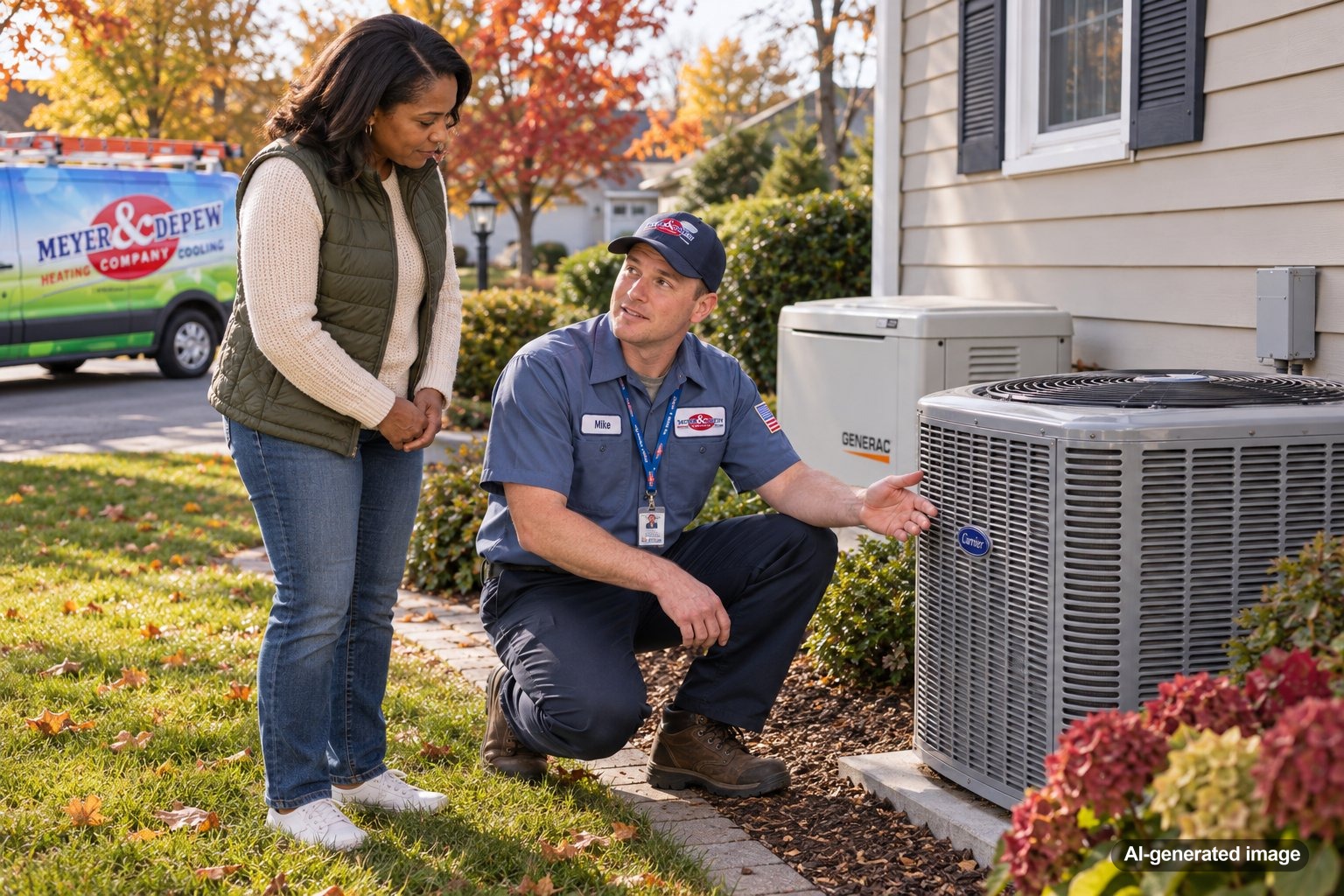
You usually do not need to shut your AC system off completely the moment fall arrives. In Central and Northern New Jersey, early fall can bring cool mornings, warm afternoons, and surprisingly humid days. Leaving the cooling system available while adjusting your thermostat for the changing weather is often more practical than treating the first cool day as the end of AC season.
The better approach is to let actual indoor conditions guide you. If your home stays comfortable without cooling, the AC simply will not run when the thermostat is set appropriately. As the season progresses, fall is also a useful time to think about AC service and maintenance before the cooling system sits idle for an extended period.
You generally do not need to turn the AC completely off as soon as fall begins. Instead, raise the cooling setpoint, use an appropriate thermostat mode, watch indoor humidity, and wait until consistently cooler weather arrives before treating cooling season as finished.
Why leaving the AC available can make sense in early fall
Fall weather in New Jersey rarely changes in a straight line. A stretch of crisp days can be followed by an afternoon warm enough to make an upstairs bedroom, sunroom, or home office uncomfortable. Homes with large windows, limited shade, significant afternoon sun, or substantial internal heat from appliances can also warm up even when outdoor temperatures feel mild.
If the thermostat is still configured for cooling, the system only runs when the indoor temperature rises above the cooling setpoint. That means leaving cooling available does not automatically mean the AC will operate constantly. It simply gives the system permission to run when your home actually needs it.
Completely disabling cooling too early can create a different inconvenience: you may find yourself repeatedly switching the system back on during warm spells. A thermostat setting that reflects your comfort preferences can handle those temperature swings more smoothly.
Raise the thermostat instead of shutting everything down
For many homeowners, the most useful fall adjustment is simply increasing the cooling setpoint. If the house remains below that temperature naturally, the AC stays off. If an unusually warm afternoon pushes the indoor temperature higher, cooling remains available.
Homes with programmable or smart thermostats may also have an automatic changeover mode that can switch between heating and cooling when conditions require it. Whether that feature is appropriate depends on the thermostat, equipment configuration, and the temperature limits you select. The important point is to avoid heating and cooling setpoints that are so close together that the system frequently changes modes.
If you are unsure how your thermostat is configured, review its normal operating settings rather than changing installer-level controls. Meyer & Depew also provides information about thermostat options for homeowners considering updated temperature controls.
Humidity can matter even when temperatures are mild
Outdoor temperature is not the only reason an air conditioner may still be useful during fall. Air conditioning also removes moisture from indoor air while it operates. A mild but humid day can leave a home feeling sticky even when the temperature is not particularly high.
That does not mean you should run the AC solely to chase a particular humidity number without considering the entire home. Indoor moisture can be affected by outdoor humidity, ventilation, bathroom and kitchen exhaust, basement conditions, air leakage, equipment sizing, and other factors. If the home repeatedly feels damp or develops persistent moisture concerns, a qualified HVAC professional can evaluate the broader comfort problem.
During transitional weather, pay attention to how the house actually feels instead of assuming that the calendar alone determines whether cooling is useful.
When it makes sense to stop relying on AC
Once daytime temperatures remain consistently comfortable and your home no longer needs mechanical cooling, the AC may naturally go days or weeks without running. At that point, there is little reason to keep lowering the thermostat just because cooling is still technically available.
You can consider cooling season effectively over when:
- Your home remains comfortable throughout the day without AC.
- Warm afternoons no longer push indoor temperatures above your preferred cooling setpoint.
- Indoor humidity is comfortable without regular cooling operation.
- Heating is becoming the more relevant comfort concern.
There is usually no need for a dramatic seasonal shutdown. Your thermostat and normal HVAC controls are designed to manage system operation. Homeowners should not disconnect wiring, open equipment panels, bypass switches, or make electrical modifications as part of a seasonal changeover.
Should you switch the thermostat to OFF?
You can set the thermostat system mode to OFF if you are confident the home will not need heating or cooling for a period of mild weather. This is different from cutting electrical power to HVAC equipment or making changes inside the system.
Some homeowners prefer OFF mode during pleasant stretches when open windows provide enough comfort. Others prefer leaving cooling enabled at a higher setpoint so the system can respond automatically to an unexpectedly warm day. Either approach can be reasonable as long as you understand how your thermostat works and the home remains comfortable.
If you have pets, temperature-sensitive occupants, valuable belongings affected by excessive heat or humidity, or portions of the home that warm considerably faster than others, leaving automatic temperature control available may be the more practical choice.
Use the end of cooling season as a maintenance checkpoint
Fall provides a natural opportunity to look back at how the AC performed during summer. Problems that were easy to tolerate in September can be forgotten by the following spring, when the first hot weather arrives and the system is suddenly needed again.
Think about whether you noticed any of the following during cooling season:
- Rooms that consistently stayed warmer than the rest of the house.
- Unusually long cooling cycles.
- Frequent starts and stops.
- Weak airflow from supply vents.
- Unusual noises or odors during operation.
- Water where it normally should not be around indoor equipment.
- A system that struggled to maintain the thermostat setting during hot weather.
These symptoms do not identify one specific failure by themselves, but they are useful information to share with a technician. Addressing an unresolved performance issue before the next cooling season can be more convenient than rediscovering it during the first stretch of hot weather.
Safe fall HVAC checks homeowners can make
- Inspect the air filter and replace it if needed according to the filter and equipment requirements.
- Make sure supply registers and return grilles are open and not blocked by furniture, rugs, or storage.
- Look for leaves, weeds, or obvious debris collecting around the outdoor AC unit.
- Review thermostat schedules that may still be based on summer routines.
- Make a note of unusual sounds, odors, airflow problems, or comfort issues you noticed during the cooling season.
Avoid opening electrical compartments, working on refrigerant components, modifying wiring, or attempting internal repairs. If the system shows signs of an electrical problem, burning odor, smoke, sparks, or another potentially unsafe condition, stop using the equipment as appropriate and contact a qualified professional or the appropriate emergency service.
Do not forget the heating side of the seasonal transition
Fall is not only about using the AC less. It is also the period when your heating system moves from months of limited use to regular operation. Waiting for the first cold night to discover a heating problem can turn a routine service issue into a more urgent comfort problem.
Before colder weather settles in, check that the thermostat responds normally, the air filter is in appropriate condition, and vents are unobstructed. If your system is due for professional maintenance, fall is a logical time to schedule it. Homeowners who prefer to keep recurring maintenance organized can also review Meyer & Depew’s service plans.
What if your home needs both heating and cooling in the same week?
That is normal during shoulder-season weather. One day may reach a temperature that makes upstairs rooms uncomfortable, while a cold night several days later may create a need for heat. The goal is not to force the HVAC system into one permanent seasonal mode according to a date on the calendar. The goal is to maintain reasonable comfort while avoiding unnecessary operation.
If you regularly need both heating and cooling within short periods, review your thermostat schedule and temperature settings. Large temperature swings between occupied and unoccupied periods can also make comfort harder to manage. A properly configured thermostat can simplify the transition without requiring constant manual adjustment.
Frequently asked questions
Can turning the AC off for fall damage it?
Simply setting the thermostat so the AC does not run is not normally the same as damaging the equipment. Problems are more likely to come from improper electrical changes, neglected maintenance, debris around the outdoor unit, or existing mechanical issues. Avoid making internal equipment changes yourself.
Should I cover my outdoor AC unit for winter?
Do not assume a full cover is appropriate for every system. Outdoor equipment is designed to tolerate weather, and a cover that traps moisture or encourages animals to nest can create other concerns. Follow the equipment manufacturer’s guidance or ask your HVAC contractor what is appropriate for your particular system.
Should I turn off the AC breaker during fall?
Homeowners generally should not use the electrical breaker as a routine thermostat substitute. Some equipment configurations have specific seasonal procedures, while others may need electrical power for controls or accessories. Use normal thermostat controls unless the manufacturer or a qualified technician has instructed you otherwise.
What thermostat mode is best during New Jersey fall weather?
There is no single setting that works for every home. Cooling mode with a higher setpoint, OFF mode during consistently mild weather, or an appropriately configured automatic changeover mode can all be practical depending on your equipment and comfort needs.
When should I schedule AC service if summer is already over?
If the AC had airflow problems, unusual noises, inconsistent cooling, frequent cycling, or another unresolved issue during summer, you do not necessarily need to wait until spring. A qualified technician can evaluate the system and help determine whether service is appropriate before the next cooling season.
You do not have to shut your AC down completely just because fall has arrived. Let the thermostat and actual indoor conditions determine when cooling runs, adjust summer schedules as the weather changes, and use the seasonal transition to catch maintenance or comfort issues before they are forgotten.
Want to make HVAC maintenance easier to stay on top of?
A service plan can help keep routine heating and cooling maintenance on your calendar before small issues become bigger headaches.
You can also request a service appointment.