


Why Does Weak Airflow Increase AC Operating Costs?
Weak airflow can increase AC operating costs because your cooling system may need to run longer to move enough conditioned air through your home. When airflow is restricted, rooms can take more time to reach the thermostat setting, comfort may become uneven, and the equipment may operate for extended periods. During a hot, humid New Jersey summer, that extra runtime can become especially noticeable. Weak airflow does not automatically mean that the AC itself has failed, but it is a symptom worth investigating before higher energy use and comfort problems become the new normal.
If your system seems to be running frequently while certain rooms still feel warm or stuffy, airflow should be part of the conversation. Professional AC service and maintenance can help identify whether the restriction involves a filter, ductwork, blower performance, coil condition, or another part of the HVAC system.
Weak airflow can raise AC operating costs because the system may run longer to satisfy the thermostat, struggle to distribute cooled air evenly, and operate under conditions that reduce effective cooling performance.
- Restricted airflow can lengthen cooling cycles.
- Longer runtime generally means more electricity is being used.
- Poor air distribution can leave some rooms uncomfortable even while the AC keeps running.
- Airflow problems may also contribute to coil or system performance issues that require professional evaluation.
How Weak Airflow Makes Your AC Work Longer
An air conditioner does more than create cool air. The system also needs to move that conditioned air through the ductwork and into the rooms of your home. If the volume of air moving through the system is lower than it should be, the cooling process becomes less effective from the homeowner’s point of view.
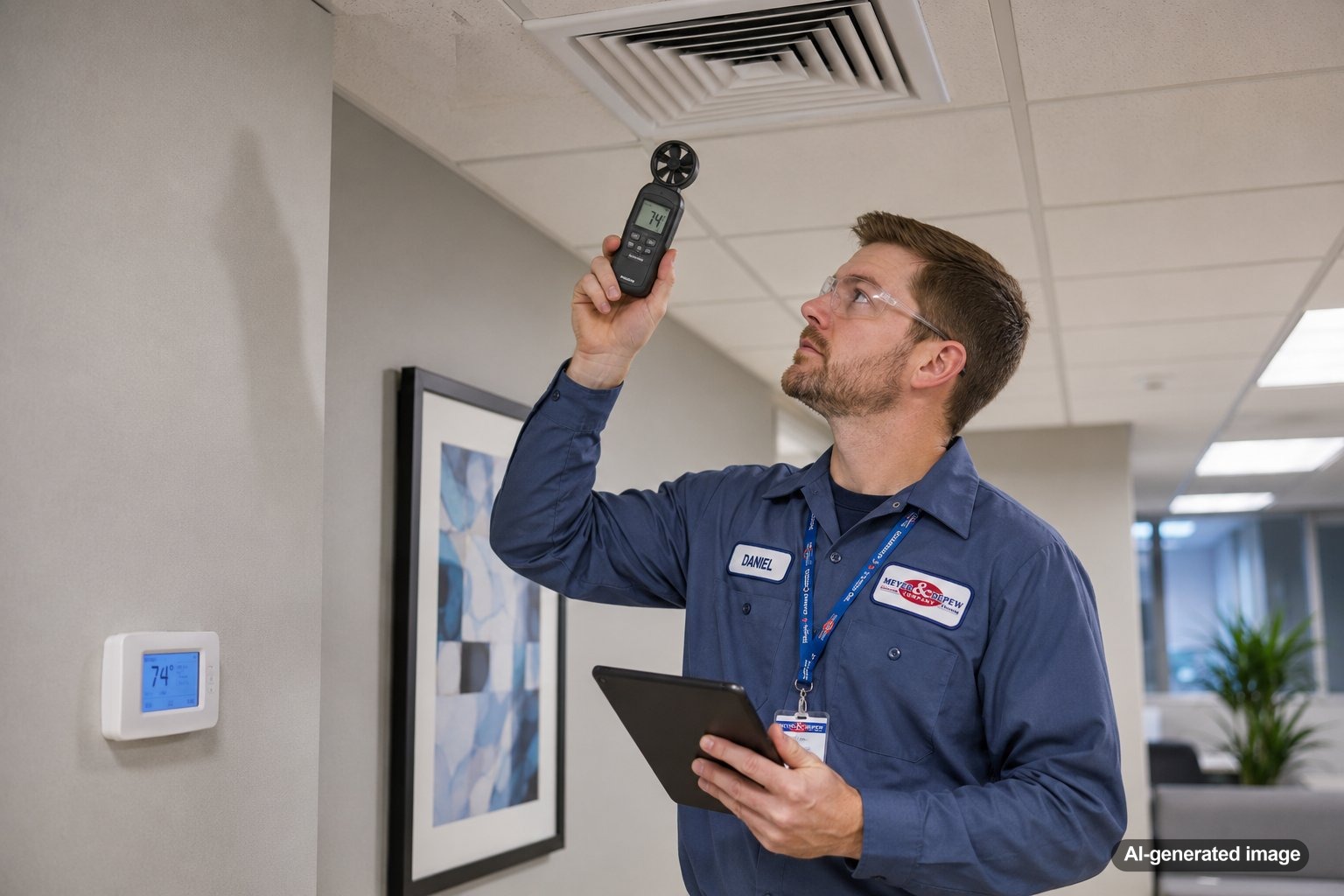
Imagine that your thermostat is set to 74 degrees, but restricted airflow means the rooms farthest from the air handler receive only a weak stream of cooled air. The system may continue operating because the thermostat has not yet detected the desired temperature. Instead of completing a normal cooling cycle, the AC can remain on for a longer period while trying to satisfy the same thermostat setting.
That extended runtime is the basic connection between weak airflow and higher operating costs. The equipment is using electricity while it runs, so a system that regularly needs more time to cool the home may consume more energy than one that distributes air properly.
Common Airflow Restrictions That Can Affect Cooling Costs
Airflow problems can develop for several reasons, and some are easier to identify than others. A qualified HVAC technician can evaluate the complete system, but understanding the common possibilities can help you recognize when a service call makes sense.
A Dirty or Overly Restrictive Air Filter
An air filter that has accumulated significant dust and debris can make it harder for air to pass through the return side of the system. Filters are important for protecting HVAC equipment and supporting indoor air quality, but they also need to be inspected and replaced as appropriate for the home, filter type, and operating conditions.
A filter that looks heavily loaded is one of the simplest airflow issues a homeowner can safely check. If you replace the filter and airflow remains weak, the restriction may be elsewhere.
Blocked Supply or Return Vents
Furniture, rugs, boxes, curtains, and other household items can partially or completely block supply registers or return grilles. Closing multiple supply vents in an attempt to redirect cooling can also affect how the duct system operates. Keeping vents open and unobstructed gives the HVAC system a better opportunity to move air as intended.
Ductwork Problems
Air can lose momentum before it reaches a room when ductwork is damaged, disconnected, restricted, poorly configured, or otherwise unable to deliver the expected airflow. Duct-related problems are not always visible because much of the system may be located behind walls, above ceilings, in attics, or in other concealed areas.
If one section of the house consistently receives much less air than another, ductwork or air distribution may be worth evaluating. Uneven airflow can also be related to broader comfort-control considerations, including appropriately designed zoning systems in homes where separate temperature control makes sense.
Indoor Coil or Blower Issues
The indoor portion of an AC system relies on proper heat transfer and air movement. Dirt buildup, mechanical problems, incorrect blower operation, or other equipment conditions may reduce airflow or cooling performance. These are not homeowner repair projects. A qualified technician can inspect the system safely and determine what is actually contributing to the problem.
Why Weak Airflow Can Make Humidity Problems More Noticeable
New Jersey summers can bring both high temperatures and substantial humidity. Air conditioning helps address indoor heat and moisture, but comfort depends on the system operating under appropriate conditions. When airflow or cooling performance is abnormal, homeowners may notice that the house feels clammy, uneven, or warmer than the thermostat reading suggests.
Humidity can also influence how comfortable a given temperature feels. A home that is technically near the thermostat setting may still feel uncomfortable when moisture levels are high. That discomfort can lead people to lower the thermostat further, which may increase AC runtime without addressing the underlying airflow problem.
If you find yourself repeatedly lowering the thermostat because the house never feels quite comfortable, consider whether weak airflow is part of the issue rather than assuming the temperature setting alone is the problem.
Weak Airflow Can Create Uneven Cooling
One of the most frustrating signs of an airflow problem is a home where one room feels comfortable while another remains noticeably warmer. The AC may be producing cooled air, but that does not help much if the air is not reaching each occupied area effectively.
Uneven cooling can encourage longer system operation because the thermostat continues calling for cooling. It can also cause homeowners to compensate with lower temperature settings, portable fans, or other workarounds. Those responses may make certain rooms more tolerable, but they do not identify why conditioned air is not being distributed properly.
Differences between floors, additions, finished basements, rooms over garages, and areas with unusual sun exposure can involve more than a simple airflow restriction. The important point is to determine whether the system has a service problem, a duct distribution issue, a control challenge, or a combination of factors.
Safe Airflow Checks Homeowners Can Make
- Check that the thermostat is set correctly for cooling.
- Inspect the air filter and replace it if appropriate.
- Make sure supply vents are open and not covered by furniture, rugs, or other objects.
- Make sure return grilles are not blocked.
- Look for obvious debris around the outdoor unit without opening or modifying the equipment.
- Compare airflow from several vents to see whether the weakness affects the whole home or only certain rooms.
These observations can give an HVAC technician useful information, but homeowners should avoid opening sealed equipment, working on electrical components, handling refrigerant, or attempting internal blower or coil repairs. If the simple checks do not reveal an obvious restriction, professional diagnosis is the safer next step.
When Weak Airflow Suggests You Should Schedule AC Service
An occasional difference between rooms does not necessarily mean something is seriously wrong. Persistent or worsening airflow problems, however, deserve attention, particularly when they occur with longer cooling cycles, increasing energy use, unusual system behavior, or declining comfort.
You should consider scheduling professional service when airflow remains weak after checking the filter and vents, when several rooms are no longer cooling properly, or when the AC seems to run for extended periods without reaching the thermostat setting. A technician can evaluate airflow, system operation, accessible duct conditions, temperature performance, and other relevant factors instead of treating the symptom in isolation.
Professional evaluation is also important if you notice ice, water where it should not be, electrical odors, smoke, sparks, or other potentially unsafe conditions. Avoid opening the equipment or attempting internal repairs yourself.
Could an Older AC System Also Be Part of the Cost Problem?
Weak airflow and higher operating costs do not always have a single cause. In an older cooling system, airflow concerns may exist alongside normal equipment aging, declining performance, recurring repairs, or a system that no longer matches the home’s comfort needs.
That does not mean every airflow complaint requires AC replacement. Many airflow problems may be serviceable depending on their cause. If the system is aging and operating costs have been trending upward, however, it can be useful to compare the cost and condition of the existing equipment with the potential benefits of a properly selected replacement. A professional assessment can help separate a repairable airflow issue from broader system considerations.
Frequently Asked Questions About Weak AC Airflow and Operating Costs
Can a dirty air filter really make my AC cost more to run?
A heavily restricted filter can reduce airflow, which may cause the cooling system to operate longer or less effectively. Inspecting the filter is a reasonable first step when airflow suddenly seems weaker than usual.
Why is airflow weak in only one room?
A single-room problem could involve a blocked register, a duct issue, air distribution, room characteristics, or another localized factor. Comparing that vent with nearby rooms can help establish whether the problem is isolated before a technician evaluates it.
Should I close vents in unused rooms to save money?
Closing multiple vents is not necessarily a reliable way to reduce cooling costs and can affect airflow through the duct system. It is generally better to keep normal supply and return paths open unless your HVAC system was specifically designed and controlled for zoning.
Does weak airflow always mean the blower is failing?
No. Weak airflow can have multiple causes, including filter restriction, blocked vents, duct issues, coil conditions, blower-related problems, or other system factors. A technician can test the equipment rather than assuming one component is responsible.
When should I call an HVAC professional?
If airflow stays weak after basic filter and vent checks, comfort is getting worse, or the AC is running for unusually long periods without keeping up, scheduling professional service is a reasonable next step.
Weak airflow can increase AC operating costs by making it harder for your cooling system to distribute conditioned air efficiently. If the system needs longer cycles to reach the thermostat setting, energy use may rise while comfort falls. Simple checks such as inspecting the filter and clearing blocked vents are worthwhile, but persistent airflow problems should be evaluated professionally so the actual cause can be identified.
Need help with your heating, cooling, or HVAC system?
Meyer & Depew serves homeowners and businesses throughout Central and Northern New Jersey.
Get a quote or call 908.272.2100.