


What Should You Check Before Calling for AC Repair?
Estimated reading time: 7 minutes
Before calling for AC repair, there are a few safe, simple checks that may help you understand what is happening with your system. In many Central and Northern New Jersey homes, weak cooling, poor airflow, or a system that will not start can sometimes be traced to thermostat settings, a dirty filter, blocked vents, or a tripped breaker. These checks will not fix every issue, and they should never involve opening equipment panels or working on electrical, refrigerant, or high-voltage components.
If your AC still is not working after these basic steps, it is time to schedule professional help. Meyer & Depew provides AC service and maintenance for homeowners who need practical answers, careful troubleshooting, and reliable guidance.
Before calling for AC repair, check the thermostat mode and temperature, inspect the air filter, make sure vents and returns are open, look for obvious debris around the outdoor unit, and check the breaker once if it is safe. If the system still does not cool properly, makes unusual noises, leaks water, trips the breaker again, or smells unsafe, stop troubleshooting and call a qualified HVAC professional.
Start With The Thermostat
The thermostat is the simplest place to begin because a small setting change can look like a major AC problem. Make sure it is set to cool, the temperature is set lower than the indoor temperature, and the fan setting is appropriate. In most homes, auto is the better everyday setting because the blower runs only when the system is cooling.
If the thermostat screen is blank, check whether it needs batteries or whether a breaker may have tripped. Smart thermostats can also create confusion after a schedule change, Wi-Fi interruption, or power outage. If your system is running at odd times, holding the wrong temperature, or ignoring your settings, the thermostat may need attention rather than the outdoor AC unit itself.
Check The Air Filter For Heavy Dust Or Restriction
A clogged air filter can reduce airflow enough to make the AC seem weak, noisy, or unreliable. When airflow is restricted, the system has a harder time moving cooled air through the home, and the indoor coil may become too cold. That can contribute to freezing, short cycling, and comfort problems that feel like a sudden breakdown.
Inspect the filter and replace it if it is dirty or past its recommended service interval. Filter timing varies by home, especially if you have pets, construction dust, high pollen exposure, or a system that runs heavily during New Jersey heat and humidity. If the system has ice on the refrigerant lines or indoor coil area, turn the system off and schedule service rather than trying to force it to run.
Make Sure Vents And Returns Are Not Blocked
Closed supply vents, blocked return grilles, furniture over registers, and heavy curtains can all interfere with airflow. A room that feels warm may not mean the AC equipment has failed. It may mean the cooled air cannot get where it needs to go, or the return side of the system is not pulling enough air back to the equipment.
Walk through the home and make sure supply vents are open and return vents are clear. Pay attention to rooms over garages, finished attics, sunrooms, upper floors, and additions, since these areas often reveal airflow or insulation issues first. If one area of the house is consistently uncomfortable while others feel fine, professional evaluation may uncover duct, zoning, thermostat, or equipment sizing concerns.
Look At The Outdoor Unit From A Safe Distance
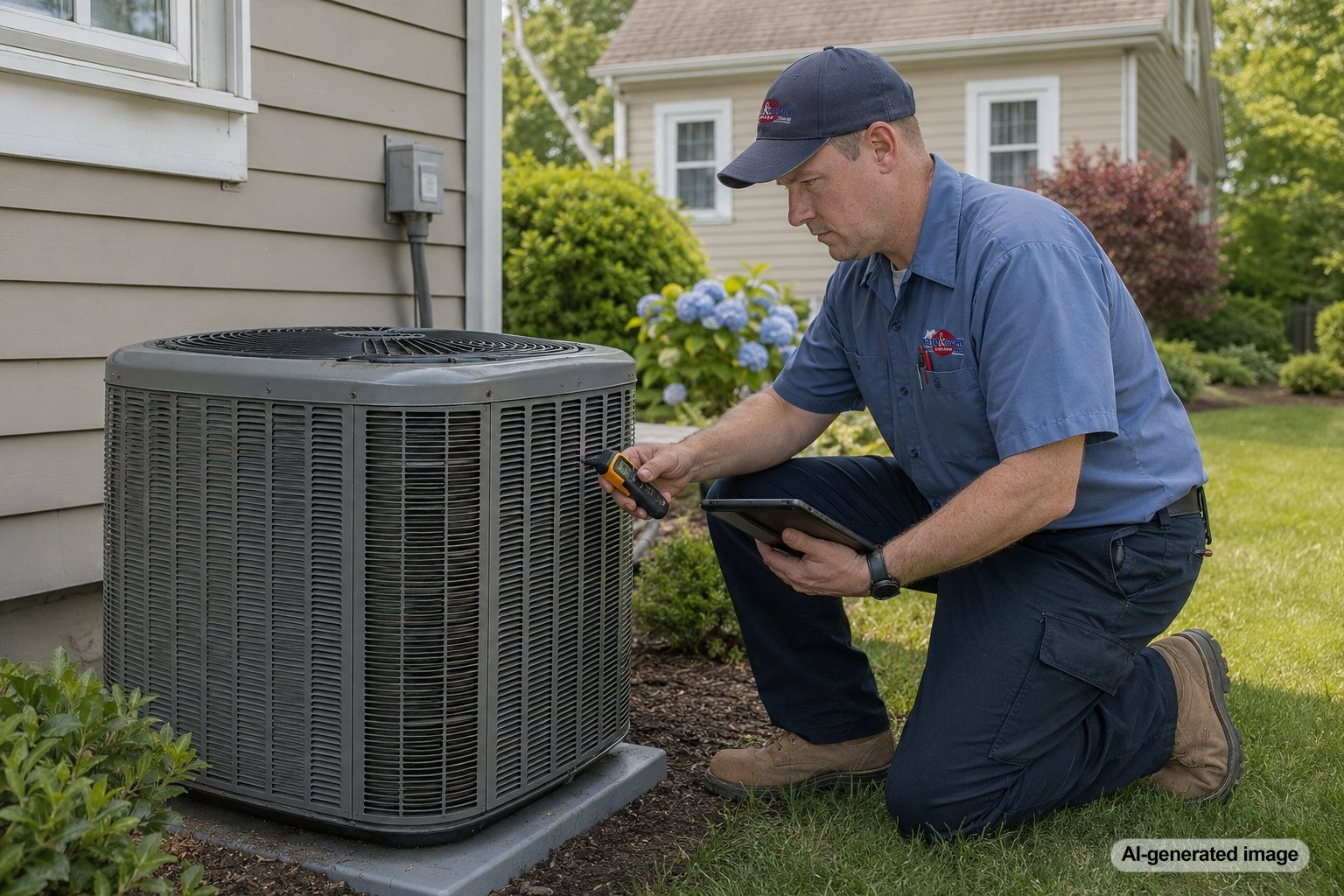
The outdoor condenser needs open space around it so it can release heat. Leaves, grass clippings, mulch, weeds, and storm debris can restrict airflow around the unit. After a windy New Jersey storm or a stretch of heavy yard growth, it is worth checking the area around the outdoor equipment.
You can safely clear loose debris from around the unit and make sure nearby plants are not crowding it. Do not remove panels, reach into the equipment, bend refrigerant lines, or attempt to repair wiring. If the outdoor fan is not running while the indoor system is calling for cooling, or if you hear buzzing, grinding, or repeated clicking, schedule professional AC repair.
Check The Breaker Once, If It Is Safe
A tripped breaker can shut down part or all of an air conditioning system. If your electrical panel is accessible and there are no signs of burning, smoke, water, heat, or damage, you can check whether the AC breaker has tripped. Reset it once only if you can do so safely.
If the breaker trips again, do not keep resetting it. Repeated tripping can point to an electrical or equipment problem that needs professional diagnosis. The same caution applies if you notice a burning smell, sparks, melted components, or unusual electrical sounds. In those situations, prioritize safety and contact the appropriate professional.
- Confirm the thermostat is set to cool and the temperature is set below the current room temperature.
- Replace or inspect the air filter if airflow seems weak or the filter looks dirty.
- Make sure supply vents and return grilles are open and not blocked.
- Clear obvious leaves, weeds, or debris from around the outdoor unit without opening the equipment.
- Check the breaker once if the panel is safe to access, but do not keep resetting it if it trips again.
When You Should Call For AC Repair
Call for professional AC repair when the system still will not cool after basic checks, the airflow remains weak, the outdoor unit will not run, the system short cycles, or the same issue keeps returning. You should also schedule service if you see water around the indoor equipment, ice on the system, or a sudden change in noise, smell, or performance.
Some problems are not visible from the outside. Low refrigerant, failing capacitors, worn motors, dirty coils, drainage problems, control board issues, and duct restrictions all require proper tools and training to evaluate. A qualified technician can test the system safely and explain whether repair, maintenance, or replacement should be considered.
What Not To Try On Your Own
Do not open sealed equipment, handle refrigerant, bypass safety switches, repair electrical wiring, adjust high-voltage components, or keep running a system that is making concerning sounds or smells. These steps can create shock, fire, refrigerant exposure, or equipment damage risks.
It is also best not to assume the most expensive possibility right away. A warm house could be caused by something simple, but it could also point to a deeper issue. Careful troubleshooting helps separate a small maintenance issue from a repair that needs prompt attention.
How Preventive Maintenance Can Reduce Surprise Problems
Routine maintenance cannot prevent every breakdown, but it can reduce the risk of many avoidable AC problems. A maintenance visit gives a technician a chance to inspect airflow, electrical components, coil condition, condensate drainage, thermostat operation, and overall cooling performance before the system is under peak summer demand.
For homeowners who want help staying ahead of seasonal service, Meyer & Depew offers service plans that can make regular HVAC maintenance easier to keep on the calendar.
FAQ: AC Checks Before Calling For Repair
Should I turn my AC off if it is not cooling?
If the system is blowing warm air, freezing, making unusual noises, leaking water, or causing the breaker to trip, turning it off can help prevent additional strain while you schedule service. If it is simply not reaching the thermostat setting, you can check the filter, vents, thermostat, and outdoor unit first.
Can a dirty filter really make my AC stop working?
A very dirty filter can restrict airflow enough to cause poor cooling, longer run times, freezing, or shutdowns. It is one of the most common safe checks homeowners can make before requesting AC repair.
Why is my AC running but the house is still warm?
Possible causes include a clogged filter, blocked vents, dirty coils, low refrigerant, duct issues, thermostat problems, or an aging system struggling with heat and humidity. If basic checks do not help, a technician can evaluate the system properly.
Is it safe to reset the AC breaker?
It may be safe to reset a tripped breaker once if your electrical panel is dry, accessible, and shows no signs of damage. If it trips again, do not continue resetting it. Repeated breaker trips need professional attention.
When should I call Meyer & Depew for AC repair?
Call when your AC still does not cool after simple checks, airflow remains poor, the system trips the breaker, ice appears, water leaks, or you notice unusual noises or smells. You can also request service if you are unsure whether the issue is minor or needs immediate attention.
Before calling for AC repair, focus on safe homeowner checks: thermostat settings, filter condition, airflow, outdoor clearance, and one safe breaker check. If the issue continues or anything seems unsafe, stop troubleshooting and schedule professional service.
Need help with your heating, cooling, or HVAC system?
Meyer & Depew serves homeowners and businesses throughout Central and Northern New Jersey.
Get a quote or call 908.272.2100.