


What to Ask Before Scheduling AC Repair
Estimated reading time: 7 minutes
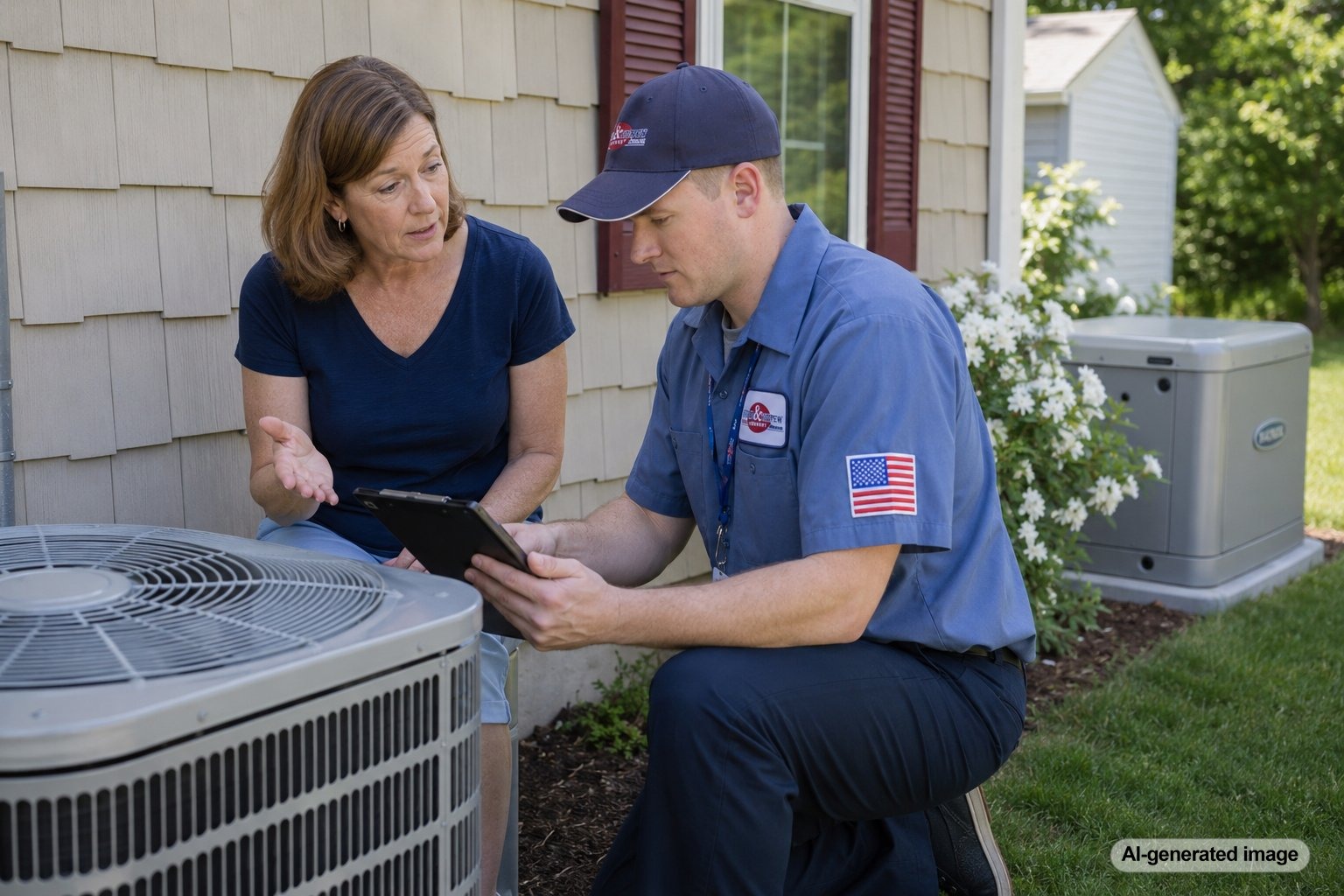
Before you schedule AC repair, it helps to know what information to gather and which questions can lead to a more useful service visit. You do not need to diagnose the problem yourself, and you should not open sealed equipment or work around electrical components. A few clear details about what you are noticing can help the HVAC company understand the urgency, prepare for the appointment, and explain what may happen next.
For homeowners in Central and Northern New Jersey, AC problems often show up during humid weather, long cooling cycles, heat waves, or after a system has been sitting unused through the colder months. Whether your system is blowing warm air, making new noises, short cycling, or struggling to cool upstairs rooms, the right questions can help you schedule service with more confidence. If you are already dealing with a cooling issue, Meyer & Depew offers AC service and maintenance for residential systems throughout the region.
Before scheduling AC repair, ask about appointment timing, service process, diagnostic fees, what information the technician needs, whether the issue sounds urgent, and what safe checks you can do before the visit. Be ready to describe the symptoms, when they started, your thermostat settings, recent filter changes, and whether the outdoor unit is running.
Ask What Information You Should Share Before The Appointment
A good repair visit starts before the technician arrives. When you call, explain what the AC is doing in plain language. Is the system running but not cooling? Is it turning on and off quickly? Are some rooms comfortable while others stay warm? Did the issue begin suddenly, or has performance been declining over several weeks?
It also helps to mention anything that changed recently. A new thermostat setting, a tripped breaker, a clogged filter, storm activity, or landscaping debris around the outdoor unit can all provide useful context. You do not need to know the technical cause. The goal is to give the service team a clear starting point.
Ask Whether The Problem Sounds Urgent
Some AC issues are uncomfortable but not immediately dangerous. Others may call for a more cautious response. If you notice electrical burning odors, smoke, sparks, water near electrical equipment, or repeated breaker trips, stop using the system if it is safe to do so and ask for professional guidance. If there is an immediate safety concern, contact the appropriate emergency service or utility.
For typical cooling problems, ask whether you should shut the system off until the appointment. For example, an AC that is frozen, blowing very little air, or running continuously without cooling may need to be turned off to prevent further strain until a qualified technician can evaluate it.
Ask What Safe Checks You Can Do First
Many homeowners want to know whether there is anything simple to check before scheduling AC repair. That is reasonable, as long as the checks stay safe. You should not remove equipment panels, add refrigerant, bypass switches, alter wiring, or try to repair sealed HVAC components yourself.
- Confirm the thermostat is set to cool and the temperature setting is below the indoor temperature.
- Inspect or replace the air filter if it is dirty or overdue.
- Make sure supply and return vents are open and not blocked by furniture, rugs, or curtains.
- Look for obvious leaves, grass, or debris around the outdoor unit without opening the equipment.
- Check whether the breaker has tripped once, if it is safe to do so. If it trips again, do not keep resetting it.
If these steps do not resolve the issue, professional service is the safer next move. Simple airflow problems can sometimes mimic larger failures, but persistent weak cooling, freezing, loud noises, or repeated shutdowns usually need a technician’s evaluation.
Ask How The Diagnostic Process Works
Before the visit, ask what the technician will typically review during an AC repair appointment. A proper diagnostic process may include checking thermostat operation, airflow, filter condition, electrical components, refrigerant-related performance indicators, condensate drainage, and the outdoor unit. The exact steps depend on the symptoms and the type of system.
This question matters because AC problems often overlap. Warm air could be related to airflow, refrigerant, electrical controls, outdoor coil condition, or a failing component. Short cycling could point to thermostat issues, improper airflow, oversized equipment, or safety controls. A qualified technician can narrow the cause without guessing.
Ask About Fees, Approvals, And Repair Options
It is fair to ask how diagnostic fees, repair approvals, and follow-up recommendations are handled. You should understand whether there is a charge for the service visit, whether repairs are discussed before work begins, and how replacement parts are addressed if something is not immediately available.
For older systems, ask how the company approaches repair versus replacement conversations. A single minor repair may make sense, while repeated repairs, poor comfort, refrigerant concerns, or a system near the end of its useful service life may call for a broader discussion. If replacement becomes part of the conversation, you can review AC installation and replacement options separately from the repair visit.
Ask About Scheduling, Access, And What To Expect At Home
Before scheduling, confirm the appointment window, who needs to be present, and what areas of the home the technician may need to access. AC service may involve the thermostat, indoor air handler or furnace, outdoor condenser, electrical disconnect, filter location, attic or basement equipment, and condensate drain area.
Clear access can make the visit more efficient. Move items away from indoor equipment, unlock gates if the outdoor unit is behind fencing, and secure pets before the technician arrives. If the system serves a business or multi-tenant property, make sure the service team knows about access rules, roof access, tenant schedules, or building management requirements.
Ask Whether Maintenance Could Help Prevent Repeat Issues
Not every AC breakdown can be prevented, but routine maintenance can reduce the risk of some common problems. Dirty coils, restricted filters, clogged drains, loose electrical connections, and airflow issues may be found before they turn into emergency comfort problems. In New Jersey, where AC systems can work hard through humid summer weather, seasonal maintenance is especially useful.
If your system has not been serviced recently, ask whether a maintenance plan would make future care easier to manage. Meyer & Depew’s service plans can help keep routine heating and cooling maintenance on a more consistent schedule.
Questions To Keep Handy Before You Call
- When did the cooling problem start?
- Is the AC running, not running, or turning on and off quickly?
- Is air coming from the vents, and does it feel warm, cool, or weak?
- Have you changed the air filter recently?
- Are any rooms much warmer than others?
- Did the breaker trip, and has it happened more than once?
- Are there unusual sounds, odors, leaks, ice, or visible damage?
- How old is the system, if you know?
Having these answers ready can make the scheduling call smoother. It also helps the HVAC company understand whether your issue is a comfort concern, an access issue, a possible equipment failure, or a situation that needs faster attention.
FAQ: Scheduling AC Repair
Should I turn off my AC before the technician arrives?
If the system is frozen, making severe noises, producing electrical odors, leaking near electrical components, or repeatedly tripping a breaker, ask the HVAC company what to do and stop using it if it is safe. For normal weak cooling, the service team can advise based on your symptoms.
Do I need to know what part is broken before calling?
No. Describe what you see, hear, and feel. A qualified technician can evaluate the system and explain the likely cause after checking the equipment.
Can a dirty filter really cause an AC problem?
Yes, a dirty filter can restrict airflow and may contribute to weak cooling, freezing, longer run times, or comfort problems. It is one of the safest things homeowners can check before scheduling service.
When should I ask about replacement instead of repair?
Ask about replacement when the system is older, repairs are becoming frequent, comfort is consistently poor, or the estimated repair is significant. A technician can help you understand the condition of the system without assuming replacement is always the right answer.
The best questions before AC repair are practical ones: what information to share, what is safe to check, how urgent the problem may be, how diagnostics and approvals work, and what to expect during the visit. Clear communication helps everyone start from a better place.
Need help with your heating, cooling, or HVAC system?
Meyer & Depew serves homeowners and businesses throughout Central and Northern New Jersey.
Get a quote or call 908.272.2100.