


What to Check If Your AC Stops Working After a Storm
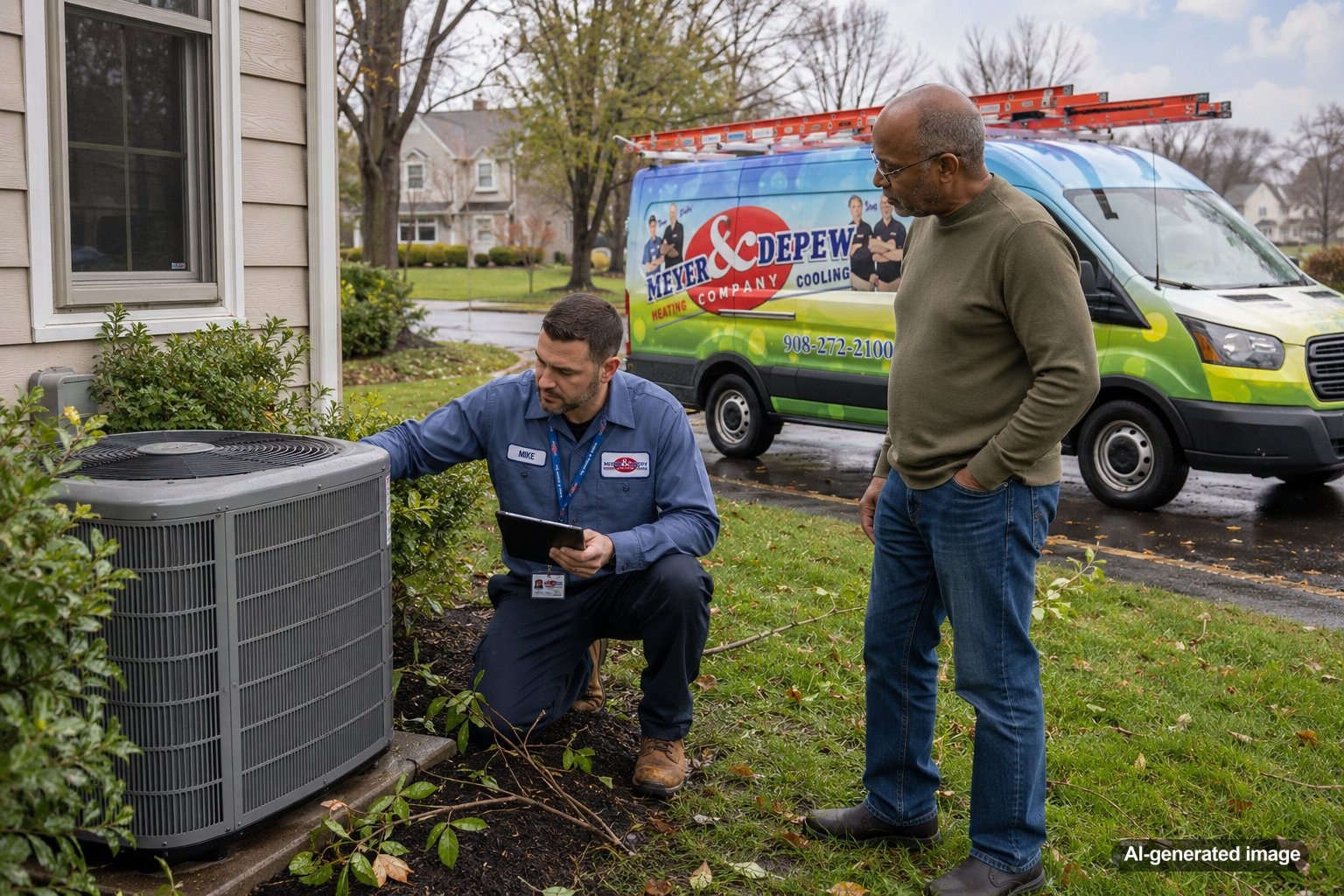
If your AC stops working after a storm, start with simple safety checks: the thermostat, power status, air filter, indoor vents, outdoor unit area, and breaker. Do not open equipment panels, touch damaged wiring, or keep resetting a breaker that trips again. Storms can leave behind power surges, standing water, debris, and electrical issues that require a qualified HVAC technician.
In Central and Northern New Jersey, summer storms can roll through fast, knock out power, and leave homeowners wondering whether the AC is actually broken or simply waiting for a safe reset. A few careful checks may help you understand what is happening before you schedule AC service and maintenance.
After a storm, confirm the thermostat is set correctly, make sure the home has power, check the air filter, look for blocked vents, inspect the outdoor unit from a safe distance, and check the breaker once if conditions are dry and safe. If you see flooding, sparks, smoke, a burning smell, damaged wires, or the breaker trips again, stop and call a professional.
Start With Safety Before Touching Anything
Storm-related AC problems are different from ordinary cooling complaints because electricity, water, and outdoor equipment may all be involved. If there is standing water near the indoor or outdoor unit, visible electrical damage, a burning smell, smoke, buzzing, sparking, or a downed line nearby, do not try to troubleshoot the system yourself.
It is also important to keep generator safety in mind during outages. A portable generator should never be used inside a home, garage, basement, or enclosed area. If backup power is part of your storm plan, make sure it is installed and operated safely, and consider whether a permanent home generator is a better long-term fit for your property.
Check the Thermostat First
Power interruptions can sometimes affect thermostat settings, schedules, Wi-Fi connections, or batteries. Make sure the thermostat is set to cooling, the temperature setting is below the current room temperature, and the fan setting is appropriate. If the thermostat screen is blank, it may need new batteries or may not be receiving power.
For smart thermostats, a storm-related internet outage does not always mean the HVAC system cannot run. Many thermostats can still control basic heating and cooling locally. If the screen is active but the AC does not respond, avoid repeatedly switching modes on and off. Give the system a few minutes, then move on to the next safe check.
Confirm the Indoor Unit and Outdoor Unit Both Have Power
Central AC systems rely on more than one component. The indoor air handler or furnace blower moves air through the home, while the outdoor condenser releases heat outside. After a storm, one part may appear to run while the other does not.
If you hear indoor airflow but the outdoor unit is silent, the issue could involve a breaker, disconnect, contactor, capacitor, surge damage, or another electrical component. If the outdoor unit hums, clicks, or tries to start but does not run normally, turn the system off and request service. Those symptoms are not a safe DIY repair.
Look at the Breaker, but Only Reset It Once
A tripped breaker can happen after a power surge or storm-related interruption. If the electrical panel is dry, accessible, and safe to approach, you can check whether the AC or HVAC breaker has tripped. If it has, reset it one time.
If the breaker trips again, leave it off. A breaker that keeps tripping is doing its job by protecting the circuit. Repeated resets can create a safety risk and may make equipment damage worse. At that point, the system should be evaluated by a qualified technician.
- Make sure the thermostat is set to cool.
- Replace or inspect the air filter if it is dirty.
- Confirm supply and return vents are open and not blocked.
- Look for branches, leaves, or debris around the outdoor unit without reaching into it.
- Check the breaker once if the area is dry and safe.
- Stop troubleshooting if you see water, damaged wiring, smoke, sparks, or repeated breaker trips.
Inspect the Outdoor Unit From a Safe Distance
High winds can push leaves, branches, mulch, patio items, and other debris against the outdoor condenser. When airflow around the coil is blocked, the AC may overheat, short cycle, or fail to cool properly. Look around the unit and clear only loose debris that is safe to remove from the outside.
Do not remove panels, reach into the fan grille, straighten internal parts, or use tools on the equipment. If a branch struck the unit, the cabinet is bent, the fan blade looks damaged, or the unit has shifted off its pad, keep the system off and schedule professional service.
Check the Air Filter and Airflow Inside the Home
A storm does not have to hit the AC directly to expose a weak point. If the system was already struggling with a dirty filter, blocked return, or restricted airflow, a power interruption or humid post-storm conditions may make the problem more obvious.
Check the filter and replace it if it is dirty or clogged. Make sure furniture, rugs, curtains, or storage items are not blocking returns or supply vents. Restricted airflow can cause poor cooling, frozen coils, longer run times, and more stress on the system.
Pay Attention to Water Around HVAC Equipment
Heavy rain can create problems around outdoor units, basement air handlers, crawl space equipment, and condensate drainage. Water near electrical equipment should always be treated seriously. Do not step into standing water to inspect HVAC equipment, and do not turn the system back on if any component appears wet or flooded.
Even if the AC runs after the storm, watch for signs such as musty odors, water stains, gurgling drain sounds, or the system shutting off unexpectedly. A clogged condensate drain, wet control board, or damaged safety switch may not show up immediately.
Why Storms Can Stop an AC System
Storm-related AC failures often come from a few broad categories: electrical interruption, surge damage, physical debris, drainage problems, or preexisting wear that finally shows up under stress. A power surge can affect controls or motors. Wind-blown debris can restrict the outdoor coil or damage the fan. Heavy rain can expose drainage or electrical vulnerabilities.
That is why it is important not to assume one cause too quickly. A thermostat that is blank may be a battery issue, a power issue, or a deeper electrical problem. An outdoor unit that will not start may have a simple power interruption or a failed component. A technician can test the system safely instead of guessing.
When to Call for Professional AC Service
Call for service if the AC still does not run after safe homeowner checks, if cooling is weak after the system restarts, if the breaker trips again, or if the outdoor unit makes unusual noises. You should also schedule service if the system starts and stops repeatedly, blows warm air, leaks water, or smells hot or electrical.
For older systems, a storm-related breakdown can also be a useful moment to ask about the bigger picture. If the system has needed frequent repairs, struggles during humid New Jersey weather, or uses older components, a technician can help you weigh repair options against replacement planning without pressure.
FAQ: AC Problems After a Storm
Should I turn my AC off during a storm?
During severe lightning, flooding, or an outage, it may be safer to turn the system off at the thermostat. For major storms, follow local safety guidance and avoid using equipment if there is flooding, electrical damage, or unstable power.
How long should I wait before turning the AC back on after power returns?
Once power is stable and there are no visible safety concerns, wait a few minutes before restarting the system. Some equipment has built-in delay protection, so it may not start immediately even when everything is working normally.
Is it safe to reset the breaker?
It can be safe to reset a tripped breaker one time if the panel is dry and there are no signs of damage. If it trips again, leave it off and call a qualified professional.
Why is my AC running but not cooling after a storm?
Possible causes include blocked outdoor airflow, a dirty filter, a damaged outdoor unit, electrical component failure, refrigerant-related issues, or a blower problem. Some of these require professional testing and should not be handled as DIY repairs.
Can a storm damage an AC unit even if it looks fine?
Yes. Surge damage, control issues, and internal component problems are not always visible from the outside. If the system behaves differently after a storm, it is worth having it checked.
If your AC stops working after a storm, stay focused on safe checks only. Thermostat settings, filters, vents, visible debris, and one breaker reset are reasonable starting points. Water, wiring damage, burning smells, repeated breaker trips, or abnormal equipment behavior should be handled by a qualified HVAC technician.
Need help with your heating, cooling, or HVAC system?
Meyer & Depew serves homeowners and businesses throughout Central and Northern New Jersey.
Get a quote or call 908.272.2100.