

What to Expect When an HVAC Technician Comes to Your Home
When an HVAC technician comes to your home, you should expect more than a quick look at the equipment and a rushed explanation. A good service visit is organized, safety-minded, and focused on understanding the comfort problem you are actually experiencing. Whether you called because the AC is not keeping up, the heat is uneven, or it is time for routine maintenance, the visit should help you understand what is happening and what your next step should be.
For homeowners in Central and Northern New Jersey, HVAC service often involves older homes, changing seasons, humidity, renovations, additions, and systems that have been modified over time. A qualified technician should look at the equipment, listen to your concerns, perform appropriate checks, and explain findings in plain language. If you need help with a heating or cooling concern, Meyer & Depew offers residential HVAC services for homes throughout the region.
An HVAC technician will typically ask about the issue, inspect the thermostat and equipment, check airflow and system operation, look for visible wear or performance concerns, explain what they found, and recommend repair, maintenance, or replacement options when appropriate. You can prepare by clearing access to equipment, noting symptoms, replacing or checking the filter if it is safe to do so, and having any past service information available.
The Visit Usually Starts With Questions
Before tools come out, the technician will usually ask what you have noticed. This part matters. A home that feels muggy upstairs, a furnace that makes a new noise, or an AC system that only struggles in the late afternoon can point the technician toward different checks.
Try to share specific details, such as when the problem started, whether it happens every day, which rooms are affected, and whether the system has recently been serviced. If the equipment stopped working after a storm, power outage, filter change, thermostat adjustment, or renovation project, mention that too.
The Technician Will Need Safe Access To Your HVAC Equipment
Most service visits require access to the indoor unit, outdoor unit, thermostat, electrical disconnects, filters, vents, and sometimes the attic, basement, crawl space, or utility room. Clearing a path before the appointment can help the visit move more smoothly.
For a cooling visit, the technician may need to inspect both the indoor air handler or furnace area and the outdoor condenser. For a heating visit, they may need access to the furnace, boiler, heat pump, venting, or related controls. If the system is in a tight utility closet or attic, make sure the area is reachable and well lit if possible.
What The Technician May Check During The Appointment
The exact process depends on the reason for the visit and the type of system in your home. A maintenance visit is different from a no-cooling or no-heat service call, but many appointments include a combination of visual inspection, operational testing, and performance checks.
- Thermostat settings and operation: The technician may confirm the thermostat mode, setpoint, wiring behavior, schedule, batteries, or smart thermostat settings.
- Air filter and airflow: A clogged filter, blocked return, closed vent, or restricted duct path can affect comfort and equipment operation.
- Indoor equipment: The technician may inspect accessible components for visible wear, water issues, unusual noise, dirt buildup, or signs that the system is not operating as expected.
- Outdoor equipment: For AC and heat pump systems, the outdoor unit may be checked for debris, coil condition, fan operation, electrical concerns, and general performance indicators.
- Drainage and moisture: Condensate lines, pans, pumps, and nearby water marks may be reviewed when cooling equipment or high humidity is involved.
- Safety and control components: Depending on the system, the technician may review safety switches, electrical controls, venting, combustion-related concerns, or other items that require professional evaluation.
Homeowners should not be expected to open sealed equipment, handle refrigerant, adjust gas pressure, modify wiring, or bypass safety switches. Those are professional tasks and can create serious risks if handled incorrectly.
What You Can Safely Check Before The Technician Arrives
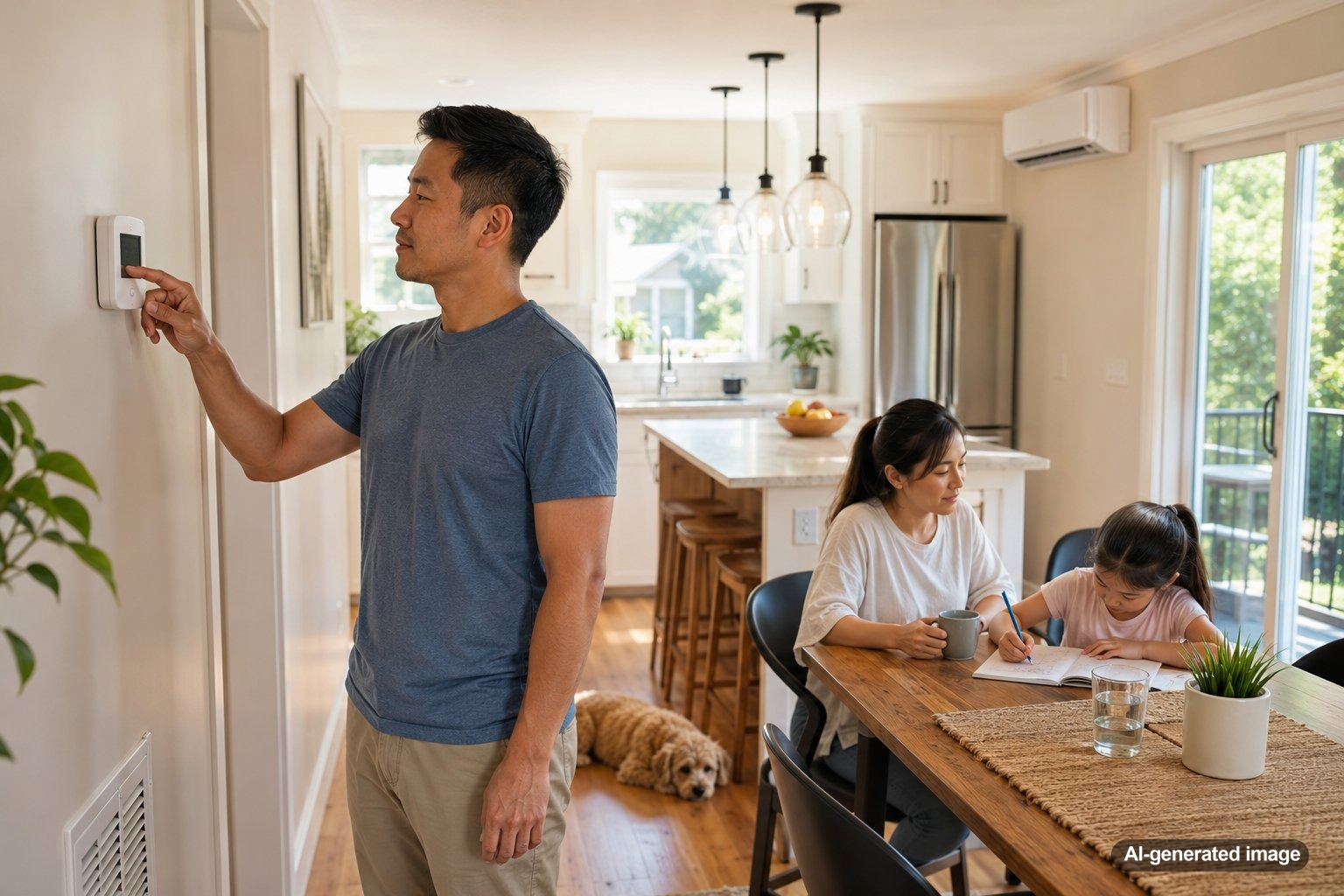
- Confirm the thermostat is set to the correct mode, such as cool, heat, or auto.
- Check whether the temperature setting is reasonable for the season.
- Inspect or replace the air filter if it is easy and safe to access.
- Make sure supply and return vents are open and not blocked by furniture, rugs, or curtains.
- Look for obvious leaves, weeds, or debris around the outdoor unit without removing panels.
- Check the breaker once if it is safe to do so, but do not keep resetting a breaker that trips again.
These checks are not a substitute for service, but they can rule out simple issues and give the technician useful information. If you smell gas, notice smoke, see sparks, hear electrical buzzing, suspect carbon monoxide, or see flooding around equipment, prioritize safety and contact the appropriate emergency service, utility, or qualified professional.
Expect A Clear Explanation, Not Just A Verdict
A helpful technician should explain what they found, what it means, and what choices you have. Sometimes the issue is straightforward, such as a clogged filter or a failed component. Other times, the visit reveals several contributing factors, such as restricted airflow, an aging system, poor duct balance, thermostat placement, or humidity problems.
It is reasonable to ask questions before approving work. Good questions include: What is causing the symptom? Is this repair urgent? Are there signs of a larger system issue? Would maintenance help reduce the risk of repeat problems? If the equipment is older, how does repair compare with replacement?
Repair, Maintenance, Or Replacement May All Come Up
Not every visit ends with the same recommendation. A newer system with a single failed part may be a good repair candidate. A system that has missed maintenance may need cleaning, adjustments, or follow-up service. Older equipment with recurring failures, poor comfort, or rising repair frequency may call for a broader replacement conversation.
The technician should avoid promising that any one repair will solve every future problem. HVAC systems are affected by equipment age, installation quality, ductwork, home insulation, thermostat control, usage patterns, and New Jersey weather conditions. A practical recommendation should reflect the whole situation, not just the part that failed that day.
How To Prepare For A Better Service Visit
A little preparation can help the technician work efficiently and give you a better explanation. Clear access to the furnace, air handler, boiler, condenser, thermostat, attic hatch, basement area, or utility space. Secure pets if needed. Write down symptoms so you do not have to rely on memory during the appointment.
If you have recent utility bill concerns, previous repair invoices, equipment age information, or warranty paperwork, keep it nearby. You do not need to become an HVAC expert, but accurate background information can help the technician understand whether the issue is new, recurring, seasonal, or connected to a past repair.
Maintenance Visits Are Different From Emergency Service Calls
During routine maintenance, the goal is to review system condition, clean or inspect appropriate components, check operation, and identify concerns before they become more disruptive. During a service call, the focus is usually on a specific complaint, such as no cooling, no heat, water near equipment, short cycling, weak airflow, or unusual noise.
If you want routine care to be easier to keep on the calendar, a service plan can help organize heating and cooling maintenance before the busiest weather periods. Maintenance cannot prevent every breakdown, but it can reduce the risk of avoidable problems and help catch visible concerns earlier.
When To Call A Professional
Call a qualified HVAC professional when your system will not turn on, runs constantly without reaching the set temperature, makes unusual noises, trips breakers, leaks water, produces burning odors, blows warm air in cooling mode, or leaves parts of the home uncomfortable despite normal thermostat settings.
You should also schedule service if the same problem keeps returning. Repeat symptoms often deserve a deeper look at airflow, controls, ductwork, system sizing, equipment age, or installation-related factors. Meyer & Depew provides AC service and maintenance as well as heating support for homes across Central and Northern New Jersey.
FAQ: HVAC Technician Home Visits
Do I need to be home for the HVAC service appointment?
In most cases, yes. The technician may need access to indoor equipment, the thermostat, utility areas, and outdoor equipment. Being available also lets you describe symptoms and ask questions about the findings.
Should I turn the system off before the technician arrives?
If the system is creating a safety concern, making a severe noise, leaking significantly, smoking, sparking, or producing a burning smell, shut it off if you can do so safely and seek professional help. For routine issues, leave the system as it is unless the service team gives you different instructions.
How long does an HVAC service visit take?
The time can vary based on the system type, access, symptoms, and whether the visit is for maintenance, diagnosis, or repair. A simple issue may be resolved quickly, while intermittent problems or systems with multiple concerns can take longer to evaluate.
What should I ask before approving a repair?
Ask what failed, why it may have failed, whether there are related concerns, how urgent the repair is, and whether the age or condition of the system changes the recommendation. A clear explanation can help you make a more confident decision.
Can the technician tell me if I need a new system?
A technician can point out repair history, equipment age, condition, performance concerns, and comfort limitations. Replacement is usually a broader decision based on reliability, repair cost, efficiency goals, comfort expectations, and how long you plan to stay in the home.
An HVAC technician visit should help you understand your system, not leave you guessing. Prepare access, share symptoms clearly, ask practical questions, and expect recommendations that match the equipment condition and the comfort problem in your home.
Need help with your heating, cooling, or HVAC system?
Meyer & Depew serves homeowners and businesses throughout Central and Northern New Jersey.
Get a quote or call 908.272.2100.