



When Does a Heat Pump Start Using Auxiliary Heat in New Jersey?
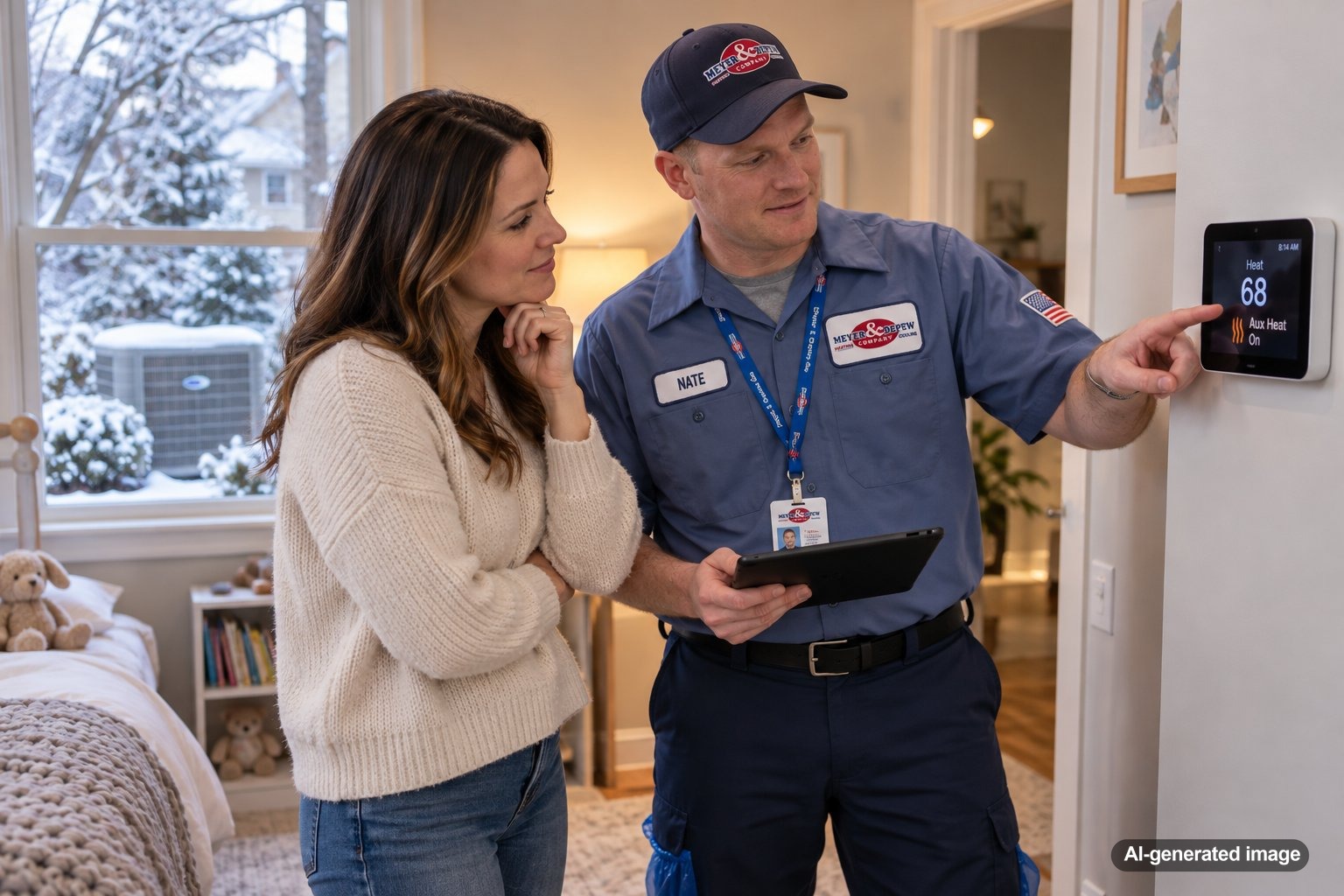
A heat pump in New Jersey may start using auxiliary heat when outdoor conditions, thermostat demand, or certain operating conditions make it difficult for the heat pump alone to raise the indoor temperature quickly enough. Seeing AUX heat appear occasionally during colder weather is not automatically a sign that something is wrong. The important questions are how often it happens, how long it stays on, and whether your home is reaching the temperature you selected.
Because heat pump controls vary by equipment and thermostat, there is no single outdoor temperature at which every system switches on auxiliary heat. Understanding what triggers backup heat can help you tell the difference between normal cold-weather operation and a situation that deserves professional attention. If your system is struggling to maintain comfort, Meyer & Depew’s heating service and maintenance information can help you understand your next step.
Auxiliary heat commonly turns on when a heat pump needs extra heating capacity. Depending on the system and thermostat, that can happen during cold outdoor temperatures, after a large thermostat increase, during a defrost cycle, or when the heat pump is not keeping up with the heating load.
- Occasional AUX heat operation during cold New Jersey weather can be normal.
- A large thermostat increase may cause auxiliary heat to engage so the home warms faster.
- Some systems use auxiliary heat while the outdoor unit goes through a defrost cycle.
- Frequent or nearly continuous AUX heat in moderate weather could point to an airflow, thermostat, equipment, or system-performance issue.
What Does Auxiliary Heat Mean on a Heat Pump?
A heat pump normally heats your home by moving heat from outdoor air into the house. Even when the outdoor air feels cold, it can still contain usable heat. As temperatures fall, however, the heat pump may have to work harder to deliver the amount of heat the home requires.
Auxiliary heat is a secondary heating source that supplements the heat pump. In many all-electric systems, the backup source is electric resistance heat. Some installations may use a different type of backup heating system. The exact configuration depends on the equipment installed in the home.
The thermostat or heat pump controls determine when supplemental heat is needed. That decision can depend on indoor temperature, outdoor temperature, how quickly the home is warming, equipment configuration, and control settings.
Does Auxiliary Heat Come On at a Specific Outdoor Temperature?
Not necessarily. Homeowners sometimes hear that auxiliary heat always starts at one particular temperature, but heat pump systems do not all operate according to a universal cutoff point. The balance between the home’s heating demand and the heat pump’s available capacity varies from one property and system to another.
A properly selected modern heat pump may continue supplying useful heat at temperatures well below freezing, while another system may need backup heat sooner. Home insulation, air leakage, ductwork, equipment sizing, thermostat programming, wind exposure, and the type and age of the heat pump can all affect when supplemental heat is needed.
For New Jersey homeowners, this means AUX heat may appear more frequently during a cold snap without necessarily indicating a malfunction. A better clue is whether the system returns to normal heat-pump operation as conditions improve.
Why AUX Heat May Turn On When You Raise the Thermostat
A common trigger is a large increase in the thermostat setting. Suppose the house is at 64 F and the thermostat is suddenly raised to 70 F. Depending on the thermostat and system configuration, the controls may interpret the six-degree difference as a request for rapid heating and bring on auxiliary heat to help close the gap.
This can also happen when recovering from an aggressive overnight setback. If you regularly lower the thermostat substantially before bed and then ask the house to warm several degrees early in the morning, the backup heat may engage even when the outdoor temperature is not exceptionally low.
That does not mean homeowners should never use temperature setbacks. It means the thermostat strategy should make sense for the specific heat pump. Some smart thermostats and heat pump controls can manage recovery gradually to reduce unnecessary supplemental heat operation. If thermostat behavior is confusing, reviewing your available thermostat options can help you understand how controls affect comfort and system operation.
Auxiliary Heat During a Defrost Cycle
During cold, damp weather, frost can form on the outdoor heat pump coil. The system periodically enters a defrost cycle to remove that frost. During defrost, the heat pump temporarily changes its operation, and some systems energize auxiliary heat indoors to keep cooler air from being delivered through the supply vents.
This is another reason AUX heat can appear briefly even when the system is operating normally. You may also notice steam or water around the outdoor unit during defrost. Steam generated as frost melts can look dramatic, but by itself it does not necessarily mean the unit is smoking.
However, heavy ice that does not clear, repeated defrost behavior, or an outdoor unit that remains encased in ice should be evaluated by a qualified HVAC technician.
When Frequent Auxiliary Heat Could Indicate a Problem
Occasional auxiliary heat and continuous auxiliary heat are very different situations. If AUX heat stays on for long periods during relatively mild weather, or if the home still cannot reach the thermostat setting, something may be limiting system performance.
Possible factors can include a dirty air filter, blocked airflow, thermostat settings, an outdoor unit obstructed by debris, a malfunctioning component, refrigerant-related problems, or a heat pump that is not delivering its expected capacity. The heating load of the home may also have changed because of additions, renovations, air leakage, or other building conditions.
No single symptom can identify the cause with certainty. A qualified technician can evaluate the thermostat, airflow, temperature performance, electrical components, outdoor unit, and overall heat pump operation rather than assuming the backup heat itself is the problem.
Safe Checks New Jersey Homeowners Can Make
- Check that the thermostat is set to Heat rather than Emergency Heat.
- Inspect the air filter and replace it if it is due for replacement or visibly restricted.
- Make sure supply registers and return vents are open and not blocked by furniture, rugs, or other objects.
- Look for obvious leaves, snow, or debris restricting airflow around the outdoor heat pump without opening or dismantling the unit.
- Notice whether AUX heat appears only briefly or seems to remain on for extended periods.
- Pay attention to whether the home is actually reaching the thermostat setting.
Homeowners should not open electrical panels, bypass safety controls, adjust refrigerant components, or attempt internal equipment repairs. If the system repeatedly trips a breaker, produces a burning smell, sparks, smokes, or creates another unsafe condition, stop treating it as a routine troubleshooting issue and seek appropriate professional help.
Auxiliary Heat vs. Emergency Heat
Auxiliary heat and Emergency Heat are related, but they are not the same thermostat function. Auxiliary heat is generally brought on automatically by the system when supplemental heating is needed. Emergency Heat is usually a manually selected thermostat mode that tells the system to rely on its backup heating source instead of normal heat pump operation.
Emergency Heat should not be selected simply because the weather is cold. If the heat pump is operating normally, its controls are generally designed to decide when auxiliary heat is appropriate. Emergency Heat may be used when the primary heat pump cannot operate properly and a qualified professional or equipment instructions indicate that backup heat should be used.
How New Jersey Weather Affects Heat Pump Operation
Central and Northern New Jersey can experience large temperature swings through the heating season. A relatively mild afternoon may be followed by a much colder night, and windy conditions can increase a home’s heat loss. Those changes affect how hard the heating system must work.
During milder winter conditions, the heat pump may handle the heating load without supplemental assistance. As outdoor temperatures fall or the home’s heating demand rises, auxiliary heat may operate more often. That transition is not automatically evidence that the heat pump is failing.
What matters is the pattern. If auxiliary heat appears primarily during colder periods and then decreases as the weather moderates, the system may simply be responding to changing demand. If it remains active during mild conditions or comfort deteriorates, an HVAC evaluation may be worthwhile.
When Should You Call an HVAC Professional?
Consider scheduling service when auxiliary heat seems to run much more frequently than it used to, stays on during relatively mild weather, or is accompanied by poor airflow, unusual noises, repeated cycling, or an inability to maintain the thermostat setting.
Professional evaluation is also appropriate if you are unsure whether thermostat settings are causing unnecessary backup heat operation. A technician can review the controls and equipment together because a thermostat setting that works well for one heat pump may not be appropriate for another.
If your heat pump has been operating through multiple New Jersey heating seasons without routine service, maintenance can also provide an opportunity to check airflow, equipment condition, electrical components, thermostat operation, and overall system performance. Maintenance cannot prevent every breakdown, but it may help identify developing issues before they become more disruptive.
Frequently Asked Questions About Heat Pump Auxiliary Heat
Is it normal for AUX heat to come on when it is freezing outside?
It can be. Colder outdoor temperatures increase the heating load on the home and can reduce the amount of heat some heat pumps can deliver without assistance. The frequency of auxiliary heat operation depends on the equipment, controls, home, and weather conditions.
Why does AUX heat come on after I increase the thermostat?
A larger temperature increase may cause the thermostat to request supplemental heat so the home reaches the new setting faster. The exact behavior depends on the thermostat and how it is configured.
Does AUX heat mean my heat pump is broken?
No. Auxiliary heat is a normal part of many heat pump systems. Concern is more appropriate when it operates unusually often, stays on in mild conditions, or appears alongside other comfort or equipment problems.
Should I switch to Emergency Heat when it gets very cold?
Not simply because the outdoor temperature is low. In normal operation, the heat pump and thermostat controls should manage auxiliary heat automatically. Emergency Heat is generally intended for situations in which normal heat pump operation is unavailable or professional guidance calls for its use.
Can a dirty filter cause more auxiliary heat use?
A heavily restricted filter can reduce airflow and may contribute to poor heating performance. That does not prove it is the reason AUX heat is running, but checking the filter is a sensible and safe homeowner step when heating performance changes.
AUX heat is not automatically a warning sign. In a New Jersey heat pump system, it may operate during cold weather, thermostat recovery, or defrost. What deserves attention is a change in the pattern, such as prolonged auxiliary heat in mild weather or a home that no longer reaches the desired temperature.
Need help with your heating, cooling, or HVAC system?
Meyer & Depew serves homeowners and businesses throughout Central and Northern New Jersey.
Get a quote or call 908.272.2100.