


Why Your AC May Run More After You Raise the Thermostat
Raising the thermostat usually sounds like it should make your AC run less, not more. In many homes, it will. But if your AC seems to run longer after you increase the set temperature, the system may be responding to humidity, airflow problems, heat stored inside the home, thermostat behavior, or a cooling issue that was already developing.
For homeowners in Central and Northern New Jersey, this can be especially confusing during humid summer weather. A small thermostat change can reveal how hard the system is working to remove moisture, move air through the house, and recover after the home has already absorbed heat. If the pattern continues, AC service and maintenance can help identify whether the issue is normal operation or a sign that something needs attention.
Your AC may run more after you raise the thermostat because the home is still holding heat, humidity is making the system work longer, airflow is restricted, the thermostat is reading conditions unevenly, or the equipment is struggling to cool efficiently. One long cycle is not always a problem. Repeated long run times, weak airflow, rising indoor humidity, warm rooms, or short cycling are better reasons to schedule service.
Why raising the thermostat does not always create an immediate shutdown
A thermostat setting is only one part of the cooling process. Your AC responds to the temperature near the thermostat, but the rest of the home may be warmer, more humid, or exposed to strong sunlight. When you raise the set point, the system may still need to finish a cooling cycle if the sensed temperature is above the new target.
For example, if the indoor temperature is 76 degrees and you raise the thermostat from 72 to 74, the AC still has work to do before it reaches 74. If the house has been gaining heat through windows, attic spaces, ductwork, or poorly shaded rooms, the system may continue running longer than expected.
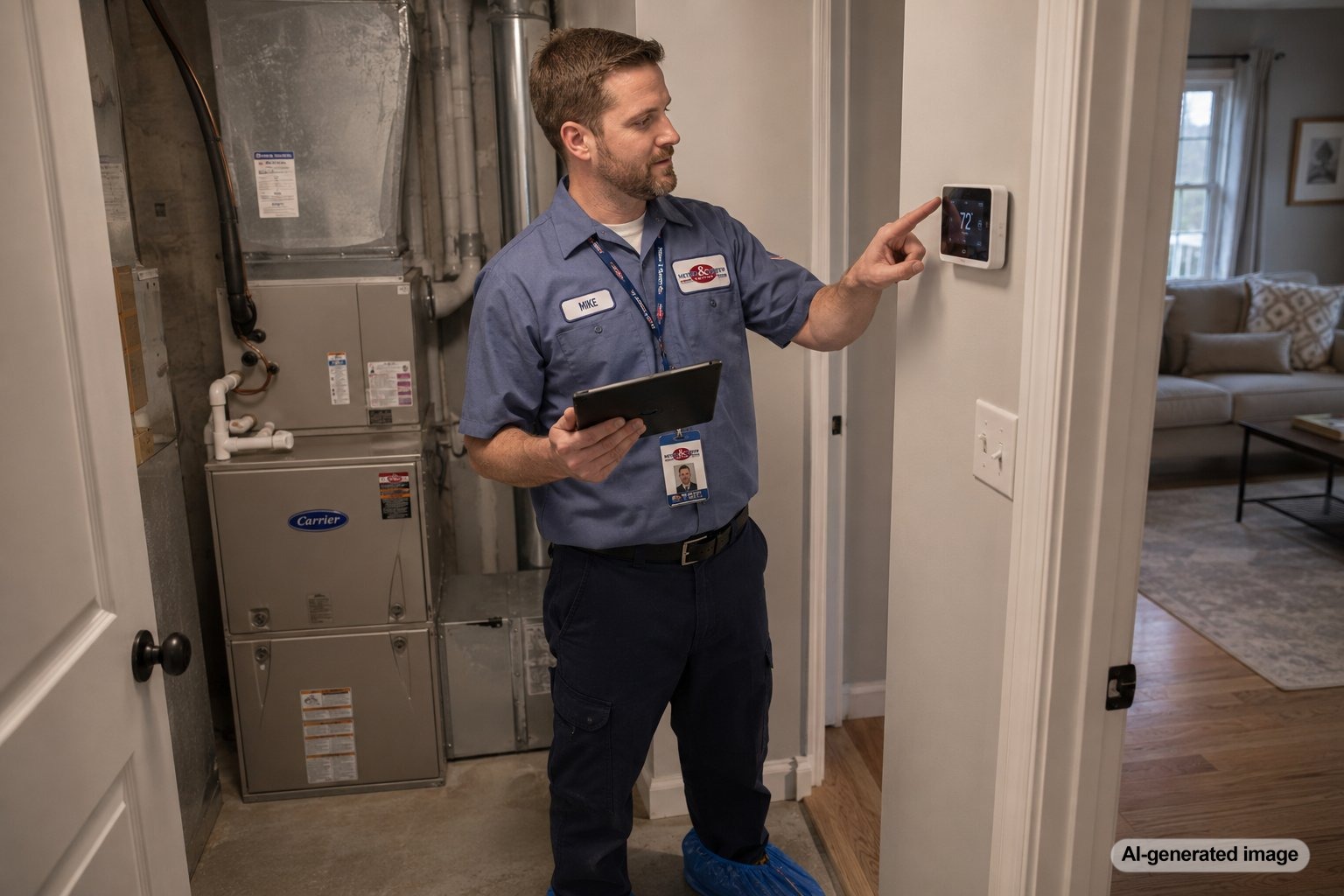
Smart thermostats can add another layer. Some use algorithms, humidity readings, occupancy patterns, or comfort settings that affect when cooling starts and stops. That does not mean the thermostat is wrong, but it can make the system’s behavior feel less direct than an older manual thermostat.
Humidity can make the AC run longer even when the temperature is higher
New Jersey summers can bring heavy humidity, and humidity changes how comfort feels. An AC does more than lower the air temperature. It also removes moisture as indoor air passes over the evaporator coil. If the air is humid, longer run times may be needed to pull moisture out of the home.
Some thermostats include humidity control features that allow the system to run slightly longer to improve comfort. In other cases, the AC may simply keep running because humid air makes the home feel warmer and slows the cooling process. You may notice this most after cooking, showering, hosting guests, or opening doors frequently.
If indoor humidity stays high even while the AC runs, the issue may involve airflow, equipment sizing, duct leakage, a dirty coil, or another condition a qualified technician should evaluate. Comfort problems that feel like a thermostat issue are often connected to moisture and air movement.
Heat stored inside the home can delay the response
Walls, floors, furniture, attic spaces, and sun-facing rooms all absorb heat during the day. When the thermostat is raised, the AC may still be fighting heat that has built up inside the structure. This is common in homes with large windows, older insulation, finished upper floors, or rooms over garages.
The outdoor temperature matters too. During a hot afternoon, the AC may have to remove heat as fast as the home is gaining it. Raising the thermostat by a couple of degrees may reduce the target, but it does not erase the heat load coming from the outdoors.
This is one reason homeowners sometimes notice different behavior in the morning than in the late afternoon. The same thermostat setting can produce different run times depending on sunlight, humidity, outdoor temperature, and how long the home has been absorbing heat.
Airflow restrictions can make a higher set point feel less effective
If the AC is running more after a thermostat adjustment, check for airflow problems before assuming the thermostat is the cause. Restricted airflow can force the system to run longer because cooled air is not moving through the home properly.
- Inspect the air filter and replace it if it is dirty or overdue.
- Make sure supply vents and return vents are open and not blocked by furniture, rugs, or curtains.
- Look for obvious leaves, grass clippings, or debris around the outdoor unit.
- Check that the thermostat is set to cooling mode and that the fan setting is not creating confusion.
- If a breaker has tripped, reset it once only if it is safe to do so. If it trips again, call a professional.
A clogged filter, blocked return, dirty blower components, duct issues, or a coil problem can all reduce cooling performance. The result may be longer run times, uneven rooms, weak airflow, or a system that seems to work harder after even small thermostat changes.
The thermostat location may be misleading the system
The thermostat only knows the conditions where it is installed. If it is near a sunny wall, a warm hallway, a lamp, electronics, a draft, or a return air path, it may not reflect how the rest of the home feels. Raising the thermostat may not reduce run time much if the thermostat area remains warmer than the target temperature.
Uneven room temperatures can create the same problem. A thermostat in a cooler central hallway may shut the AC off before bedrooms are comfortable. A thermostat in a warm location may keep calling for cooling while other rooms are already cool. In homes with persistent room-by-room differences, zoning systems or thermostat upgrades may be worth discussing.
Do not move thermostat wiring or open control equipment yourself. If the thermostat location appears to be part of the problem, an HVAC professional can evaluate the placement, controls, wiring, and available comfort options safely.
It could be a sign the AC is losing efficiency
Sometimes the timing of the thermostat change is a coincidence. The system may have already been struggling, and raising the thermostat simply made the run time more noticeable. Aging equipment, dirty coils, low airflow, duct leakage, failing components, or refrigerant-related problems can all cause longer cycles.
Homeowners should avoid trying to diagnose sealed refrigerant systems or electrical components. Those checks require proper training and tools. What you can observe is the pattern: Is the AC running longer than it used to? Are some rooms still warm? Is the air from the vents weaker than normal? Is the system turning on and off rapidly? Are humidity levels rising indoors?
If the answer is yes, the system should be evaluated. Routine maintenance may help catch issues before they become more disruptive, and recurring cooling concerns may point to repair needs, duct concerns, control problems, or a system that is nearing the end of its practical service life.
When longer AC run time is normal versus when it is a concern
| Situation | What it may mean |
|---|---|
| The AC finishes one longer cycle after you change the setting | The home may still be above the new target temperature or holding heat from earlier in the day. |
| The AC runs longer on humid days | The system may be removing moisture, especially during muggy New Jersey weather. |
| Run times are longer and rooms still feel warm | Airflow, ductwork, equipment performance, or thermostat location may need professional evaluation. |
| The system short cycles or trips breakers | Stop repeated resets and schedule service, especially if electrical issues continue. |
FAQ
Should my AC shut off immediately when I raise the thermostat?
Not always. If the indoor temperature near the thermostat is still above the new set point, the system may continue running until it reaches the target. Smart thermostat settings and humidity controls can also affect cycle behavior.
Can a dirty filter make my AC run longer?
Yes. A dirty filter can restrict airflow, which may reduce cooling performance and make the system run longer. Filter replacement is one of the safest homeowner checks to make before scheduling service.
Why does this happen more during humid weather?
Humid air feels warmer and can take longer to condition. Your AC may need longer cycles to remove moisture, especially during muggy summer weather in Central and Northern New Jersey.
When should I call for AC service?
Schedule service if longer run times continue, airflow feels weak, rooms stay warm, humidity remains high, unusual noises appear, the system short cycles, or breakers trip. These patterns can point to problems beyond a normal thermostat response.
Raising the thermostat should often reduce cooling demand, but it does not guarantee an immediate shutdown or shorter cycle. If your AC keeps running longer than expected, look at humidity, airflow, heat gain, thermostat location, and overall system performance before assuming the thermostat is the only issue.
Need help with your heating, cooling, or HVAC system?
Meyer & Depew serves homeowners and businesses throughout Central and Northern New Jersey.
Get a quote or call 908.272.2100.