



Why Your AC Shuts Off When the Drain Pan Fills
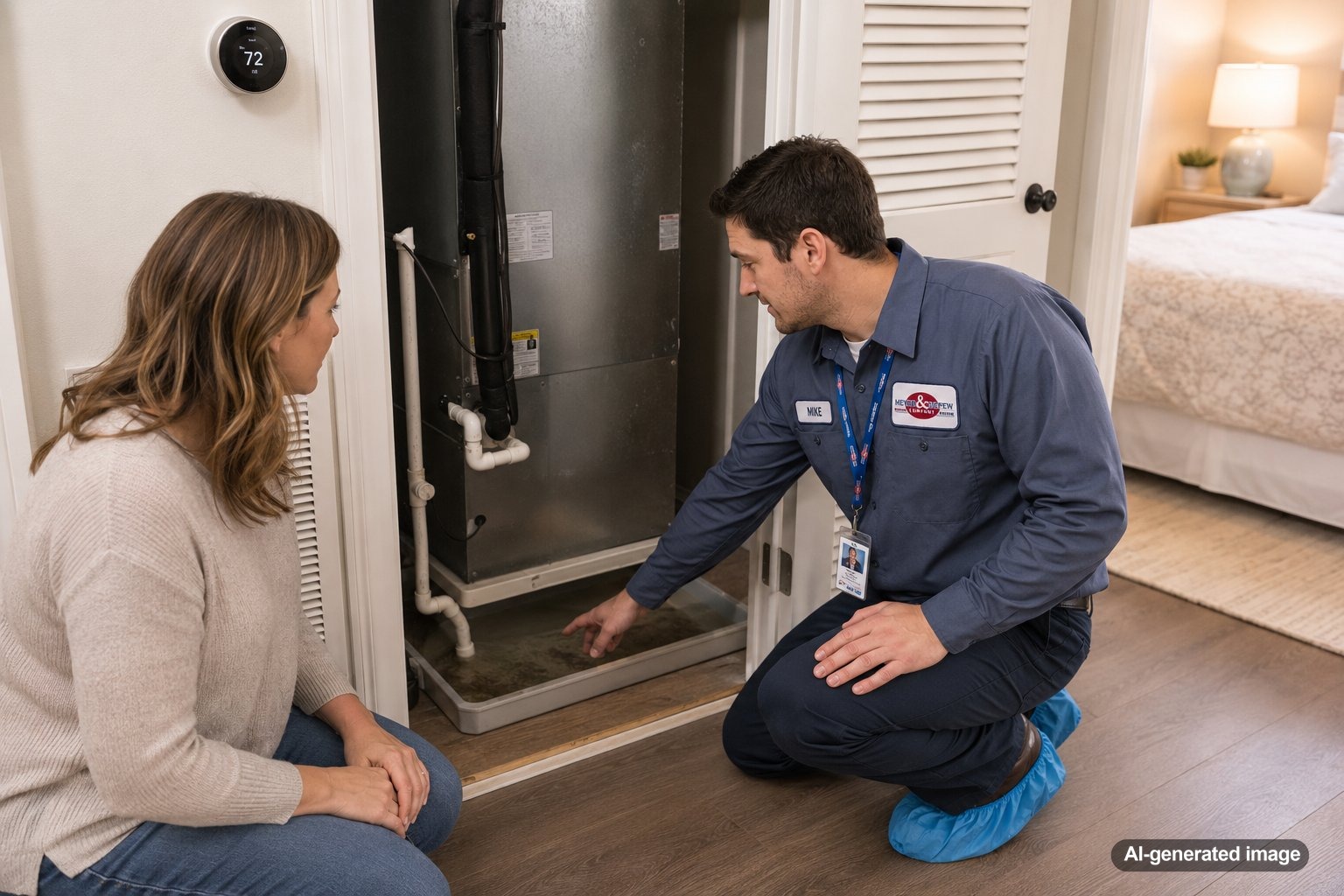
Your AC may shut off when the drain pan fills because a safety switch detects rising water and stops the cooling system before it can cause more serious leakage or property damage. The shutdown can feel like an unexpected breakdown, especially during a hot New Jersey afternoon, but the switch may be doing exactly what it was designed to do.
A full drain pan usually means the moisture removed from your indoor air is not draining correctly. A clogged condensate line is a common cause, although frozen coils, installation issues, damaged components, and excessive condensation can also contribute. The safest response is to leave the protective switch in place and arrange for the drainage problem to be evaluated through professional AC service and maintenance.
- Your AC creates condensation while it cools and dehumidifies the air.
- That water should flow through a condensate drain line.
- If the water backs up, it may collect in the drain pan.
- A float switch can shut off the system when the water reaches a certain level.
- The switch should not be bypassed because it helps reduce the risk of water damage.
What the AC drain pan does
As warm indoor air passes over the cold evaporator coil, moisture in the air condenses on the coil. It is similar to the water that forms on the outside of a cold glass, although an operating air conditioner can produce a substantial amount of condensate during humid weather.
The water drips into a primary drain pan below the evaporator coil and then exits through a condensate drain line. Depending on the system and its location, there may also be a secondary pan beneath the indoor equipment. This backup pan is especially important when an air handler or evaporator coil is installed in an attic or another area where a leak could damage ceilings, insulation, flooring, or stored belongings.
The pan is not intended to remain full. It is a collection point that directs water toward the drain. Standing water indicates that the drainage process has been interrupted or that the system is producing water faster than it can drain.
How a full drain pan shuts down the AC
Many systems include a condensate overflow switch, commonly called a float switch or wet switch. As water rises in the drain pan or condensate line, the switch changes position and interrupts the cooling circuit. The thermostat may still appear to be calling for cooling, but the outdoor unit, indoor blower, or entire system may stop depending on how the switch is installed.
This protective shutdown helps limit continued condensation. Without it, the AC could keep operating while water spills over the pan. A small drainage problem can then become a stained ceiling, damaged drywall, wet insulation, warped flooring, or microbial growth in damp materials.
Some homeowners notice that the system starts again after water slowly drains or evaporates. That temporary restart does not mean the underlying issue is resolved. If the blockage remains, the pan may refill and trip the switch again.
Common reasons the drain pan fills
A clogged condensate drain line
Dust, biological buildup, debris, and sludge can accumulate inside the condensate line. When the opening becomes restricted, water backs up toward the drain pan. This is one of the most frequent explanations for a full pan and repeated float-switch shutdowns.
A dirty or restricted air filter
A severely restricted filter can reduce airflow across the evaporator coil. Under certain conditions, the coil may become too cold and develop ice. When that ice melts, the resulting volume of water can overwhelm the pan or expose an existing drainage restriction.
A frozen evaporator coil
Low airflow is one possible reason for coil icing, but refrigerant or equipment problems may also be involved. Because refrigerant systems and internal AC components require specialized tools and training, a frozen coil that returns after basic filter and vent checks should be evaluated by a qualified technician.
A damaged, rusted, or misaligned drain pan
Older metal pans may corrode, while plastic pans can crack or shift. A pan that is not level may hold water in the wrong area instead of directing it toward the drain outlet. Water may also leak before it reaches the float switch.
A disconnected or improperly pitched drain line
Condensate typically relies on gravity or a condensate pump to move away from the equipment. A sagging, disconnected, or poorly pitched line may prevent reliable drainage. Installation details matter because even a partial low spot can collect buildup and slow the flow of water.
A failed condensate pump
Some systems use a pump when gravity drainage is not practical. If the pump loses power, becomes clogged, or fails mechanically, condensate can back up. Many pumps have their own safety switch that may stop the AC when the reservoir fills.
High humidity and long cooling cycles
New Jersey humidity can cause an AC system to remove a large amount of moisture during extended cooling cycles. High condensate production does not usually fill a properly functioning pan by itself, but it can reveal a partially clogged line, undersized drain arrangement, or weak condensate pump.
Safe checks you can make before calling
- Turn the cooling system off at the thermostat if water is overflowing or leaking near the equipment.
- Inspect the air filter and replace it if it is dirty and you can do so safely.
- Make sure supply registers and return vents are open and not blocked by furniture, rugs, or stored items.
- Look for visible water around the indoor unit, secondary pan, ceiling, or nearby floor.
- Check whether the condensate pump has power if your system uses one, without opening or modifying electrical components.
- Note any ice, unusual sounds, musty odors, or repeated shutdown patterns to share with the technician.
Avoid removing safety switches, forcing the float down, opening sealed equipment, or repeatedly resetting the system. Do not pour harsh chemicals into a condensate line unless the equipment manufacturer or a qualified HVAC professional has confirmed that the product and method are appropriate for your system.
Why bypassing the float switch is risky
A float switch can be frustrating when the house is getting warmer, but bypassing it removes an important layer of protection. The AC may resume cooling while continuing to produce water, allowing the pan to overflow into the surrounding area.
This is particularly risky for attic systems. Water can travel along framing, insulation, ductwork, or wiring before a visible ceiling stain appears. By the time the leak is noticed downstairs, a larger area may already be wet.
The switch itself could occasionally be defective or installed incorrectly, but that determination should be made after the drainage system and equipment have been inspected. The proper solution is to correct the cause of the water buildup, not defeat the device warning you about it.
What an HVAC technician may inspect
A qualified technician can examine the primary and secondary drain pans, drain line, trap, vent, float switch, condensate pump, air filter, evaporator coil, blower operation, and overall drainage configuration. The goal is not only to remove standing water but also to identify why it accumulated.
Depending on the findings, service may involve clearing the condensate line, cleaning accessible drainage components, correcting the line pitch, replacing a damaged switch or pump, addressing airflow restrictions, or repairing a deteriorated drain pan. If the coil has frozen, the technician can evaluate whether airflow, controls, refrigerant performance, or another system condition contributed.
Recurring clogs deserve closer attention. Repeatedly clearing the same line without checking its slope, routing, trap, venting, and termination point may provide only temporary relief. Preventive HVAC service plans can also help keep routine inspections and maintenance from being overlooked.
When the problem needs prompt service
Schedule professional service when the AC remains off, the drain pan refills, water is leaking into the home, the ceiling is wet, the coil is covered with ice, the condensate pump is not working, or the breaker repeatedly trips. Prompt attention is also wise when the indoor unit is installed above finished living space.
Turn the system off and prioritize safety if water is reaching electrical components, light fixtures, outlets, or wiring. Do not touch wet electrical equipment. If there is smoke, sparking, or an electrical burning odor, leave the equipment off and contact the appropriate emergency service or qualified professional.
How maintenance may reduce future drain problems
Routine AC maintenance may help catch drainage issues before the pan reaches the shutoff point. During appropriate service, a technician can inspect condensate components, look for developing buildup, confirm that safety controls respond correctly, and identify airflow conditions that may contribute to coil icing.
Homeowners can support reliable operation by checking the filter regularly, keeping return and supply vents unobstructed, and paying attention to water stains or musty odors near the equipment. A drain pan that looks dry today can still have a partially restricted line, so the absence of standing water does not replace periodic professional inspection.
Frequently asked questions
Will the AC turn back on after the drain pan empties?
It may. Some float switches automatically reset after the water level drops. However, the system can shut down again if the clog, pump problem, freezing issue, or drainage defect has not been corrected.
Can a dirty filter cause water in the AC drain pan?
Yes, indirectly. A heavily restricted filter may reduce airflow and contribute to evaporator coil icing. When the ice melts, the additional water may fill the pan, especially if the drain line is already restricted.
Is water in the AC drain pan normal?
A small amount of water passing through the primary pan while the system operates can be normal. Standing water, a full secondary pan, overflow, rust, or repeated float-switch trips are not conditions to ignore.
Why does my thermostat work while the AC does not run?
The thermostat may still have power and display a cooling call even when a condensate safety switch has interrupted the equipment circuit. Other electrical or control problems can cause similar symptoms, so the cause should not be assumed without inspection.
How urgent is a full AC drain pan?
It should be addressed promptly because continued water buildup can lead to property damage and additional system problems. The urgency is greater when water is actively overflowing, the equipment is in an attic, or moisture is near electrical components.
When a full drain pan shuts off your AC, the safety switch is often preventing a drainage issue from becoming a damaging leak. Leave the switch in place, turn the system off if water is escaping, complete only safe visual checks, and schedule service to correct the underlying cause.
Need help with your heating, cooling, or HVAC system?
Meyer & Depew serves homeowners and businesses throughout Central and Northern New Jersey.
Get a quote or call 908.272.2100.