

Why Does My AC Take So Long to Reach the Thermostat Setting?
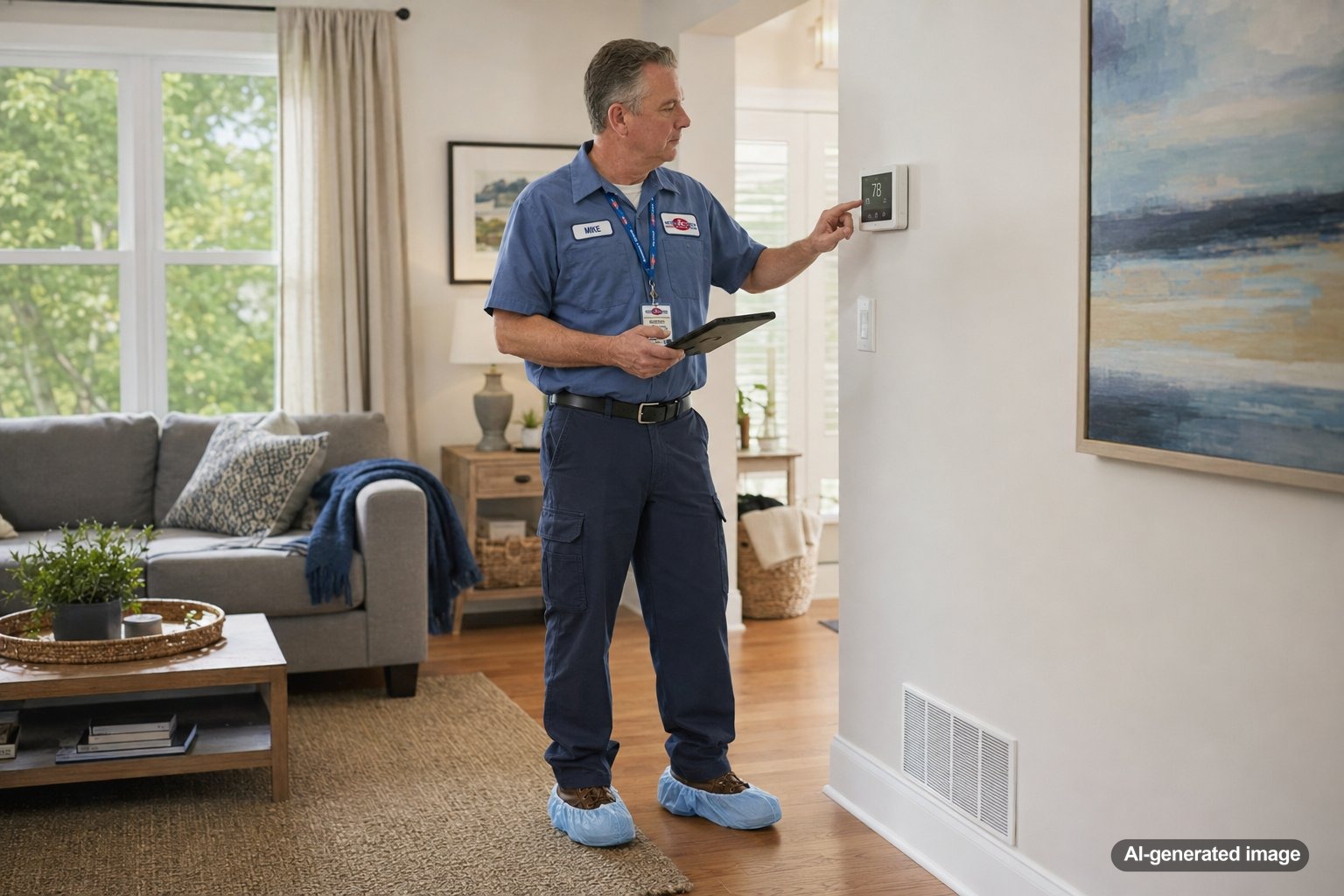
Your AC may take a long time to reach the thermostat setting because of extreme outdoor heat, excess indoor humidity, restricted airflow, heat entering the house, an incorrect thermostat setup, or a cooling-system problem. Some long cooling cycles are normal, particularly during hot and humid New Jersey weather. However, a system that runs for hours without making meaningful progress may need attention.
The key distinction is whether the indoor temperature is falling steadily. A long, productive cycle can be normal and efficient. An AC that barely changes the temperature, blows weak or warm air, cycles irregularly, or cannot satisfy the thermostat may need professional AC service and maintenance.
Your AC will generally need more time when the outdoor temperature and indoor heat load are high. Check the thermostat, filter, vents, return grilles, windows, and outdoor unit for simple problems. If cooling remains unusually slow or the system never reaches the setting, schedule an HVAC evaluation rather than lowering the thermostat repeatedly.
How Long Should an AC Take to Reach the Thermostat Setting?
There is no single correct number of minutes because cooling time depends on the difference between the current indoor temperature and the set temperature, outdoor conditions, humidity, home construction, system capacity, and airflow. Dropping the temperature by one or two degrees is very different from asking a warm house to cool by eight or ten degrees after the AC has been off all day.
On an ordinary summer day, you should typically notice gradual progress during a cooling cycle. During a heat wave, the system may run for long periods and hold the house near the set temperature instead of reaching it quickly. HVAC equipment is generally designed to cool a home steadily, not produce an immediate blast that changes the temperature throughout every room at once.
Watch the trend rather than the clock alone. If the thermostat temperature is slowly moving toward the setting, the system may simply be handling a heavy load. If the reading does not change for an extended period, rises while the AC runs, or falls only after sunset, another factor may be limiting performance.
Common Reasons Your AC Is Cooling Slowly
Hot or humid weather is increasing the cooling load
Central and Northern New Jersey summers can combine high temperatures with substantial humidity. Your AC must remove both sensible heat, which changes the measured temperature, and latent heat, which is moisture in the air. On humid days, part of the system’s capacity is devoted to moisture removal, so the thermostat reading may fall more slowly even though the home is becoming more comfortable.
A system can also lose ground during the hottest part of the afternoon when sunlight, outdoor heat, cooking, electronics, and occupants add heat faster than usual. If it catches up after the sun goes down, the issue may be a high peak load rather than a complete loss of cooling.
A dirty filter or blocked return is restricting airflow
Your AC can only cool the air that moves through it. A heavily loaded filter, furniture covering a return grille, closed supply vents, or dust buildup can reduce airflow. You may notice weak air from multiple registers, longer cycles, uneven rooms, or more noise near a return grille.
Closing vents in unused rooms is not a reliable way to redirect cooling. It can change pressure within the duct system and may make overall performance worse. Keep supply and return openings accessible unless a qualified technician has provided different instructions for a properly designed zoning system.
The thermostat is adding heat or reading the space inaccurately
A thermostat near direct sunlight, a warm lamp, cooking equipment, an exterior door, or an electronic device may sense conditions that do not represent the rest of the house. Incorrect schedules, an active energy-saving mode, or a wide temperature differential can also make operation seem inconsistent.
Confirm that the thermostat is set to cooling mode, the desired temperature is below the current room temperature, and the fan is set to Auto unless you have a specific reason to run it continuously. A fan set to On circulates air even when the compressor is not cooling, which can make register air feel warmer between cycles.
Heat is entering the home faster than expected
Air leaks, weak attic insulation, sunny windows, open fireplace dampers, frequent door opening, and unshaded west-facing rooms can add a significant load. A house may also cool slowly after an oven has been used, several people have gathered indoors, or blinds were left open through the afternoon.
If only certain rooms lag behind, the cause may involve duct layout, insulation, sun exposure, balancing, or a comfort-control limitation rather than the AC equipment alone. Homes with recurring room-to-room differences may benefit from an evaluation of airflow or properly designed zoning options.
The outdoor unit cannot release heat effectively
The outdoor unit transfers heat from inside the home to the outdoors. Leaves, grass clippings, shrubs, or other debris close to the cabinet can interfere with airflow. A dirty outdoor coil, failing fan, electrical problem, or other internal issue may also reduce capacity, but those conditions require professional diagnosis and service.
You can look for obvious debris from a safe distance and keep ordinary vegetation from crowding the unit. Do not open panels, bend coil fins, spray electrical components, or attempt to repair wiring or refrigerant parts.
The system has a mechanical, electrical, or refrigerant-related problem
Slow cooling can accompany a dirty evaporator coil, blower problem, duct leakage, failing capacitor, compressor issue, control fault, or incorrect refrigerant charge. These problems can produce similar symptoms, so the thermostat behavior alone cannot identify the failed component.
Ice on refrigerant lines or the indoor coil is another warning sign. Reduced airflow and refrigeration problems can both contribute to freezing. Turn the cooling system off and request professional service rather than chipping away ice or continuing to operate the equipment.
The AC may not match the home’s current needs
An undersized system may run almost continuously during peak weather and still struggle to reach the setting. An oversized system can create a different problem: short, powerful cycles that reduce the temperature quickly but do not remove enough humidity, leaving the house clammy and encouraging repeated thermostat changes.
Capacity cannot be judged reliably from square footage alone. Windows, insulation, air leakage, ceiling height, orientation, ductwork, occupancy, and renovations all affect the load. If the problem has existed since installation or began after an addition or major remodel, a detailed load and airflow evaluation may be appropriate.
Safe Checks You Can Make Before Calling
- Verify that the thermostat is in Cool mode and the fan setting is Auto.
- Make sure the set temperature is reasonable for the conditions and below the current indoor temperature.
- Inspect the air filter and replace it if it is dirty, using a suitable filter for the system.
- Confirm that supply registers and return grilles are open, clean, and not blocked by furniture or rugs.
- Close exterior doors and windows, lower sun-facing shades, and limit major indoor heat sources.
- Look for leaves, grass, or other obvious debris around the outdoor unit without opening the cabinet.
- If the system has stopped entirely, check whether its breaker has tripped once, provided you can do so safely. Do not repeatedly reset a breaker that trips again.
Avoid making dramatic thermostat changes. Setting the thermostat far below your preferred temperature does not make a standard AC cool faster. It usually makes the system continue running toward a lower target and can obscure whether the original problem is improving.
Pay Attention to the Pattern
The timing and location of the problem can provide useful clues for a technician. Note whether slow cooling happens only in the afternoon, only on the second floor, after thermostat schedule changes, during humid weather, or every time the system starts. Also note weak airflow, unusual sounds, water near the equipment, ice, odors, or unexpectedly frequent cycling.
If cooling performance declined suddenly, a service problem is more likely than a basic design limitation. If the system has always struggled in the same rooms, airflow, duct design, insulation, or equipment sizing may deserve closer evaluation. If the issue appeared after new windows, an addition, attic work, or interior remodeling, changes to the home’s heat load or air distribution may be involved.
When Slow Cooling Needs Professional Service
Arrange professional service when the AC runs continuously without lowering the temperature, airflow remains weak after a filter check, register air is not cool, the equipment freezes, water appears where it should not, or a breaker trips again. Unusual buzzing, grinding, burning odors, smoke, or sparks also require prompt attention. Shut the system down if continued operation appears unsafe.
A qualified HVAC technician can measure temperature change, airflow, static pressure, electrical performance, refrigerant-system operation, coil condition, thermostat accuracy, and duct behavior. Those measurements help distinguish a weather-related load from an airflow restriction, equipment fault, control issue, or system-design concern.
For an older system with recurring repairs or persistent comfort problems, the evaluation may also include repair-versus-replacement considerations. Age alone does not settle that decision. Repair history, equipment condition, comfort, efficiency, ductwork, and the expected cost and value of available options all matter.
Frequently Asked Questions
Is it normal for my AC to run continuously on a very hot day?
It can be normal during peak heat if the system is maintaining a comfortable indoor temperature or making steady progress. It is less reassuring when the indoor temperature continues rising, airflow is weak, the air is not cool, or the behavior is new.
Why does my AC reach the setting at night but not during the afternoon?
Afternoon sun, higher outdoor temperatures, humidity, cooking, and occupancy can raise the cooling load. The fact that the AC catches up after sunset suggests it may be operating near its peak capacity, though airflow, insulation, ductwork, and equipment condition can still affect performance.
Will setting the thermostat lower make the house cool faster?
Usually not. Most central AC systems cool at their available operating capacity regardless of how far you lower the setting. A much lower target typically extends the run time instead of increasing the cooling rate.
Can a dirty filter keep the thermostat from reaching its setting?
Yes. A dirty filter may restrict airflow, reduce cooling performance, and contribute to coil freezing in some situations. If a clean filter does not restore normal performance, another airflow or equipment issue may be present.
Should I turn off the AC if I see ice?
Yes. Turn off cooling and schedule qualified service. Continuing to operate a frozen system can worsen the condition. Do not chip away the ice or open equipment panels.
A long cooling cycle is not automatically a malfunction. What matters is whether your AC is steadily reducing heat and humidity. If it cannot approach the thermostat setting after basic, safe checks, a professional evaluation can identify whether the cause is weather, airflow, thermostat behavior, the home itself, or the cooling equipment.
Need help with your heating, cooling, or HVAC system?
Meyer & Depew serves homeowners and businesses throughout Central and Northern New Jersey.
Get a quote or call 908.272.2100.