



Why Condensation Near Vents Should Not Be Ignored
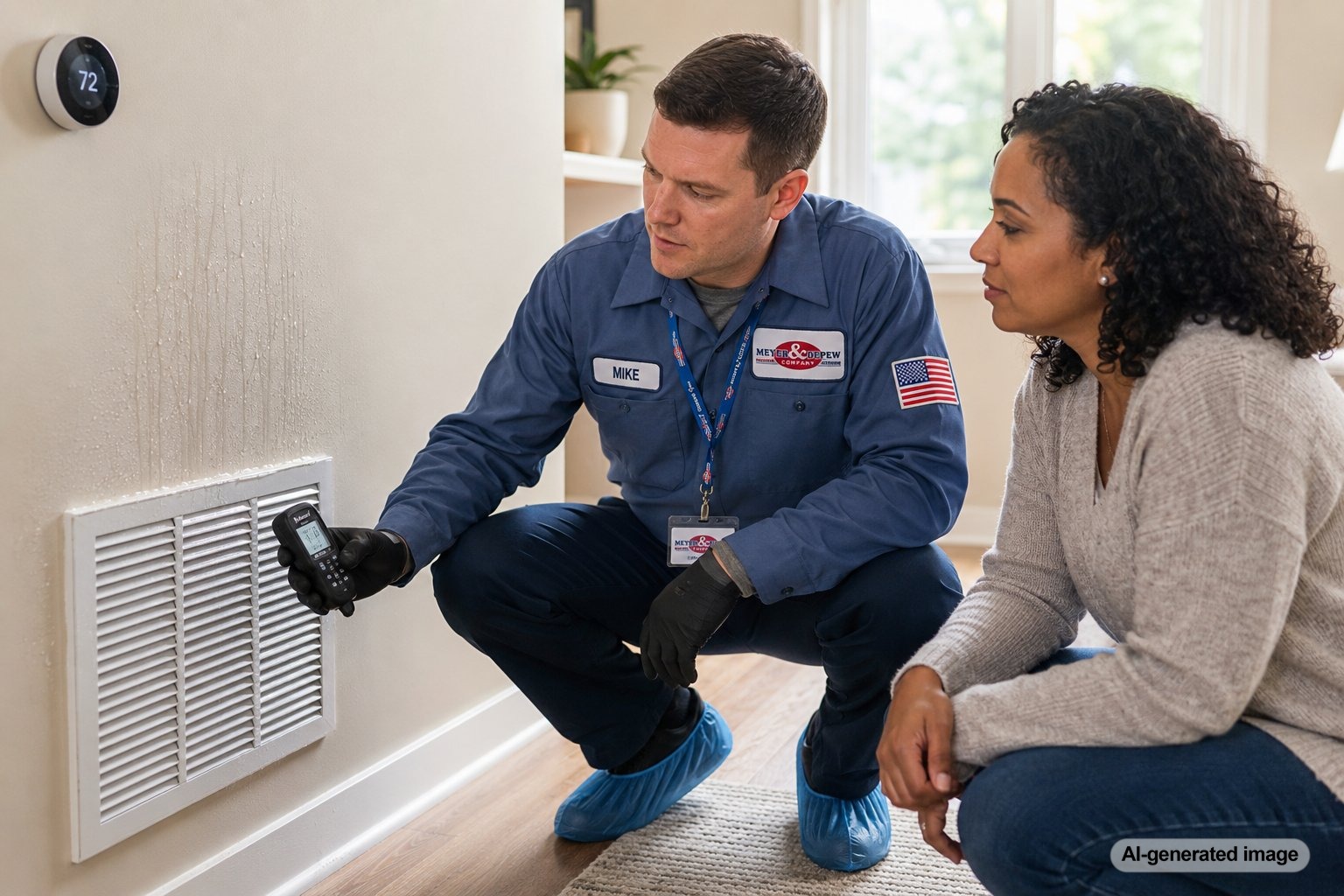
Condensation near vents may look like a small nuisance at first. A little moisture on the ceiling grille, a damp ring around a supply register, or water droplets forming during a humid New Jersey summer can be easy to dismiss. Still, that moisture is often a clue that something in the HVAC system, ductwork, insulation, airflow, or indoor humidity balance is not working as it should.
For homeowners and property managers in Central and Northern New Jersey, condensation near vents deserves attention because it can lead to stained drywall, peeling paint, musty odors, mold concerns, and comfort problems if the source is not corrected. It may be related to cooling performance, restricted airflow, high indoor humidity, poorly insulated ducts, or air leakage around the vent. Meyer & Depew’s AC service and maintenance team can evaluate the system if moisture keeps coming back or appears in multiple rooms.
Condensation near vents should not be ignored because it usually means warm, humid air is meeting a colder surface somewhere it should not. Occasional light moisture during very humid weather may not mean the system is failing, but recurring dampness, dripping, stains, mold-like growth, or musty odors should be checked by a qualified HVAC professional.
What Condensation Near Vents Usually Means
Condensation forms when warm, humid air contacts a cooler surface and the air can no longer hold the same amount of moisture. Around HVAC vents, that cooler surface may be the metal register, nearby drywall, ductwork above a ceiling, or air leaking around the opening. During cooling season, supply vents can become cold enough that moisture in the air collects on them, especially when indoor humidity is high.
The important question is not simply whether moisture is present. It is why the vent area is getting cold, damp, or exposed to excess humidity in the first place. A small amount of temporary condensation after a very humid day may be different from water stains that grow larger each week. Persistent condensation can point to a deeper issue that affects both comfort and the building materials around the vent.
Common Reasons Moisture Appears Around HVAC Vents
Several conditions can cause condensation near supply vents. One common cause is high indoor humidity. If the home feels clammy even when the AC is running, the system may not be removing enough moisture from the air, or outdoor humidity may be entering through leaks, gaps, crawl spaces, basements, or poorly sealed areas.
Restricted airflow can also contribute. A dirty air filter, blocked return, closed supply vents, or an indoor coil problem can reduce the amount of air moving across the system. When airflow drops, parts of the system may get colder than intended, which can make condensation more likely. Homeowners can safely check the filter and confirm that supply and return vents are open and unobstructed, but recurring airflow concerns should be evaluated by a technician.
Duct insulation and air sealing are another major factor. If a duct runs through an attic, garage, crawl space, or other unconditioned area, warm humid air around the duct can condense on cold metal if the insulation is missing, damaged, compressed, or poorly sealed. In some homes, air leakage around the boot where the duct meets the ceiling or wall can pull humid air into contact with cold surfaces near the vent.
Why Ignoring Vent Condensation Can Become Expensive
Moisture around vents can damage more than the grille itself. Ceiling stains, soft drywall, bubbling paint, warped trim, and musty odors can develop when the area stays damp. In rooms with limited air circulation, moisture can also contribute to indoor air quality concerns, especially if dust and organic material collect near the register.
Condensation can also hide the real performance issue. A vent that sweats because of poor airflow, high humidity, or duct leakage may be a symptom of an HVAC system that is struggling to cool the space evenly. In older New Jersey homes, additions, finished attics, basements, and rooms over garages can be especially prone to uneven temperatures and humidity swings. In those situations, the solution may involve airflow balancing, duct evaluation, humidity control, zoning, or other comfort improvements rather than simply wiping the vent dry.
Commercial buildings can face similar issues, especially in offices, retail spaces, medical facilities, nonprofits, and mixed-use properties where occupancy changes throughout the day. If condensation appears near several vents or in areas with sensitive materials, it may be worth reviewing maintenance history and scheduling a professional inspection through a qualified commercial HVAC provider.
Safe Checks Before You Call
- Replace or inspect the air filter if it is dirty or overdue.
- Make sure supply vents and return vents are open and not blocked by furniture, rugs, boxes, or curtains.
- Check whether condensation appears only during very humid weather or happens regularly.
- Look for water stains, peeling paint, damp drywall, musty odors, or mold-like growth around the vent.
- Notice whether the affected room feels colder, warmer, or more humid than the rest of the home.
- Confirm the thermostat is set reasonably and the fan setting has not been changed in a way that affects humidity control.
These checks can help you describe the problem clearly when scheduling service. They are not a substitute for opening HVAC equipment, inspecting refrigerant components, modifying electrical parts, or removing ductwork. If the condensation is heavy, recurring, or paired with poor cooling, it is safer to have the system checked professionally.
When Condensation Near Vents Needs Professional Attention
Call for HVAC service when moisture returns after you wipe it away, when water is dripping, when stains spread, or when more than one vent is affected. You should also schedule service if the home feels humid, the AC runs constantly, airflow feels weak, or rooms are uneven despite normal thermostat settings. These clues can point to issues that require proper testing rather than guesswork.
A qualified technician can evaluate airflow, filter condition, coil condition, duct insulation, duct leakage, temperature difference, condensate drainage, thermostat settings, and the overall cooling performance of the system. Depending on what is found, the answer may be simple maintenance, duct sealing, insulation improvements, humidity control, equipment repair, or a broader comfort review.
If indoor humidity is a recurring concern, it may also be worth exploring air quality and comfort options. Humidity control, ventilation, and proper HVAC maintenance can all play a role in keeping the home more comfortable and reducing the conditions that allow moisture to collect near vents.
FAQ About Condensation Near Vents
Is condensation on an AC vent normal?
Light, temporary condensation can happen during very humid weather, but recurring moisture is not something to ignore. It often means humidity, airflow, duct insulation, or air leakage should be checked.
Can a dirty air filter cause condensation near vents?
A dirty filter can restrict airflow, and restricted airflow can contribute to colder surfaces and moisture problems. Replacing the filter is a safe first check, but continued condensation should be inspected by a professional.
Does condensation near vents mean there is mold?
Not always. Moisture creates conditions where mold-like growth may develop, especially with dust and repeated dampness. If you see staining, growth, or smell musty odors, have the area and HVAC system evaluated.
Should I close vents to stop condensation?
Closing vents is usually not the best fix and can sometimes make airflow problems worse. Keep vents open and clear, then schedule service if condensation continues.
Can insulation around ducts help?
Proper duct insulation and air sealing may help when ducts pass through hot, humid, or unconditioned spaces. A technician can determine whether duct insulation, leakage, or another issue is causing the moisture.
Condensation near vents is a warning sign worth taking seriously. It may be tied to humidity, airflow, duct conditions, or AC performance, and catching the cause early can help protect comfort, building materials, and indoor air quality.
Need help with your heating, cooling, or HVAC system?
Meyer & Depew serves homeowners and businesses throughout Central and Northern New Jersey.
Get a quote or call 908.272.2100.