



Why Dehumidifiers Can Help You Feel Cooler at Higher Temperatures
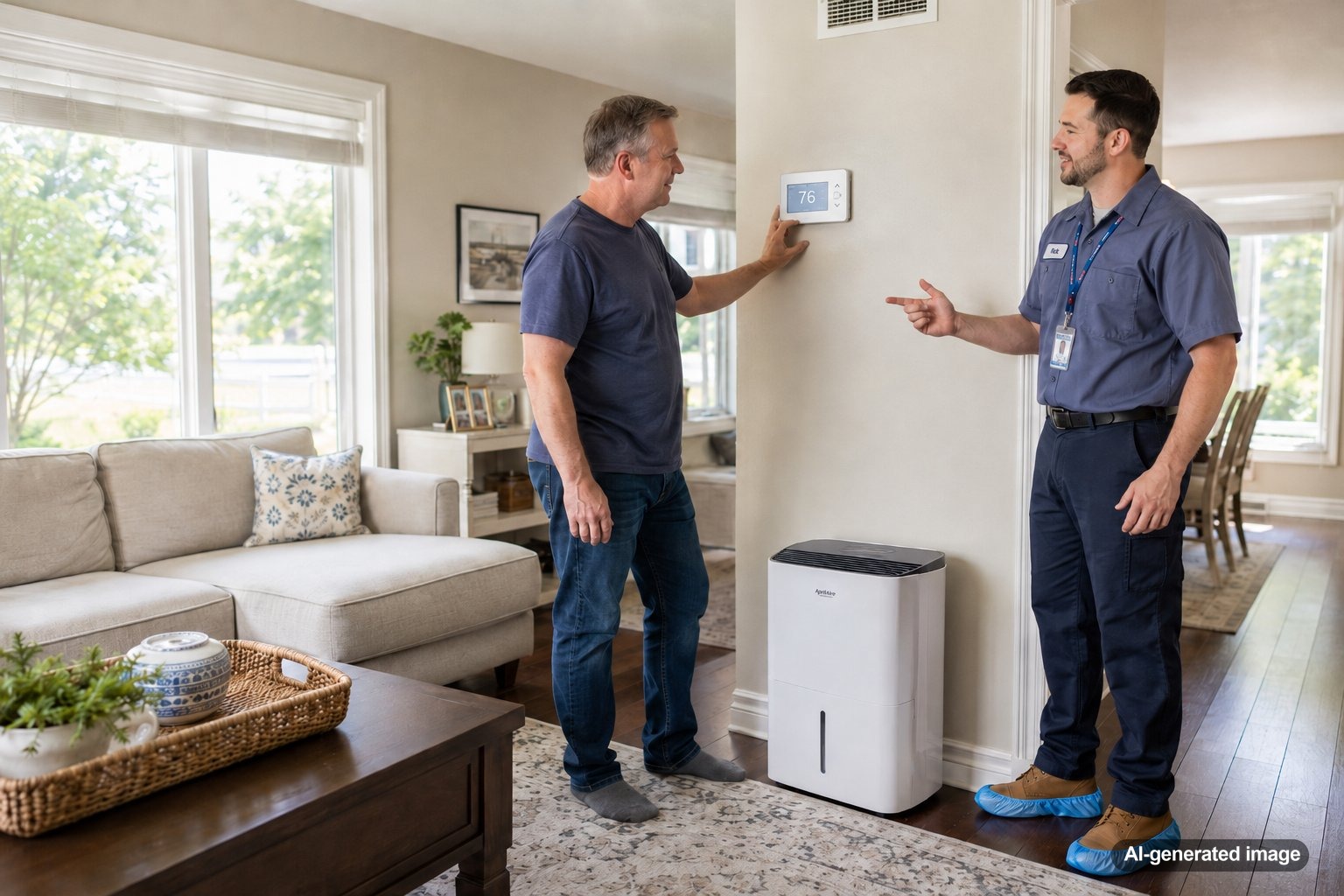
Yes, a dehumidifier can help your home feel cooler even when the thermostat is set a few degrees higher. Temperature matters, but humidity strongly affects how comfortable the air feels against your skin. When indoor air holds too much moisture, perspiration evaporates more slowly, rooms can feel sticky, and a reasonable thermostat setting may still feel uncomfortable.
This is especially relevant during humid New Jersey summers, when an AC system may lower the temperature without removing enough moisture to create consistent comfort. Managing humidity through a properly selected dehumidification solution can make the indoor environment feel less clammy while supporting your broader air quality and comfort strategy.
Dehumidifiers remove excess moisture from indoor air. Drier air generally allows perspiration to evaporate more effectively, which can help occupants feel more comfortable at a higher thermostat setting. A dehumidifier does not replace AC, but it can address moisture problems that cooling alone may not fully control.
How Humidity Changes the Way Temperature Feels
Your body releases heat partly through the evaporation of perspiration. When indoor humidity is high, the surrounding air is already carrying a large amount of moisture. That makes evaporation less effective, so your skin may feel damp and the room may seem warmer than the thermostat indicates.
Lowering the indoor moisture level can reduce that heavy, sticky sensation. A room at 75 degrees with controlled humidity may feel more comfortable than a room at 72 degrees with excessive humidity. The exact experience varies by person, home, airflow, sunlight, activity level, and other conditions, but humidity is often an overlooked part of the comfort equation.
Why Your AC May Not Remove Enough Moisture
Air conditioners remove some humidity as warm indoor air passes over the cold evaporator coil. Moisture condenses and drains away, but the amount removed depends on how the system operates.
An oversized AC system may cool the home quickly and shut off before completing a long enough cycle to remove substantial moisture. This can create a house that reaches the thermostat setting but still feels damp. Similar problems may occur when airflow is incorrect, the system is not operating properly, or outdoor humidity is unusually high.
Humidity concerns may also be more noticeable in tightly sealed homes, finished basements, shaded lower levels, rooms with limited airflow, or spaces where everyday activities add moisture. Cooking, bathing, laundry, indoor plants, and frequent door openings can all contribute.
Portable Versus Whole-Home Dehumidifiers
Portable dehumidifiers can be useful for a single room, basement, or isolated damp area. They are relatively simple to place, but homeowners must routinely empty the reservoir or arrange safe drainage. They also only address the area where they operate, and several units may be needed in a larger home.
A whole-home dehumidifier is designed to manage moisture across a broader area and can often work with the home’s HVAC system. It may provide more consistent control than relying on multiple portable units, but proper equipment selection, drainage, airflow, and installation are important.
- Portable units: Often suited to targeted moisture problems in one room or a small area.
- Whole-home systems: Better suited to recurring humidity concerns throughout multiple rooms or levels.
- AC system evaluation: Important when high humidity is paired with short cycling, uneven cooling, weak airflow, or unusually long run times.
How Dehumidification Can Support Your AC
When humidity is controlled, some homeowners find they do not need to keep lowering the thermostat to chase comfort. That may reduce unnecessary cooling demand, although actual energy use depends on the equipment, settings, home construction, weather, and operating habits.
A dehumidifier also addresses moisture directly instead of asking the AC system to solve every comfort problem through colder air. This distinction can be valuable when the home reaches the selected temperature but still feels muggy.
Dehumidification should still be considered part of a complete comfort plan. Airflow, insulation, duct condition, equipment sizing, ventilation, thermostat placement, and the condition of the cooling system can all affect how a home feels. If your AC is struggling, short cycling, or producing inconsistent temperatures, professional AC service and maintenance may be appropriate before adding new equipment.
Signs Your Home May Have Excess Humidity
A single humid afternoon does not necessarily indicate a major problem. Recurring patterns are more useful when deciding whether your home needs additional humidity control.
- The air feels sticky even when the thermostat shows a reasonable temperature.
- Rooms develop a damp or musty odor.
- Condensation repeatedly appears on windows, vents, or other cool surfaces.
- Basements or lower levels feel noticeably more humid than the rest of the home.
- The AC frequently starts and stops while the home still feels clammy.
- You keep lowering the thermostat without achieving the comfort you expect.
Persistent moisture can also be connected to drainage issues, water intrusion, plumbing leaks, poor ventilation, or building-envelope problems. A dehumidifier may manage airborne moisture, but it should not be used to hide an active leak or unresolved water problem.
Safe Checks Homeowners Can Make
- Confirm that the thermostat is set correctly and the fan is not continuously circulating humid air without active cooling.
- Inspect or replace a dirty air filter according to the manufacturer’s guidance.
- Make sure supply and return vents are open and not blocked by furniture, rugs, or curtains.
- Check for obvious moisture sources such as a plumbing leak, standing water, or an unvented bathroom.
- Use an indoor humidity monitor to look for recurring patterns rather than relying only on how one room feels at one moment.
A humidity reading is only one piece of information, and inexpensive monitors can vary in accuracy. The most useful clue is a consistent combination of elevated readings, clammy comfort, condensation, or musty conditions.
When to Call an HVAC Professional
Consider professional help when excess humidity continues despite normal AC operation, affects several rooms, or appears alongside cooling problems. A qualified technician can evaluate whether the issue involves equipment sizing, airflow, drainage, controls, ductwork, system performance, or the need for dedicated dehumidification.
Professional evaluation is also appropriate if the AC runs constantly, cycles unusually often, freezes, leaks water, produces weak airflow, or cannot maintain the selected temperature. Avoid opening sealed HVAC equipment, adjusting refrigerant components, or modifying electrical controls yourself.
For homeowners considering a whole-home dehumidifier, an HVAC professional can help determine the appropriate capacity and installation approach. Correct drainage and integration matter because a poorly selected or installed system may not deliver the expected moisture control.
Frequently Asked Questions
Can a dehumidifier replace air conditioning?
No. A dehumidifier removes moisture but does not provide the same temperature reduction as an AC system. The two can complement each other when both heat and humidity affect comfort.
Will a dehumidifier make the room colder?
It may make the room feel more comfortable by reducing moisture, but many portable dehumidifiers release some heat while operating. The primary benefit is humidity control, not direct cooling.
Should I lower the thermostat or run a dehumidifier?
If the room is genuinely too warm, cooling is necessary. If the thermostat temperature seems reasonable but the air feels sticky or clammy, humidity control may be the missing factor. Recurring problems should be evaluated rather than managed only by repeatedly lowering the thermostat.
Do all homes need a whole-home dehumidifier?
No. Some homes maintain comfortable humidity through normal AC operation and ventilation. A whole-home unit is generally considered when moisture problems are persistent, widespread, or difficult to control with targeted solutions.
Can high indoor humidity indicate an AC problem?
It can. Short cycling, incorrect airflow, drainage concerns, equipment sizing, or declining performance may contribute. High humidity can also come from non-HVAC sources, so a full evaluation may be needed.
Comfort depends on both temperature and moisture. When indoor humidity is controlled, your home may feel less sticky and more comfortable without requiring an extremely low thermostat setting. The right solution could involve a portable unit, a whole-home dehumidifier, AC service, or correction of a separate moisture source.
Need help with your heating, cooling, or HVAC system?
Meyer & Depew serves homeowners and businesses throughout Central and Northern New Jersey.
Get a quote or call 908.272.2100.