



Why Do High-Efficiency Furnaces Produce Condensate?
Estimated reading time: 9 minutes
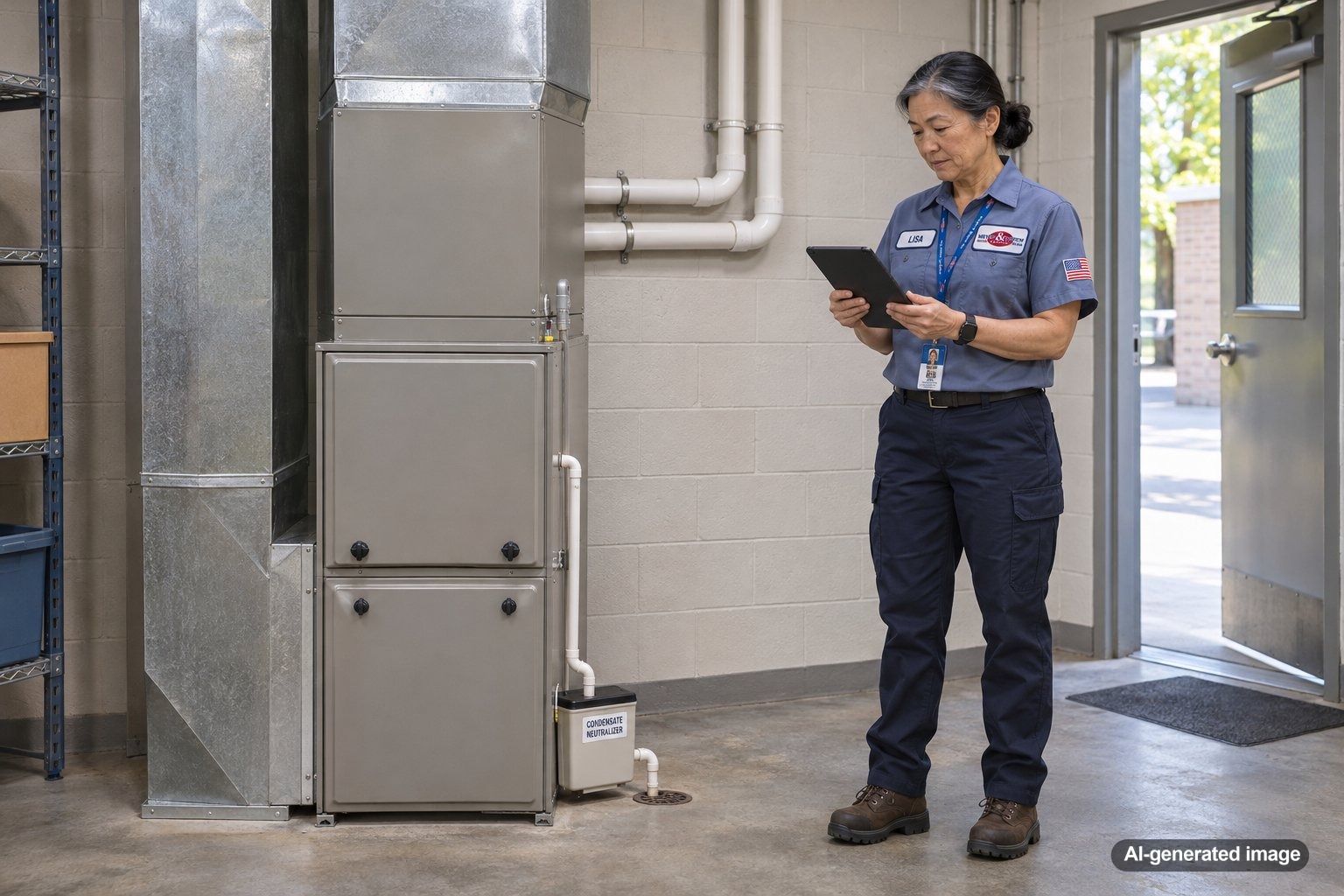
Finding water near your furnace can be unsettling, especially when you have never seen a heating system produce moisture before. But if you own a high-efficiency gas furnace, some water production is completely normal. These furnaces are designed to capture additional heat from combustion gases, and that process causes water vapor to condense into liquid. The important distinction is whether that water is draining properly or escaping somewhere it should not.
For homeowners throughout Central and Northern New Jersey, understanding furnace condensate is particularly useful during the heating season. A properly functioning condensate system helps your furnace operate as designed, while a clogged drain, frozen discharge line, or failing condensate pump can interrupt heating. If you are unfamiliar with your equipment, professional heating service and maintenance can help identify whether the moisture you are seeing is expected or requires attention.
High-efficiency gas furnaces produce condensate because they extract enough heat from combustion exhaust that some of its water vapor turns into liquid water. A properly installed drainage system carries this moisture away. Water inside the designated drain is normal; water collecting on the floor, overflowing from equipment, or repeatedly triggering a safety shutdown is not.
Where Does Furnace Condensate Actually Come From?
When natural gas burns inside a furnace, the combustion process produces heat, carbon dioxide, and water vapor, among other combustion products. Conventional gas furnaces generally release much of that water vapor through their exhaust systems because the gases remain relatively hot.
High-efficiency condensing furnaces operate differently. They use an additional heat exchanger to recover more heat from the combustion gases before those gases leave the equipment. As the gases cool, some of their water vapor changes from gas to liquid. That liquid is called condensate.
This is not water being pulled out of your home’s indoor air. It is moisture created during the fuel combustion process and recovered as the exhaust gases cool. Understanding that distinction helps explain why a high-efficiency furnace may produce water even when indoor humidity is low.
Why Furnace Efficiency Makes a Difference
A furnace’s Annual Fuel Utilization Efficiency, or AFUE, measures how much of the fuel’s energy becomes useful heating over a typical heating season under standardized conditions. For example, a furnace rated at 95% AFUE converts approximately 95% of the fuel energy into useful heat under that rating method.
Many modern condensing gas furnaces achieve AFUE ratings of 90% or higher. Their secondary heat exchangers are a major reason they can recover more energy than traditional non-condensing models.
That additional heat recovery also explains the water. When combustion exhaust cools sufficiently, water vapor condenses instead of remaining entirely in the exhaust stream. The condensate is a predictable result of the furnace’s design, not evidence that the equipment is wasting water or malfunctioning.
However, condensate production alone does not establish that a furnace is operating at its rated efficiency. Proper installation, venting, airflow, maintenance, and equipment condition still matter.
How a High-Efficiency Furnace Handles Condensate
Condensing furnaces include components specifically intended to collect and remove moisture. The exact arrangement varies by manufacturer, furnace orientation, and installation location.
The secondary heat exchanger
As combustion gases travel through the secondary heat exchanger, their temperature falls enough for condensation to occur. The resulting liquid collects within designated passages and drains toward the furnace’s condensate collection system.
The condensate trap and drain tubing
Condensate typically passes through a manufacturer-designed trap and drain assembly. The trap is important because it helps maintain appropriate pressure separation and prevents unwanted gas movement through the drainage path.
Depending on the installation, condensate may flow by gravity into an approved drain. The tubing must be properly routed and pitched to support drainage without creating unintended low spots where water can collect.
The condensate pump
Some basement and utility-room installations cannot drain by gravity to an appropriate location. In those cases, a condensate pump may collect the water in a small reservoir and lift it to a suitable discharge point.
A pump that runs periodically during furnace operation may be behaving normally. A pump that runs continuously, fails to empty, overflows, or makes unusual noises deserves professional evaluation.
Is Furnace Condensate the Same as Air Conditioner Condensate?
Both heating and cooling equipment can create condensation, but the moisture comes from different processes.
During cooling, an air conditioner’s indoor evaporator coil removes moisture from the air passing across its cold surface. That water drains into a condensate pan and through a drain line.
During heating, a condensing gas furnace creates liquid water by cooling the moisture-containing products of fuel combustion. Furnace condensate is generally acidic because combustion-related compounds dissolve into the water. It should not be treated as ordinary drinking water or used for household purposes.
Some installations require a condensate neutralizer to raise the pH before discharge, depending on equipment requirements and applicable plumbing rules. A qualified HVAC professional can determine whether the installed drainage arrangement is appropriate.
In homes where the furnace and AC share nearby drainage components, identifying which system is producing water can also be helpful when investigating a leak.
Why Condensate Problems Become More Noticeable in Winter
Cold weather creates several situations that can affect condensate drainage. This is especially relevant in New Jersey homes with furnaces installed in basements, utility closets, or areas near exterior walls.
Frozen drain or discharge lines
If condensate tubing passes through an unheated space or discharges outdoors, freezing temperatures may cause water inside the line to freeze. Ice can restrict drainage, eventually causing condensate to back up.
This is an installation concern rather than an inevitable consequence of high-efficiency equipment. Proper routing and protection from freezing are important considerations.
Clogged traps and drainage lines
Debris, sediment, and accumulated deposits may restrict condensate flow over time. Some systems also develop biological buildup in wet drainage components.
When condensate cannot leave the furnace as intended, water may appear around the cabinet or collect in places where it does not belong.
Condensate pump failures
A pump can experience problems involving its float mechanism, electrical supply, reservoir, or discharge line. Certain installations include an overflow safety switch that can interrupt furnace operation if the reservoir becomes too full.
If a furnace stops heating while water is accumulating near the condensate equipment, a drainage-related safety interruption is one possibility. Other heating faults can produce similar symptoms, so the cause should be confirmed rather than assumed.
When Is Water Around a Furnace a Warning Sign?
Condensate flowing through its intended drainage system is normal. Water escaping from that system is different.
Contact a qualified technician if you notice any of the following:
- Water pooling on the floor near the furnace or condensate pump.
- Persistent dripping from a furnace cabinet, tubing connection, or drain assembly.
- Repeated heating interruptions accompanied by visible condensate buildup.
- A condensate pump reservoir that fills but does not empty.
- Drainage tubing that appears frozen, disconnected, crushed, or visibly damaged.
- Water stains, corrosion, or recurring dampness around the heating equipment.
Do not assume every furnace-area leak is caused by condensate. Nearby plumbing, humidifiers, air conditioning components, and other equipment can also introduce water. A technician can trace the source before recommending repairs.
Visible flooding around electrical equipment is a safety concern. Avoid touching wet electrical components, keep clear of standing water near energized equipment, and arrange appropriate professional assistance.
What Homeowners Can Safely Check
You do not need to disassemble your furnace to gather useful information about a possible condensate problem. A few visual observations can help explain the symptoms when you schedule service.
- Look for water on the floor around the furnace, without opening equipment panels or touching electrical components.
- Observe whether visible condensate tubing appears disconnected or damaged.
- Note whether the issue occurs only during freezing weather or whenever the furnace runs.
- If your system has an accessible condensate pump, listen for unusual continuous operation or repeated unsuccessful pumping without opening the unit.
- Check thermostat settings and replace a dirty air filter if it is safely accessible and due for replacement.
- Record any thermostat error messages or changes in heating operation.
Avoid removing condensate traps, disconnecting drain lines, bypassing overflow switches, or attempting to modify combustion or venting components. These parts can affect safe furnace operation, and manufacturer-specific procedures matter.
Can Routine Maintenance Help Prevent Condensate Problems?
Routine heating maintenance provides an opportunity to inspect condensate-related components before drainage trouble causes a heating interruption. During appropriate professional service, a technician may evaluate the condensate trap, drainage pathway, pump operation, visible connections, and any applicable neutralizer.
The technician can also assess other aspects of furnace operation, including combustion-related safety checks and the condition of components that support reliable heating.
Not every condensate problem can be prevented, particularly when freezing conditions, component failures, or hidden installation issues are involved. Still, identifying restrictions or developing pump problems during maintenance may reduce the chance of an unexpected shutdown.
Frequently Asked Questions About Furnace Condensate
Should a high-efficiency furnace produce water every time it runs?
A condensing gas furnace normally creates condensate while operating under conditions that cool the exhaust enough for water vapor to condense. The amount can vary with firing rate, operating time, combustion conditions, and equipment design. You may not see water flowing continuously because some systems collect it before draining or pumping it away.
Does condensate mean my furnace is leaking?
No. Condensate production is normal for a condensing furnace. Water appearing outside the intended drainage path, however, may indicate a clogged line, damaged connection, pump issue, or another problem that needs investigation.
Is furnace condensate dangerous?
Furnace condensate is generally acidic and should be managed through an appropriate drainage system. It is not suitable for drinking or household reuse. The condensate itself is different from a combustion gas leak, but problems involving the furnace’s combustion or venting system require qualified professional attention.
Can a blocked condensate drain stop the heat?
Yes. Depending on the furnace and installation, backed-up condensate can activate a safety control or interfere with proper operation. If your furnace repeatedly shuts down, have the drainage system and relevant safety controls evaluated rather than attempting to bypass them.
Do all gas furnaces need condensate drains?
No. Condensing gas furnaces require a way to remove the water created by their heat-recovery process. Traditional non-condensing gas furnaces generally vent combustion gases while they are still hot enough to avoid substantial condensation inside the furnace. Their venting systems must nevertheless be properly designed to prevent unintended condensation and related damage.
The Bottom Line: Condensate Is Normal, Leaks Are Not
High-efficiency furnaces produce condensate because they recover additional heat from combustion exhaust. The resulting water should move through a properly designed trap, drain, and, when needed, condensate pump. Normal drainage is part of efficient furnace operation. Pooling water, blocked lines, pump failures, or repeated shutdowns deserve attention.
For New Jersey homeowners, the most practical approach is to recognize that condensate is expected while treating unexpected water around the furnace as something worth investigating. A qualified HVAC technician can determine whether the issue involves routine drainage maintenance, a failed component, freezing conditions, or a larger installation concern.
Need help with your heating, cooling, or HVAC system?
Meyer & Depew serves homeowners and businesses throughout Central and Northern New Jersey.
Get a quote or call 908.272.2100.