



What Causes Your Home to Heat Back Up After the AC Shuts Off?
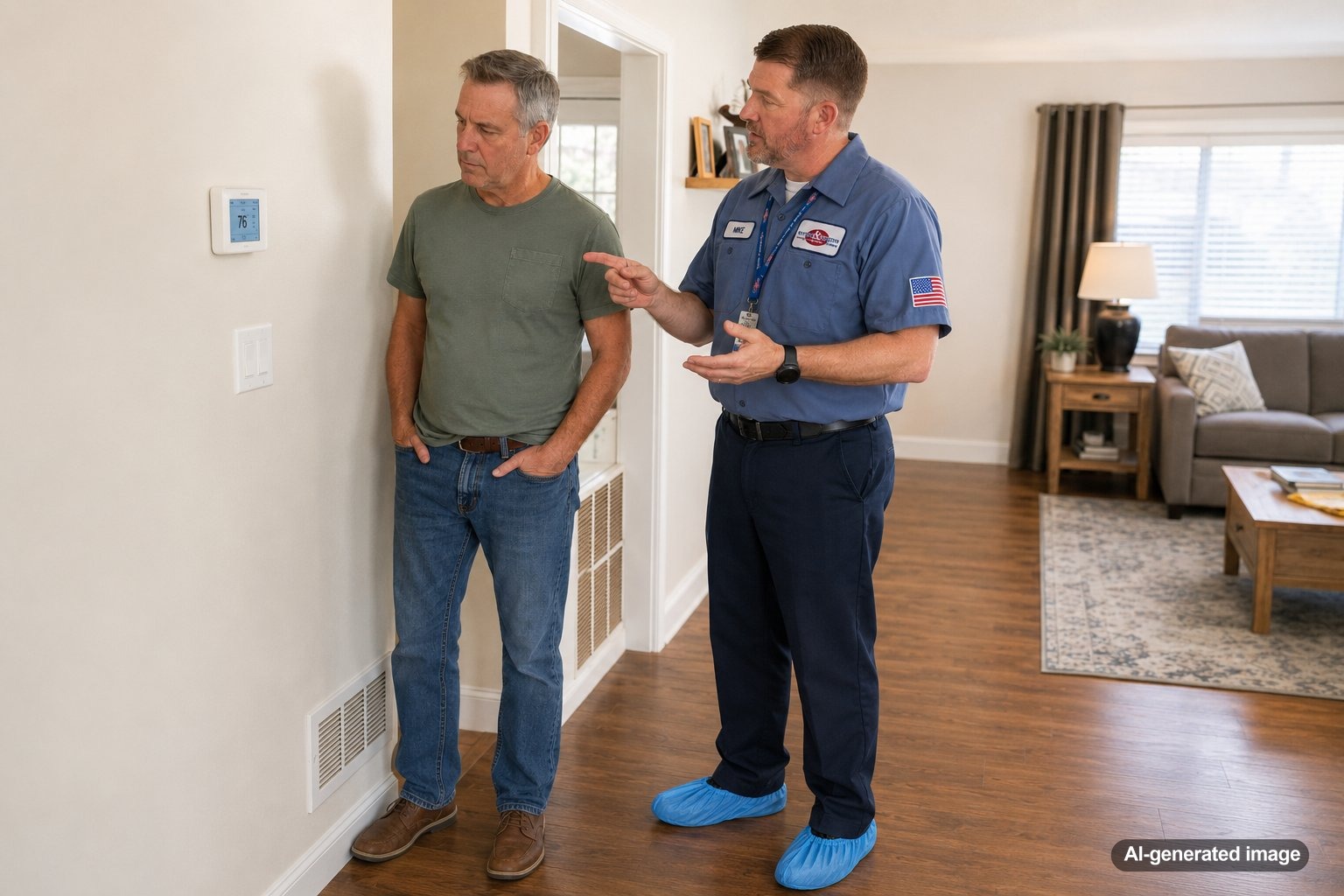
When your AC shuts off, your home should hold a comfortable temperature for a reasonable amount of time. If the house heats back up quickly, the problem is not always that the air conditioner is broken. It may be that heat, humidity, poor airflow, duct leakage, insulation gaps, or thermostat behavior are working against the cooling system.
In Central and Northern New Jersey, this can be especially noticeable during humid summer weather. The AC may cool the air, satisfy the thermostat, and shut off, only for certain rooms to feel warm again within minutes. Understanding why that happens can help you decide whether you need simple homeowner checks, AC service and maintenance, or a closer look at the overall comfort system.
Your home may heat back up after the AC shuts off because warm outdoor air is entering the house, humidity is making the air feel warmer, airflow is restricted, ductwork is losing cooled air, the thermostat is poorly placed, or the AC is cycling too quickly to remove enough heat from the home.
Why the temperature rises after the AC cycle ends
An air conditioner does not keep running nonstop under normal conditions. It cycles on, removes heat and moisture, then shuts off when the thermostat reaches its set temperature. After that, the home naturally begins gaining heat again from the roof, attic, windows, walls, appliances, people, and outdoor air.
A small temperature change over time is normal. A fast rebound is different. If the temperature climbs quickly or the house feels sticky right after the system stops, it often means the cooling cycle is not doing enough work, the home is gaining heat too quickly, or the thermostat is not accurately reflecting the comfort level in the rooms you use most.
Common causes of quick heat gain after cooling
1. Heat is entering faster than the AC can offset it
Hot attics, leaky windows, poorly sealed doors, unshaded glass, and weak insulation can all allow heat to move into the home after the AC stops. Older New Jersey homes can be especially prone to this when additions, attic spaces, or finished upper floors were not upgraded with comfort in mind.
South-facing rooms, second floors, sunrooms, and rooms over garages often warm up first. The AC may satisfy the thermostat in a central hallway while those tougher rooms are already starting to gain heat again.
2. Humidity is making the house feel warmer
Humidity changes how comfortable a room feels. Even if the thermostat says the temperature is acceptable, high indoor humidity can make the air feel heavy, sticky, and warmer than the number on the screen. During a humid New Jersey summer, an AC that runs in very short cycles may not stay on long enough to remove enough moisture.
This is one reason a home can feel fine while the system is running, then uncomfortable shortly after it shuts off. The air temperature may not have changed much, but the moisture level can make the home feel less comfortable.
3. The AC is short cycling
Short cycling means the system turns on and off too frequently. This can happen for several reasons, including thermostat issues, airflow restrictions, equipment sizing concerns, refrigerant-related problems, or control problems. A short cycle may cool the area near the thermostat before the rest of the home has had time to cool evenly.
When the AC shuts off too soon, walls, furniture, floors, and upstairs rooms may still be holding heat. That stored heat moves back into the air, and the home feels like it is warming up almost immediately.
4. Airflow is restricted
Cooling depends on steady airflow. A clogged filter, blocked return, closed supply vent, dirty coil, or blower issue can reduce how much conditioned air moves through the home. When airflow is weak, the thermostat may still be satisfied, but the house may not be evenly cooled.
Restricted airflow can also put extra strain on the equipment. Homeowners can safely check filters and visible vent obstructions, but deeper airflow problems should be evaluated by a qualified technician.
5. Ductwork may be losing cooled air
If ducts run through an attic, crawlspace, basement, garage, or other unconditioned area, leaks or poor insulation can waste cooled air before it reaches the living space. The AC may produce cold air, but less of it gets delivered where it belongs.
Duct issues can show up as rooms that never quite cool, weak airflow from certain vents, dust concerns, or a system that runs often but still leaves the home uncomfortable. In some homes, duct design can be just as important as the AC equipment itself.
6. The thermostat location is misleading the system
A thermostat placed near a supply vent, in a hallway, close to a kitchen, near direct sunlight, or far from problem rooms may not represent the true comfort of the home. It may tell the AC to shut off because one area is cool enough while bedrooms, offices, or upper floors are still warm.
Smart thermostats, zoning, and room sensors may help in some homes, but the right solution depends on the layout, ductwork, equipment, and how the home is used. Meyer & Depew offers options for thermostats and comfort controls when a simple setting change is not enough.
Safe checks before you call for service
- Check whether the thermostat is set to cool and the temperature setting is reasonable.
- Replace or inspect the air filter if it is dirty or overdue.
- Make sure supply and return vents are open and not blocked by furniture, rugs, curtains, or storage.
- Look for obvious debris around the outdoor unit, keeping plants and obstructions away from the cabinet.
- Notice whether the AC runs for only a few minutes at a time, which may point to short cycling.
- Compare rooms to see whether the issue is whole-home heat gain or mostly one area.
Avoid opening sealed equipment panels, handling refrigerant lines, bypassing safety switches, or working on electrical components. If you smell burning, see smoke or sparks, or suspect an unsafe condition, prioritize safety and contact the appropriate emergency service or qualified professional.
What the pattern can tell you
The timing and location of the heat gain can offer clues. If the whole home warms up quickly, the issue may involve insulation, air leakage, airflow, equipment performance, or short cycling. If only the second floor heats up, the cause may involve duct balance, attic heat, zoning, or return airflow. If the home feels sticky more than hot, humidity control may deserve attention.
Repeated quick heat gain can also affect comfort expectations. Lowering the thermostat several degrees may not fix the underlying issue. It can make the system run longer, but if airflow, ducts, humidity, or heat gain are the real problem, the house may still feel uneven or uncomfortable.
When professional AC service makes sense
Schedule professional service if the system short cycles, rooms stay uneven, airflow feels weak, humidity remains high, the AC runs constantly during normal summer conditions, or the house warms back up soon after each cooling cycle. A technician can evaluate system operation, airflow, thermostat behavior, duct conditions, and possible equipment issues without guessing.
Routine maintenance may also help catch developing problems before the hottest part of the season. For homeowners who want heating and cooling maintenance to stay on schedule, service plans can be a practical way to keep regular care from slipping through the cracks.
FAQ
Is it normal for a house to warm up after the AC shuts off?
Yes, some warming is normal because heat continues to enter the home. It becomes a concern when the temperature rises quickly, comfort drops right away, or the AC has to restart very often.
Can humidity make my home feel warmer even if the temperature is steady?
Yes. High humidity can make indoor air feel warmer and heavier. If the AC cycles off before removing enough moisture, the house may feel uncomfortable even when the thermostat reading looks acceptable.
Does a bigger AC solve this problem?
Not always. An oversized AC can cool the thermostat area quickly but shut off before removing enough humidity or cooling the whole home evenly. Proper sizing, airflow, ductwork, and controls all matter.
Should I close vents in unused rooms to keep other rooms cooler?
Closing vents can create airflow and pressure problems in many ducted systems. It is usually better to keep vents open and have a professional evaluate balancing, zoning, or duct concerns if comfort is uneven.
When should I call Meyer & Depew?
Call when quick heat gain keeps happening, the system short cycles, airflow is weak, humidity is high, or certain rooms never feel comfortable. A qualified technician can help identify whether the issue is equipment, airflow, ducts, controls, or the home itself.
If your home heats back up quickly after the AC shuts off, the thermostat is only part of the story. The real issue may involve heat gain, humidity, airflow, ductwork, thermostat placement, or system cycling. A careful evaluation can help you avoid guesswork and choose the right next step.
Need help with your heating, cooling, or HVAC system?
Meyer & Depew serves homeowners and businesses throughout Central and Northern New Jersey.
Get a quote or call 908.272.2100.