



Why Mini Splits Should Not Be Oversized
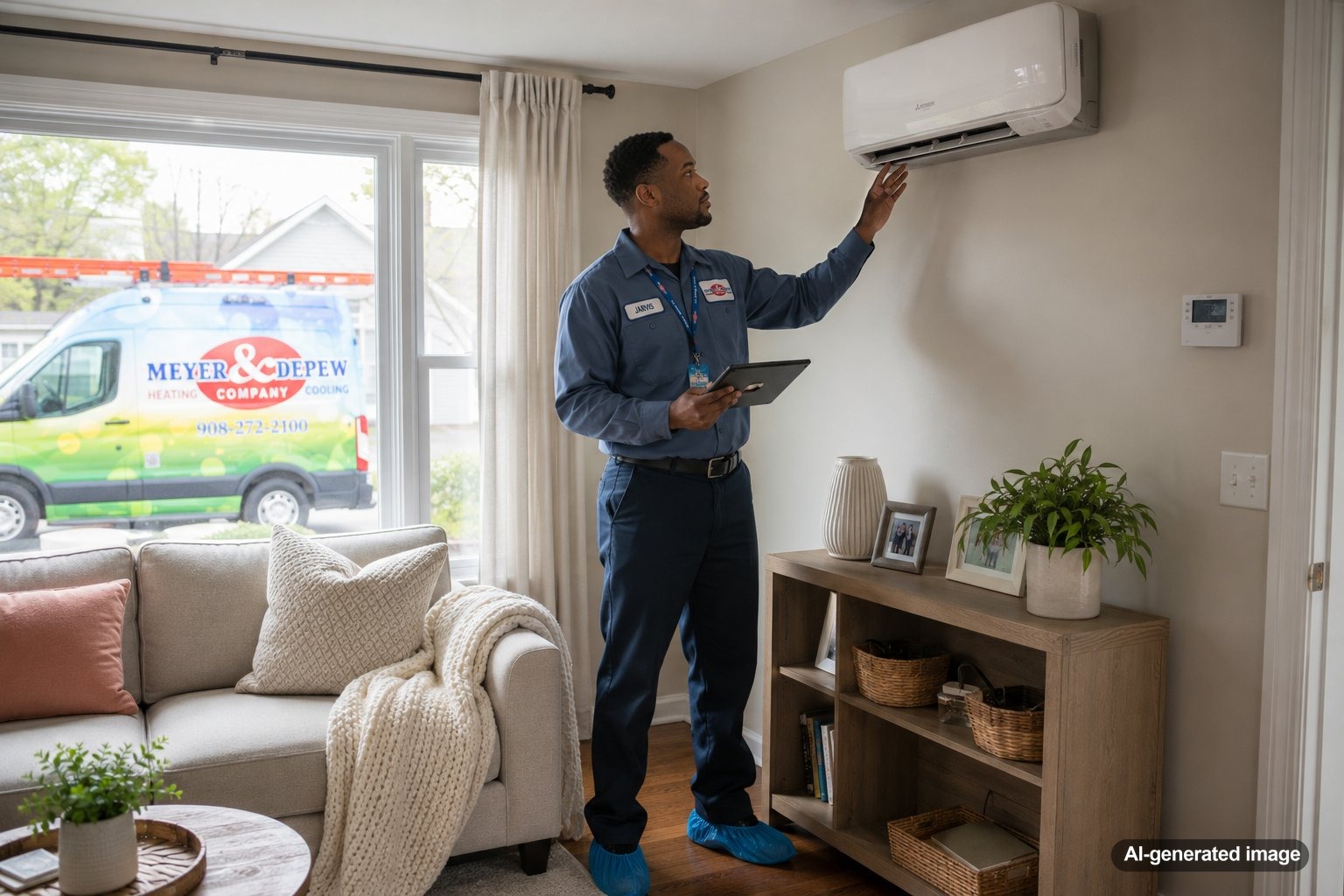
Bigger is not always better with ductless HVAC. When a mini split is oversized for the room or zone it serves, it may cool or heat the space quickly on paper, but that does not mean it will deliver steady comfort, good humidity control, or efficient operation. In many Central and Northern New Jersey homes, the best ductless performance comes from careful sizing, thoughtful placement, and a clear understanding of how the room is actually used.
Mini splits are designed to modulate, meaning they can adjust output based on demand. But they still need to be matched properly to the space. If you are considering ductless mini split systems for a bedroom, addition, finished basement, home office, garage workspace, or older home without ducts, proper sizing is one of the most important parts of the project.
A mini split should not be oversized because too much capacity can cause short cycling, uneven temperatures, weak humidity removal, extra wear, and disappointing energy performance. A qualified HVAC professional should evaluate the room size, insulation, windows, sun exposure, ceiling height, use patterns, and heat gain before recommending equipment.
Why an oversized mini split can become a comfort problem
An oversized mini split can satisfy the thermostat quickly, then shut down or reduce operation before the room has been evenly conditioned. That quick on-and-off pattern is often called short cycling. It may seem harmless at first, but it can leave parts of the room too warm, too cold, or noticeably humid.
This matters in New Jersey because summer comfort is not only about temperature. Humidity plays a major role. A properly sized cooling system usually needs enough run time to remove moisture from the air. When an oversized mini split cools the room too fast, it may not run long enough to manage humidity well. The thermostat might say the room is 72 degrees, while the space still feels clammy or uncomfortable.
Short cycling can reduce efficiency
One of the main reasons homeowners choose mini splits is efficiency. Ductless systems can be a strong option for targeted comfort because they avoid duct losses and can serve specific zones. Oversizing can work against that advantage.
HVAC equipment generally performs best when it can operate in longer, steadier cycles. An oversized unit may start and stop more often than necessary, which can waste energy and make comfort feel less consistent. Even inverter-driven mini splits that can ramp output up and down still have a practical operating range. If the selected unit is far larger than the room needs, it may spend too much time at its lowest setting or cycle off instead of running smoothly.
Humidity control can suffer
Humidity is one of the most overlooked reasons not to oversize a mini split. A room can feel sticky even when the temperature is technically low enough. This is especially common in basements, sunrooms, bedrooms, and additions where airflow, insulation, and moisture conditions can vary from the rest of the house.
During cooling season, the system needs time for air to pass over the indoor coil so moisture can be removed. If a unit is too powerful, it may lower the temperature before enough moisture is pulled from the air. The result can be a cool but damp room, which is not the same as a comfortable room.
Oversizing can create uneven room temperatures
Mini split placement matters, but sizing does too. If the unit delivers too much heating or cooling too quickly, the area near the indoor head may reach the set temperature before air has mixed well throughout the room. This can be noticeable in long rooms, rooms with partial walls, finished attics, bonus rooms, and spaces with open stairways.
In older New Jersey homes, room layout can make this even more important. Plaster walls, additions built at different times, older windows, and varying insulation levels can all affect comfort. A careful load calculation helps avoid guessing based only on square footage.
Too much capacity can add wear
Short cycling can place extra stress on equipment over time. Starting and stopping repeatedly is not ideal for many mechanical systems. While mini splits are built to modulate, they still need the right application, installation, and maintenance to perform well.
An oversized system may also make service concerns harder to interpret. A homeowner might notice frequent cycling, poor humidity control, or temperature swings and assume the equipment is defective, when the real issue may be that the unit was not matched well to the room. A qualified technician can evaluate whether the issue involves sizing, settings, airflow, placement, maintenance, or another factor.
How proper mini split sizing is determined
Square footage is only a starting point. Proper mini split sizing should consider the full room load, not just the floor area. A small room with large west-facing windows may need different capacity than a similar-sized room shaded by trees. A finished attic may behave differently than a first-floor office. A basement may have lower cooling load but higher humidity concerns.
- Room size, ceiling height, and layout
- Insulation levels and air leakage
- Window size, condition, and sun exposure
- How many people regularly use the space
- Heat from electronics, appliances, or equipment
- Whether the mini split is for cooling, heating, or both
- How the room connects to nearby spaces
For homeowners comparing ductless options, it can also help to think about the goal. Are you trying to solve a hot bedroom, condition a new addition, improve a finished basement, or support an older home without ductwork? The answer can affect whether one indoor unit is enough, whether more than one zone makes sense, or whether another comfort solution should be considered.
What homeowners can safely check before assuming the unit is oversized
Not every mini split comfort issue is caused by oversizing. Dirty filters, blocked airflow, incorrect mode settings, closed doors, poor thermostat placement, or maintenance needs can also cause problems. Before assuming the system is the wrong size, there are a few safe checks homeowners can make.
- Make sure the system is set to the correct mode, such as cooling, heating, dry, or auto.
- Inspect and clean or replace accessible filters according to the manufacturer’s guidance.
- Confirm that furniture, curtains, or shelving are not blocking airflow from the indoor unit.
- Look for obvious debris around the outdoor unit, if it is safe to do so.
- Note when the problem happens, such as afternoon sun, high humidity, very cold nights, or when doors are closed.
If the issue continues, professional evaluation is the safer next step. Homeowners should not open sealed equipment, handle refrigerant, bypass safety controls, modify wiring, or attempt major HVAC repairs themselves.
When to call a professional
Call a qualified HVAC professional if the mini split turns on and off frequently, struggles with humidity, leaves the room uneven, makes unusual sounds, leaks water, shows error codes, or no longer keeps the space comfortable. These symptoms do not always mean the system is oversized, but they do mean the equipment should be evaluated.
Meyer & Depew can review ductless comfort concerns, maintenance needs, installation questions, and replacement options for homes and businesses throughout Central and Northern New Jersey. For ongoing system care, a service plan may help keep routine maintenance on schedule and reduce the chance that small issues go unnoticed.
FAQ: Mini split oversizing
Is it bad to oversize a mini split by a little?
A small difference may not always cause a major problem, especially with variable-speed equipment, but more capacity is not automatically better. The wider the gap between the room’s actual load and the unit’s capacity, the more likely comfort and efficiency issues become.
Can an oversized mini split still cool the room?
Yes, it may cool the room quickly. The concern is that it may not run long enough to dehumidify well or distribute air evenly. Comfort depends on more than reaching the thermostat setting.
Does dry mode fix an oversized mini split?
Dry mode may help in some conditions, but it is not a cure for poor sizing, placement, or installation. If humidity problems keep returning, the system should be checked by a professional.
Can a mini split be too small instead?
Yes. An undersized mini split may run constantly and still struggle to heat or cool the space. Proper sizing is about matching the system to the real load, not simply choosing the smallest or largest option.
Should every room have its own mini split head?
Not always. It depends on the layout, comfort goals, insulation, doors, airflow paths, and how the spaces are used. A professional can help determine whether one zone, multiple zones, or a different HVAC approach makes the most sense.
An oversized mini split can look like a comfort upgrade but perform like a mismatch. Proper sizing helps the system run more steadily, manage humidity more effectively, and deliver the room-by-room comfort ductless systems are known for.
Thinking about replacing or upgrading your HVAC system?
Meyer & Depew can help you understand your options for comfort, efficiency, and long-term reliability in your New Jersey home or business.
Questions? Contact Meyer & Depew or call 908.272.2100.