



Why Mulch Around Your AC Unit Can Cause Problems
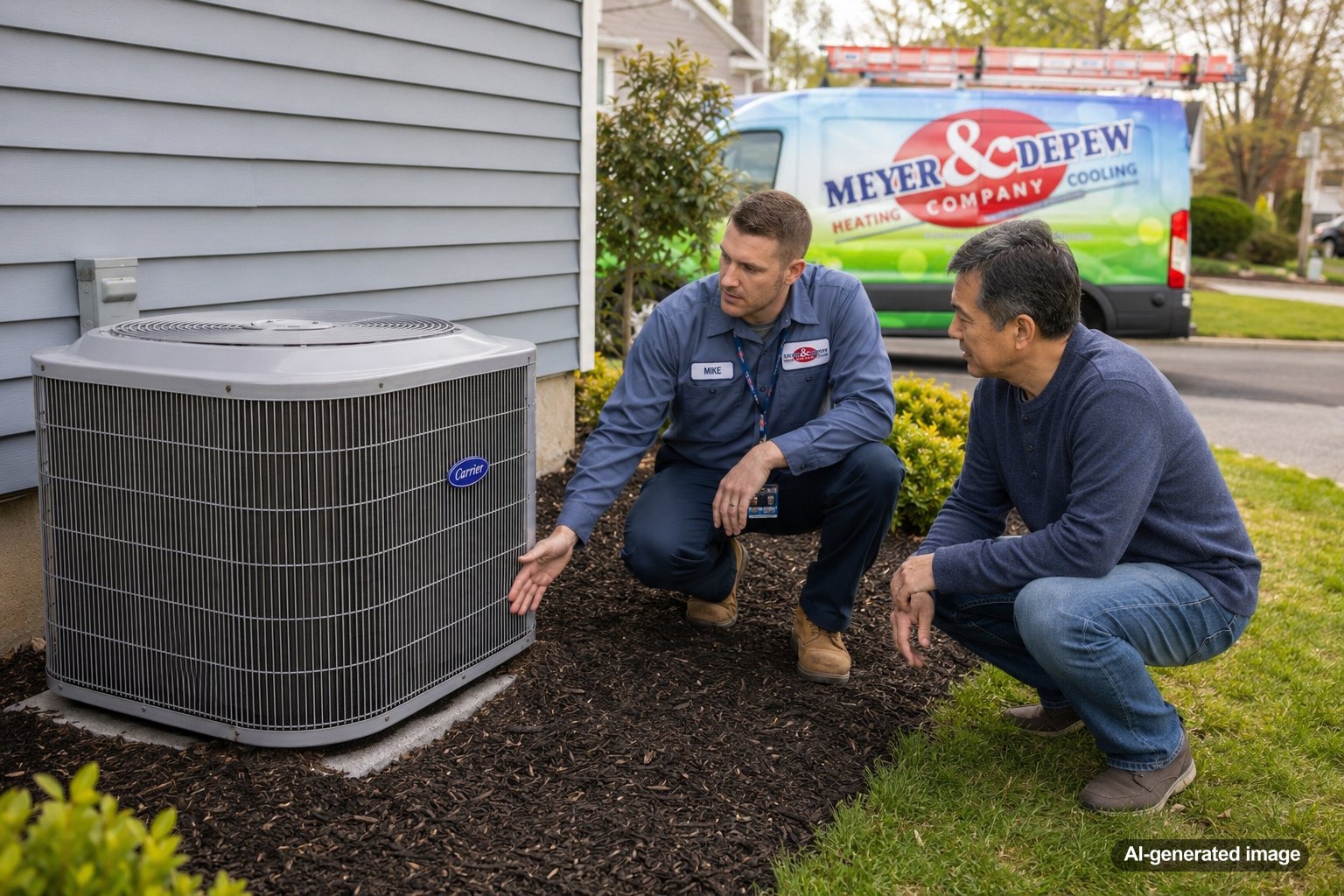
Mulch can make a yard look clean and finished, but piling it too close to an outdoor AC unit can create real cooling problems. Your outdoor condenser needs open space to pull in air, release heat, and stay accessible for routine service. When mulch, leaves, grass clippings, or landscaping debris crowd the cabinet, the system may have to work harder than it should.
For homeowners in Central and Northern New Jersey, this often becomes noticeable during humid summer weather, when an AC system is already under heavier demand. A neat landscape should not come at the expense of cooling performance, airflow, or safe service access. If your system has been struggling, Meyer & Depew can help with professional AC service and maintenance.
Mulch around your AC unit can cause problems when it blocks airflow, holds moisture against the equipment area, gets pulled into the coil, attracts pests, or makes it harder for a technician to reach the unit. A clear, open area around the condenser helps the system release heat more effectively and makes maintenance easier.
Why Outdoor AC Clearance Matters
Your outdoor AC unit is not just sitting outside because there was no room indoors. It plays a specific role in the cooling process. The condenser coil and fan help release heat collected from inside your home. To do that properly, the unit needs open airflow around the sides and above the cabinet.
When mulch is built up too high or pushed too close, it can limit how much air reaches the unit. Even a partial restriction can matter during long cooling cycles, especially on hot, sticky New Jersey afternoons. Restricted airflow may contribute to longer run times, weaker cooling, higher system stress, and more frequent service concerns.
How Mulch Can Interfere With AC Performance
Mulch is lightweight enough that pieces can shift during storms, yard work, or leaf blowing. Once it moves toward the outdoor cabinet, it can gather around the base, cling to damp areas, or end up against the condenser coil. That can make the system less efficient at moving heat away from your home.
Another issue is heat buildup. Your AC needs to discharge warm air upward and away from the unit. If shrubs, mulch mounds, decorative borders, or stored yard items crowd the condenser, hot air can linger near the equipment. In some cases, the system may recycle warmer air instead of getting the open airflow it needs.
Moisture, Debris, And Pest Concerns
Mulch is designed to retain moisture in planting beds. That is helpful for landscaping, but it is not always helpful near HVAC equipment. A damp area around the condenser can encourage weeds, insects, and small pests. It can also keep leaves and organic debris packed close to the unit instead of allowing the area to dry out cleanly.
This does not mean every home with mulch near the AC has a serious problem. The issue is usually distance, depth, and maintenance. A thin, controlled mulch bed that stays well away from the unit is very different from a thick mound that touches the cabinet or covers the equipment pad.
Safe Checks Before You Call
- Look for mulch, leaves, grass clippings, weeds, or branches crowding the outdoor unit.
- Make sure the unit has clear open space around the sides and above the fan discharge area.
- Keep the equipment pad visible and avoid burying the base of the unit in mulch.
- Trim nearby plants so they do not grow into the condenser during the cooling season.
- Do not remove panels, wash internal components, or attempt electrical or refrigerant work yourself.
If you notice heavy buildup, clear only what is safely reachable from the outside. Avoid bending fins, pushing debris deeper into the coil, or using sharp tools around the equipment. If the coil appears packed with debris or the system still is not cooling well, a qualified technician should evaluate it.
How Much Space Should You Leave Around The AC Unit?
A practical rule is to keep the area around the outdoor unit open and easy to access. Many systems need at least a couple of feet of side clearance, with more open space above the unit so hot air can discharge properly. Exact clearance can vary by equipment design, installation, and manufacturer guidance, so a technician can confirm what is appropriate for your system.
Think of the AC unit as working equipment, not a decorative yard feature. Landscaping can still look attractive, but it should be planned around airflow and service access. Stone, edging, or plants should not trap debris against the cabinet, block the coil, or prevent a technician from reaching key components during maintenance.
Why This Matters During New Jersey Summers
In New Jersey, AC systems often run through heat, humidity, pollen, thunderstorms, and rapid weather swings. Outdoor units can collect grass clippings after mowing, seed pods in spring, leaves in early fall, and mulch after heavy rain or yard cleanup. These small issues can add up if the unit is not checked regularly.
Routine maintenance helps catch airflow restrictions, dirty coils, drainage concerns, worn electrical components, and other issues before they become more disruptive. Homeowners who want a more consistent maintenance schedule may also want to look into service plans that help keep heating and cooling care on track.
When To Call A Professional
Call for professional service if your AC is running but not cooling well, turning on and off frequently, making unusual noises, tripping the breaker, or struggling after you clear visible debris from around the outdoor unit. You should also schedule service if the coil looks clogged, the unit seems to be overheating, or you are unsure whether the landscaping clearance is adequate.
It is especially important not to open sealed equipment areas, handle refrigerant lines, bypass switches, or work around high-voltage components. A trained HVAC technician can clean and inspect the equipment safely, check performance, and look for underlying issues that may not be visible from the yard.
FAQ: Mulch And Outdoor AC Units
Can I have mulch near my AC unit at all?
Yes, but it should not touch the unit, cover the equipment pad, or restrict airflow. Keep mulch controlled, shallow near the equipment area, and far enough away to maintain clear service access.
Is stone better than mulch around an AC unit?
Stone can reduce some organic debris concerns, but it still needs to be managed carefully. Any material that blocks airflow, traps heat, or makes the unit hard to service can create problems.
Can mulch cause my AC to stop working?
Mulch alone may not be the only cause, but it can contribute to airflow restrictions, dirty coils, moisture issues, and added system strain. If cooling problems continue after clearing the area, schedule professional service.
Should I hose off mulch dust or debris from the unit?
A light exterior rinse may be safe in some situations, but avoid using high pressure, harsh cleaners, or spraying electrical areas. If debris is packed into the coil, professional cleaning is the safer choice.
Mulch should improve the look of your yard, not make your AC work harder. Keep the outdoor unit clear, dry, and accessible so it can move air properly and be serviced safely.
Need help with your heating, cooling, or HVAC system?
Meyer & Depew serves homeowners and businesses throughout Central and Northern New Jersey.
Get a quote or call 908.272.2100.