



Why Spring Pollen Can Still Affect Summer Indoor Air
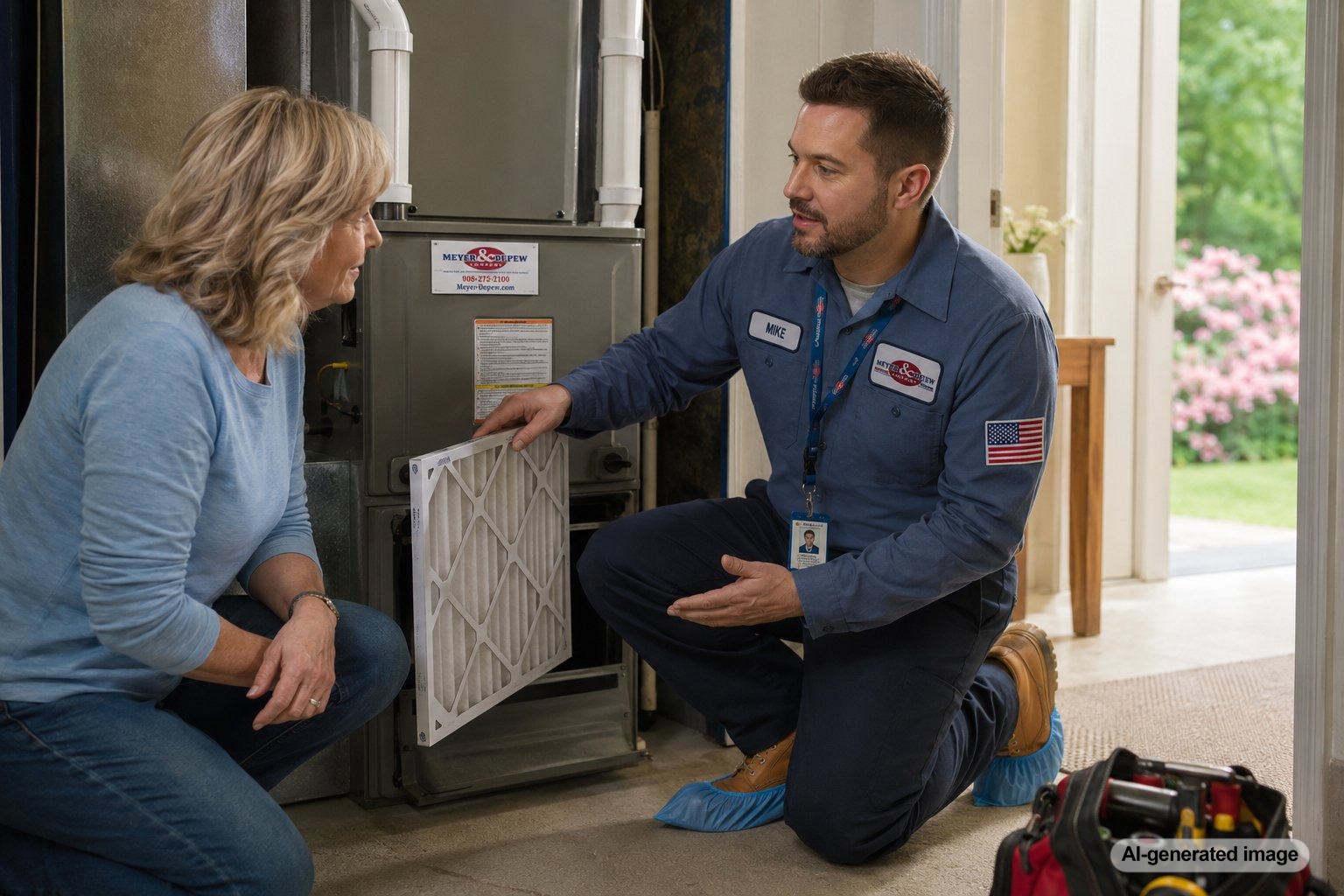
Spring pollen can still affect summer indoor air because it does not always disappear when the outdoor pollen season slows down. In New Jersey homes, pollen can settle into dust, cling to soft surfaces, collect in filters, and move through the HVAC system when the AC runs. That means a home can feel cleaner and cooler in July while still circulating some of the same irritants that entered during April, May, or June.
For homeowners in Central and Northern New Jersey, this is often most noticeable when allergy-like symptoms continue indoors even after windows are closed and the air conditioning is on. Your HVAC system is not the only factor, but filtration, airflow, humidity, and routine maintenance all play a role. Meyer & Depew helps homeowners evaluate air quality and comfort concerns alongside heating and cooling performance.
Spring pollen can linger indoors into summer when it gets trapped in dust, ductwork, filters, rugs, upholstery, and return air pathways. Running the AC may help control windows-open exposure, but it can also keep indoor air moving. Cleaner filters, better housekeeping around returns, humidity control, and professional HVAC maintenance may help reduce how much pollen keeps recirculating.
How spring pollen gets inside and stays there
Pollen enters a home in ordinary ways: open windows, screen doors, pets, shoes, clothing, grocery bags, and outdoor gear. During peak spring pollen days, a surprising amount can settle on entry mats, floors, bedding, curtains, furniture, and shelves. Once indoors, it can mix with dust and become part of the home environment rather than remaining a short-term outdoor issue.
Older homes, busy households, and homes near trees, lawns, parks, or active landscaping may notice this more. A home does not need to look dusty for pollen to be present. Fine particles can collect where air naturally moves, including around return grilles, under doors, near stairways, and in rooms where the HVAC system pulls air back toward the equipment.
Why your AC can make lingering pollen more noticeable
Air conditioning cools the home by moving air. That movement is necessary for comfort, but it also means particles in the home can be pulled toward the return side of the system and sent through the filter. If the filter is dirty, poorly fitted, too low in efficiency, or overdue for replacement, more dust and pollen may remain in circulation.
This is also why some homeowners feel worse in certain rooms. A bedroom with heavy curtains, carpet, a blocked return, or a supply register that blows across dusty surfaces may feel more irritating than a kitchen or hallway. The HVAC system may be doing its job from a temperature standpoint while the indoor air still needs attention.
The filter matters, but it is not the whole answer
A clean HVAC filter can help capture airborne particles, but the right filter depends on the system. Choosing the highest-rated filter on the shelf is not always the best move. Some filters can restrict airflow if the HVAC system is not designed for them, which may affect comfort, efficiency, and equipment performance.
A qualified technician can help determine which filter type makes sense for your system and how often it should be changed during high-use seasons. If your household has pets, allergy concerns, nearby construction, or heavy spring pollen exposure, filter changes may need to happen more often than a basic schedule suggests. Professional AC service and maintenance can also identify airflow restrictions, dirty components, and maintenance issues that may contribute to poor comfort or indoor air complaints.
Humidity can change how indoor air feels
Summer humidity can make indoor air feel heavier, mustier, or less fresh. While humidity does not create pollen, it can affect comfort and may make existing indoor irritants feel more noticeable. High indoor humidity can also support dust mite and mold concerns, which may overlap with allergy-like symptoms.
If your home feels sticky even when the thermostat says the temperature is correct, the issue may be more than pollen. Oversized cooling equipment, short cycling, poor airflow, leaky ductwork, or inadequate dehumidification can all affect how the air feels. In many New Jersey homes, indoor air quality and comfort are closely connected.
Common places pollen hides after spring
- Air filters: A filter that caught spring pollen may keep restricting airflow if it is not replaced.
- Return grilles: Dust near returns can be pulled back into the system again and again.
- Rugs and carpets: Soft surfaces can hold pollen brought in on shoes, pets, and clothing.
- Bedding and upholstery: Particles can settle where people spend long periods of time.
- Window tracks and screens: Pollen that collected during spring can be disturbed later when windows are cleaned or opened.
- Closets and mudrooms: Jackets, sports gear, and shoes can carry outdoor particles well past pollen season.
- Replace or inspect the HVAC filter if it is dirty or overdue.
- Make sure supply and return vents are open and not blocked by furniture, rugs, or storage.
- Vacuum around return grilles and entry areas with care so settled dust is not stirred up excessively.
- Wash bedding, pet beds, and frequently used throw blankets.
- Keep windows closed on high pollen or high humidity days when possible.
- Schedule professional service if airflow seems weak, the system runs constantly, or indoor air still feels stale.
When air purification or ventilation may be worth discussing
If pollen and indoor air complaints keep returning, it may be time to look beyond the basic filter. Whole-home air purification, improved filtration, ventilation options, and humidity control can all be part of the conversation. The right approach depends on the home’s HVAC system, ductwork, occupancy, comfort concerns, and whether the issue is mostly particles, humidity, stale air, odors, or a mix of several factors.
For example, a home that feels dusty after the AC starts may need different attention than a home that feels damp and stale. A home with allergy-sensitive family members may have different priorities than a lightly used vacation property or a busy household with pets. The best next step is not a one-size-fits-all product, but a careful look at how air is moving through the home.
When to call a professional
Call a qualified HVAC professional if you have persistent indoor air complaints, weak airflow, unusually dusty rooms, musty odors, frequent filter clogging, high indoor humidity, or comfort problems that do not improve with basic filter changes and cleaning. A technician can inspect the system, evaluate airflow, review filter compatibility, and look for maintenance issues that may be affecting both comfort and air quality.
You should also get help if your AC is freezing, short cycling, leaking water, making unusual noises, or failing to cool properly. Those symptoms may point to mechanical or airflow problems that should not be handled with DIY repairs.
FAQ: Spring pollen and summer indoor air
Can pollen stay in a house for months?
Yes, pollen can remain indoors when it settles into dust, fabrics, carpets, bedding, and HVAC filters. Regular cleaning and filter changes may help reduce the amount that keeps getting stirred back into the air.
Does running the AC remove pollen?
Running the AC can help when windows stay closed and the system filter is clean and properly fitted. However, AC operation also moves indoor air, so a dirty filter, blocked returns, or dusty surfaces can keep particles circulating.
Should I use a stronger HVAC filter for pollen?
Possibly, but filter choice should match your HVAC system. A filter that is too restrictive can reduce airflow. Ask a qualified technician what filtration level is appropriate for your equipment and comfort needs.
Why do my allergies feel worse indoors in summer?
Indoor symptoms may come from lingering pollen, dust, pet dander, mold concerns, humidity, or poor ventilation. If symptoms continue, it may be worth discussing both medical guidance and an HVAC air quality evaluation.
How often should I change my filter in summer?
It depends on the filter type, system use, pets, household activity, and indoor air concerns. Many homes need more frequent checks during heavy AC use, especially after spring pollen season.
Spring pollen can follow your home into summer when it settles indoors and gets picked up by everyday airflow. A cleaner filter, better airflow, humidity awareness, and routine HVAC maintenance can make your cooling system part of a broader indoor comfort strategy.
Need help with your heating, cooling, or HVAC system?
Meyer & Depew serves homeowners and businesses throughout Central and Northern New Jersey.
Get a quote or call 908.272.2100.