



Why Your Upstairs Feels Hotter Than Downstairs in Summer
Estimated reading time: 5 minutes
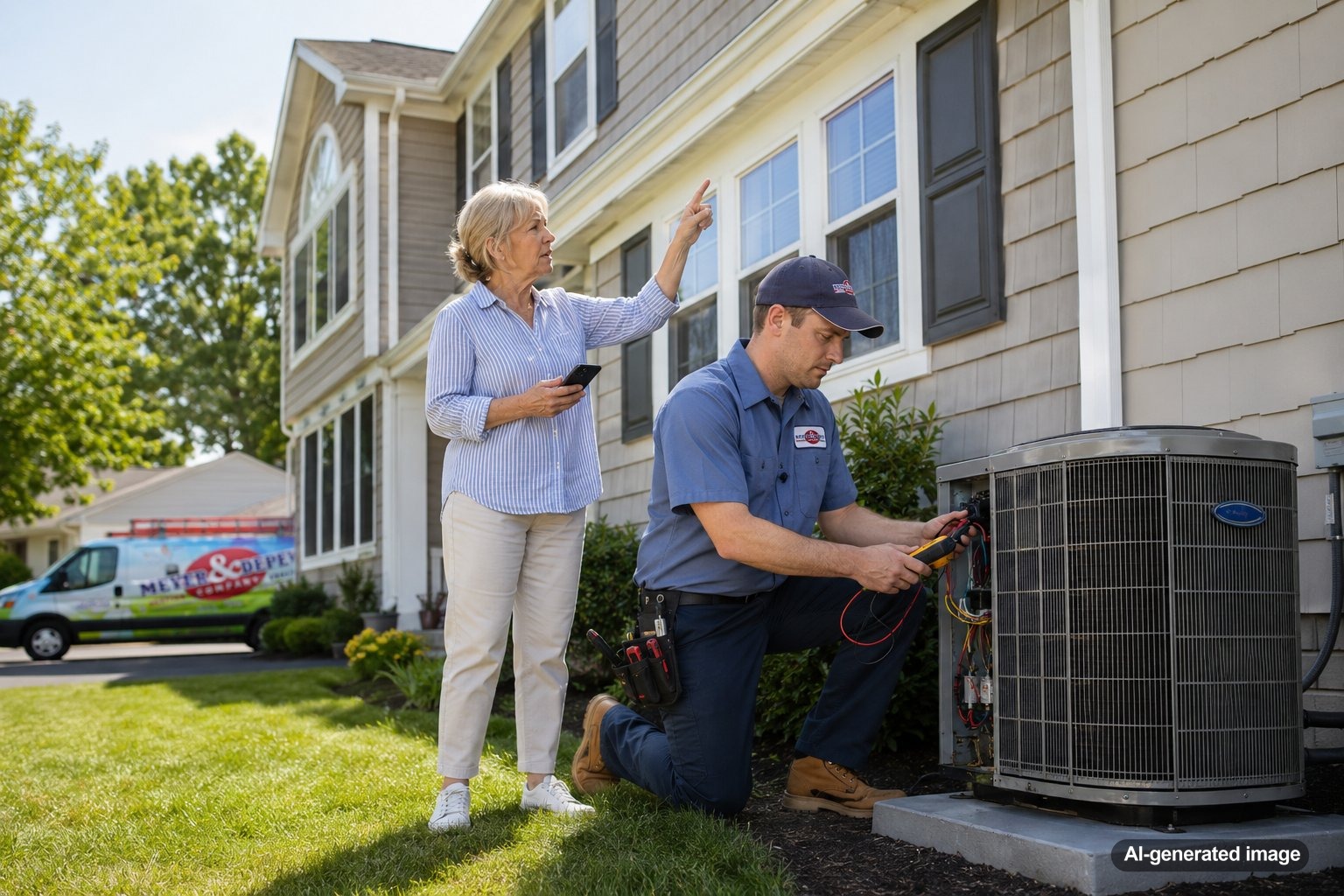
If your upstairs feels hotter than downstairs in summer, you are not imagining it. Warm air naturally rises, upper floors absorb more heat from the roof and attic, and your cooling system may have a harder time moving enough conditioned air to the rooms farthest from the equipment. In many Central and Northern New Jersey homes, the issue becomes more noticeable during humid weather, long heat waves, and sunny afternoons.
The answer is usually not one single problem. Uneven cooling can come from airflow restrictions, duct design, attic insulation, thermostat location, aging equipment, or a home layout that was never designed for balanced comfort. Meyer & Depew’s AC service and maintenance team can help evaluate whether the issue is a simple maintenance concern or a larger comfort design problem.
Upstairs rooms often feel hotter because heat rises, the attic and roof add extra heat load, and many homes do not deliver enough cooled air to the second floor. Safe first steps include checking filters, vents, returns, thermostat settings, and obvious airflow restrictions. If the problem continues, a qualified HVAC technician can assess airflow, ductwork, refrigerant performance, insulation, zoning options, or whether a ductless solution makes sense.
Why upstairs rooms get hotter first
The second floor sits closer to the roof and attic, where summer heat can build quickly. Even with insulation, heat can move downward into bedrooms, hallways, and bonus rooms. If the attic is poorly ventilated, under-insulated, or has air leaks, the upstairs can feel several degrees warmer than the main level.
Sun exposure also matters. Rooms with large windows, west-facing walls, skylights, or limited shade often pick up more heat during the afternoon. A room above a garage, a finished attic space, or a bedroom at the end of a long duct run can be even harder to cool evenly.
Your AC may be cooling, but not balancing the house
A central AC system can be working and still leave the upstairs uncomfortable. Cooling performance and air distribution are related, but they are not the same thing. The system may produce cold air, yet the ductwork may not deliver enough of that air to the upper floor.
Common comfort issues include undersized or leaky ducts, long duct runs, closed or blocked vents, weak return airflow, dirty filters, or dampers that are not positioned correctly. In some homes, the thermostat is downstairs, so the system shuts off once the first floor reaches the set temperature, even while upstairs bedrooms are still too warm.
Humidity can make the temperature difference feel worse
New Jersey summers often bring humidity along with heat. When indoor humidity is high, upstairs rooms can feel warmer and heavier even if the thermostat reading does not look extreme. High humidity can also make bedrooms feel uncomfortable at night, especially when the AC cycles off too quickly or airflow is limited.
An HVAC technician can evaluate whether the system is running long enough to remove moisture, whether airflow is properly balanced, and whether indoor comfort products may help. For some homes, air quality and comfort improvements are part of the larger solution, especially when humidity, stale air, or ventilation concerns are also present.
Safe checks homeowners can make before calling
- Replace or inspect the air filter if it is dirty or overdue.
- Make sure upstairs supply vents are open and not covered by furniture, rugs, or curtains.
- Check that return vents are not blocked.
- Look for obvious debris around the outdoor AC unit.
- Confirm thermostat settings, fan settings, and schedules have not changed.
- Check the breaker once, if it is safe to do so, but do not keep resetting it if it trips again.
Avoid opening sealed equipment panels, adjusting refrigerant, changing electrical components, or modifying ductwork yourself. Those areas should be handled by a qualified professional because improper adjustments can create safety, performance, or equipment problems.
When zoning or ductless cooling may help
If your upstairs has always been hotter than downstairs, the issue may be more about design than repair. A single thermostat on the first floor cannot always manage two levels with different heat loads. In those cases, zoning systems may help separate comfort control by area, allowing the upstairs and downstairs to be managed more independently.
Ductless mini split systems can also be useful for difficult rooms, additions, finished attics, rooms over garages, and spaces where extending or redesigning ductwork is not practical. They are not the answer for every home, but they can be a strong option when one or two upstairs areas need targeted cooling.
When to schedule professional AC service
Professional service is worth scheduling if upstairs rooms remain hot after basic checks, if airflow feels weak, if the AC runs constantly, if the system short cycles, or if the temperature gap between floors keeps growing. A technician can measure system performance, inspect the blower, evaluate airflow, check accessible duct conditions, and look for maintenance issues that could be affecting comfort.
It is also wise to call if your system is older, has needed frequent repairs, or struggles during every summer heat wave. Sometimes maintenance and airflow correction can help. In other cases, the home may need a better long-term comfort strategy that includes duct improvements, zoning, equipment replacement, or supplemental cooling.
FAQ: Upstairs too hot in summer
Should I close downstairs vents to push more cold air upstairs?
Closing too many vents can create pressure problems and may reduce system performance. It is better to have airflow and duct balance evaluated before making major changes.
Can a bigger AC fix a hot upstairs?
Not always. An oversized AC can cool too quickly, short cycle, and remove less humidity. The right solution depends on system sizing, duct design, insulation, airflow, and how the home is used.
Why is the upstairs worse at night?
Heat stored in the roof, attic, walls, and upper rooms can continue to affect comfort after sunset. Bedrooms may also have weaker airflow or limited returns, which can make sleeping areas feel warmer.
Do smart thermostats help with uneven upstairs temperatures?
They may help with scheduling, remote sensing, and better control habits, but they cannot fix major airflow, duct, insulation, or equipment problems by themselves.
A hot upstairs usually points to a mix of heat gain, airflow imbalance, thermostat location, humidity, and system performance. Start with safe checks, then bring in a professional if the issue continues or affects comfort every summer.
Need help with your heating, cooling, or HVAC system?
Meyer & Depew serves homeowners and businesses throughout Central and Northern New Jersey.
Get a quote or call 908.272.2100.