



Why West-Facing Rooms Are Harder to Cool in Summer
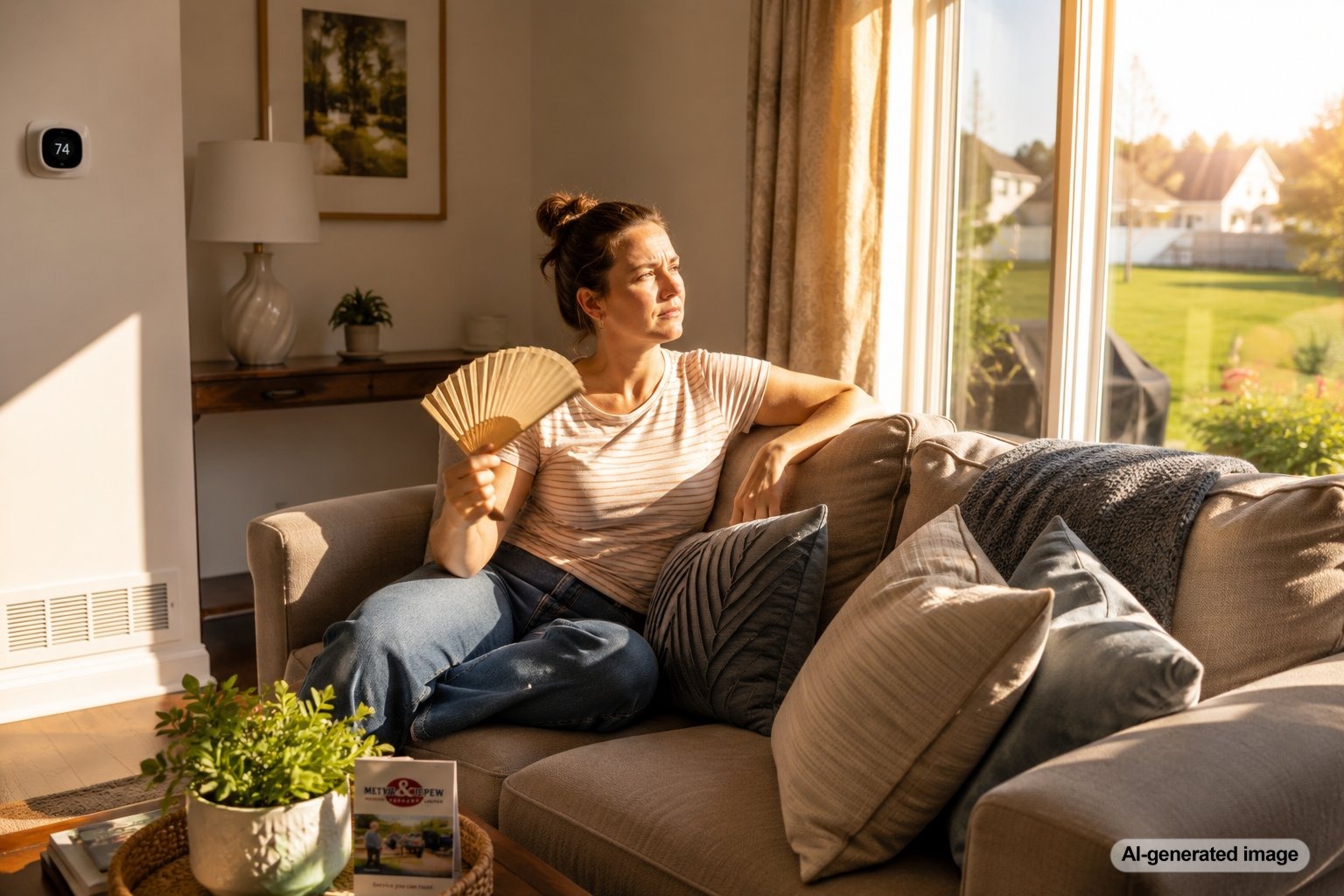
West-facing rooms often feel warmer in summer because they get hit with the strongest late-day sunlight, right when the house has already absorbed hours of heat. In many New Jersey homes, that means a bedroom, home office, kitchen, conference room, or second-floor space can feel noticeably hotter than the rest of the building even when the AC is running.
The issue is not always a broken air conditioner. Sometimes it is a mix of solar heat gain, window exposure, insulation, airflow, thermostat location, and the way the cooling system was designed. Meyer & Depew helps homeowners and businesses throughout Central and Northern New Jersey evaluate these comfort problems through practical AC service and maintenance, system assessments, and room-by-room comfort solutions.
West-facing rooms are harder to cool because afternoon and evening sun adds heat late in the day, often faster than the room can release it. Large windows, weak insulation, closed doors, limited return airflow, and a thermostat located elsewhere in the home can make the problem worse.
Why afternoon sun creates a bigger cooling challenge
Morning sunlight can warm a room, but the outdoor temperature is usually lower and the house has not yet stored much heat. West-facing rooms get their strongest sun exposure later, when outdoor temperatures are typically near their daily peak and the walls, attic, roofline, and windows have already been warming for hours.
That late-day timing matters. A west-facing room may be relatively comfortable at noon, then become uncomfortable between mid-afternoon and early evening. The AC may still be cooling the home, but the heat entering that one space can be more intense than the airflow serving it.
In older homes, additions, finished attic spaces, bonus rooms over garages, and rooms with large glass areas, this problem can be especially noticeable. The room does not just feel sunny. It can hold heat in walls, furniture, flooring, and window treatments long after the sun begins to drop.
The window factor: glass can overpower a room
Windows are one of the biggest reasons a west-facing room gets uncomfortable. Glass allows sunlight to enter directly, and once that solar energy warms the surfaces inside the room, the space can feel stuffy even if the air temperature at the thermostat looks normal.
Several window details can change how severe the problem feels:
- Window size: Large picture windows, sliding doors, and tall bedroom windows can bring in a significant amount of afternoon heat.
- Window age: Older or poorly sealed windows may allow more heat transfer and air leakage.
- Shading: A room with little tree cover, no overhang, or light window treatments may absorb more sun.
- Interior surfaces: Dark flooring, furniture, and walls can absorb and hold more radiant heat.
Closing blinds or curtains during peak sun can help reduce heat gain, but it may not fully solve the problem if the room also has airflow or system balance issues.
Airflow often makes the hot-room problem worse
A west-facing room needs enough cool supply air to offset the added heat. If the room has a small supply register, long duct run, restricted ductwork, dirty filter, closed vent, or blocked return path, it may not receive enough airflow during the hottest part of the day.
Closed bedroom or office doors can also trap heat. If cool air enters the room but has no easy way to return to the HVAC system, airflow can become unbalanced. The room may feel stagnant, while other rooms closer to the thermostat cool more quickly.
- Make sure supply vents are open and not blocked by rugs, furniture, or curtains.
- Check the air filter and replace it if it is dirty or overdue.
- Keep doors slightly open when possible to improve air movement.
- Close blinds, shades, or curtains before the strongest afternoon sun hits the room.
- Check that the thermostat is set correctly and not being influenced by lamps, direct sun, or nearby electronics.
Thermostat location can hide the real problem
Many homes have one central thermostat, often located in a hallway, living area, or another room that does not receive the same west-facing sun. If that thermostat reaches the set temperature, the AC cycle may end even though the west-facing room is still hot.
This is one reason uneven cooling can feel confusing. The system may appear to be doing its job based on the thermostat reading, while one room continues to lag behind. In some homes, a properly planned zoning system or thermostat upgrade can help manage comfort more precisely, especially when different parts of the home have different heat loads.
Room-by-room comfort is not only a residential issue. Offices, retail spaces, medical suites, restaurants, and other commercial buildings can also have west-facing areas that become uncomfortable late in the day, especially when occupancy, equipment heat, and large windows add to the cooling load.
When it may be more than sunlight
West-facing exposure can explain a lot, but it should not be used to dismiss every cooling complaint. If the room used to cool well and suddenly does not, there may be another issue with the HVAC system or building envelope.
Common possibilities include reduced airflow, duct leakage, a weakening blower motor, refrigerant-related performance issues, clogged coils, a dirty filter, insulation gaps, attic heat transfer, or an AC system that is struggling throughout the home during hot weather. A qualified technician can evaluate the system without guessing or assuming the sun is the only cause.
It is also worth paying attention to how often the system runs. Long cycles on very hot days can be normal, but constant running with weak airflow, warm air from vents, short cycling, unusual sounds, water around equipment, or rising indoor humidity should be checked by a professional.
Practical ways to improve comfort in a west-facing room
The right solution depends on the home or building. Some rooms improve with basic changes, while others need a more complete comfort evaluation.
- Shading improvements: Better blinds, shades, exterior awnings, or landscaping can reduce afternoon heat gain.
- Airflow adjustments: A technician can evaluate supply and return airflow, duct condition, and system balance.
- Insulation and sealing: Rooms near attics, garages, or older exterior walls may benefit from reducing heat transfer.
- Thermostat strategy: Smart thermostat features may help with schedules, comfort settings, and better system management.
- Zoning or ductless options: For persistent hot rooms, ductless mini split systems or zoning may provide targeted comfort.
A larger AC system is not automatically the answer. Oversizing can create other comfort problems, including short cycling, uneven humidity control, and unnecessary wear. The better approach is to understand why the room is overheating, then match the solution to the cause.
When to schedule professional HVAC service
Schedule service if a west-facing room remains uncomfortable after basic homeowner checks, if the AC cannot keep up throughout the home, or if the problem has become worse over time. A professional evaluation can look at airflow, ductwork, refrigerant performance, thermostat operation, equipment condition, and possible comfort upgrades.
For homes and businesses in Central and Northern New Jersey, this type of room-by-room comfort issue is common during summer heat and humidity. The goal is not just to make one room feel better for an afternoon. It is to understand how the space, sun exposure, and HVAC system work together so you can make a sensible decision.
FAQ: West-facing rooms and summer cooling
Why is my west-facing bedroom hot at night?
A west-facing bedroom can absorb heat during the afternoon and early evening, then release it slowly after sunset. If the room has limited airflow, large windows, poor insulation, or a closed door, it may stay warmer than the rest of the house well into the night.
Can closing blinds really help?
Yes, closing blinds, shades, or curtains before the strongest afternoon sun hits can reduce heat gain. It may not solve airflow or equipment issues, but it is a safe first step that can make the room easier to cool.
Does a hot west-facing room mean my AC is too small?
Not always. A hot room can be caused by sun exposure, duct design, closed doors, poor return airflow, insulation gaps, or thermostat placement. A professional load and comfort evaluation can help determine whether the system size is actually part of the problem.
Would a smart thermostat fix uneven cooling?
A smart thermostat may help with scheduling and comfort control, but it cannot overcome every airflow, insulation, or ductwork issue. In some homes, zoning, duct adjustments, or a targeted ductless system may be more effective.
West-facing rooms are harder to cool because they gain heat late in the day, when the AC is already working against high outdoor temperatures. If safe checks do not help, the next step is a professional look at airflow, ductwork, thermostat strategy, and room-specific comfort options.
Need help with your heating, cooling, or HVAC system?
Meyer & Depew serves homeowners and businesses throughout Central and Northern New Jersey.
Get a quote or call 908.272.2100.