



Why Your AC Freezes Up in Warm Weather
Estimated reading time: 7 minutes
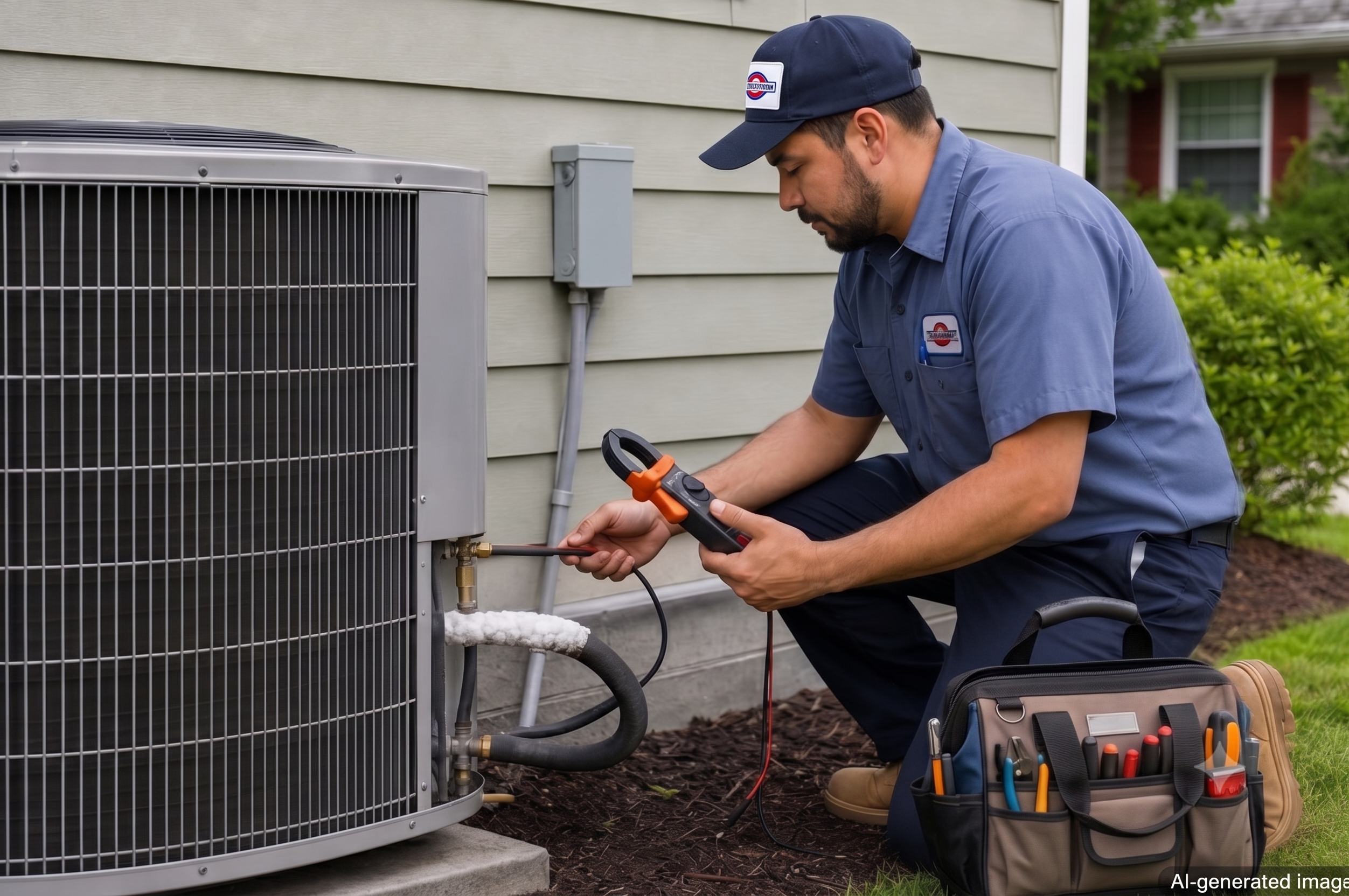
An AC system can freeze even when the weather outside is hot because the problem usually starts inside the system, not outside in the air. When airflow is restricted, refrigerant conditions are off, or the evaporator coil gets too cold, moisture can turn into ice and block the cooling process. For New Jersey homeowners, this can be especially frustrating during humid summer weather, when the system is already working hard to keep the home comfortable.
If you see ice on your indoor coil, refrigerant lines, or outdoor equipment, the safest move is to turn the system off and avoid trying to chip, scrape, or force the ice loose. Meyer & Depew provides AC service and maintenance for homeowners throughout Central and Northern New Jersey when cooling problems need professional attention.
Quick answer:
Your AC may freeze up in warm weather when the evaporator coil gets too cold because of poor airflow, a dirty filter, blocked vents, a malfunctioning blower, refrigerant-related issues, or a system running under conditions it cannot handle properly.
How Can an AC Freeze When It Is Hot Outside?
Your air conditioner removes heat from indoor air as that air passes across the evaporator coil. Under normal conditions, the coil gets cold enough to absorb heat but not so cold that condensation freezes. If something disrupts that balance, the coil temperature can drop below freezing.
Once ice starts forming, it can create a chain reaction. Ice blocks airflow across the coil, blocked airflow makes the coil even colder, and the system continues to run without moving enough heat. What began as a small performance issue can quickly become a system that barely cools at all.
Warm weather does not prevent this from happening. In fact, long run times during hot, humid New Jersey weather can make the symptoms more noticeable because the system may be operating for extended periods while the underlying problem gets worse.
Common Reasons Your AC Freezes Up
A frozen AC system can have more than one cause. Some are simple airflow restrictions, while others require trained diagnostic work. The most common issues include:
- Dirty or clogged air filter: A restricted filter can reduce airflow across the evaporator coil, allowing the coil to get too cold.
- Blocked supply or return vents: Furniture, rugs, closed registers, or stored items near returns can limit the air the system needs to operate properly.
- Dirty evaporator coil: Dust and debris on the coil can interfere with heat transfer and contribute to freezing.
- Blower problems: If the blower motor, fan, belt, or control components are not moving enough air, the coil may freeze even if the thermostat is calling for cooling.
- Refrigerant-related issues: Low refrigerant charge or refrigerant flow problems can cause coil temperature and pressure conditions that lead to ice.
- Drainage and humidity problems: Excess moisture, high indoor humidity, or drainage issues can add to ice formation when the coil is already too cold.
Because several of these problems can look similar from the outside, it is important not to assume the cause. Adding refrigerant, opening sealed components, or adjusting electrical parts is not safe homeowner work and should be handled by a qualified technician.
Why Airflow Matters So Much
Airflow is one of the most overlooked reasons an AC freezes up in warm weather. Your system depends on a steady volume of warm indoor air moving across the evaporator coil. That air carries heat, and the coil absorbs it. When airflow drops, the coil can become too cold.
This is why a simple filter problem can create such a noticeable cooling issue. A clogged filter may seem minor, but it can make the system work harder while moving less air. The same thing can happen when return vents are blocked, supply registers are closed in too many rooms, or the indoor blower is not operating correctly.
In older New Jersey homes, airflow problems can also be tied to duct design, renovations, additions, or rooms that were never balanced properly. A system may appear to be running normally while certain areas receive weak airflow and the coil struggles under poor operating conditions.
Safe checks before you call:
- Turn the cooling system off if you see ice forming.
- Check whether the air filter is dirty and replace it if needed.
- Make sure supply and return vents are open and not blocked.
- Look for obvious debris around the outdoor unit without opening equipment panels.
- Check the thermostat settings to make sure the fan and cooling mode are set correctly.
- If the breaker has tripped, reset it one time only if it is safe to do so. If it trips again, stop and call a professional.
What You Should Not Do When Your AC Is Frozen
A frozen AC system can tempt homeowners to speed up the thawing process, but some shortcuts can damage the equipment or create safety risks. Do not scrape ice off the coil or refrigerant lines. Do not use sharp tools, heat guns, open flames, or hot water on HVAC components. Do not open sealed panels or attempt to add refrigerant.
The safest approach is to shut the system off and allow the ice to thaw naturally. If you need air movement, you may be able to switch the thermostat fan setting to on, but avoid restarting cooling until the system has thawed and the likely cause has been addressed. Running the AC while frozen can strain the compressor and reduce airflow even further.
When a Frozen AC Points to a Bigger Problem
If the system freezes once because of a severely clogged filter and improves after a proper filter change, the issue may be limited. But repeated freezing, weak airflow, warm air from vents, unusual noises, short cycling, water around the indoor unit, or ice returning after thawing can point to a deeper problem.
Refrigerant-related issues, blower failures, dirty indoor coils, control problems, and duct restrictions all require proper testing. A qualified technician can evaluate system pressures, temperature split, airflow, electrical operation, coil condition, and other factors without guessing. That is especially important because a frozen coil is often a symptom, not the root cause.
Routine maintenance can help reduce the risk of cooling problems by keeping filters, coils, drains, electrical components, and system operation on a regular service schedule. Homeowners who want a more consistent maintenance routine can review Meyer & Depew’s service plans.
Can a Frozen AC Mean It Is Time to Replace the System?
Not always. A frozen AC can often be related to maintenance, airflow, or a repairable component. However, replacement may be worth discussing if the system is older, needs frequent repairs, uses outdated equipment, struggles during normal summer weather, or has ongoing comfort issues throughout the home.
The decision should be based on the condition of the equipment, repair history, comfort goals, efficiency concerns, and whether the system is properly sized for the home. A professional evaluation can help separate a one-time repair from a pattern that may make replacement a better long-term option.
FAQ: AC Freezing in Warm Weather
Should I keep running the AC if it has ice on it?
No. Turn the cooling system off if you see ice. Continuing to run a frozen AC can reduce airflow, strain components, and make the problem worse.
Can a dirty air filter really cause ice on my AC?
Yes. A dirty air filter can restrict airflow across the evaporator coil. When the coil cannot absorb enough heat from the air, it may get cold enough for moisture to freeze.
How long does it take a frozen AC to thaw?
It depends on how much ice has formed and the conditions around the equipment. It can take several hours or longer. Do not try to force the ice off with tools or heat.
Does a frozen AC always mean low refrigerant?
No. Low refrigerant can be one cause, but airflow problems, dirty coils, blower issues, and other conditions can also lead to freezing. A technician can test the system properly.
When should I schedule service?
Schedule service if the ice returns, the system blows warm air, airflow is weak, the AC will not restart normally, or you are not sure what caused the freezing.
Bottom line:
An AC that freezes in warm weather is usually telling you that airflow, heat transfer, refrigerant conditions, or system operation is out of balance. Safe homeowner checks can help, but recurring ice should be evaluated before it leads to more serious cooling problems.
Need help with your heating, cooling, or HVAC system?
Meyer & Depew serves homeowners and businesses throughout Central and Northern New Jersey.
Get a quote or call 908.272.2100.