


Why Your AC is Leaking Water Inside the House
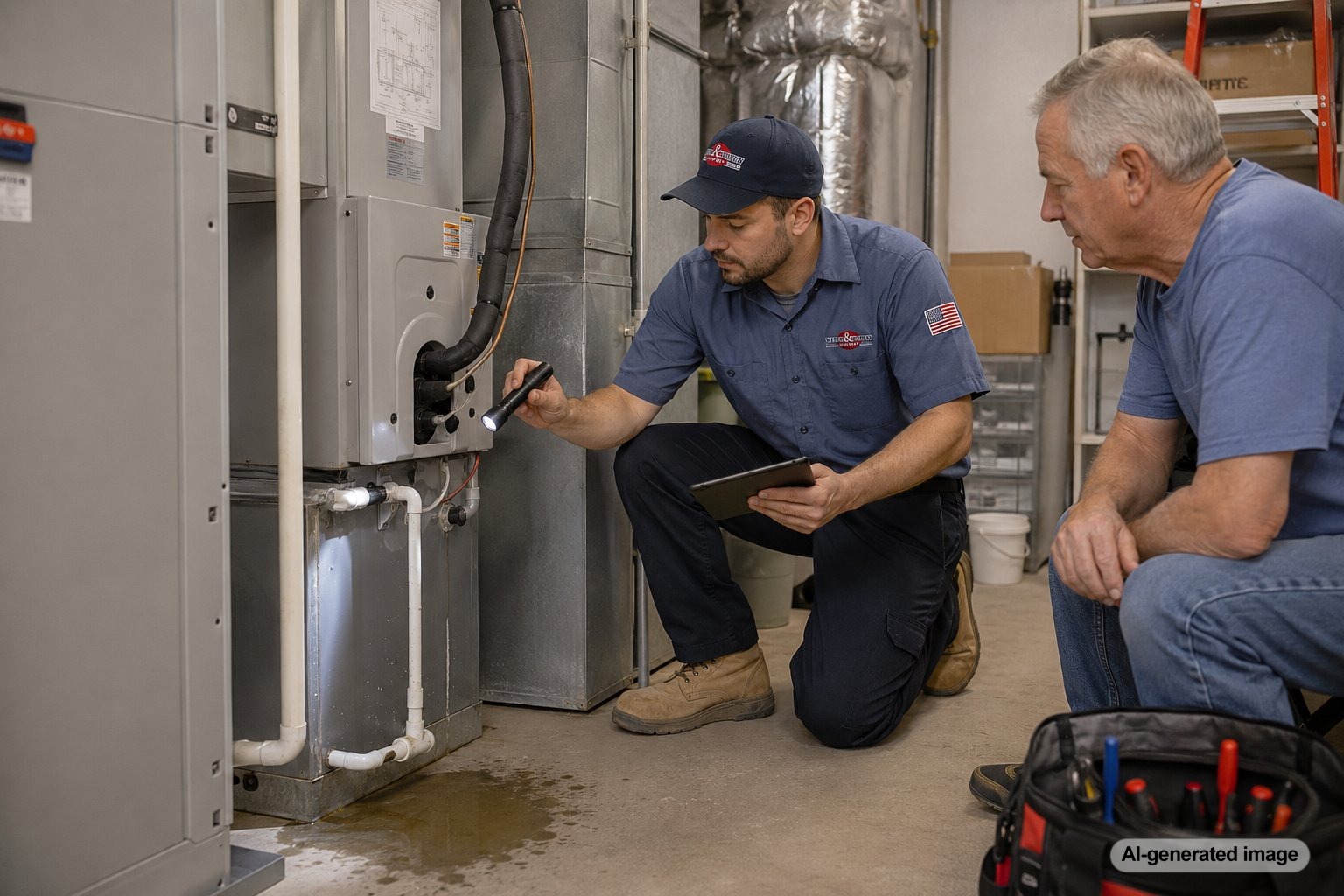
If your AC is leaking water inside the house, it is usually a sign that something in the system is not draining properly. While a small amount of condensation is normal during cooling, that moisture should be directed safely outside or into a designated drain. When water appears around your indoor unit, ceiling, walls, or mechanical room floor, it often points to a maintenance issue, restricted airflow, or a drainage problem that needs attention.
For homeowners in Central and Northern New Jersey, AC leaks often show up during periods of heavy summer use when systems are working hard to manage both heat and humidity. In many cases, prompt service can help prevent water damage and identify the underlying cause before it leads to larger HVAC problems. If your system has been showing other symptoms, it may be worth scheduling AC Service and Maintenance or a professional inspection.
An AC leaking water indoors may be caused by a clogged condensate drain line, a dirty air filter, a frozen evaporator coil, a damaged drain pan, or a condensate pump problem. Some simple checks are safe for homeowners, but persistent leaks should be evaluated by a qualified HVAC technician.
Common Reasons an AC Leaks Water Indoors
Clogged Condensate Drain Line
The most common cause of indoor AC water leaks is a blocked condensate drain line. As your system removes humidity from the air, water collects and drains away through a dedicated pipe. Dust, algae, and debris can sometimes clog that line, causing water to back up and overflow.
Dirty Air Filter and Restricted Airflow
A heavily clogged air filter can reduce airflow across the evaporator coil. When airflow becomes restricted, the coil may get too cold and develop ice. As that ice melts, excess water can overwhelm the drainage system and leak into the home.
Frozen Evaporator Coil
Frozen coils may result from airflow restrictions, low refrigerant levels, or other system issues. Homeowners may notice reduced cooling, ice buildup, or water around the unit after the ice begins to thaw. Because refrigerant systems require specialized training, a technician should evaluate the root cause.
Damaged or Rusted Drain Pan
Older systems sometimes develop cracks, corrosion, or deterioration in the condensate pan. Instead of directing water toward the drain, the pan may allow moisture to escape onto nearby surfaces.
Condensate Pump Problems
Some homes use a condensate pump to move water away from the indoor equipment. If the pump fails or loses power, water can accumulate and overflow rather than being discharged properly.
What Homeowners Can Safely Check
- Inspect and replace a dirty air filter if needed.
- Check the thermostat settings and make sure the system is operating normally.
- Look for visible water around the indoor unit.
- Make sure supply and return vents are open and not blocked.
- Check whether the breaker has tripped once, if it is safe to do so.
- Look for obvious debris around the outdoor unit.
Avoid opening sealed components, handling refrigerant, bypassing safety switches, or attempting repairs on electrical parts. If water continues to appear after basic checks, professional service is the safest next step.
Why Humidity Can Make the Problem More Noticeable
New Jersey summers often bring significant humidity along with high temperatures. During humid weather, your AC removes more moisture from the air, increasing the amount of condensate produced. A drain issue that might go unnoticed during mild conditions can become much more obvious during periods of heavy cooling demand.
Regular maintenance can help identify drainage concerns before peak cooling season arrives. Many homeowners choose Service Plans to help keep seasonal maintenance on schedule.
When to Call a Professional
You should schedule professional service if water continues to leak after replacing the filter, if you see ice on the system, if cooling performance has declined, or if the leak is causing damage to floors, ceilings, or walls.
A qualified technician can inspect the drain system, check airflow conditions, evaluate the evaporator coil, and identify whether additional repairs may be needed. Because several different issues can produce similar symptoms, a proper diagnosis is important.
Frequently Asked Questions
Is it normal for an AC to produce water?
Yes. Air conditioners naturally remove moisture from the air during cooling. The water should drain away through the condensate system rather than leaking into the home.
Can a dirty air filter cause an AC to leak water?
Yes. Restricted airflow can contribute to coil freezing, which may create excess water when the ice melts.
Should I turn off my AC if it is leaking?
If water is actively leaking and causing damage, shutting the system off may help limit additional moisture until the cause can be evaluated.
Can I clear a clogged drain line myself?
Homeowners can visually inspect accessible areas, but persistent drainage issues are best handled by a qualified HVAC professional to avoid equipment damage.
An AC leaking water inside the house is often related to drainage, airflow, or coil issues. While a few simple checks are safe to perform, ongoing leaks should be evaluated promptly to help prevent water damage and restore reliable cooling.
Need help with your heating, cooling, or HVAC system?
Meyer & Depew serves homeowners and businesses throughout Central and Northern New Jersey.
Get a quote or call 908.272.2100.